
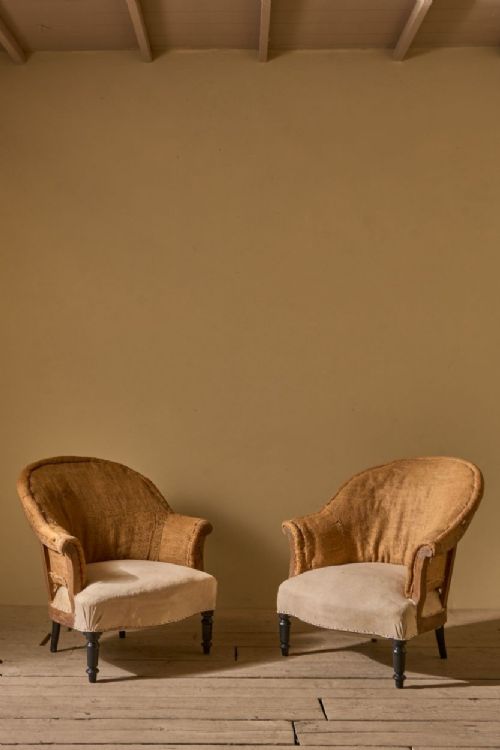
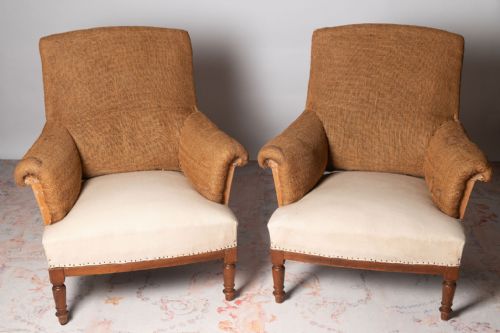
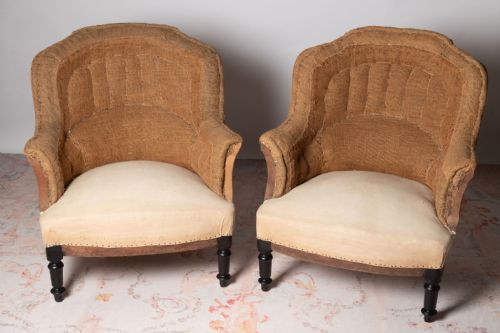
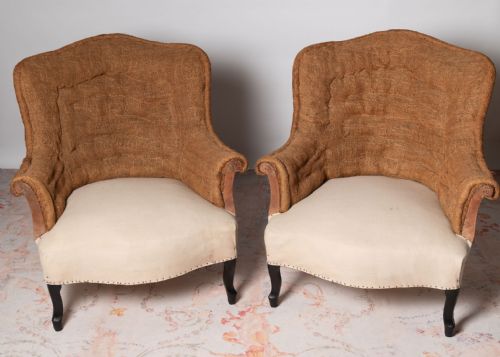


Hessian French Chair
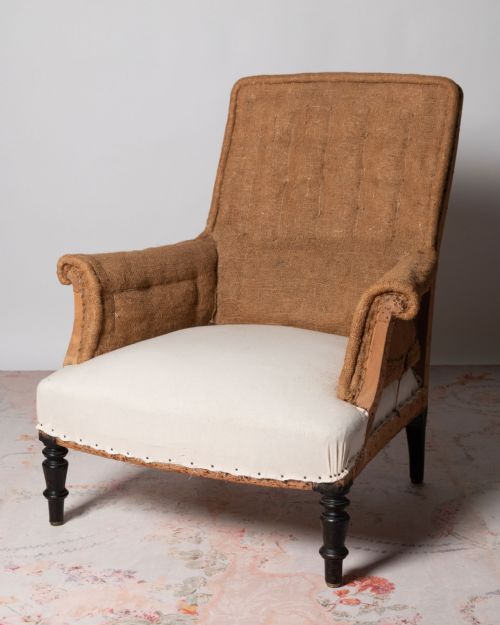
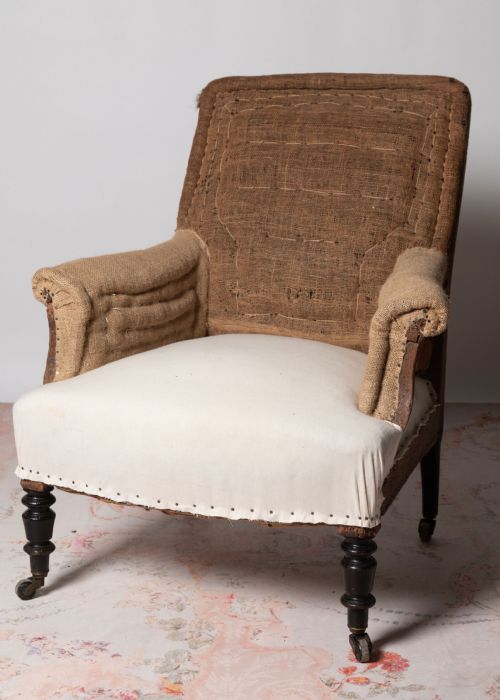
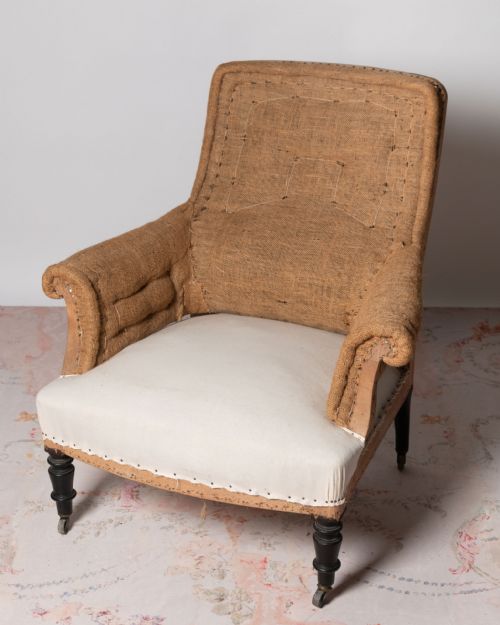
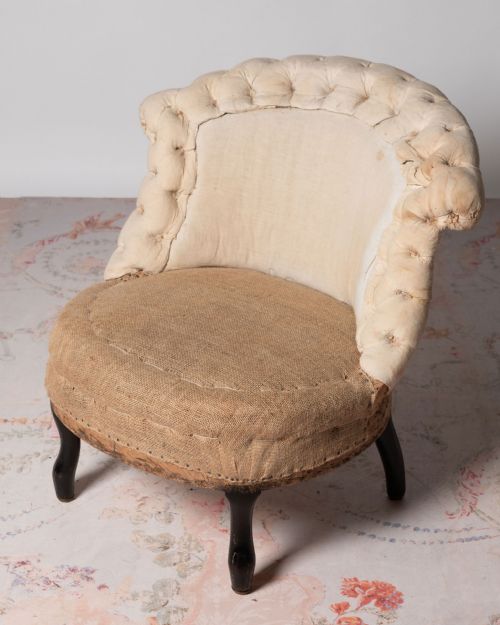
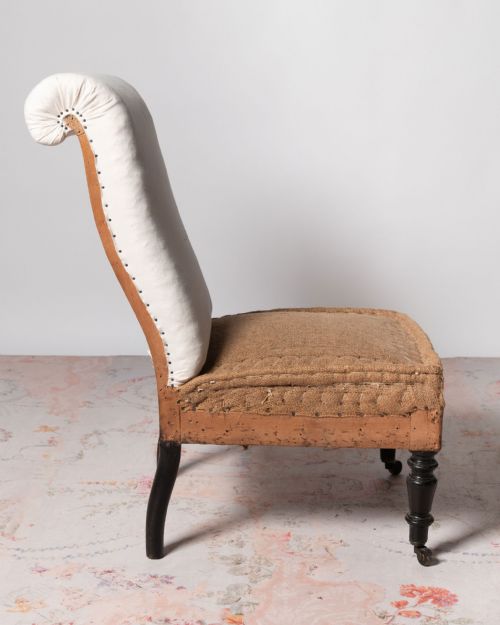
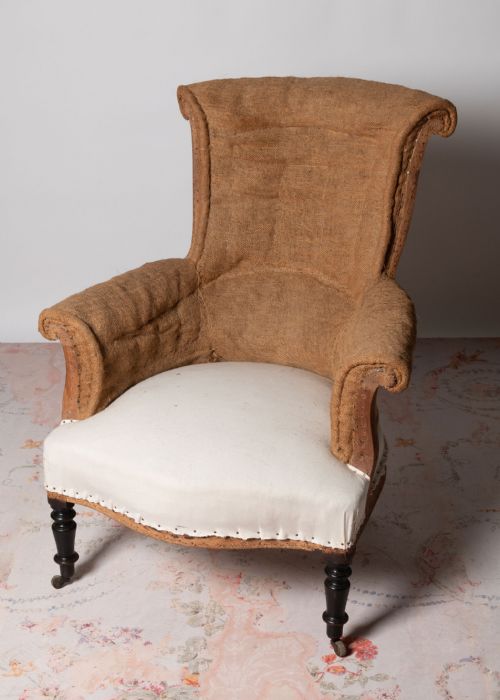
A hessian french chair brings tactile texture and understated heritage to a room, offering nineteenth-century seating upholstered in coarse jute fabric.
Hessian French Chair
When you search for a hessian french chair, you are looking at nineteenth-century seating rooted in continental traditions like Napoleon III, Louis XVI, French provincial and French country styles. These pieces range from scroll back slipper chairs and tub chairs to salon armchairs and painted fauteuils originating from the nineteenth century and the Edwardian era.
The versions you are most likely to meet on this page are nineteenth-century armchairs and slipper chairs upholstered directly in raw hessian or calico. They showcase traditional silhouettes with exposed wooden frames in beech and hardwood, often carrying the marks of age and historical use across French workshops.
How they were made
Makers constructed these frames using sturdy timbers such as beech and hardwood, shaping structural supports to withstand daily sitting while maintaining elegant continental profiles. Woodwork ranges from simple painted finishes to exposed natural grains, frequently paired with brass detailing.
Upholstery relied on coarse jute hessian, linen, and cotton fabrics layered over supportive stuffing materials. Frames were often initially fitted with plain hessian or calico as a durable foundation or final utilitarian covering, prioritising resilience and texture.
Some nineteenth-century chairs arrived wrapped in coarse hessian simply to protect finer silks underneath, accidentally inventing a distinct rustic aesthetic.
What varies in quality
The distinction between ordinary and superior examples lies in the integrity and proportion of the wooden frame, alongside the authenticity of the period upholstery approach. Finer pieces demonstrate skilful joinery in beech or hardwood and retain harmonious silhouettes that reflect their specific continental style.
Subtleties in the texture of the hessian and the character of the exposed wood elevate certain pieces above others. The visual weight of a scroll back or the elegance of painted surfaces separates standard seating from more desirable examples.
The Hessian French Chair Glossary
- Hessian
- A coarse woven fabric typically made from jute fibres, utilised as a durable upholstery covering or structural foundation on period seating. It provides a tactile, neutral texture that defines the rustic appearance of these chairs.
- Napoleon III
- A nineteenth-century French design style encompassing eclectic revivals and comfortable domestic seating. Pieces from this period frequently display curved lines and deep buttoning or simple fabric coverings.
- Slipper chair
- A low-seated bedroom chair traditionally designed without arms to allow easier movement while dressing. In French variants, this form often incorporates a scrolled back and generous padding.
- Calico
- A plain-woven cotton fabric commonly employed as an underlying upholstery layer or tight primary cover on antique chairs. It offers a smooth, neutral surface that complements raw hessian.
Hessian French Chair: Frequently Asked Questions
What is a hessian french chair?
A hessian french chair is a nineteenth-century continental armchair or slipper chair upholstered in coarse jute fabric rather than traditional decorative silks or velvets. These pieces draw on styles like Napoleon III and French provincialism.
They combine robust wooden frames made of beech or hardwood with simple, unadorned textile coverings that highlight texture and form over ostentatious patterns.
Where were these chairs used?
Historically, these chairs served functional roles in nineteenth-century French salons, bedrooms, and sitting rooms as accessible everyday seating. Their modest upholstery materials suited domestic spaces where durability mattered.
Today, their restrained aesthetic allows them to sit comfortably in contemporary or traditional rooms alike, functioning as accent chairs or reading seats.
How do I live with hessian upholstery?
Living with hessian upholstery involves appreciating the natural, rustic character of coarse jute fibres that soften gradually with gentle use. The neutral tone adapts easily to diverse colour palettes.
Care simply requires regular light vacuuming with a soft brush attachment to prevent dust from settling into the dense weave of the fabric.
How do I tell periods apart?
Distinguishing between periods relies on observing subtle shifts in frame silhouette, woodwork finishing, and stylistic cues such as scroll backs or painted surfaces. Nineteenth-century examples often carry heavier proportions.
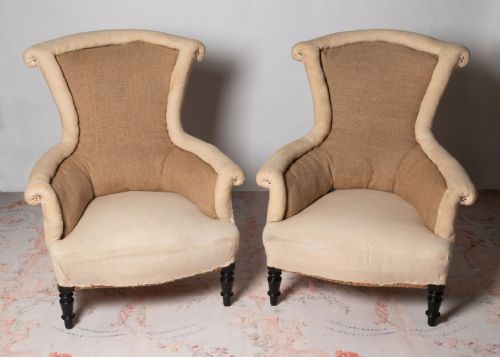
Edwardian salon armchairs on this page tend to show lighter framing and alternative interpretations of continental forms, reflecting shifts in manufacturing trends.