

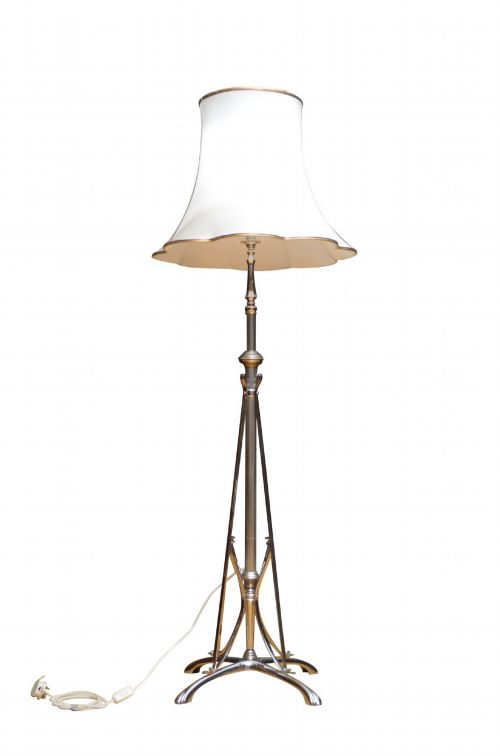


Metal Standing Lamp
A metal standing lamp brings both functional illumination and architectural presence to a room, drawing the eye with its vertical scale.
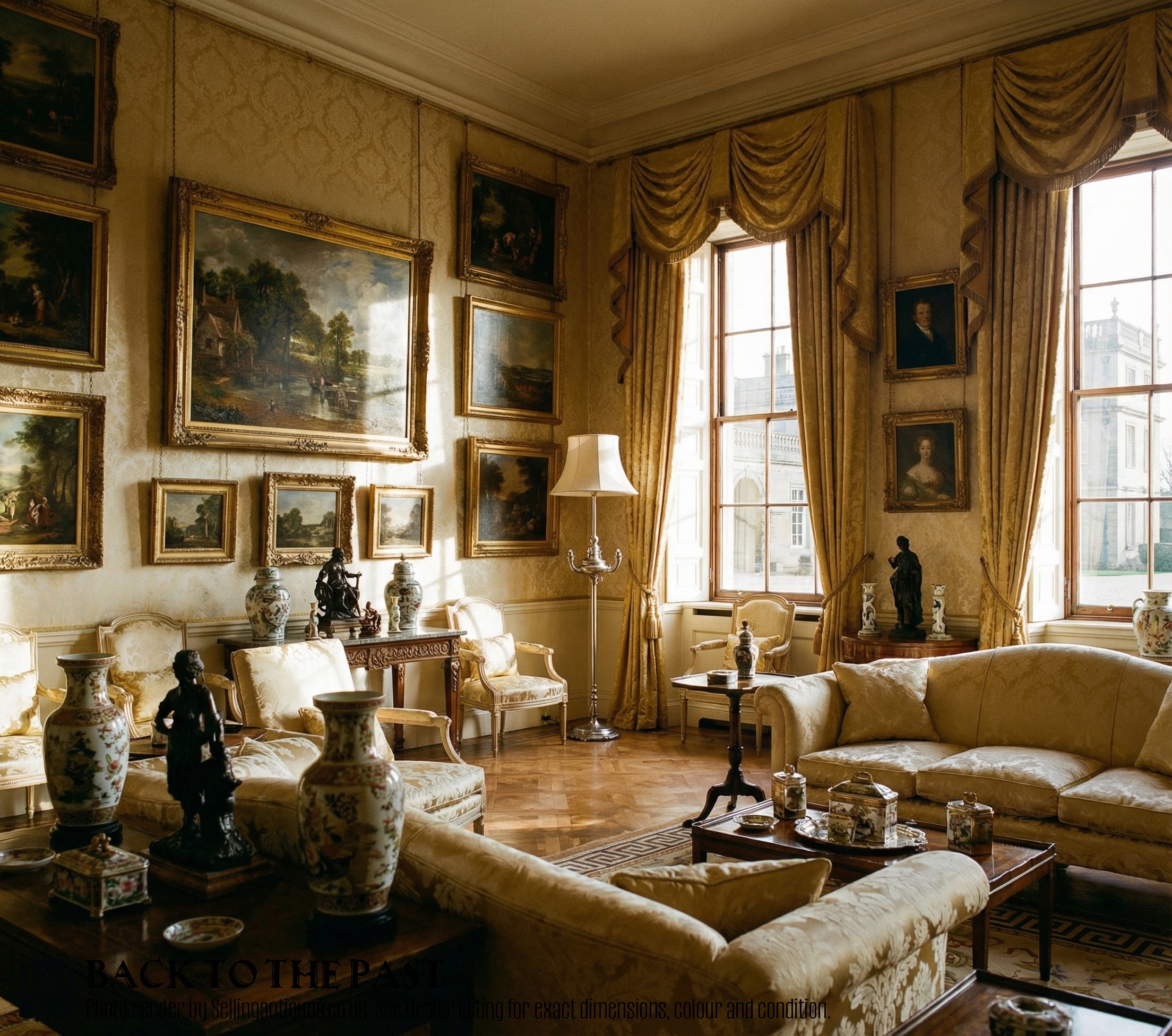
Metal Standing Lamp
A metal standing lamp provides elevated task or ambient lighting through tall vertical forms designed to stand directly on the floor. When you search for a metal standing lamp, you encounter diverse tall lighting formats such as standard lamps, torcheres, telescopic floor lamps, and lantern stands. These tall fixtures originate from periods spanning the Victorian era through the Edwardian years and into the 1920s and 1930s.
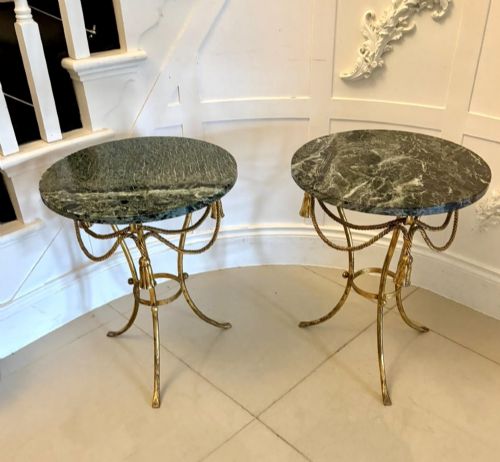
You are most likely to meet standard lamps and floor lamps constructed from brass, wrought iron, and bronze, often featuring adjustable arms or telescopic shafts. Many pieces reflect design movements like Art Deco, Art Nouveau, and Arts and Crafts, alongside period revivals such as French Neoclassical and Gothic Revival. Alongside traditional lighting, related floor-standing metal pieces include plant stands, side tables with integrated illumination, and floor candelabras.
The historical function of these tall metal lights ranges from burning oil and gas to accommodating early electrical systems. Makers utilised the strength of metals to support heavy fittings, fabric shades, and glass elements while maintaining stability on a slender base. Surviving examples demonstrate how past interiors integrated tall illumination into seating areas and reading corners.
How they were made
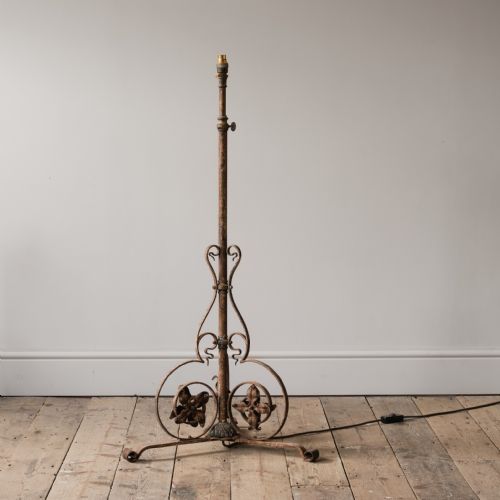
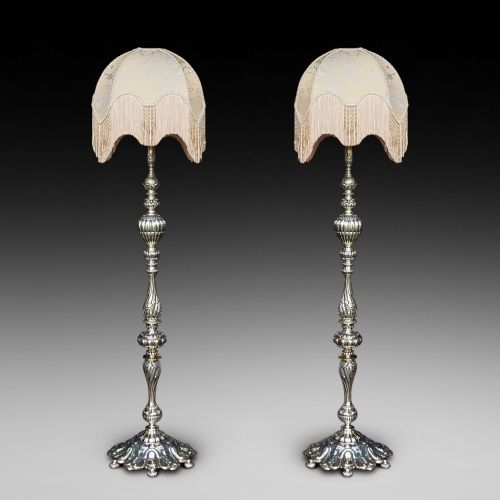
Makers forged, cast, and hammered materials like brass, wrought iron, copper, bronze, and cast iron into slender vertical columns and sturdy bases. Wrought iron pieces often reveal blacksmith techniques with hand-forged joints and adjustable mechanisms, whereas brass and bronze components frequently display fine casting and scrollwork.
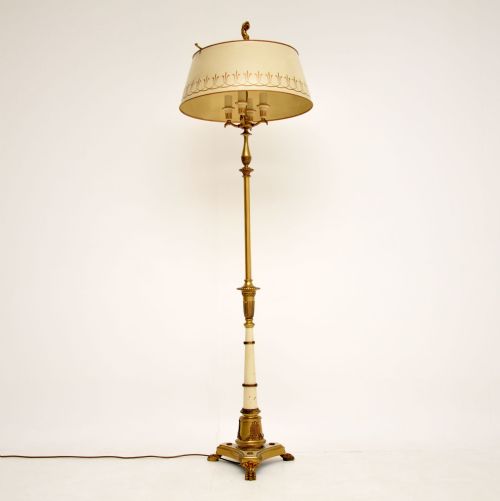
Combinations of mixed materials appear across the periods, incorporating elements such as marble bases, onyx sections, toleware painted finishes, and glass shades or fabric elements. Telescopic shafts rely on internal mechanisms and thumbscrews to allow height adjustment, while weighted bases provide the necessary balance for extended arms.
The documented pieces span the Victorian, Edwardian, and Art Deco eras, alongside the wider nineteenth century.
What varies in quality
The grade of a metal standing lamp depends upon the weight and purity of its metal construction, distinguishing solid brass or heavy forged iron from lighter plated alternatives. Superior examples exhibit clean casting lines, crisply articulated scrollwork, and robust mechanical adjustment systems that operate smoothly without slipping.
Proportion and architectural balance dictate the visual success of the piece, separating standard production items from master-designed works of the Arts and Crafts or Art Nouveau movements. The integration of complementary materials, such as genuine marble plinths or patinated bronze, elevates the overall execution.
W A S Benson·RENE MATHIEU
The Metal Standing Lamp Glossary
- Standard lamp
- A tall floor-standing lamp designed to illuminate a room from an elevated position. This term appears frequently in British trade descriptions.
- Torchere
- A tall ornamental stand or floor lamp, often designed to hold an uplighter or candle, stemming from classical interior traditions.
- Telescopic
- An adjustable shaft mechanism allowing the height of the lamp standard to extend or contract.
- Ormolu
- Gilded bronze or brass applied as a decorative finish to furniture and metalwork during the eighteenth and nineteenth centuries.
- Tole
- Painted or lacquered sheet metal, commonly utilised for decorative lamp bodies and shades in French designs.
Metal Standing Lamp: Frequently Asked Questions
Where should I place a standard lamp in a room?
Standard lamps perform best beside armchairs, sofas, or in dark corners where they provide focused reading light or soft ambient illumination. Their vertical profile makes them useful for filling empty floor space without cluttering the room layout.
Ensure the heavy metal or marble base rests on an even surface so the tall structure remains stable. Positioning the lamp near a wall socket prevents trailing cords across high-traffic walkways.
How do I identify an Art Deco metal lamp?
Art Deco metal lamps feature geometric forms, stepped bases, clean vertical lines, and stylised motifs typical of the 1920s and 1930s. Materials often include chromed metals, brass, and frosted glass uplighter shades.
In contrast to the flowing organic curves of earlier Art Nouveau pieces, Art Deco designs emphasise symmetry, streamlined silhouettes, and machine-age industrial aesthetics.
Can antique metal lamps be safely rewired?
Professional rewiring allows antique metal standard lamps to meet modern electrical safety standards while preserving their original structural components. Electricians can thread modern wiring through historic brass or iron stems without altering the exterior finish.
Retaining original lampholders and switches is often possible when they pass safety testing, ensuring the historical integrity of the piece remains intact.