


Regency Style Floor Lamp
These pieces are regency style floor lamps, bringing classical form and adjustable height to a room.
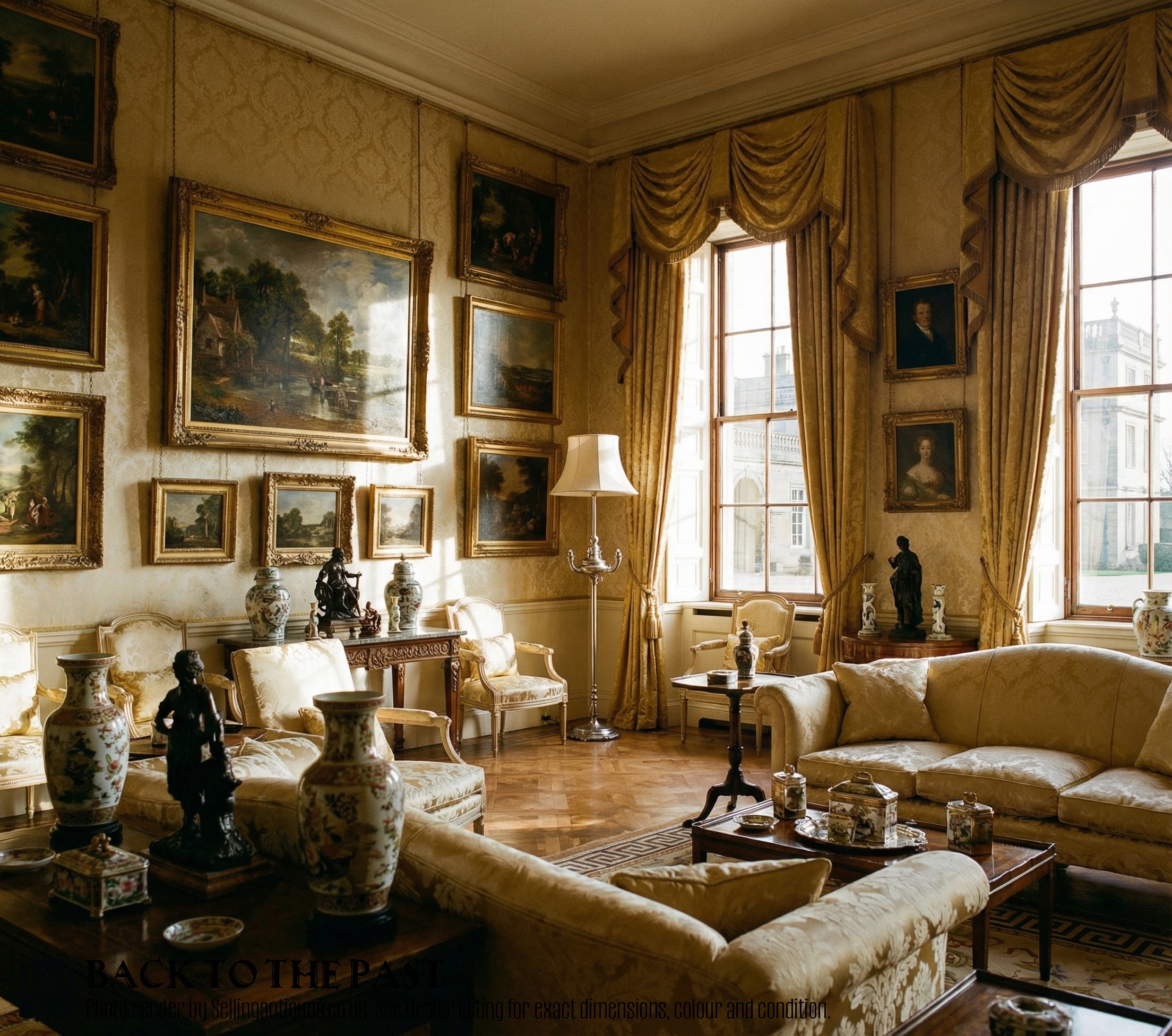
Regency Style Floor Lamp
A regency style floor lamp provides elevated illumination through standard and floor lamp forms dating from the nineteenth century into the twentieth century. These pieces draw upon neoclassical lines, incorporating architectural details and slender columns.
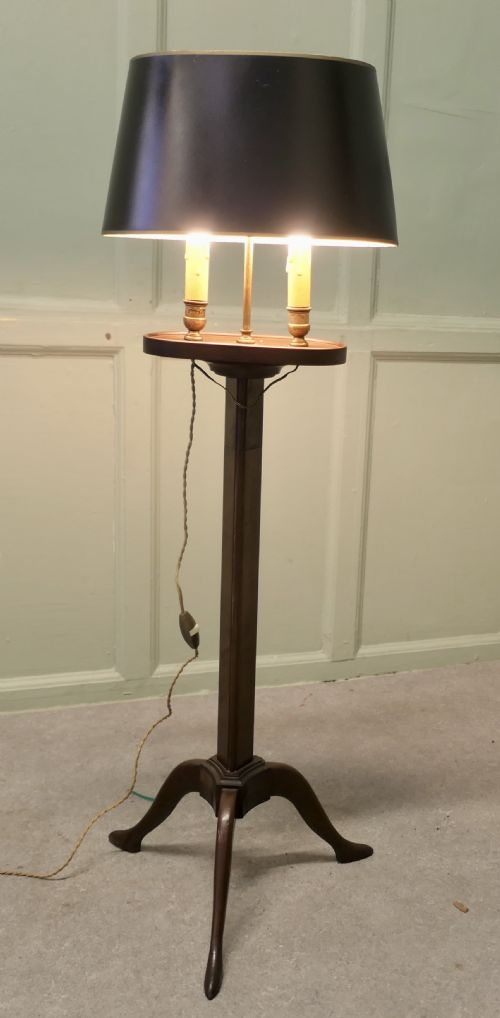
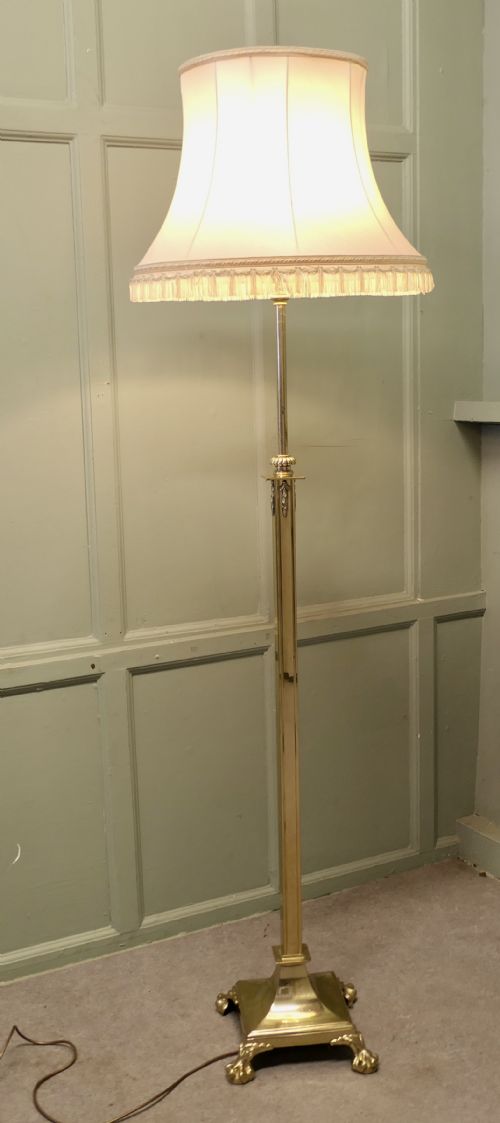
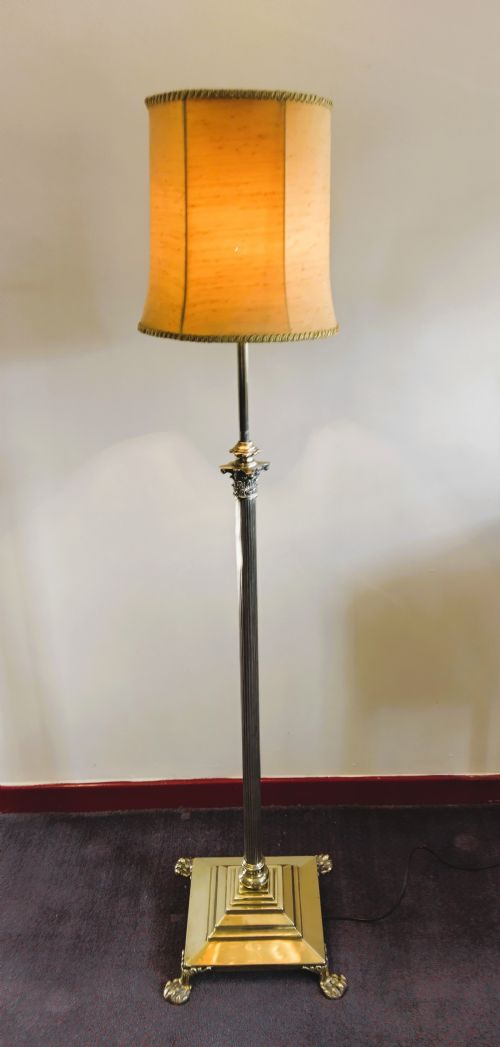
You meet versions styled as bouillotte lamps with twin candles, telescopic brass standards, and painted metal finishes. The selection ranges from nineteenth century originals to revival pieces from the nineteen twenties and thirties.
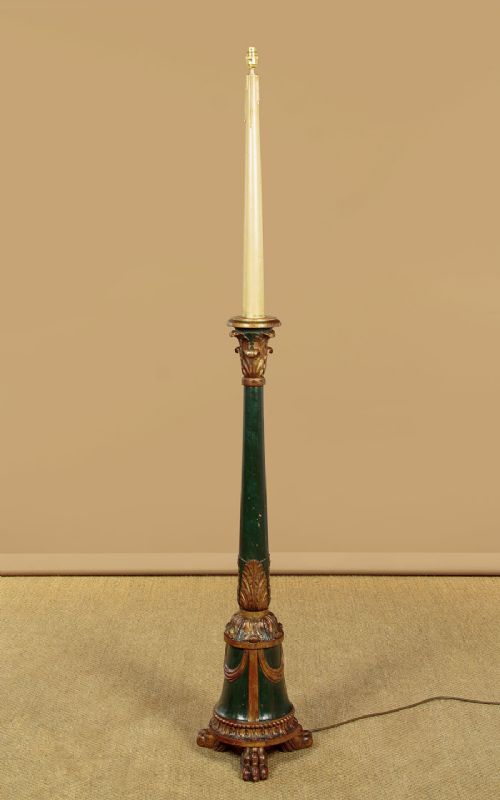
Makers drew on neoclassical and regency revival idioms, producing standard lamps in brass, solid brass, parcel gilt, and mahogany. These variations supply both height and directional light for traditional interiors.
How they were made
Makers fashioned these regency style floor lamps predominantly from brass and solid brass, often adding gilt bronze, silvered finishes, or parcel gilt highlights. Wood and mahogany appear in column shafts, while marbleized details complement metal components.
Construction methods rely on telescopic mechanisms for adjustable height and heavy bases to support tall standards. Metalwork receives chased or painted surface treatments, paired with fabric shades on standard lamp formats.
Regency Style Floor Lamp Retail Price Guide 2026
Typical asking prices for regency style floor lamp among the pieces listed under this phrase on Sellingantiques today, from the lower quarter to the upper quarter. They describe what is for sale here now, not the wider market.
The inventory spans the nineteenth century through the nineteen thirties, featuring materials such as brass, mahogany, fabric, and marbleized wood.
What varies in quality
Weight and metal gauge distinguish finer regency style floor lamps from lighter alternatives, as heavy solid brass and cast bronze provide greater stability for tall telescopic columns. The precision of neoclassical casting and chasing on the base and collar dictates the crispness of the ornament.
The sophistication of the surface treatment, whether genuine parcel gilt, silvering, or detailed paintwork over metal, separates standard production from superior examples. Original mechanisms for height adjustment operate with smoother action and finer tolerances.
The Regency Style Floor Lamp Glossary
- Bouillotte lamp
- A traditional desk or reading light featuring multiple candle arms, adapted here into floor standing formats. These often include adjustable shade heights.
- Telescopic
- A sliding mechanism within the standard shaft that allows the overall height of the lamp to be adjusted. This engineering feature supports flexible placement.
- Parcel gilt
- A surface decoration where only specific raised details or ornaments are highlighted with gold leaf. This technique emphasises neoclassical motifs.
- Neo-classical
- A style drawing inspiration from the art and architecture of classical antiquity. It appears frequently in the columns and urn motifs of these lamps.
Regency Style Floor Lamp: Frequently Asked Questions
How do I adjust the height?
Many of these pieces use a telescopic mechanism built into the brass standard. You loosen a collar or thumbscrew to raise or lower the shaft.
Ensure you support the upper section firmly while making adjustments to protect the internal wiring and metal threads.
What is a bouillotte lamp?
A bouillotte lamp is a style originally designed for card games, featuring multiple candle arms around a central column. Floor versions adapt this multi-light arrangement for ambient room illumination.
They frequently include adjustable shades to direct the light downward.
Are these pieces solid brass?
The listings include heavy solid brass standards alongside brass-plated metals and painted metal constructions. Solid brass pieces offer substantial weight at the base for stability.
Checking the weight and examining the metal at unpolished joints helps identify solid construction.
How do I care for gilt finishes?
Gilt and parcel gilt surfaces require gentle dusting with a soft, dry cloth without abrasive polishes. Chemical cleaners can strip the thin gold leaf layers over time.
Preserving the original surface maintains the character of nineteenth and early twentieth century metalwork.