


Cream Shade Floor Lamp
These cream shade floor lamps bring warmth and height to a room, offering practical illumination dressed in period character.
Cream Shade Floor Lamp
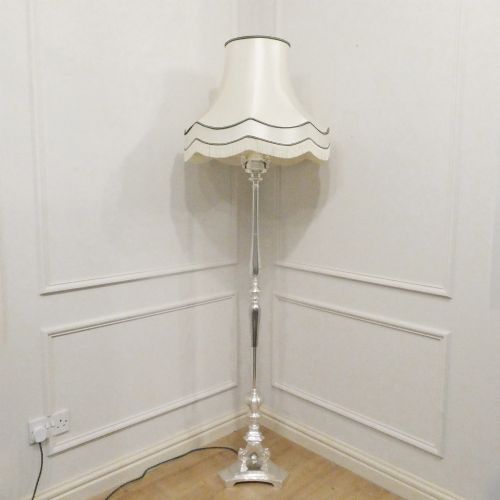
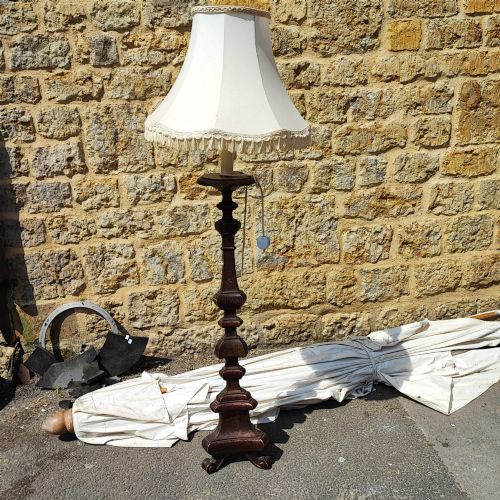
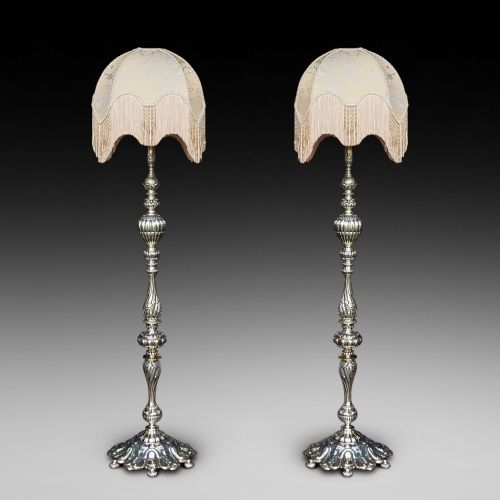
A cream shade floor lamp provides ambient light through tall upright forms, appearing in Victorian, Edwardian, and early twentieth century guises. You will frequently encounter heavy brass standard lamps and wrought iron standard lamps when browsing these examples.
The selection ranges from tripod lamp structures to standard lamps paired with mahogany bases and adjustable arms. These pieces serve as both functional reading lights and significant vertical furniture within a traditional English or Edwardian interior.
Construction and Materials
Makers utilised durable metals and timbers, combining brass, silver plate, and wrought iron with carved wood and giltwood. Many standards incorporate weighted metal bases or sturdy wooden tripod legs to support the height safely.
Upper fittings often accommodate fabric shades, sometimes featuring a fringe or glass stem elements that diffuse the light softly. Metal components show careful turning, casting, or hand-forging depending on whether the style leans industrial, traditional, or arts and crafts.
Cream Shade Floor Lamp Retail Price Guide 2026
Typical asking prices for cream shade floor lamp among the pieces listed under this phrase on Sellingantiques today, from the lower quarter to the upper quarter. They describe what is for sale here now, not the wider market.
Current listings demonstrate standard lamp forms spanning the Victorian era through the 1930s, utilising brass, wrought iron, mahogany, and giltwood.
Assessing Quality
Quality rests on the substance of the materials and the integrity of the proportions, distinguishing heavy, solid metal or timber standards from lighter, simpler constructions. A well-balanced base and cleanly turned joints indicate superior workmanship.
The refinement of decorative details, such as hand-carved woodwork on giltwood or mahogany elements and finely articulated adjustable arms, separates standard production pieces from finer examples.
The Cream Shade Floor Lamp Glossary
- Standard lamp
- A tall floor-standing lamp designed to illuminate a room from standing height. This term appears frequently alongside floor lamp in older British catalogues.
- Canterbury/lamp stand
- A combined furniture piece integrating a compartment for sheet music or books with an upright lamp standard. It represents a clever multi-functional Edwardian invention.
- Wrought iron
- Iron heated and hammered into shape by hand, resulting in textured, durable scrollwork and structural frames. It is typical of Arts and Crafts and rustic vernacular lighting.
- Giltwood
- Wood that has been coated with a thin layer of gold leaf or gold paint. This technique adds decorative brilliance to carved lamp standards from the early twentieth century.
Cream Shade Floor Lamp: Frequently Asked Questions
How do I date a floor lamp?
Dating relies on stylistic clues, construction methods, and materials like heavy brass or wrought iron. Victorian and Edwardian examples often display distinct hand-finishing compared to later industrial or 1930s designs.
Examine the wiring access points and switches, as older fittings have often been modernised for safety while retaining their original period frames.
Where should I place a standard lamp?
These tall lamps suit corners of reception rooms or beside deep armchairs where they cast downward light for reading. Their vertical presence helps fill empty vertical space in rooms with high ceilings.
Parks well behind low seating or alongside side tables to create layered pools of light within traditional English country schemes.
Are adjustable arms original?
Many Victorian and Edwardian standard lamps feature mechanical joints or pivoting arms designed to direct light precisely where needed. These mechanisms are typically built from brass or iron as part of the original construction.
Check that the movement remains smooth and that the locking screw or counterbalance functions properly without excessive play.
Can I change the cream shade?
Shades are frequently replaced over decades of use, and matching a suitable fabric or fringed shade enhances the period appearance. The shade proportion should balance the height and weight of the underlying standard.
Ensure the fitting type matches the vintage bulb holder, whether using a traditional shade carrier or a modern spider fitter.