



Metal Plant Urn
A metal plant urn holds foliage in heavy cast iron, bronze or brass, bringing weight and structure to a room or garden.
Metal Plant Urn
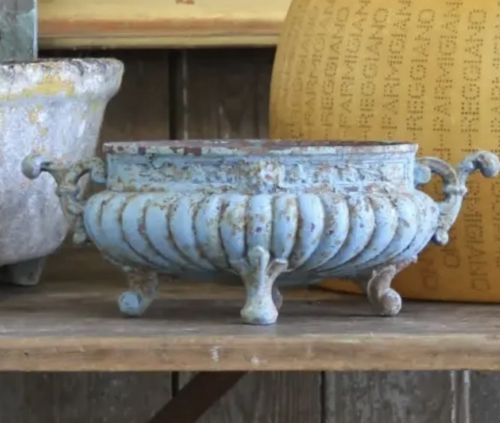
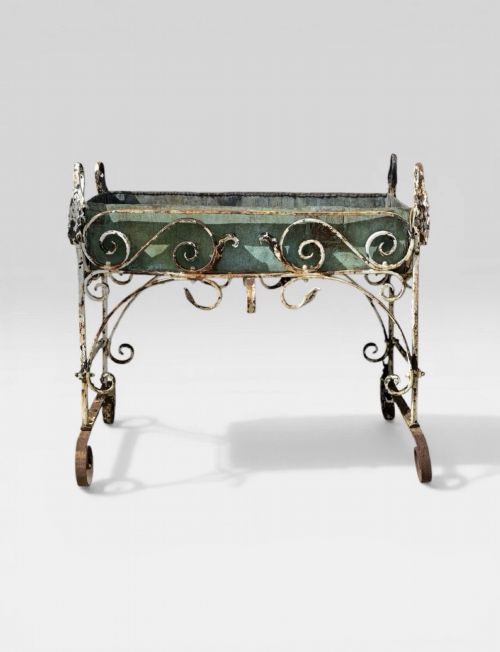
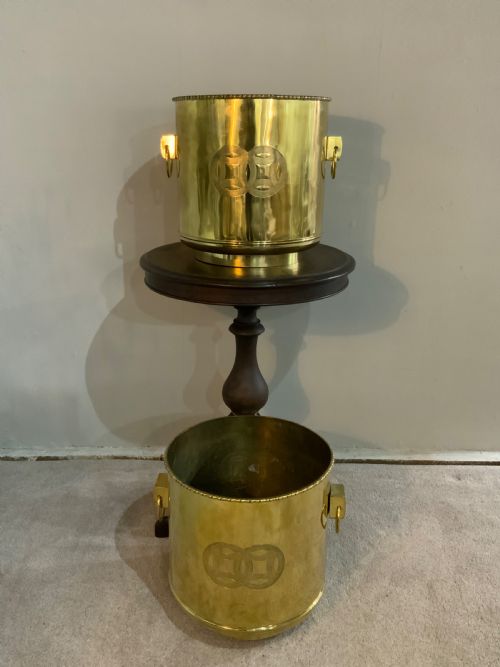
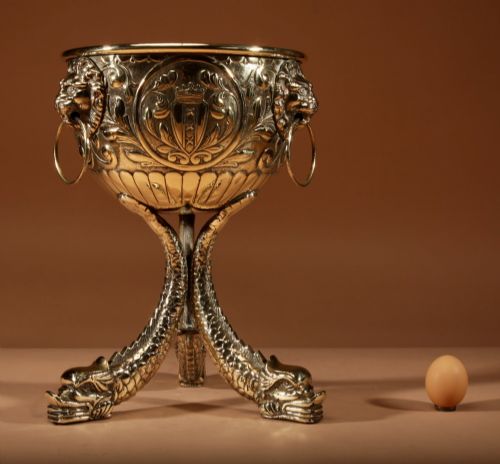
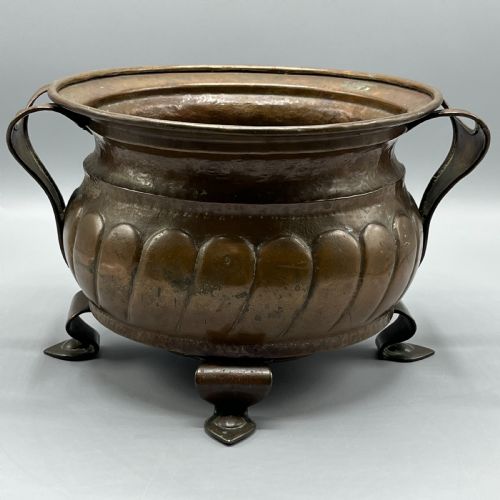
A metal plant urn encompasses forms such as jardinieres, cachepots, and garden planters designed to house growing greenery. Buyers seeking a metal plant urn will encounter heavy outdoor vessels alongside smaller indoor display pieces originating from the nineteenth and early twentieth centuries.
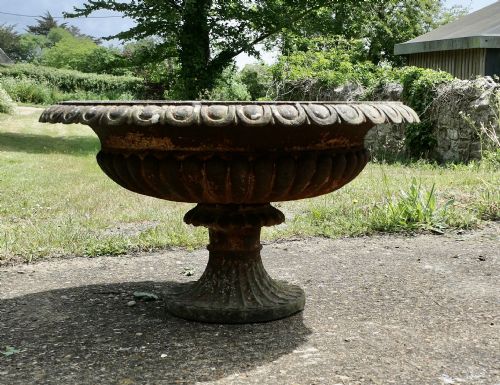
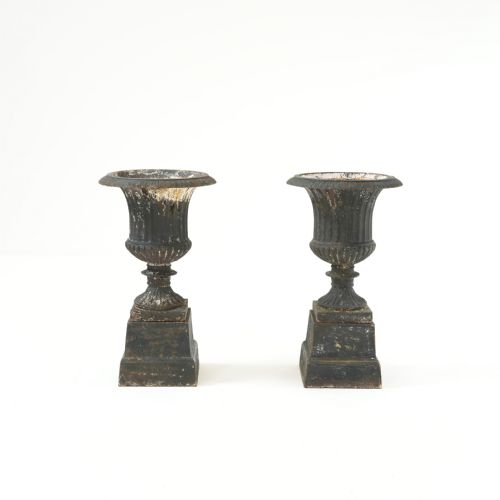
The selection ranges from robust nineteenth century cast iron garden campana urns on plinths to delicate brass and copper indoor jardinieres. Pieces draw upon diverse traditions including Victorian, Neoclassical, Arts and Crafts, and Japanese Meiji periods.
French and Chinese export designs appear frequently alongside British Victorian examples. These vessels serve practical functions for planting while functioning as architectural ornaments for terraces, patios, and interiors.
Materials and construction
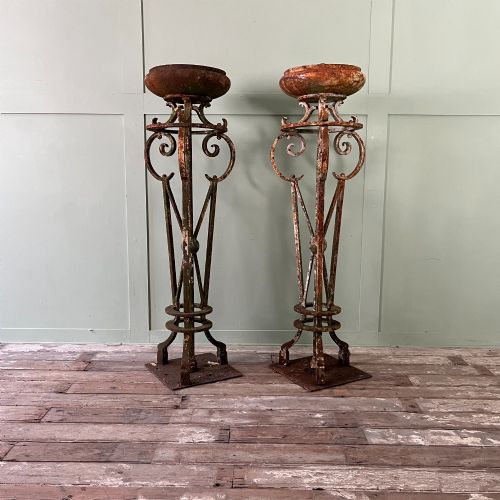
Foundry work dominates the construction of these pieces, utilising cast iron, bronze, brass, and lead formed through traditional moulding and casting techniques. Iron vessels often feature heavy cast ornament or structural strapwork intended to endure outdoor exposure.
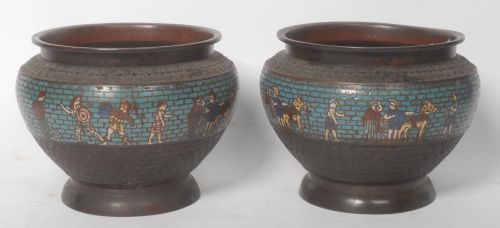
Copper and brass examples utilise sheet metal that is beaten, embossed, or spun, occasionally displaying the hand-hammered surfaces typical of the Arts and Crafts movement. Decoration includes champleve and cloisonne enamel inlay applied to bronze and brass bases.
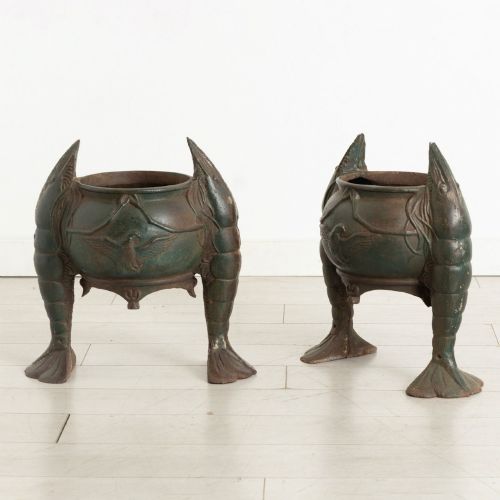
Keep an eye out for cast iron planters shaped specifically as marine shrimp.
Judging quality
Quality rests upon the crispness of the casting and the thickness of the metal used in the body. Finer examples display sharp, well-defined relief work and substantial weight rather than thin, pressed construction.
Surface finish and patination determine the visual depth of the metal. Original patination, hand-chased details, and intact enamel work separate standard utilitarian vessels from superior decorative specimens.
The Metal Plant Urn Glossary
- Cachepot
- An ornamental pot used to hold a flowerpot and conceal it, lacking drainage holes at the base. They sit indoors on stands or tables.
- Campana urn
- A bell-shaped garden vessel with a flared rim, seated on a pedestal base. This classic neoclassical form dates back to antiquity.
- Cloisonne
- Enamelwork in which enamel is applied to compartments separated by strips of metal welded to the upright body. It appears on Asian bronze vessels.
- Champleve
- An enamelling technique where troughs or cells are carved into the surface of metal and filled with vitreous enamel. The surrounding metal remains visible as lines.
Metal Plant Urn: Frequently Asked Questions
Can cast iron urns stay outside?
Heavy cast iron vessels withstand outdoor weather conditions and develop a natural rusted or weathered patina over time. Many are specifically designed for garden terraces and lawns.
Protective coatings or indoor placement help preserve pieces with delicate painted surfaces or integrated stands.
What is the difference between a jardiniere and a planter?
A jardiniere typically refers to an ornamental indoor vessel intended for display, often manufactured in polished brass, copper, or cloisonne. Planters encompass a broader functional category that includes heavy outdoor cast iron garden pieces.
Indoor versions frequently require an inner pot to protect the metal from direct moisture and soil contact.
How do I date an antique metal urn?
Dating relies upon material composition, manufacturing marks, casting quality, and stylistic motifs associated with periods like the Victorian era or Meiji period. Stylistic cues such as neoclassical campana shapes or Arts and Crafts hammering indicate specific eras of production.
Examining assembly methods, fixings, and surface wear assists in confirming the age of the metalwork.
Are bronze Japanese planters antique?
Many bronze vessels originate from the Japanese Meiji period, reflecting distinct artistic traditions imported to the West during the late nineteenth and early twentieth centuries. These pieces often feature detailed casting and patination.
Such items were produced for both domestic use and the international export market.