




Meissen Style Figurines
Meissen style figurines bring elaborate Rococo revival and Victorian charm to the tabletop through hand painted porcelain and gilt detail.
Meissen Style Figurines
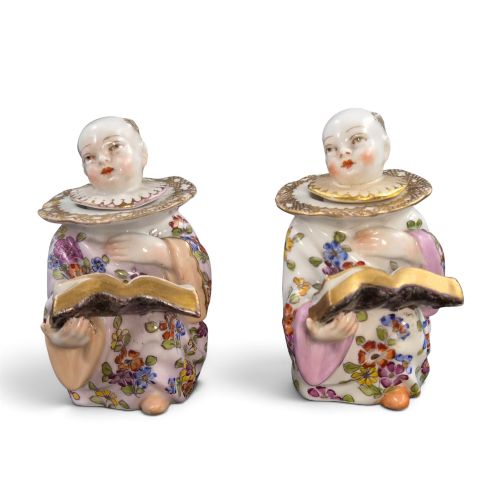
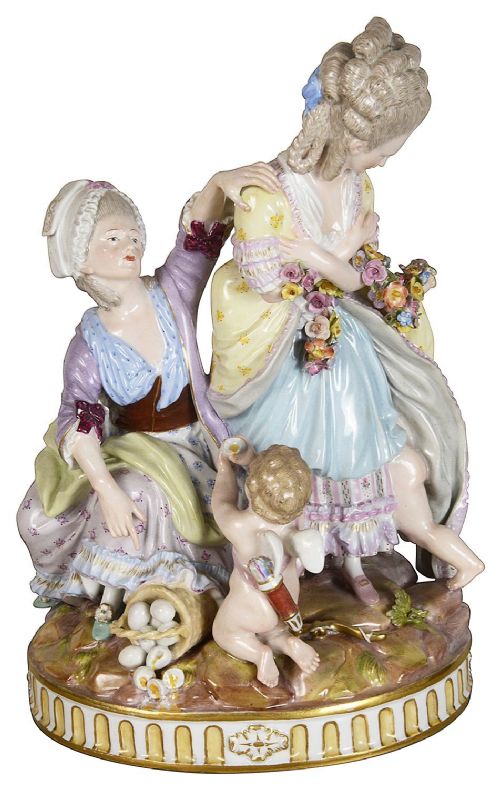
Meissen style figurines represent decorative ceramic sculpture, predominantly taking the form of porcelain figures, figural groups, inkwells, and candelabras. Buyers exploring this phrase will frequently encounter nineteenth century interpretations alongside eighteenth century examples, reflecting both authentic German production and nineteenth century revival pieces.
The subjects range from romantic pairs and children in gardens to mythological scenes such as the Drunken Silenus and street vendors. These pieces utilise traditional styles like Rococo, Rococo Revival, and Chinoiserie to create ornate decorative objects for the home.
Nineteenth century makers such as Edmé Samson, Helena Wolfsohn, and Sitzendorf produced notable Continental groups that emulate the distinctive aesthetic of the Meissen factory. Most items found in this selection date from the nineteenth century, capturing the detailed modelling and characterful expressions typical of the period.
What varies in quality
The fineness of the modelling dictates the visual success of the piece, particularly in the rendering of facial expressions, fingers, and delicate applied flowers. Superior examples display crisp details and clean casting lines that retain their sharpness beneath the glaze and enamel layers.
The application of hand painting and gold leaf separates standard decorative items from exceptional artistic works. Skilled brushwork in the enamel colours and precise placement of gold leaf create depth and character that elevate the sculpture.
Listings feature hard-paste porcelain figures spanning the eighteenth and nineteenth centuries, including works by Edmé Samson and Helena Wolfsohn.
Edmé Samson·Helena Wolfsohn·Sitzendorf
The Meissen Style Figurines Glossary
- Hard-paste porcelain
- A dense, vitrified ceramic composed of kaolin and petuntse, fired at high temperatures to produce a durable and bright white body. It provides the standard foundation for fine European decorative figures and tableware.
- Enamel
- Opaque glass-like paint applied to the surface of fired porcelain and subsequently fixed with a lower temperature kiln firing. It provides the vibrant colour palette found on robes, skin tones, and naturalistic bases.
- Gilt
- A thin layer of gold applied to the porcelain surface to accent decorative details, borders, and bases. It is often burnished to create a bright metallic shine against the matte or glossy enamel colours.
- Rococo Revival
- A nineteenth century design movement that reinterprets the ornate, asymmetrical curves and shell motifs of the eighteenth century French Rococo style. It is heavily represented in the bases and scrollwork of Victorian porcelain groups.
- Chinoiserie
- European artistic interpretation of Chinese and East Asian decorative motifs, popular in porcelain modelling and painting. It appears in figures dressed in exotic garments or engaged in fantastical eastern scenes.
Meissen Style Figurines: Frequently Asked Questions
How do I identify a Meissen style piece?
Examination of the modelling, painting technique, and underlying ceramic body helps determine the origin and era of the object.
Nineteenth century revival pieces often exhibit softer enamel colours and distinct decorative motifs compared to eighteenth century originals.
Were these figures meant for display?
These decorative porcelain sculptures served primarily as ornamental centerpieces for wealthy dining tables and mantelpieces.
Some specialised forms, such as figural inkwells and candelabras, combined practical utility with sculptural display.
What is the difference between hard paste and soft paste porcelain?
Hard paste porcelain uses a mixture of kaolin and petuntse fired at extreme heat to create a durable, non porous body.
Continental factories favored this formulation for its stability during complex sculptural firing.
How should I clean porcelain figures?
Dusting with a soft, dry brush removes surface particles without risking delicate applied elements like flower petals or fingers.
Harsh cleaning agents and excessive moisture should be avoided to protect hand painted enamel and gold leaf details.