


Meissen Porcelain Birds
Meissen porcelain birds bring lively nineteenth-century European fauna into the room through modelled figures and hand-painted plates.
Meissen Porcelain Birds
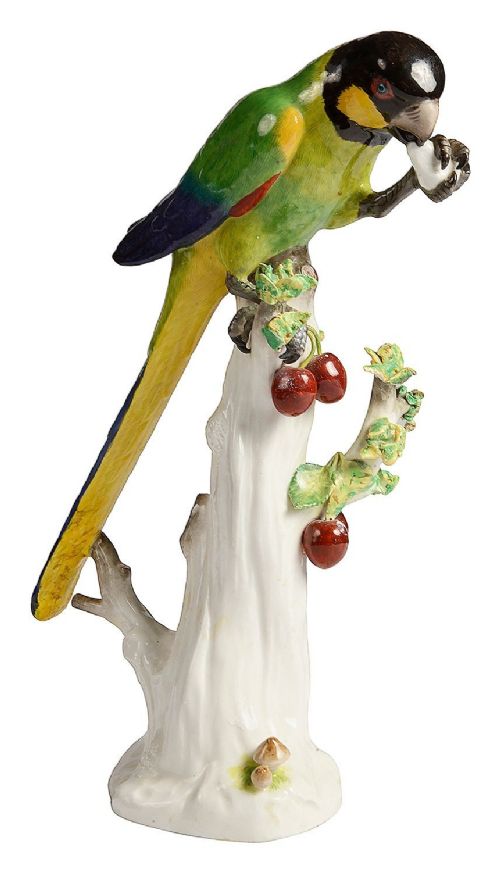
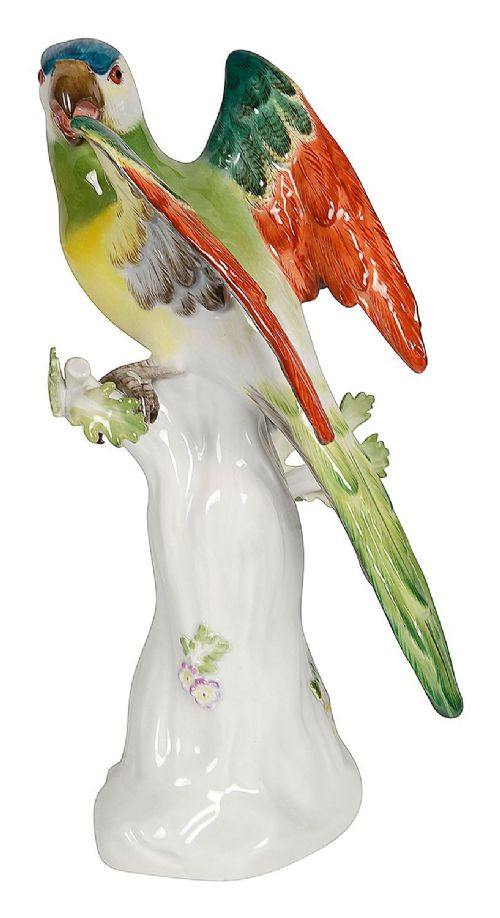
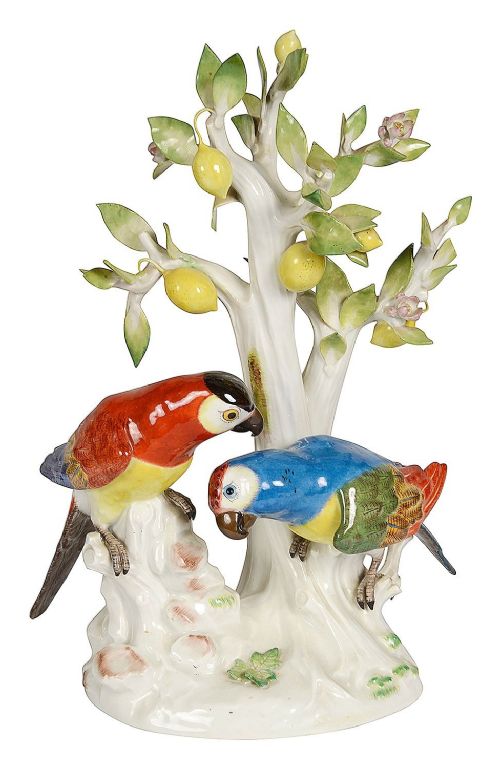
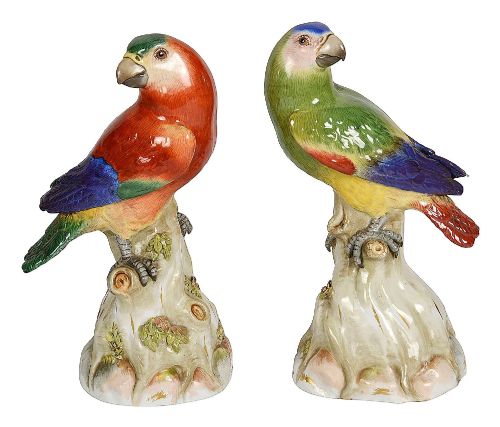
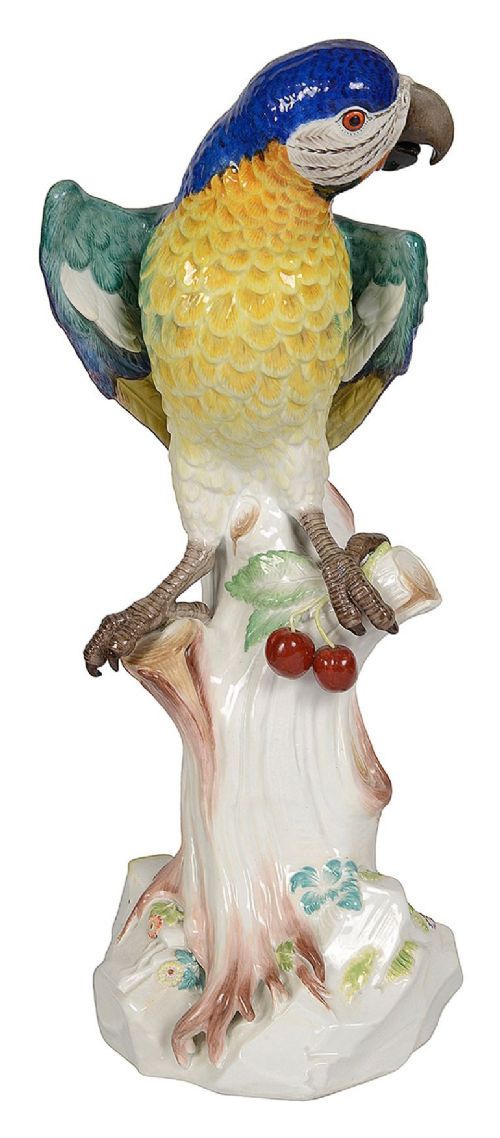
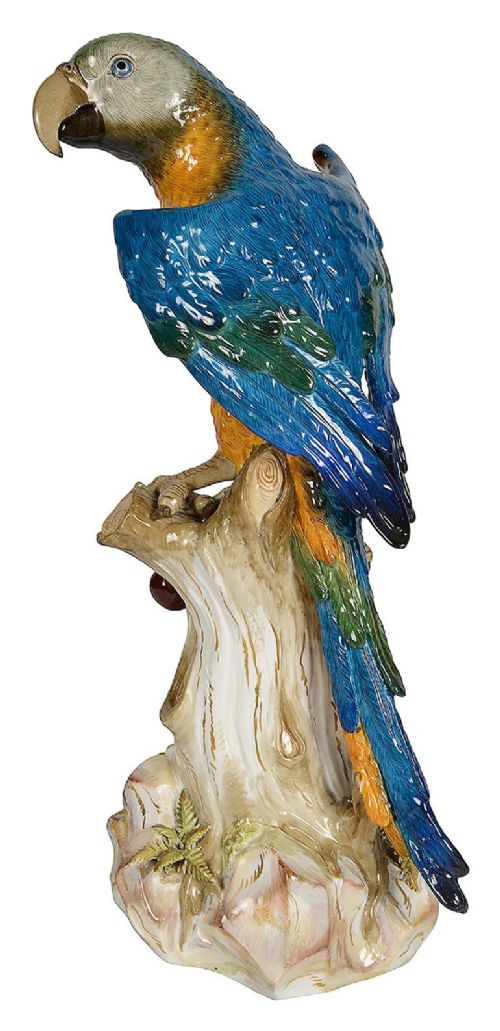
Meissen porcelain birds appear as three-dimensional figures and decorated tableware from the nineteenth century. The sculptural pieces range from parrots and cockatoos to hoopoes and pairs perched on tree trunks or mounted in ormolu candelabra.
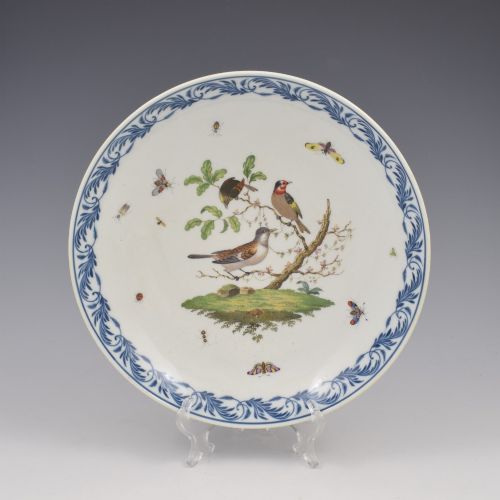
Tableware forms also feature ornithological subjects. The selection includes reticulated plates, dessert dishes, platters, bowls, jugs, and coffee cups painted with exotic birds and insects.
Victorian and Rococo Revival styles dominate the pieces on this page, reflecting the nineteenth-century German taste for elaborate decorative porcelain. Figures vary from single specimens to imposing pairs standing over forty centimetres tall.
Assessing quality
Quality rests in the precision of the hand-painting and the naturalism of the modelled form. Stronger pieces show careful layering of enamel colours and fine detailing in feathers and foliage.
Scale and complexity also divide the range. Larger figures, paired groups, and items featuring intricate reticulation or ormolu mounts require greater technical skill than standard tableware plates.
Bird subjects span sculptural parrots, cockatoos, and hoopoes alongside hand-painted ornithological dessert dishes and cups.
Meissen
The Meissen Porcelain Birds Glossary
- Hard-paste porcelain
- A dense ceramic material fired at high temperatures, composed of kaolin and petuntse. It provides the durable white body characteristic of Meissen figures and plates.
- Overglaze enamel
- Coloured glass decoration applied on top of a fired glaze and fixed with a secondary, lower-temperature firing. This technique allows for brilliant multi-coloured plumage.
- Reticulated plate
- A ceramic plate featuring an openwork border pierced in geometric or floral patterns. These plates often frame central hand-painted bird studies.
- Ormolu
- Gilt-bronze mounts applied to decorative objects. Nineteenth-century makers occasionally combined porcelain bird figures with these metal fittings for candelabra.
Meissen Porcelain Birds: Frequently Asked Questions
How do I identify Meissen bird figures?
Meissen bird figures from the nineteenth century are typically modelled as parrots, cockatoos, or hoopoes perched on tree trunks, often marked with the factory's crossed swords.
The modelling style reflects Rococo Revival and Victorian aesthetics, pairing naturalistic feather textures with vibrant enamel colours and gilt accents.
Were these porcelain birds meant for display?
Sculptural parrot and cockatoo figures were produced purely as decorative ornaments for nineteenth-century interiors. Larger examples and pairs stood on mantelpieces or cabinets.
Plates, dessert dishes, and bowls served a dual purpose for dining and display, featuring hand-painted ornithological studies framed by gilt or reticulated borders.
What is the difference between Meissen figures and plates?
Figures are three-dimensional hard-paste porcelain sculptures modelled as birds, sometimes mounted in ormolu candelabra. They focus on form, posture, and coloured enamel plumage.
Plates and platters are flat or shallow vessels that use the ceramic surface as a canvas for hand-painted bird and insect scenes, often combined with relief moulding.
How should I care for antique Meissen porcelain?
Handle porcelain figures and plates carefully, supporting the base rather than delicate projecting parts like beaks, tails, or ormolu mounts. Dust gently with a soft, dry brush.
Keep pieces away from direct sunlight to preserve the vibrant overglaze enamel colours and gold leaf highlights over time.