



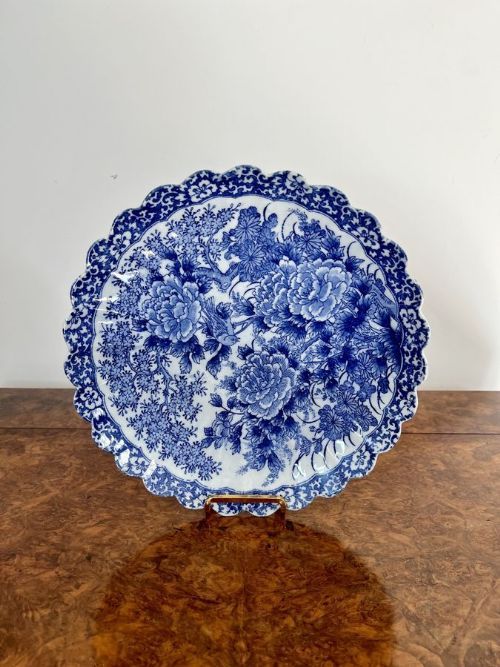
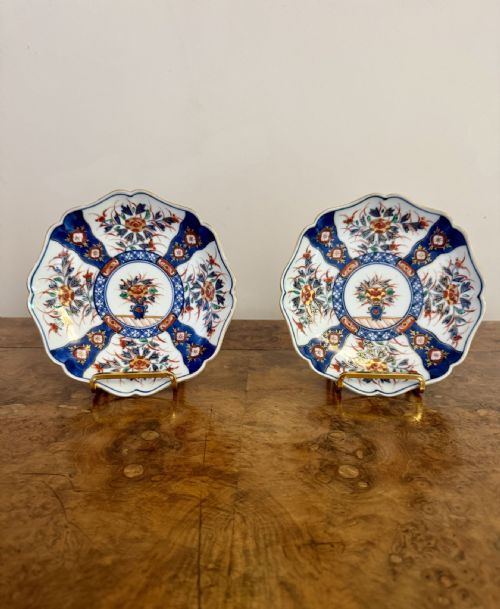


Meiji Style Imari Charger
A meiji style imari charger brings bold palettes of cobalt underglaze and enamel to large decorative ceramic plates.
Meiji Style Imari Charger
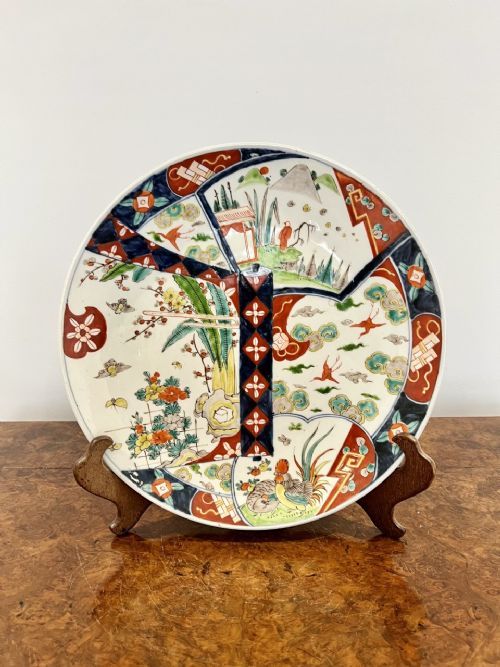
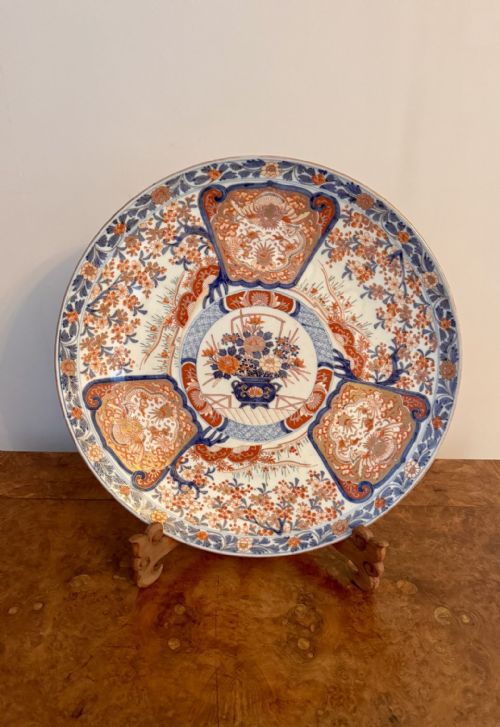
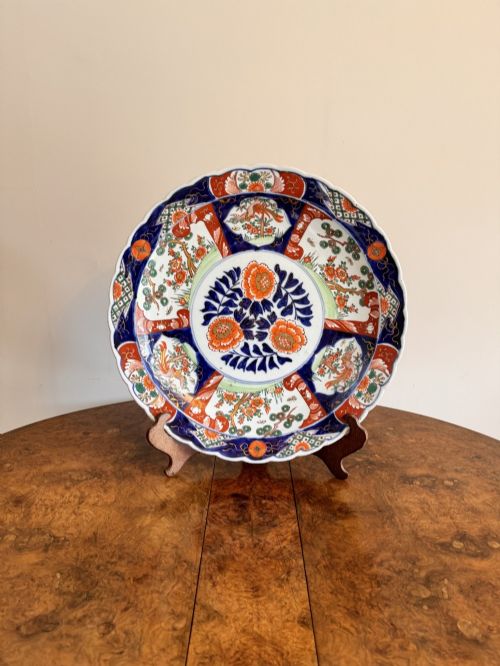
When you search for a meiji style imari charger, you encounter large decorative porcelain plates and chargers originating from Japan during periods such as the nineteenth century, Victorian era, nineteen hundred, and nineteen twenty. These pieces take various forms including scallop edge bowls, oval plates, and platters alongside standard circular chargers.
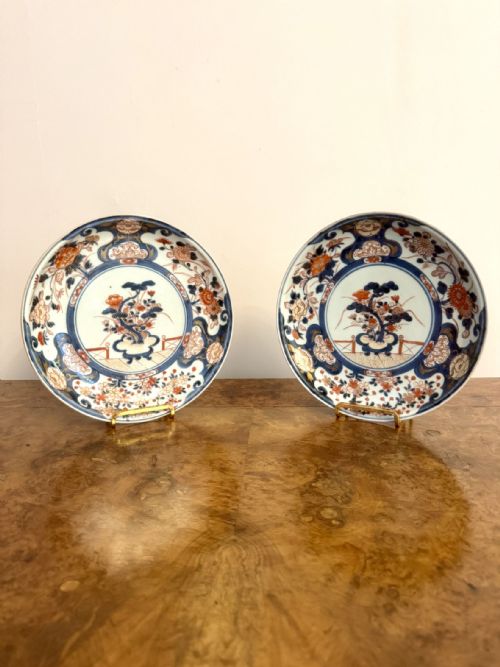
The objects displayed on this page show the distinct aesthetic of Japanese Imari and Japanese Edo or Meiji styles. Buyers find single chargers, matched pairs, and varied decorative plates created for display and ornamental use.
How They Were Made
These items are constructed from porcelain and ceramic materials, shaped into chargers, plates, and bowls with traditional forms like scalloped edges. Artisans applied cobalt underglaze and enamel pigments directly onto the ceramic body to build the characteristic dense surface patterns.
Makers integrated gold leaf, gilt, and glaze enhancements to highlight specific details within the painted compositions. Hand painted techniques dominate the inventory, combining metallic leaf accents with rich cobalt glazes.
Meiji Style Imari Charger Retail Price Guide 2026
Typical asking prices for meiji style imari charger among the pieces listed under this phrase on Sellingantiques today, from the lower quarter to the upper quarter. They describe what is for sale here now, not the wider market.
Some nineteenth century artisans were so confident in their brushwork they added undulating scallop edges that stubbornly refused to stay round.
What Varies in Quality
The standard of a meiji style imari charger rests on the precision of the hand painting and the depth of the cobalt underglaze. Superior examples display crisp definition in the enamel work and generous application of gold leaf or gilt.
Forming techniques also differentiate the pieces, with unusual shapes like oval bodies and scalloped edges requiring greater skill in ceramic moulding. The richness of the glaze and the clarity of the porcelain determine the standing of each individual plate.
The Meiji Style Imari Charger Glossary
- Charger
- A large decorative plate traditionally utilised for display rather than dining. These substantial ceramic pieces form the centrepiece of many collections.
- Cobalt Underglaze
- A blue pigment applied to the raw ceramic body before firing and glazing. This technique ensures the colour remains permanent beneath the clear outer glaze.
- Enamel
- Opaque glass-like coloured paints applied over the fired glaze and refired at a lower temperature. This method adds vibrant red and secondary hues to the design.
- Gilt
- A thin layer of gold or gold-coloured material applied to the surface of the ceramic. It provides decorative highlights that catch the light.
- Scallop Edge
- A decorative border shaped into a series of flowing curves resembling a scallop shell. This shaping appears frequently on plates and bowls in the inventory.
Meiji Style Imari Charger: Frequently Asked Questions
How do I display an imari charger?
These large plates suit placement on dedicated stands, wooden brackets, or secure wall mounts. Their prominent scale makes them effective focal points in a room.
Ensure the mounting hardware supports the weight of the porcelain safely. Keep them away from areas of heavy foot traffic to prevent accidental knocks.
Are these chargers safe for food?
Antique decorative pieces function primarily as ornamental items rather than tableware. The enamel and gilt surfaces may sustain damage from cutlery and repeated washing.
Enjoy them visually as works of ceramic art rather than utilising them for serving meals. Hand washing with mild soap suffices if dust accumulates.
What defines the Meiji period style?
The Meiji era encompasses Japanese craftsmanship produced during the late nineteenth and early twentieth centuries. This aesthetic builds on earlier Edo traditions while incorporating intricate detailing for export markets.
The style relies on dense cobalt blue and enamel palettes combined with gilt highlights. Plates from this era showcase the high skill of Japanese ceramic artists.
How are pairs matched?
Matched pairs share identical dimensions, moulding styles, and painted decorative motifs. Artisans created them together to adorn symmetrical spaces in a home.
Inspect the brushwork and edge shapes to verify their pairing. Minor variations in hand painted details remain normal for authentic antique items.