





Meiji Porcelain Display Dish
A meiji porcelain display dish brings intricate hand-painted detail and rich cobalt blue tones into any room.

Meiji Porcelain Display Dish
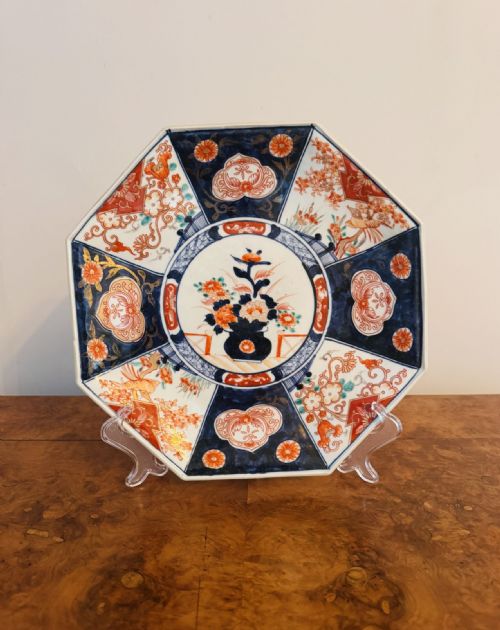
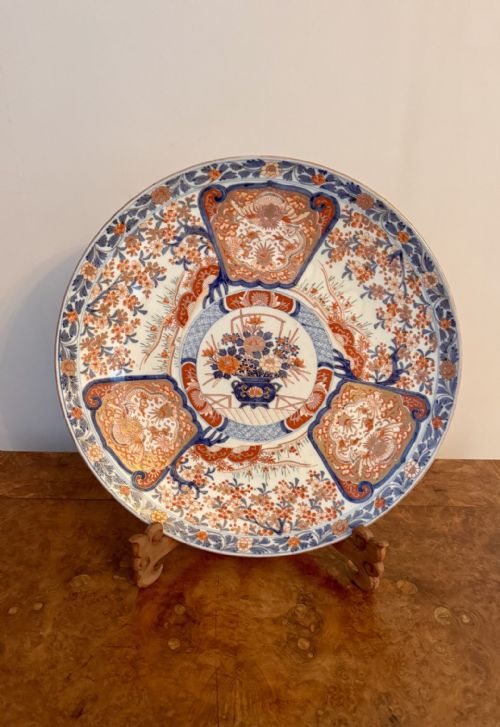
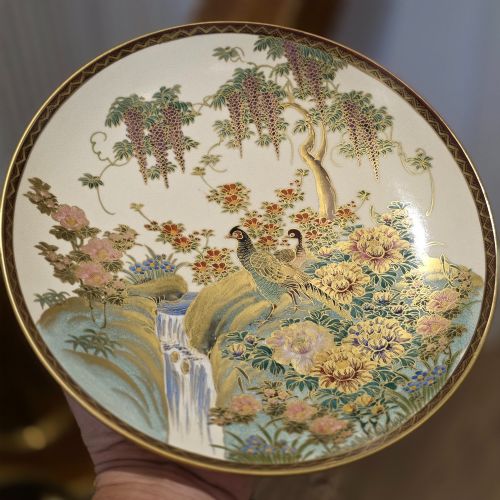
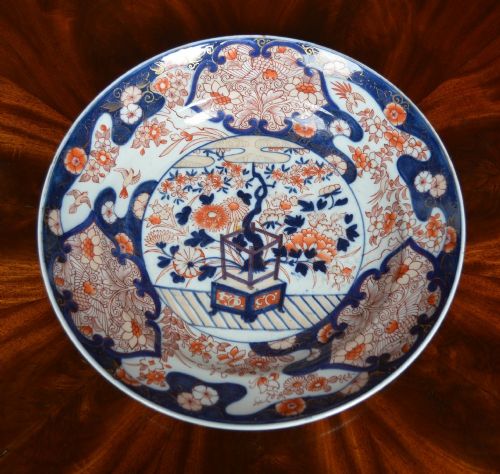
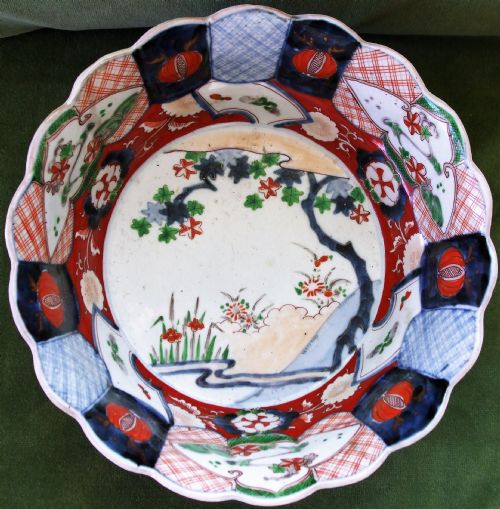
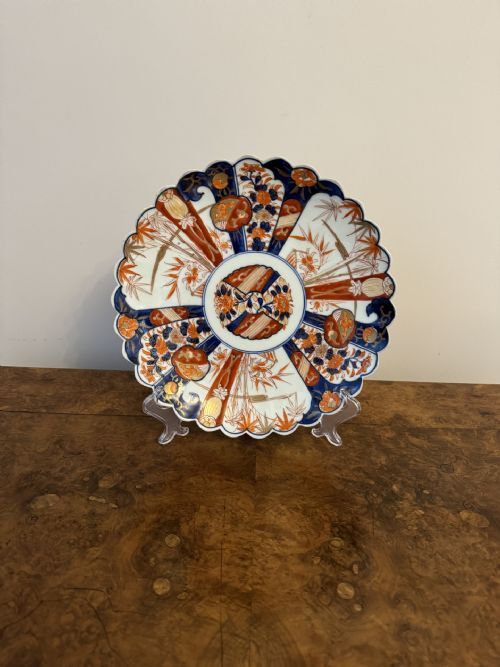
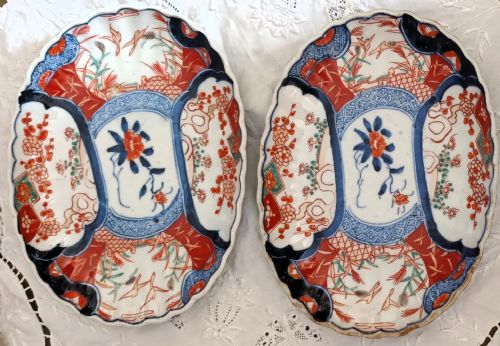
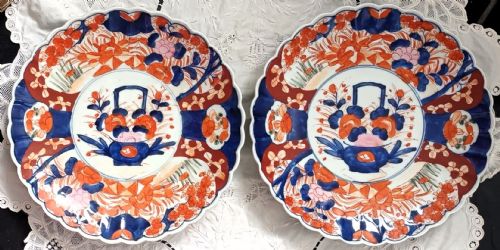
When you search for a meiji porcelain display dish, you encounter decorative plates, chargers, and bowls originating from Japan during the late nineteenth and early twentieth centuries. These items served primarily for visual display rather than dining, often featuring elaborate hand-painted motifs of floral patterns, birds, and deities.
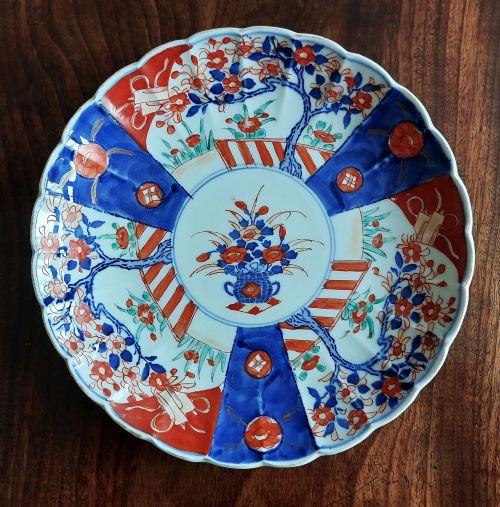
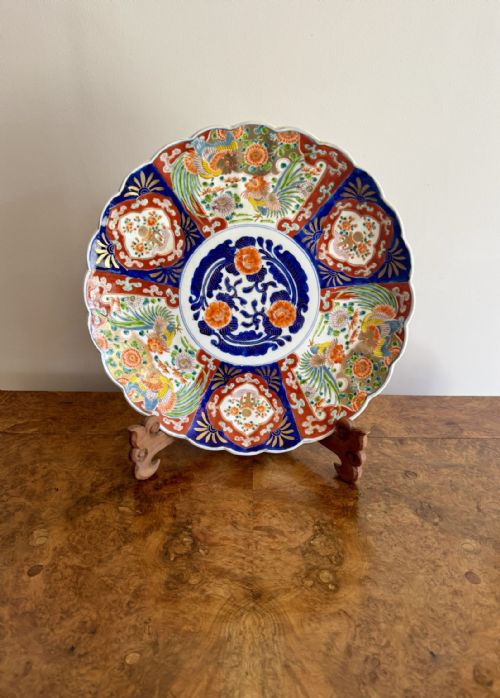
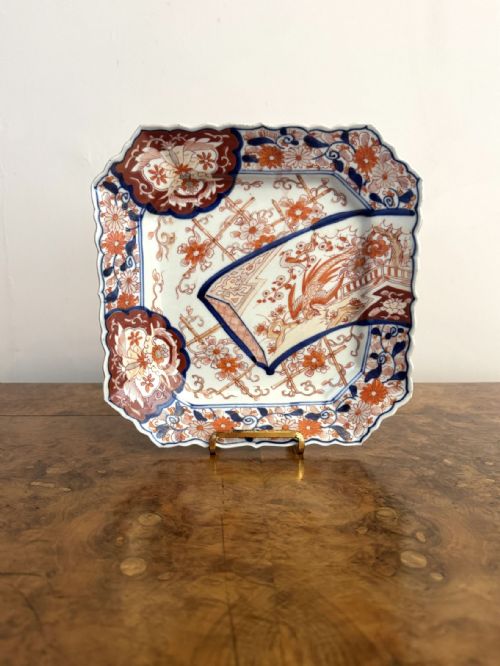
The most common examples on this page belong to the Japanese Imari style, characterised by deep blue and iron red pigments supplemented with gilt details. Pieces range from standard circular plates to scalloped edge dishes, square plates, and large wall chargers.
Dating spans from the mid nineteenth century through to the early twentieth century, encompassing the Meiji period and extending into the Taisho era. Collectors find both single items and matched pairs or larger sets.
How they were made
Potters shaped fine porcelain clay into plates and chargers, often incorporating moulded elements such as scalloped edges, hexagonal walls, or square corners before the initial firing. Artisans then applied underglaze cobalt blue followed by enamel colours and gold leaf highlights.
Specialised workshops employed meticulous hand-painting techniques to render complex scenes of exotic birds, floral arrangements, and the Seven Lucky Gods. Subsequent lower-temperature firings fused the enamel pigments and gilding to the glazed porcelain surface.
Several plates depict exotic birds observing daily scenes, adding a permanent touch of avian curiosity to the sideboard.
What varies in quality
The skill of the hand-painted brushwork dictates visual distinction, separating mass-produced export wares from pieces executed by master artists. Precision in the alignment of cobalt underglaze lines with overlying enamel colours determines the clarity of the design.
Preservation of the original gilding and enamel integrity over decades of handling influences desirability. The weight of the porcelain body, the symmetry of moulded scalloped edges, and the presence of artist signatures indicate superior production standards.
Koshida·Gyokkō·Kozan
The Meiji Porcelain Display Dish Glossary
- Imari
- A traditional Japanese porcelain style originating from the port of Arita, known for a palette dominated by cobalt blue, iron red, and gold. These pieces were heavily exported to Europe during the Meiji period.
- Charger
- A large decorative plate intended for display on a wall or sideboard rather than for serving food. Chargers often measure significantly wider than standard dining plates.
- Gilding
- The application of gold leaf or powdered gold paint to the surface of porcelain. This technique accents specific details within the painted design.
- Scalloped edge
- A decorative rim shaped into a series of flowing curves resembling a scallop shell. This shaping is frequently found on Meiji period display dishes.
- Satsuma
- A type of Japanese earthenware or porcelain with a crackle-glaze finish and intricate polychrome enamel and gilt decoration. Signed pieces from this tradition are sought after by collectors.
Meiji Porcelain Display Dish: Frequently Asked Questions
How do I display these dishes safely?
Display chargers and large plates using sturdy wall hangers designed for heavy ceramics or secure them in cabinets on dedicated plate stands.
Position pieces away from direct sunlight and areas of high foot traffic to protect the enamel and gilt surfaces from accidental impact.
Are these dishes meant for food use?
These items function primarily as decorative display dishes rather than functional tableware. Historic enamels and surface gilding can degrade when exposed to acidic foods or frequent washing.
Clean pieces gently with a dry or slightly damp soft cloth instead of submerging them in water or placing them in a dishwasher.
What period do these pieces date from?
Most items originate from the Meiji period, spanning from the late nineteenth century to the early twentieth century. Some examples extend slightly earlier into the nineteenth century or later into the Taisho era.
Stylistic cues, potting techniques, and export markers help determine the precise era of manufacture.