


Gilt Japanese Charger Plate
These gilt japanese charger plate examples bring rich nineteenth and early twentieth century export artistry directly to your walls and cabinets.

Gilt Japanese Charger Plate
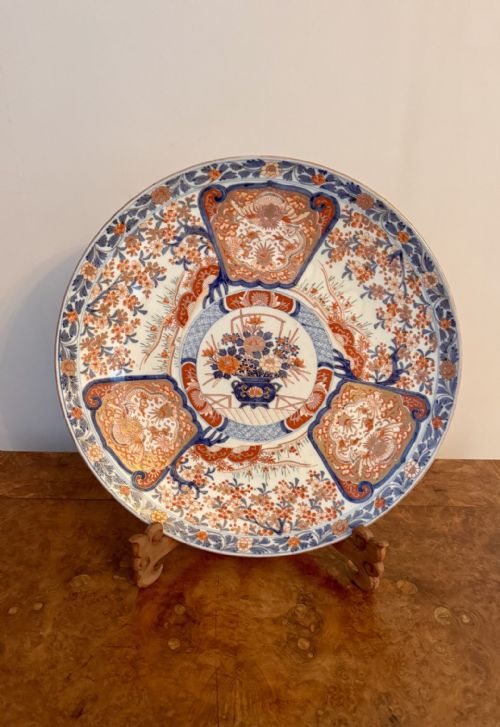
A gilt japanese charger plate sits as a large decorative centrepiece, often measuring considerably larger than standard dining service. The selection here leans heavily towards traditional Japanese Imari patterns alongside Kutani and Satsuma wares, spanning the Meiji period up to the early twentieth century.
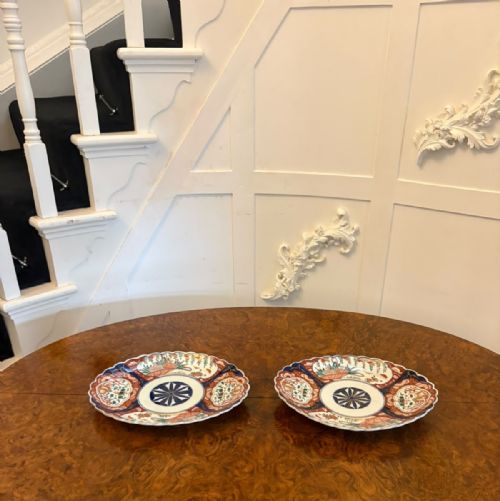
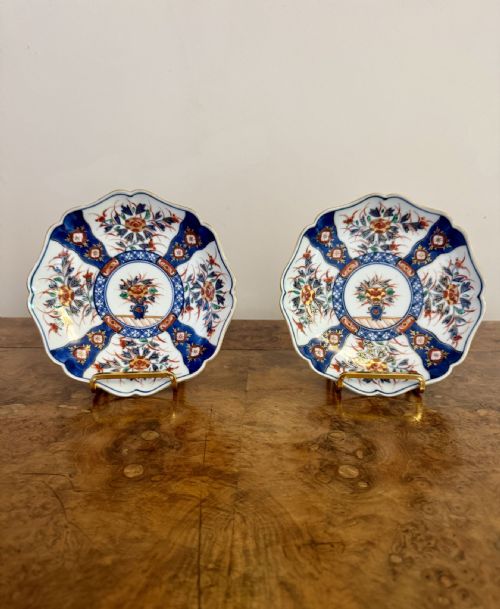
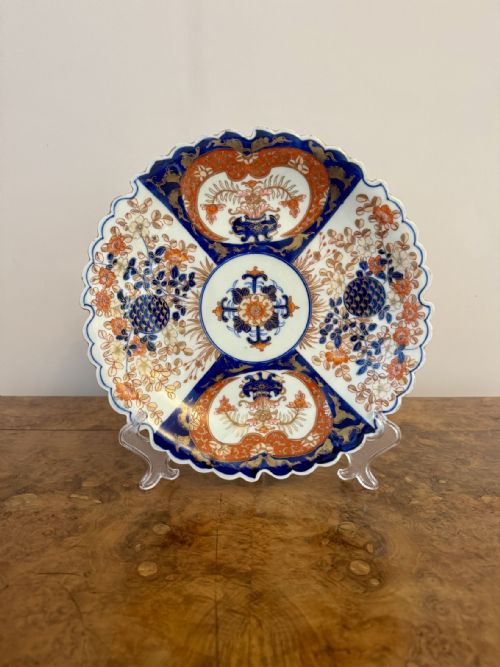
Most examples take the form of broad porcelain plates or shallow bowls designed primarily for display rather than utility. You encounter round and oval configurations, frequently featuring intricate hand-painted motifs enhanced with gold leaf and enamel highlights.
The historical spread reaches from the nineteenth century into the 1920s, capturing the height of Japanese export porcelain production for Western interiors. These substantial dishes bring dense cobalt underglaze and vibrant polychrome palettes into domestic spaces.
Materials and construction
Potters and ceramicists shaped these large vessels from fine porcelain and earthenware, firing the clay bodies to achieve durable foundations for decoration. Artisans then applied cobalt underglaze details before the initial glaze firing.
The distinctive surface richness relies on hand-painted enamels combined with gold leaf or gilt detailing added over the glaze. Subsequent lower-temperature firings fixed these metallic and coloured pigments securely to the ceramic surface.
Current listings demonstrate a concentration of nineteenth-century Japanese porcelain, featuring Imari and Kutani styles alongside Meiji period production dates.
Evaluating craftsmanship and artistry
The distinction between standard export wares and superior pieces rests in the precision of the hand painting and the complexity of the composition. Denser multi-figure scenes and crisper brushwork separate masterwork productions from simpler decorative items.
The application and preservation of the gold leaf or gilt accents also define the upper tier of quality. Intact metallic highlights and balanced polychrome palettes indicate greater skill in both the original execution and the subsequent care of the object.
Meizan mark
The Gilt Japanese Charger Plate Glossary
- Charger
- A large decorative plate or platter traditionally utilised for display rather than for serving food at the table. These substantial pieces anchor wall displays or cabinet arrangements.
- Imari
- A traditional style of Japanese export porcelain originating from the town of Arita, characterised by a distinctive palette of cobalt blue, iron red, and abundant gold. This aesthetic dominated late nineteenth-century production.
- Meiji
- The historical period spanning from 1868 to 1912, marking an era of intense artistic export and technical refinement in Japanese ceramics. Pieces from this era often display exceptional decorative ambition.
- Kutani
- A style of Japanese porcelain known for bold colours and intricate pictorial designs, frequently incorporating extensive gilt work. These wares often feature detailed figurative or natural scenes.
- Cobalt Underglaze
- A blue pigment applied to the raw ceramic body before glazing and firing, creating permanent decoration beneath the glossy surface layer. This technique provides the stable deep blue foundation seen on many export plates.
Gilt Japanese Charger Plate: Frequently Asked Questions
How do I hang a heavy charger safely?
Large export porcelain plates require specialised spring-loaded wall hangers that distribute the weight evenly across the rim. Ensure the fixing matches the substantial mass of these nineteenth-century ceramics.
Avoid wire-only solutions that lack proper tension or structural support for plates exceeding fifty centimetres in diameter.
Can I use these plates for serving food?
Historic export chargers are intended strictly for decorative display rather than culinary use. The delicate enamel and gilt surfaces can wear or react poorly to modern foodstuffs and cutlery.
Keep these ceramic pieces safely positioned in cabinets or mounted securely on walls to preserve their hand-painted finishes.
How do I date a Meiji period plate?
Dating relies on examining the ceramic body weight, the style of the cobalt underglaze, and any visible studio marks on the reverse. Meiji pieces often combine traditional Japanese motifs with manufacturing techniques adapted for Western export markets.
Comparing the specific palette and edge scalloping against documented nineteenth-century examples helps narrow the production window.
What is the difference between Imari and Kutani?
Imari wares typically rely on a tripartite colour scheme of underglaze blue, iron red, and gold, featuring structured geometric and floral panels. Kutani pieces lean towards broader pictorial narratives and heavier multi-figure scenes.
Both styles utilise extensive gilding, but their compositional layouts and primary colour densities remain distinct.