


Meiji Period Satsuma Pottery
Meiji period satsuma pottery brings together intricate hand-painted earthenware and gold leaf created in nineteenth-century Japan.
Meiji Period Satsuma Pottery
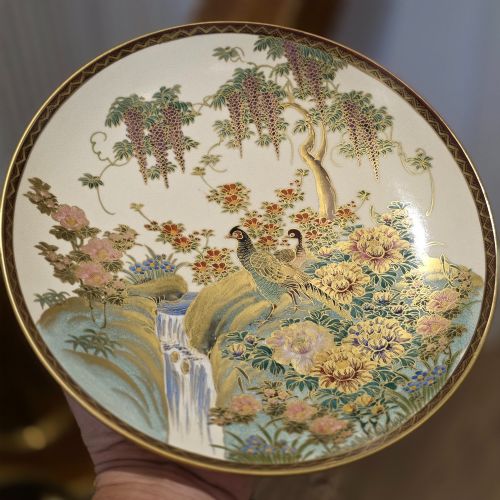
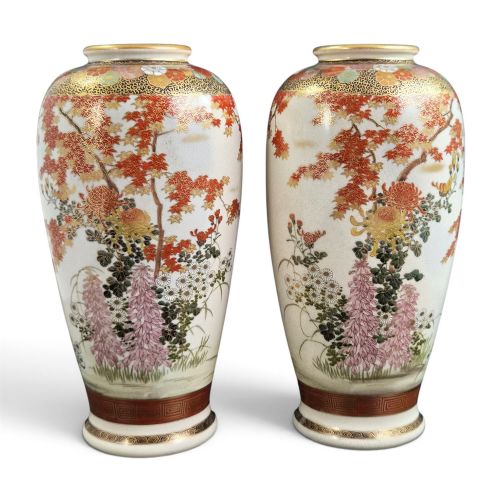
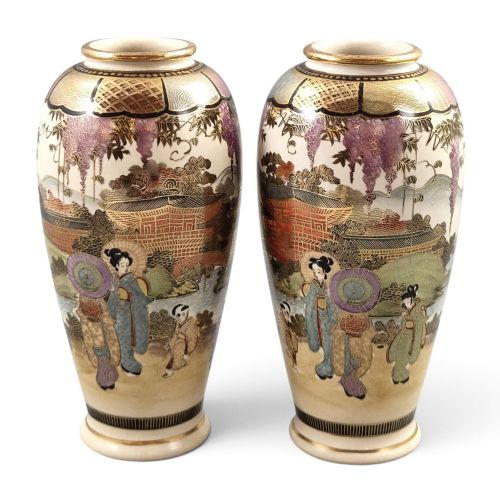
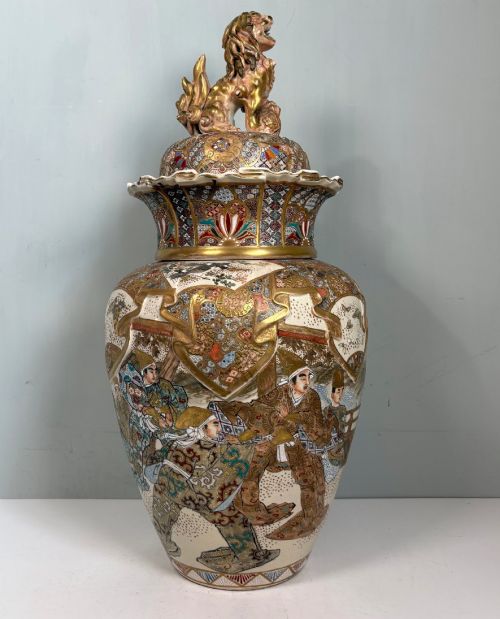
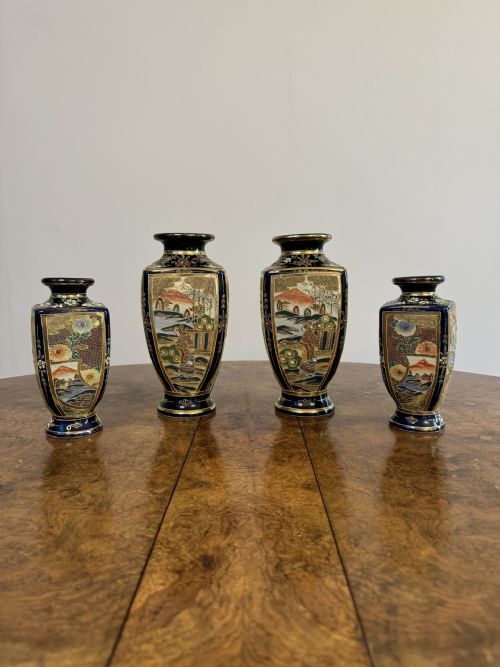
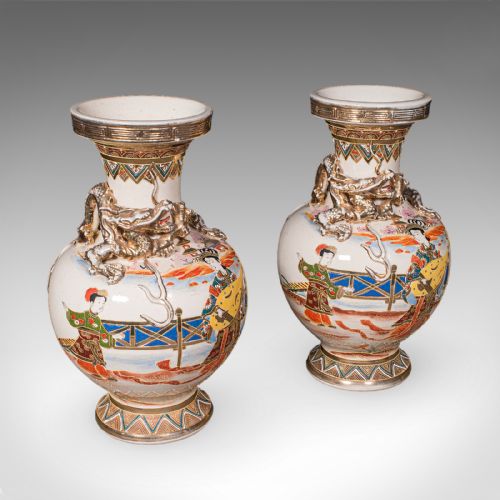
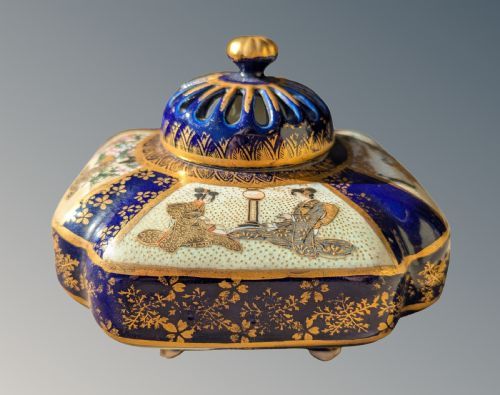
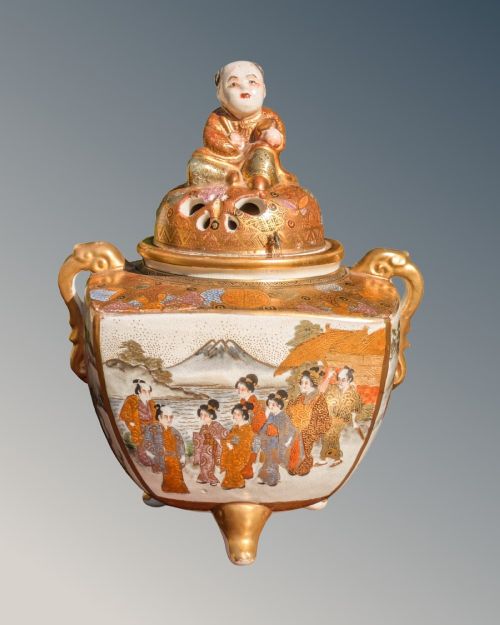
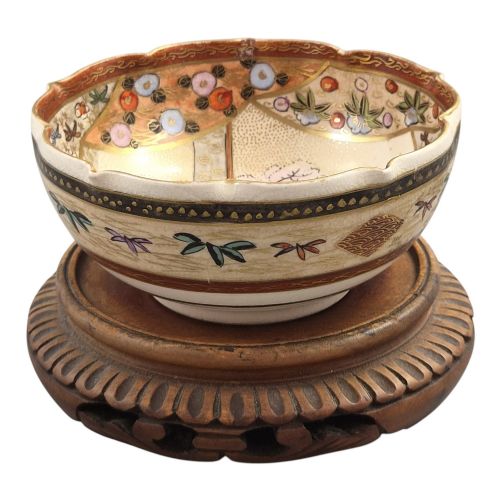
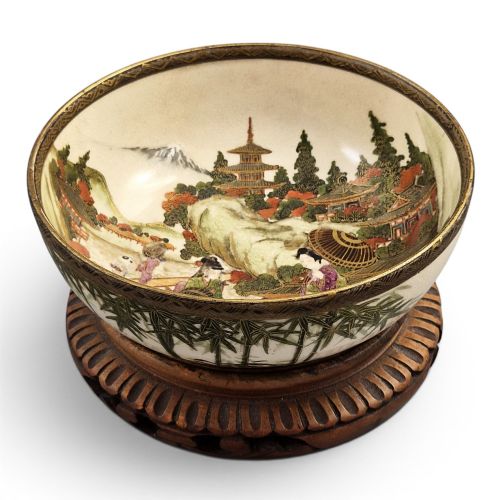
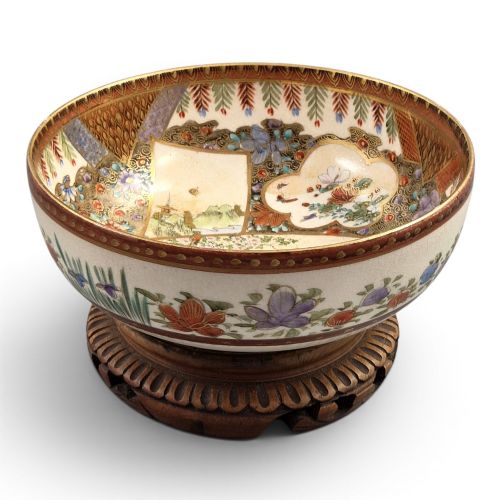
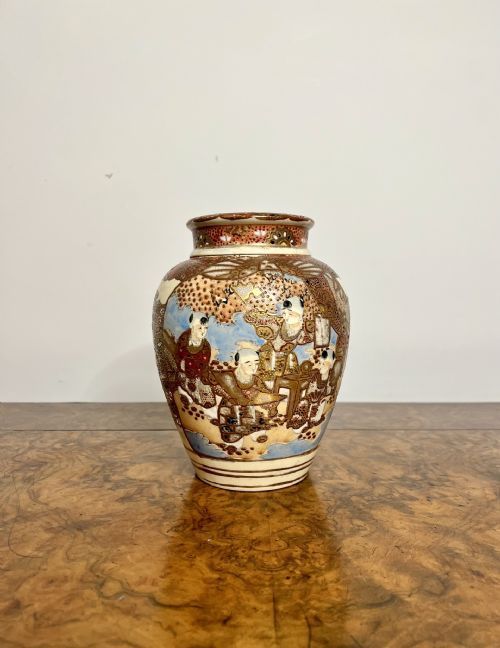
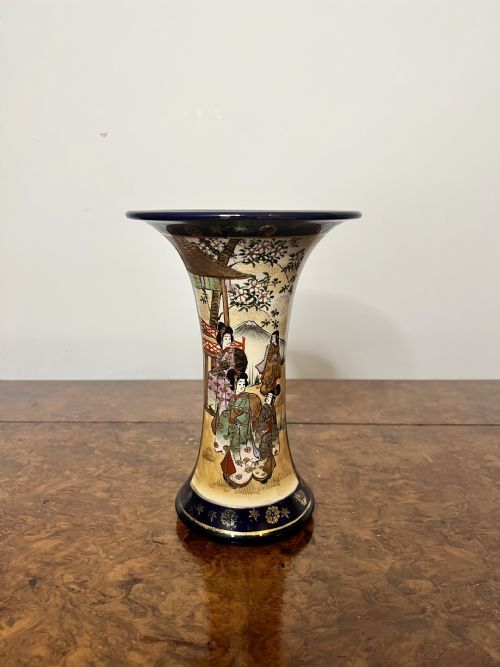
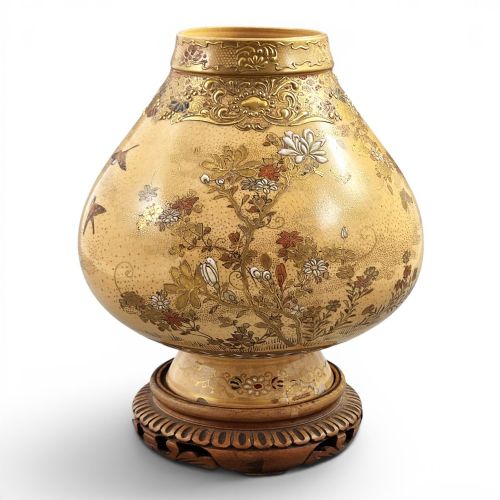
Meiji period satsuma pottery comprises decorative vessels, bowls, boxes, and figures originating from Japan during the late nineteenth and early twentieth centuries. These objects display distinct regional styles, particularly from Kyoto, and frequently depict court figures, processions, deities, and natural scenes such as flowers and birds. A buyer exploring this selection encounters items ranging from small miniature vases and tea caddies to large garniture sets and ceremonial incense burners.
The majority of pieces date from the nineteenth century through the early twentieth century, spanning the Meiji and into the Meiji-Taisho transition periods. Common functional and decorative forms include baluster vases, ginger jars, okimono, and shallow dishes. Collectors often find works marked by renowned workshops or individual artists who shaped the character of Japanese ceramic export art during this era.
Materials and Construction
Makers formed these pieces using earthenware, which provided a porous, cream-coloured ceramic body suited to detailed surface decoration. Artisans then applied crackle glaze over the pottery body, creating a network of fine lines across the surface before painting.
The decoration relied heavily on enamel paints, gold leaf, gilt, and raised moriage details. Painters worked intricate scenes of figures and foliage onto the glazed earthenware, often highlighting specific areas with heavy gilding and gold leaf.
Listings feature items spanning the nineteenth century through the 1920s, utilising earthenware, enamel, gold leaf, and wood.
Factors That Separate Quality
Quality in these ceramics depends upon the precision and complexity of the enamel work and gilt detailing. Pieces originating from prominent Kyoto workshops or bearing the signatures of established makers display superior execution in facial expressions, garment patterns, and compositional layout.
The density and skill of the painting also dictate the standing of a piece within the range. Finely detailed depictions involving numerous arhats, thousand butterflies, or elaborate court processions require advanced technical control compared to simpler floral motifs.
Kinkozan Workshop·Koshida·Shozan·Kizan·Kozan·Hotoda·Toshozan·Makuzu Kozan II·Ryuzan·Chosei·Nanzan·Kikkoen·Ryokuzan·Chikuzan·Zenkozan·Kanzan·Hozan·Ryozan Okamoto
The Meiji Period Satsuma Pottery Glossary
- Moriage
- A decorative technique using slip applied in raised dots or lines to create a tactile, three-dimensional effect beneath the glaze and enamel. This method frequently accentuates robes and architectural details on figural vessels.
- Koro
- A traditional Japanese incense burner, often supported on three feet and fitted with a pierced cover. These items frequently incorporate guardian lion figures or intricate pierced work.
- Okimono
- A small decorative carving or figurine intended for display in an alcove or on a shelf. These objects portray deities, historical figures, or animals.
- Natsume
- A small tea caddy traditionally used in Japanese tea ceremonies. The form is named after its resemblance to the fruit of the jujube tree.
- Garniture
- A set of matching vases or vessels designed to be displayed together as an ornamental grouping. These sets typically consist of three or more coordinated pieces.
Meiji Period Satsuma Pottery: Frequently Asked Questions
What is satsuma pottery?
Satsuma pottery is a type of Japanese earthenware featuring a distinctive crackle glaze and elaborate hand-painted enamel and gilt decoration. Originating in Satsuma Province, production later expanded significantly to urban centres like Kyoto during the Meiji period.
These pieces were largely produced for export and international exhibition, combining traditional Japanese iconography with Western decorative preferences of the late nineteenth century.
How do I identify a Meiji period piece?
Meiji period pieces can be identified through a combination of stylistic markers, manufacturing techniques, and artist signatures. The era spans the late nineteenth and early twentieth centuries, a time when Japanese export ceramics reached high levels of intricate detail.
Many higher-quality items feature painted or impressed artist signatures and workshop marks on the base, pointing to specific studios in Kyoto or Tokyo.
How should I care for antique earthenware?
Antique earthenware requires gentle handling due to the porous nature of the ceramic body and the delicate application of surface enamels and gold leaf. Dusting with a soft, dry cloth is sufficient for routine maintenance.
These decorative objects should be kept away from direct moisture, extreme temperature fluctuations, and harsh cleaning agents to preserve the integrity of the glaze and gilding.