



Japanese Satsuma Ceramic Urns
Japanese satsuma ceramic urns bring together intricate earthenware forms and rich gilding, offering collectors a striking glimpse into Meiji and Taisho period craftsmanship.
Japanese Satsuma Ceramic Urns
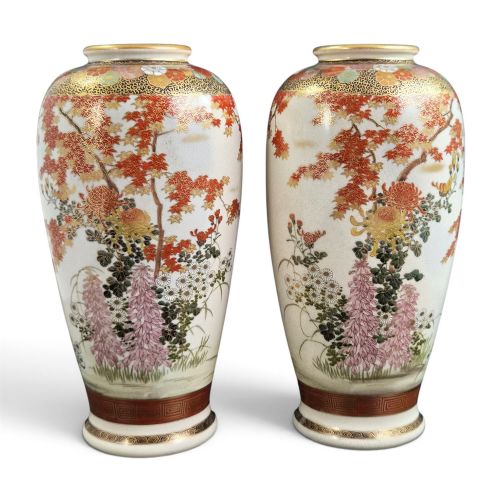
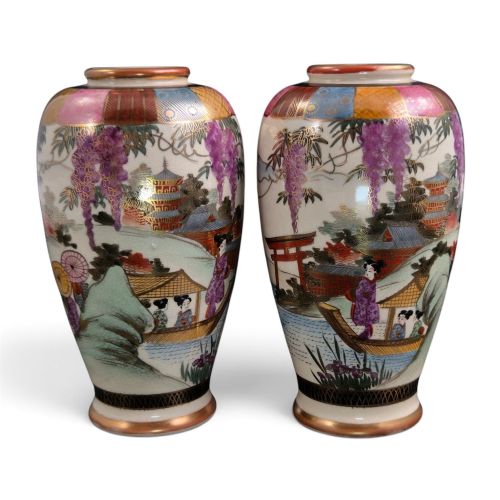
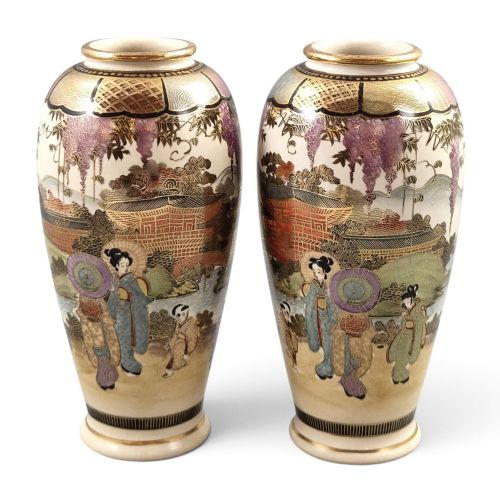
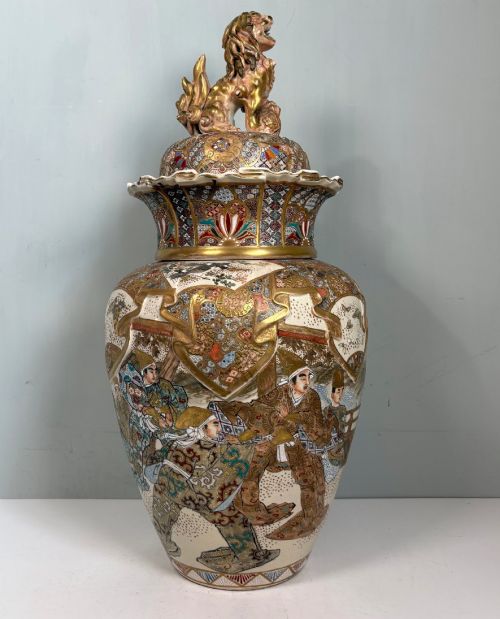
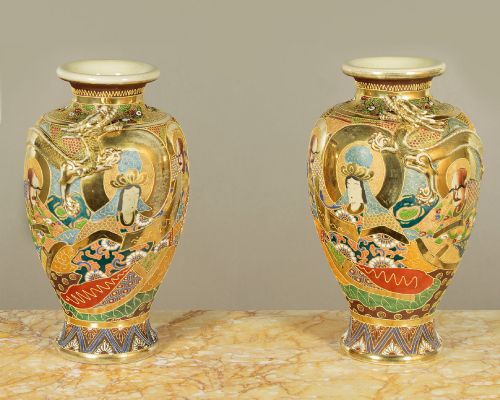
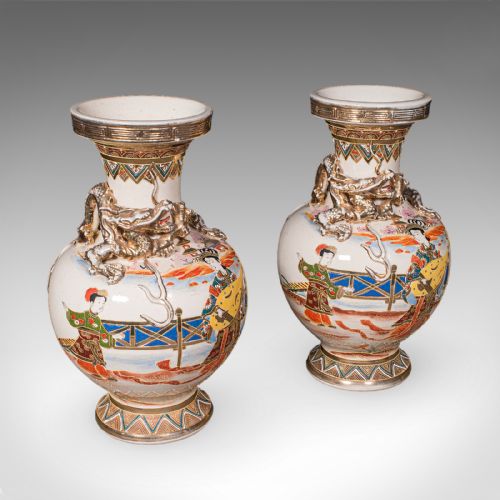
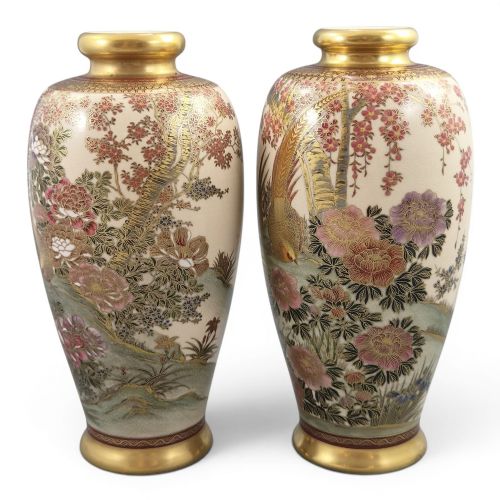
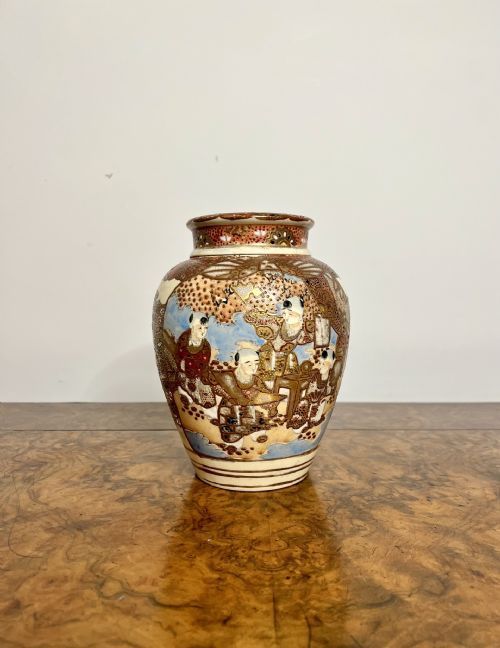
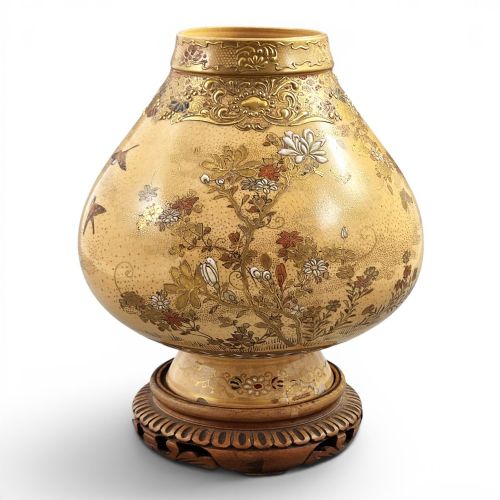
Japanese satsuma ceramic urns encompass lidded jars, ginger jars, and decorative baluster vessels produced primarily during the Meiji, Taisho, and early Showa periods. These pieces frequently feature detailed hand-painted figural scenes, landscapes, and floral motifs rendered in enamel and gold leaf upon a distinctive earthenware body.
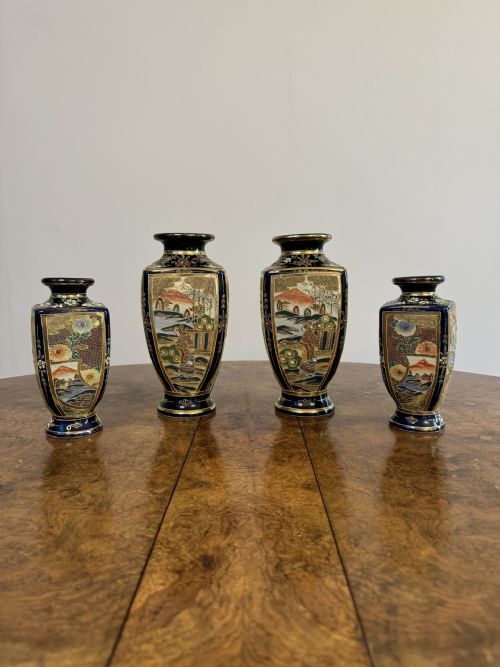
Collectors on this page will most commonly meet pairs of vases and lidded containers originating from workshops in Kyoto and Kobe. Examples range from miniature vessels to monumental garnitures decorated with traditional motifs such as wisteria, butterflies, and processions of arhats.
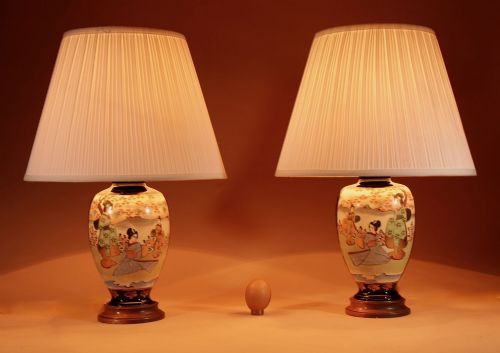
The utility of these ceramics extends from cabinet miniatures to large decorative focal points, occasionally adapted into table lamps during the twentieth century. Their enduring appeal lies in the density of narrative painting and the meticulous application of cobalt grounds and moriage relief.
How japanese satsuma ceramic urns were made
Makers utilised a porous, cream-coloured earthenware body covered with a finely crackled transparent glaze that created a stable canvas for subsequent enamel painting. Artisans then built up complex compositions using mineral pigments alongside abundant gold leaf and gilt detailing.
Techniques such as moriage were frequently employed to lay down raised dots and lines of slip, adding tangible texture to robes, dragons, and floral borders before the final firing. Workshops also integrated wood stands and bronze or gilt fittings on specific vessel types and incense burners.
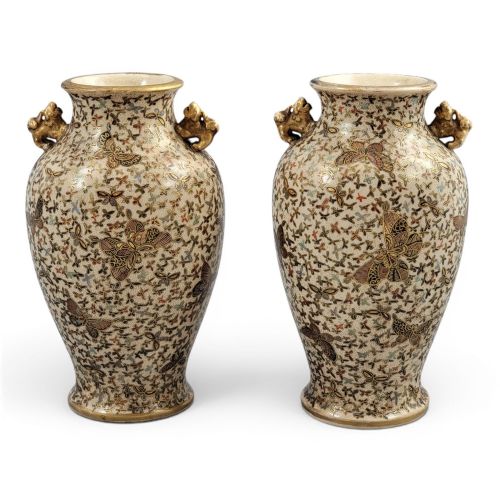
A multitude of tiny painted butterflies covers several surfaces, ensuring these ceramic urns remain permanently populated by gilded insects.
What varies in quality
The standard of painting determines the tier of a piece, distinguishing stiff, repetitive floral fills from fluid, highly individual depictions of court figures and landscapes. Master workshops invested significantly more time in layering facial expressions, minute costume patterns, and precise spatial depth.
The crispness and durability of the gilt and enamel work separate standard export wares from exhibition-quality output bearing recognised signatures from Kyoto or Kobe. Furthermore, the finesse of the underlying ceramic potting and the stability of the crackle glaze dictate overall structural integrity.
Maruni Kobe·Shozan·Manpei·Kinkōzan·Hotoda·Kinzan·Chosei·Nanzan·Seiko-en Chokei·Yamashu·Kizan·Hakusan·Tagawa·Tashiro
The Japanese Satsuma Ceramic Urns Glossary
- Moriage
- A decorative technique using raised slip to create textured relief patterns on ceramic surfaces. This method adds a tactile dimension to robes, foliage, and borders.
- Koro
- A traditional Japanese incense burner typically supported on three or more feet with a pierced lid. These vessels often feature handles and intricate enamel decoration.
- Mon
- A Japanese heraldic badge or crest used to identify families or clans. The Shimazu family crest frequently appears on Satsuma wares produced in Satsuma province and Kyoto.
- Gilt
- A thin application of gold or gold leaf used to highlight outlines, robes, and backgrounds. It provides the characteristic shimmering quality associated with fine Satsuma ceramics.
- Baluster
- A vase form characterised by a bulbous lower body tapering to a narrower neck and flared rim. This classic silhouette provides a stable canvas for narrative landscape scenes.
Japanese Satsuma Ceramic Urns: Frequently Asked Questions
How do I identify Meiji period Satsuma?
Meiji period Satsuma ceramics are generally recognised by their dense enamel painting, extensive use of gold leaf, and finely crackled earthenware glaze. Many pieces from this era bear workshop signatures or artist seals on the base.
Earlier nineteenth-century examples often display more restrained palettes and meticulous brushwork compared to later mass export output. Examining the precision of the figural work helps confirm the production period.
What is the Shimazu mon on these vases?
The Shimazu mon is a crest featuring a cross within a circle, representing the ruling clan of the Satsuma domain. Its presence links the ceramic to the region's historical patronage and production.
While many Kyoto workshops adopted the crest as a traditional decorative motif rather than a strict territorial marker, it remains an important indicator of Satsuma identity.
What does moriage mean on ceramics?
Moriage refers to the raised clay slip applied to the surface before glazing and firing to create a textured, three-dimensional effect. Artisans used this technique to accentuate dragons, robes, and floral elements.
When combined with heavy gilding, moriage catches the light and adds a distinct tactile quality that distinguishes high-relief Satsuma pieces.