





Gold Painted Japanese Pottery
These examples of gold painted japanese pottery bring together intricate earthenware forms and rich gilding from the Meiji and Taisho periods.
Gold Painted Japanese Pottery
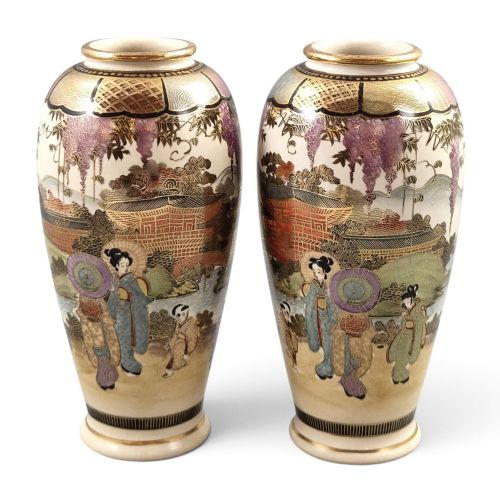
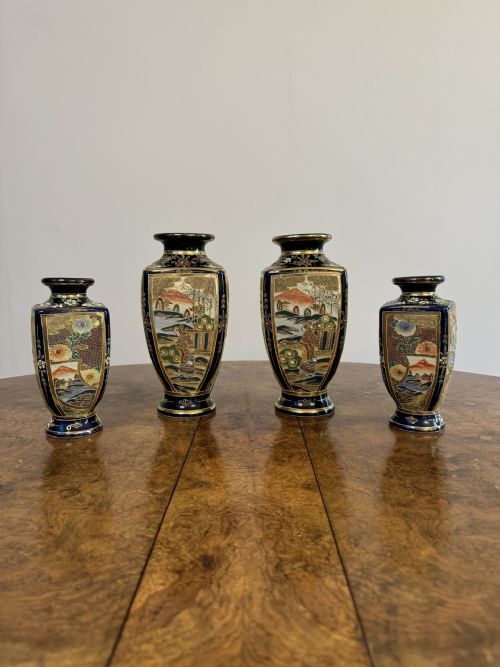
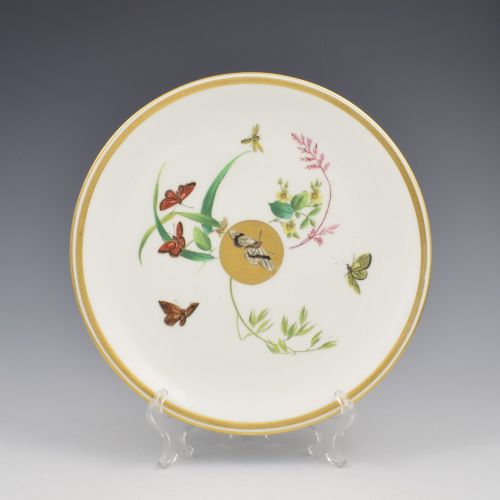
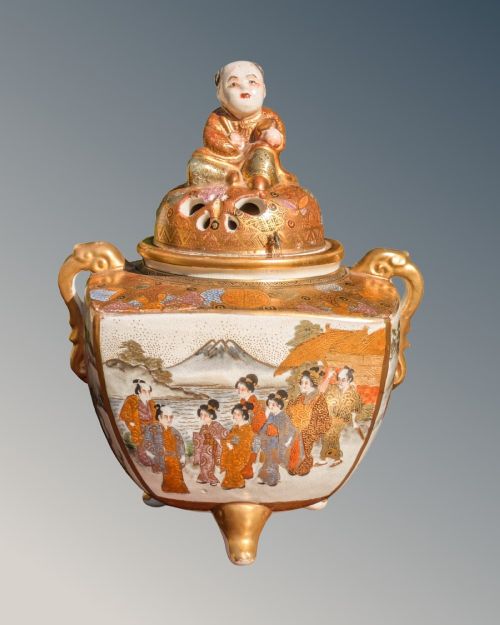
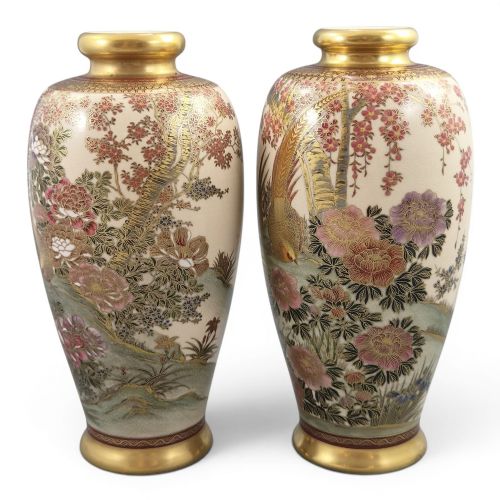
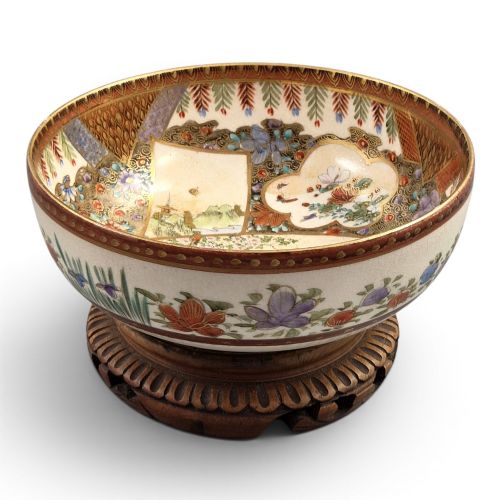
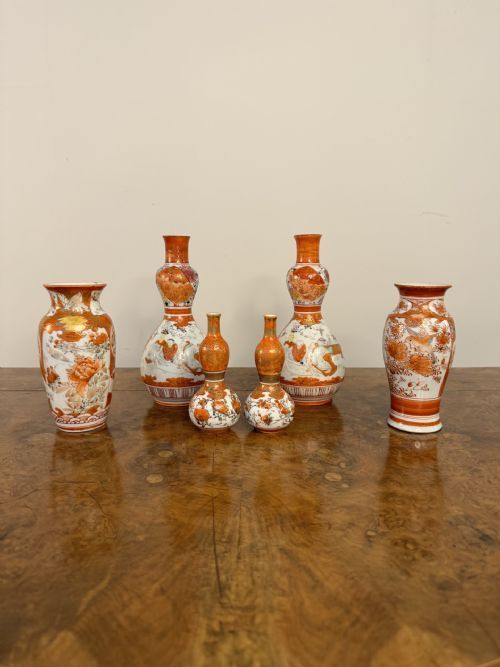
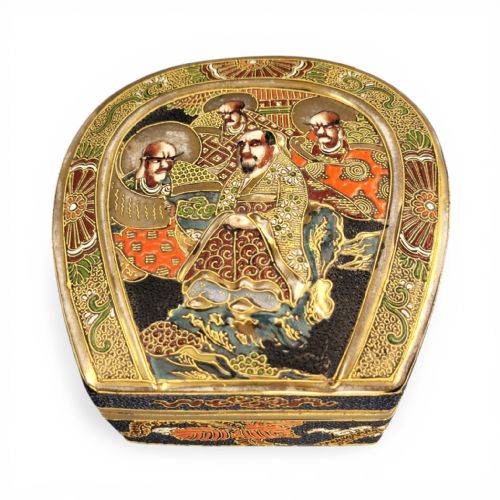
When you search for gold painted japanese pottery, you encounter a selection of earthenware and porcelain objects created primarily during the late nineteenth and early twentieth centuries. The pieces on this page are dominated by Satsuma and Kutani wares, spanning forms such as vases, bowls, incense burners, and cabinet plates.
The aesthetic of these items relies heavily on detailed figurative scenes, floral motifs, and geometric patterns rendered in enamel and gold leaf. Originating from workshops in Kyoto and other key regions, these vessels reflect the intersection of traditional Japanese craftsmanship and international export tastes during the Meiji, Taisho, and early Showa periods.
Materials and production techniques
Makers shaped these wares from fine earthenware and porcelain, applying an absorbent base glaze that readily accepted intricate overglaze enamels. Artisans then introduced extensive gilding and gold leaf to highlight specific motifs, figural processions, and decorative borders.
Many items display crackle-glaze effects across the ceramic body, providing a textured surface for the detailed brushwork. Signature marks and crests, such as the Shimazu mon, were often hand-painted onto the base alongside artist inscriptions.
Materials recorded across current inventory include enamel, earthenware, gold leaf, gilt, porcelain, wood, glaze, and gilding.
Distinctions in quality
The distinction between standard commercial output and superior studio pieces rests upon the precision of the brushwork and the density of the gilding. Master workshops employed skilled painters whose miniature portraits and landscape panels maintain sharp definition and balanced composition across complex surfaces.
Heavier garnitures and monumental vases demonstrate greater ambition in scale and structural stability, often incorporating raised enamel work and intricate geometric inset panels. Finer examples retain crisp gold leaf highlights that resist fading and wear, reflecting the standing of named makers and prominent Kyoto kilns.
Koshida·Shozan·Manpei·Kozan·Kinkōzan·Toshozan·Chosei·Seiko-en Chokei·Nikko·Hakusan·Hododa·Taizan·Hattori·Ippo·Taniguchi
The Gold Painted Japanese Pottery Glossary
- Satsuma
- A type of Japanese earthenware featuring a pale, ivory crackle glaze decorated with polychrome enamels and extensive gilding. It originated in Satsuma Province and later became a major export product produced extensively in Kyoto.
- Kutani
- A style of Japanese porcelain and pottery known for bold colour palettes, particularly iron red and rich gold, depicting nature scenes and figural compositions. These wares were produced primarily in Ishikawa Prefecture.
- Koro
- A traditional Japanese incense burner, often fitted with a pierced lid and resting on short feet. They appear frequently in Satsuma and Kutani forms.
- Mon
- A Japanese heraldic badge or crest used to identify families or clans. The Shimazu family crest appears frequently on Satsuma pottery.
- Meiji Period
- The era of Japanese history lasting from 1868 to 1912, marked by rapid modernisation and an explosion of decorative arts destined for Western markets.
Gold Painted Japanese Pottery: Frequently Asked Questions
What is Satsuma ware?
Satsuma ware is a distinct style of Japanese pottery characterised by an ivory-coloured earthenware body covered in a fine network of crackled glaze. Artisans decorated these surfaces with elaborate hand-painted scenes using enamel colours and raised gold leaf.
Originally produced for domestic use in southern Kyushu, the style evolved significantly during the Meiji period to satisfy heavy demand from European and American collectors. Today, these pieces remain recognisable by their intricate figural compositions and rich gilding.
How do I identify a Meiji period piece?
Meiji period ceramics generally date between 1868 and 1912, a timeframe defined by Japan's opening to international trade and the subsequent rise of export art. Objects from this era often display dense, meticulous decoration that combined traditional motifs with Western-influenced perspectives.
Many pieces bear painted artist signatures, workshop stamps, or family crests on the underside. Researching these specific kanji marks helps narrow down the production date and the studio of origin.
How should I display these ceramics?
Displaying these delicate pieces requires stable shelving away from direct sunlight, which can fade the fragile overglaze enamels and gold leaf over time. Placing them in enclosed cabinets protects the fine earthenware surfaces from accidental knocks and dust accumulation.
Because many items feature intricate three-dimensional gilding and thin handles, ensure that any supporting surface is entirely level. Proper interior lighting can accentuate the metallic sheen of the gold paint and the detail in miniature panels.
What is the difference between Satsuma and Kutani?
Satsuma pottery is constructed from earthenware with an absorbent, crackled glaze that supports detailed polychrome figures and heavy gold leaf. It tends to present a warm, ivory background tone across vases, bowls, and incense burners.
Kutani works are typically porcelain or denser ceramic bodies featuring vibrant overglaze colour schemes dominated by greens, blues, purples, and reds, supplemented by gold accents. The visual impact relies on bold graphic patterns and striking colour contrasts rather than ivory crackle fields.