
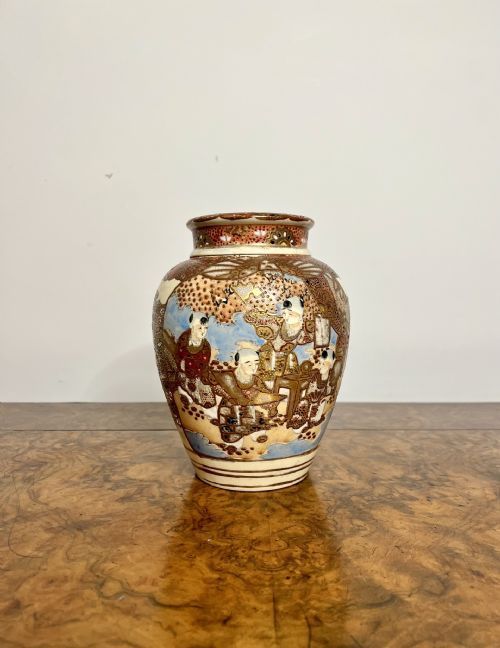
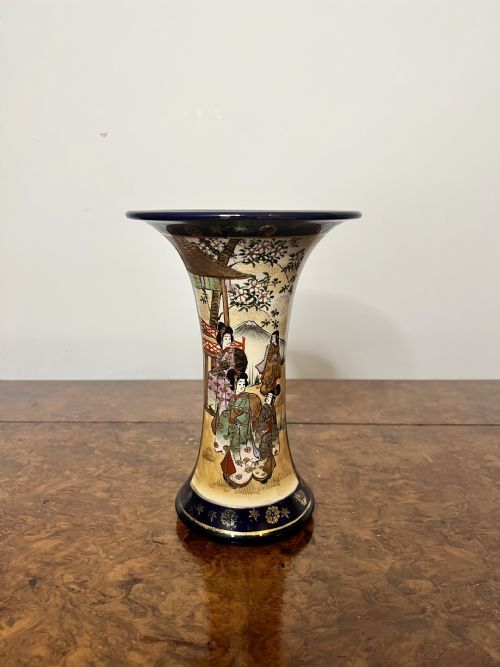
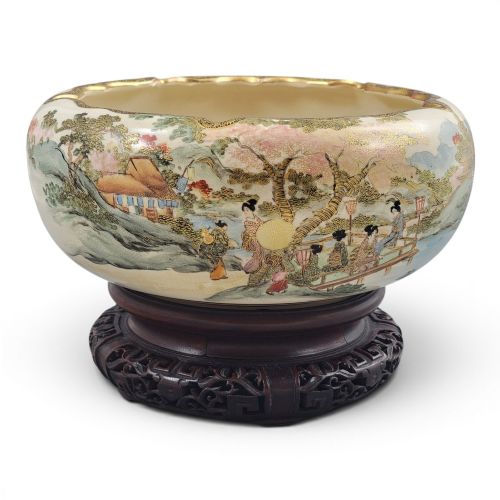


Hand Painted Satsuma Porcelain
Hand painted satsuma porcelain brings intricate Japanese ceramic artistry into your home, offering finely detailed vessels decorated with gold leaf and enamel.
Hand Painted Satsuma Porcelain
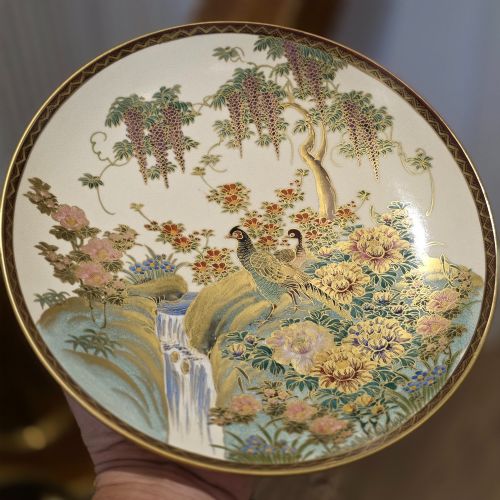
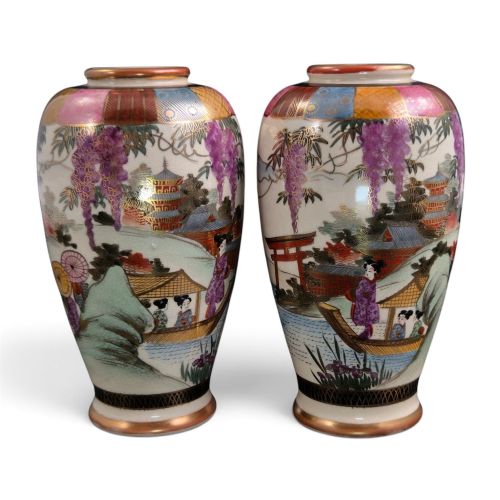
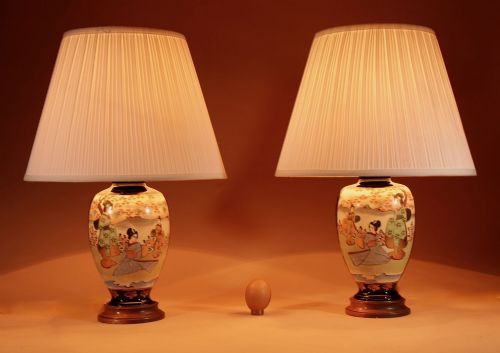
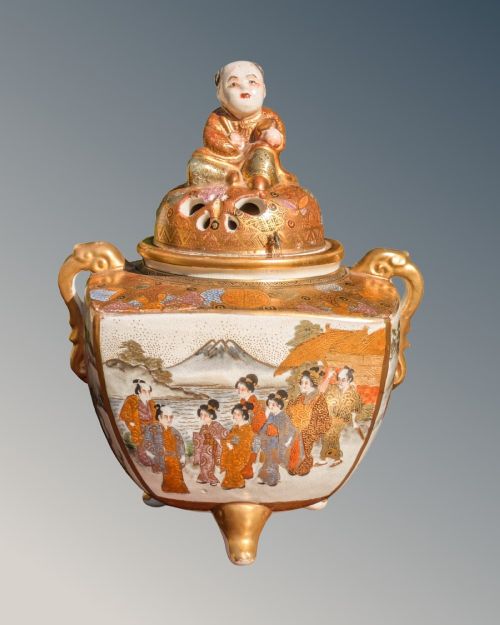
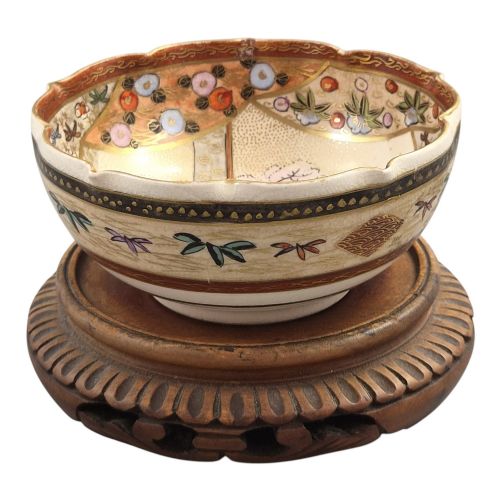
Hand painted satsuma porcelain items comprise vases, decorative bowls, plates, table lamps, incense burners, and tea sets originating primarily from the late nineteenth century and the early twentieth century. These objects span the Meiji period, Taisho period, and Edwardian eras, reflecting both domestic use and export craftsmanship.
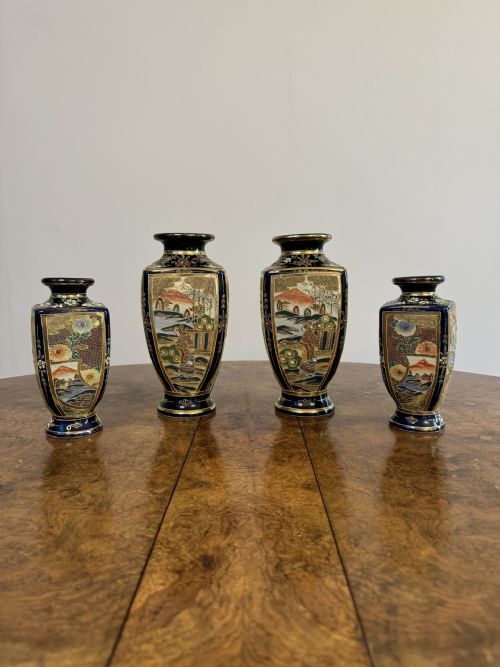
The category is dominated by earthenware and porcelain forms featuring detailed pictorial scenes, floral motifs, and figural processions. Buyers will frequently encounter both individual items and matched pairs, ranging from small cabinet miniatures to monumental garniture vases.
Kyoto emerges as a key centre of production for these ceramics, alongside specific workshops and signed pieces bearing traditional family crests such as the Shimazu mon. The selection moves from simple decorative plates to large lidded jars and complex temple jars.
How they were made
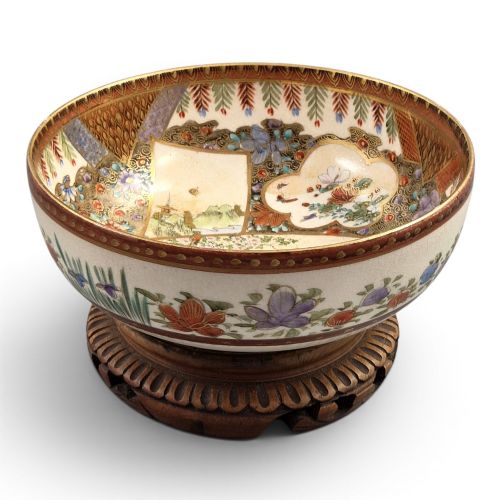
Potters shaped fine earthenware and porcelain bodies before applying a characteristic creamy, crackled glaze that provided a textured canvas for subsequent decoration. Artisans then utilised hand-mixed enamel paints alongside rich gold leaf and heavy gilt detailing to build up elaborate surface patterns.
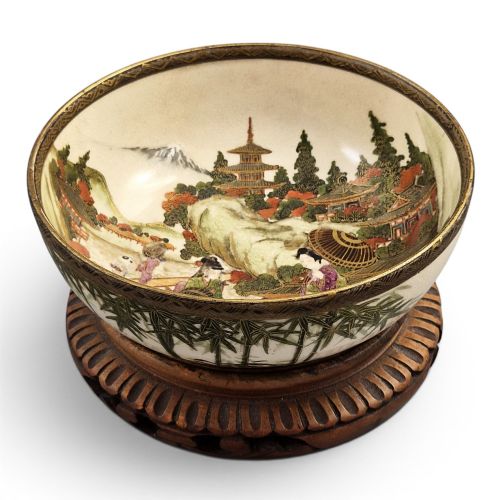
Decoration relied on meticulous brushwork executed by specialised painters who rendered microscopic figures, landscape views of Mount Fuji, and dense floral arrangements by hand. Many pieces received artist signatures or workshop marks applied directly onto the base during the final stages of production.
The listings span the Victorian, Edwardian, Meiji, and Taisho periods, showcasing materials including enamel, gold leaf, and porcelain.
What varies in quality
The standard of painting defines the primary tier of distinction, moving from loose decorative strokes to masterwork compositions featuring hundreds of distinct figures rendered with micro-brush precision. Finer examples display dense, controlled application of gold leaf and enamel without bleeding across the fine crackle lines of the glaze.
The prominence of the maker or workshop mark heavily influences the standing of a piece, with recognised Kyoto names and signed master productions commanding greater attention. Additionally, the crispness of the moulded form and the preservation of the delicate gilding determine where an object sits within the broader spectrum.
Koshida·Gyokkō·Kozan·Shizan·Chosei·Kinkozan·Nikko·Hododa·Hayakawa·Taniguchi
The Hand Painted Satsuma Porcelain Glossary
- Satsuma
- A type of Japanese pottery historically characterised by a soft, ivory-coloured earthenware body covered with a finely crackled transparent glaze. Later export production extended these decorative techniques onto white porcelain bodies.
- Meiji Period
- The era in Japanese history spanning from 1868 to 1912, which saw a massive expansion of decorative arts created specifically for international export markets. Pieces from this time often exhibit exceptional technical control and complex narrative scenes.
- Gilt
- Gold applied to the surface of ceramic pieces as a decorative accent or solid border. On quality works, it highlights robes, architectural elements, and framing cartouches.
- Mon
- A Japanese heraldic badge or crest used to identify families or clans. The Shimazu clan mon frequently appears on Satsuma wares associated with the Satsuma domain.
- Koro
- A traditional Japanese incense burner typically supported on legs and fitted with a pierced cover. These vessels allowed scented smoke to drift outward during use.
- Garniture
- A set of matching ceramic vases or jars designed to be displayed together on a mantelpiece or sideboard. They usually consist of three or five graduated pieces.
Hand Painted Satsuma Porcelain: Frequently Asked Questions
What is satsuma porcelain?
Satsuma porcelain refers to Japanese ceramics decorated with elaborate enamel paintings and gold leaf over a characteristic glaze. These objects were largely produced during the late nineteenth and early twentieth centuries for both domestic and international markets.
Items range from delicate tea sets and miniature vases to large decorative bowls and temple jars. The style is instantly recognisable by its detailed pictorial storytelling and rich surface ornamentation.
How do I date my piece?
Dating these ceramics relies heavily on stylistic markers, artist signatures, and period attributes associated with the Meiji and Taisho eras. Pieces marked with specific Kyoto workshop names often fall into precise late nineteenth or early twentieth-century windows.
Examining the base for historical signatures, crests, and export stamps helps narrow down the decade of manufacture. The presence of traditional Japanese reign periods in descriptions also offers a reliable chronological anchor.
Where were they made?
The primary manufacturing hub for high-end decorative wares was Kyoto, where master workshops refined the art of enamel and gilt painting on ceramic bodies. Other regional kilns also contributed to the vast output of export ceramics during the late nineteenth century.
Kyoto studios such as Kinkozan produced some of the most celebrated bowls and vases found in collections today. Master painters worked within these structured urban environments to supply global demand.
How should I display them?
These decorative vessels suit placement on sideboards, mantels, or within glass cabinets where their fine detail remains protected. Table lamps offer a practical way to integrate period porcelain into daily interior lighting schemes.
Keeping pieces away from direct sunlight preserves the vibrant enamel colours and gold leaf accents over time. Grouping matched pairs or garniture sets creates a balanced, traditional display.