


Gilt Ceramic Mantel Vases
Gilt ceramic mantel vases combine painted porcelain or earthenware bodies with lustrous metallic gilding, bringing grand decorative presence to a chimney piece.
Gilt Ceramic Mantel Vases
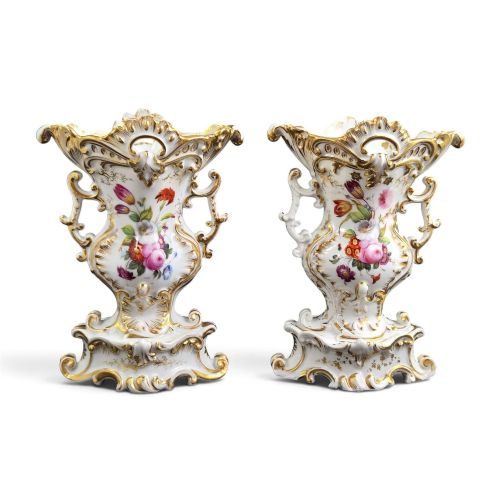
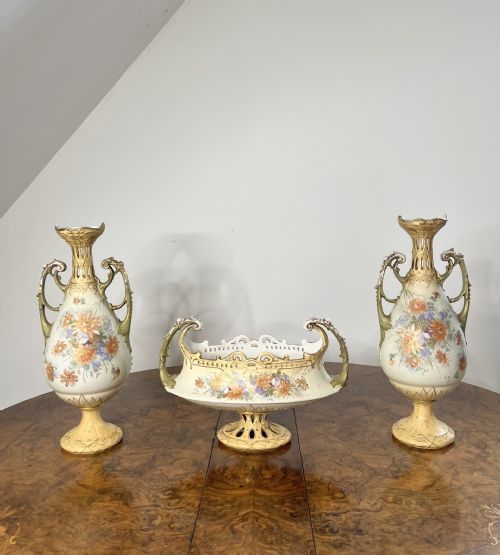
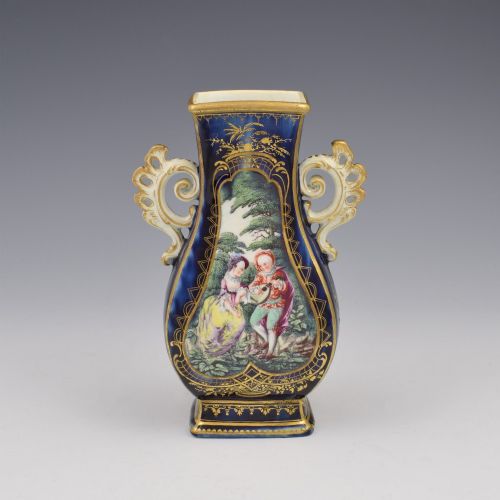
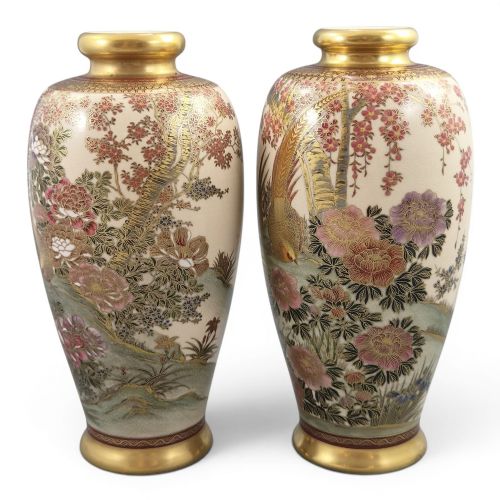
When you search for gilt ceramic mantel vases, you encounter decorative vessels designed primarily for display upon mantelpieces, often arranged as matched pairs or three-piece garnitures. The forms range from classical urns and lidded ginger jars to spill vases and centrepieces produced across the nineteenth and early twentieth centuries.
Continental European workshops dominate the selection, particularly French manufacturers producing in the Sevres or Old Paris styles alongside English factories such as Royal Worcester and Mason's Ironstone. Earthenware and porcelain bodies provide the canvas for rich enamels, hand-painted scenes, and applied metallic highlights.
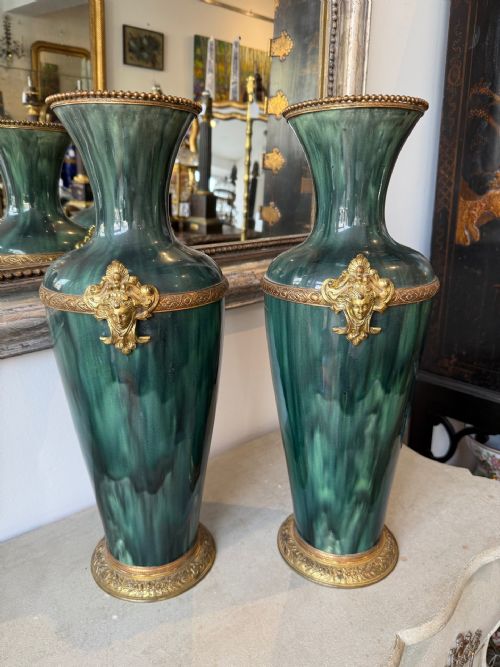
Stylistic influences draw heavily on French Rococo Revival, Victorian Chinoiserie, and classical antiquity. Certain examples incorporate cast ormolu mounts that elevate the ceramic body into a more architectural or sculptural domestic ornament.
How They Were Made
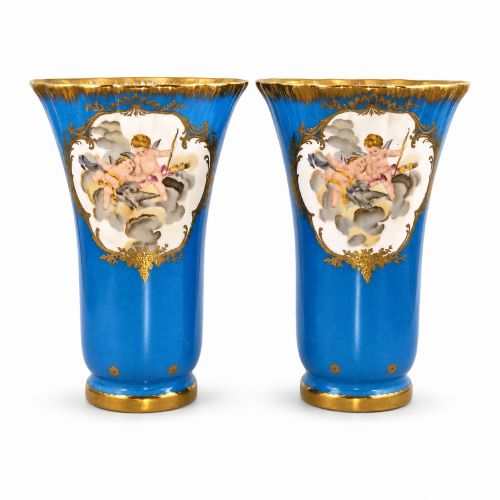
Potters shaped these vessels from fine porcelain or sturdier earthenware before applying ground colours such as bleu céleste or deep blue grounds. Artisans then executed hand-painted floral panels, landscapes, or figural scenes using mineral enamels.
Gilding was applied using gold leaf, liquid gold, or chemical gilding techniques, which were subsequently fired and burnished to create contrasting matte and reflective metallic surfaces. Ormolu mounts, cast in brass or bronze and fire-gilded, were frequently fitted to secure the ceramic components.
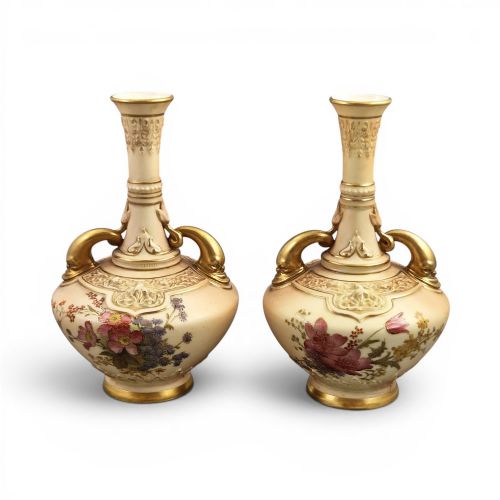
Dolphin handles on nineteenth-century porcelain give fierce aquatic supervision to peaceful mantelpiece flora.
What Varies in Quality
The standard of hand-painting dictates much of the distinction between ordinary production and superior craftsmanship. Detailed brushwork in pictorial panels and the precision of raised white enamel ornamentation separate ambitious studio pieces from standard factory output.
The execution and weight of the gilding also define the grade of a piece, with high-quality application retaining a crisp, burnished metallic lustre after heavy use and cleaning. Additionally, the integration of bronze or ormolu mounts shows whether the metalwork was custom-cast for the specific ceramic body or adapted from generic stock.
Royal Worcester·Jacob Petit·Samson Paris·Royal Vienna·Flight Barr and Barr·Wolfsohn Dresden·Manpei Kobe·Hododa
The Gilt Ceramic Mantel Vases Glossary
- Garniture
- A set of three or more matching vases or urns designed to be displayed together on a mantelpiece or sideboard. These sets typically feature a taller central vessel flanked by two smaller matching pieces.
- Ormolu
- Finely cast and chased brass or bronze that has been coated in a layer of gold. It appears frequently as decorative feet, handles, or rims on nineteenth-century ceramic vases.
- Bleu Céleste
- A bright turquoise-blue ground colour developed at the Sèvres porcelain manufactory. It provides a vivid backdrop for gilt scrollwork and painted floral reserves.
- Spill Vase
- A tall, slender vessel used originally to hold thin wood spills for lighting candles or fires. They are frequently decorated with hand-painted botanical motifs.
- Chinoiserie
- European artistic style reflecting Chinese and East Asian decorative motifs. It appears on ceramic bodies through fantastical landscapes and pavilion scenes rendered in bright enamels and gold.
Gilt Ceramic Mantel Vases: Frequently Asked Questions
What is a garniture set?
A garniture set consists of matching vases or urns designed to be displayed together as a unified decorative scheme on a mantelpiece.
Typically comprising three pieces, the central vessel is taller and flanked by two matching side vases.
How do I clean gilt ceramic vases?
Gilt ceramic vases require gentle dusting with a soft, dry brush to protect fragile metallic leaf and painted enamel surfaces.
Avoid liquid cleaners, chemical solvents, or abrasive cloths that can permanently damage the gold gilding.
Where were most of these vases made?
The majority of these decorative vases originate from nineteenth-century European workshops, particularly in France, England, and Germany.
Prominent manufacturing centres included Paris, Sevres, Worcester, and Vienna.
Can I use mantel vases for flowers?
While these vessels were historically manufactured to hold floral arrangements or pot pourri, many delicate antique pieces are better suited for dry display.
Moisture can seep through older unglazed interior cracks or damage historic internal repairs.