


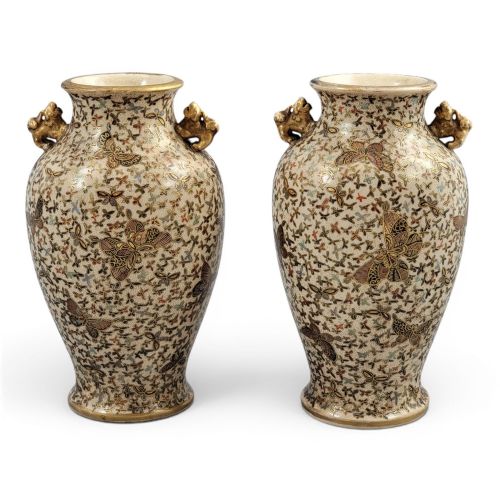

Cream Gilded Ceramic Vases
Cream gilded ceramic vases bring together delicate porcelain or earthenware bodies and rich metallic leaf or glaze work, spanning Victorian and Meiji production.
Cream Gilded Ceramic Vases
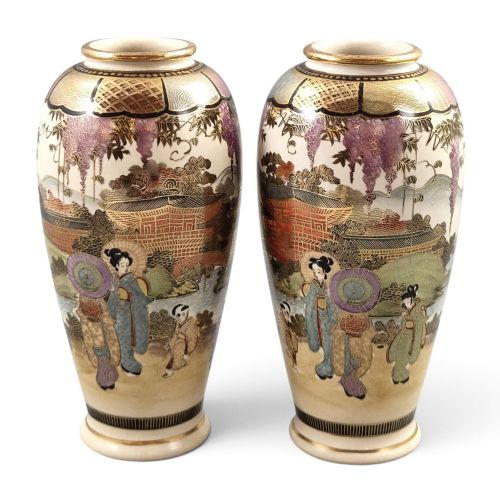
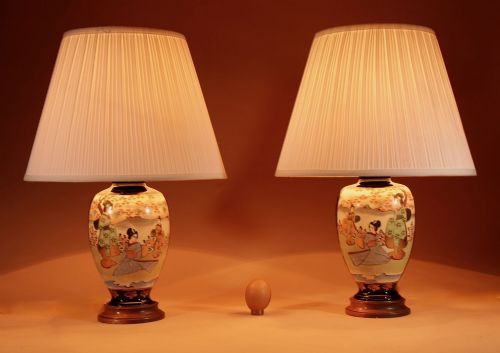
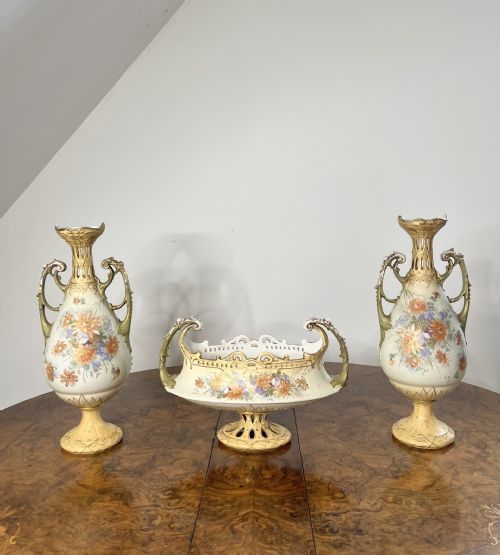
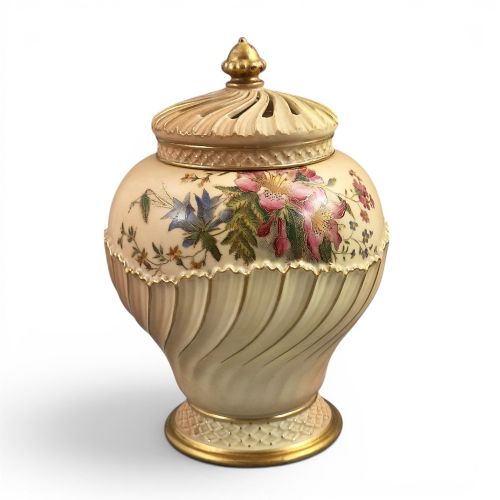
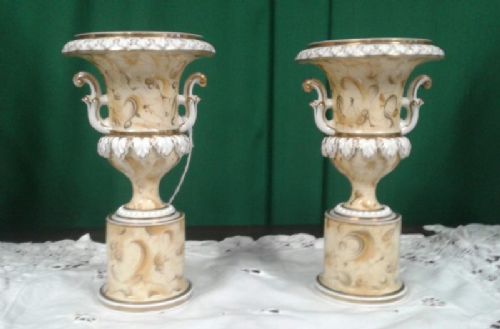
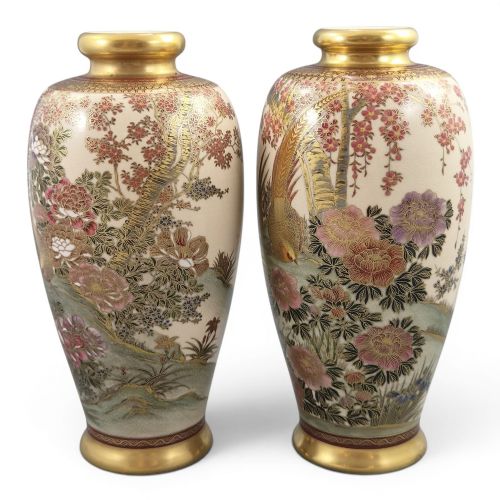
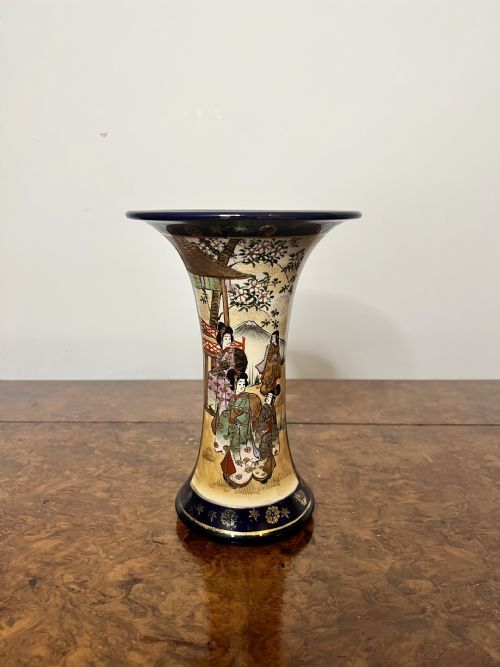
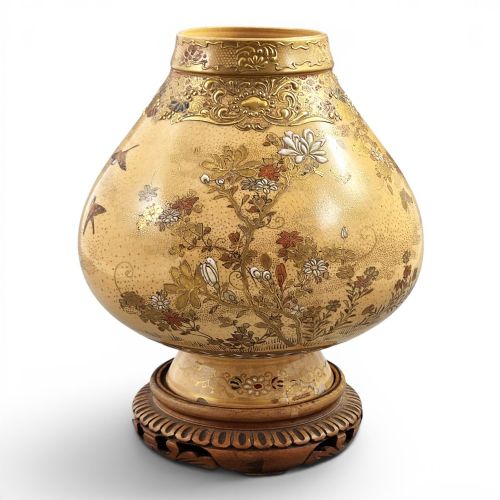
When searching for cream gilded ceramic vases, collectors encounter a dominant selection of Japanese Satsuma earthenwares alongside British porcelains from the Victorian and Edwardian eras. These pieces take forms ranging from standard display vessels and spill vases to large centrepieces, pot-pourri jars, and converted table lamps.
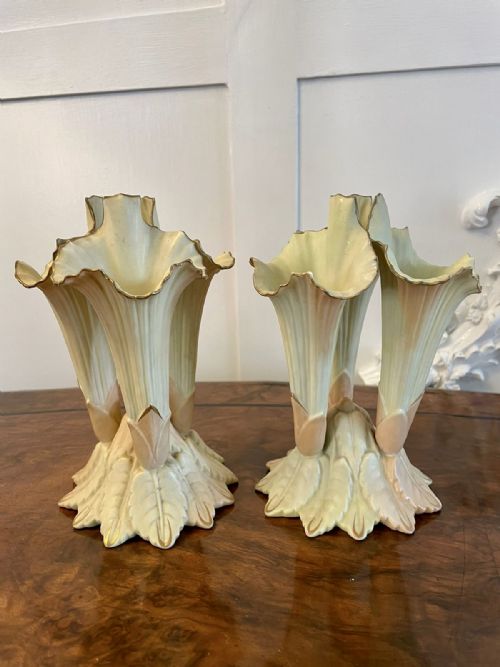
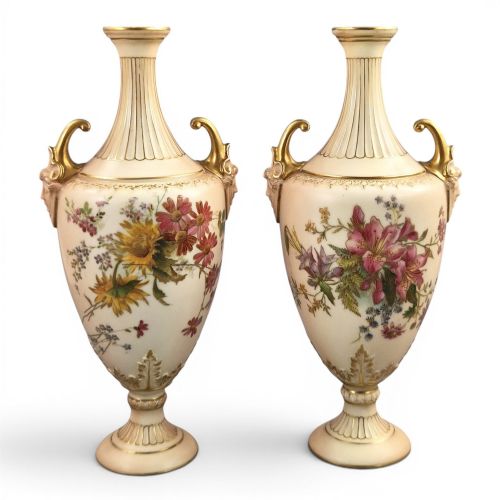
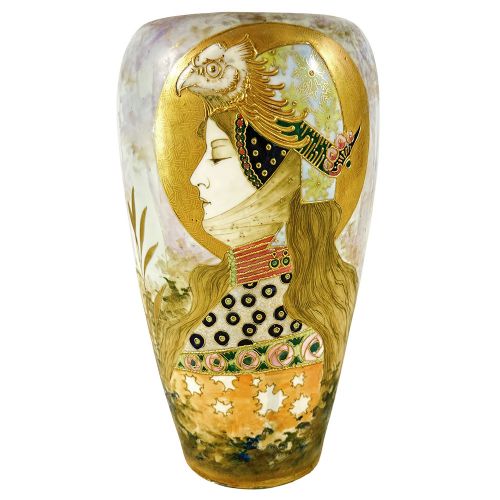
Japanese examples often display intricate pictorial scenes of figures, landscapes, and butterflies enhanced by raised gold leaf. British counterparts by potteries such as Royal Worcester utilise soft blush ivory glazes complemented by delicate hand-painted floral motifs and gilding.
The objects date primarily from the nineteenth century through to the early twentieth century, reflecting the cross-cultural aesthetic exchanges between Britain and Japan during the Meiji and Aesthetic periods.
How they were made
Maker utilise earthenware and porcelain bases, applying pale or blush ivory glazes to create the characteristic light background colour. Artisans then layer fine gold leaf and enamel paints by hand to build up intricate surface patterns.
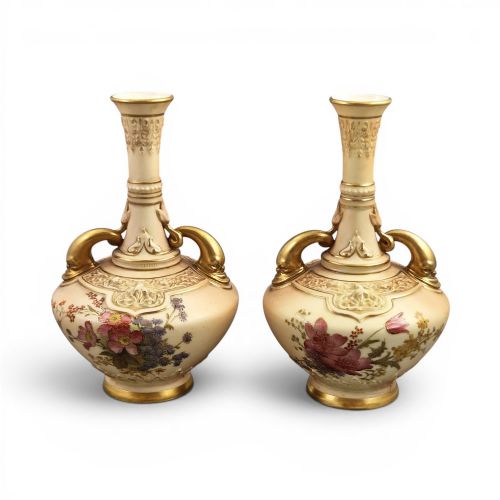
Techniques involve detailed pictorial work and relief moulding, seen in specialised pieces featuring dolphin handles or cornucopia shapes. Kiln firing sets the enamel and glaze before final gilding is burnished to catch the light.
Dolphins appear surprisingly often as structural support on nineteenth-century British vases.
What varies in quality
Quality rests upon the precision of the hand-painted detail and the crispness of the gilt work across the ceramic surface. Master workshops achieved finer brushwork and more complex figural or landscape compositions than standard commercial output.
The depth and application of gold leaf separate standard production from exhibition-grade pieces. Heavier, more secure potting and harmonious integration of handles or mounts also elevate certain items.
Royal Worcester·Kinkōzan·Shozan·Hododa·Locke And Co·Tashiro·Reissner Stellmacher And Kessel·Doulton Burslem
The Cream Gilded Ceramic Vases Glossary
- Blush ivory
- A soft, pale cream porcelain glaze developed by potteries such as Royal Worcester in the late nineteenth century. It provides a matte ground for hand-painted floral decoration.
- Satsuma
- A type of Japanese earthenware characterised by a crackled ivory glaze and extensive gilt and enamel decoration. It was produced extensively for export during the Meiji period.
- Campana
- A bell-shaped urn or vase form derived from classical antiquity. These vessels typically sit on a square plinth base with flared rims.
- Shimazu mon
- The heraldic crest of the Satsuma clan, represented as a cross within a circle. It frequently appears on high-quality Japanese export ceramics.
- Garniture
- A matching set of vases or jars designed to be displayed together on a mantelpiece or sideboard. They usually comprise a central vessel flanked by smaller matching pieces.
Cream Gilded Ceramic Vases: Frequently Asked Questions
How do I identify Satsuma ware?
Satsuma pieces feature a distinctive fine crackle glaze over a buff earthenware body, heavily decorated with enamels and gold leaf. They often depict Japanese figures, landscapes, or flora.
Many examples bear signature marks on the base identifying the studio, artist, or kiln of origin.
What is blush ivory porcelain?
Blush ivory refers to a specialised cream-coloured ceramic body and glaze pioneered by British manufacturers like Royal Worcester. The matte surface mimics the soft tone of ivory.
It serves as a pale canvas for delicate hand-painted floral sprays and gilded highlights.
Can these vases hold water?
Most antique earthenware pieces, particularly older Satsuma wares, feature porous bodies and crackled glazes that are not suited for holding water. They are best displayed dry or used with internal glass liners.
Porcelain examples from British makers are denser, but age and painted surfaces mean careful handling remains sensible.
How should I display them?
Display these vessels away from direct sunlight to protect delicate enamel colours and gold leaf over time. Stable surfaces protected from foot traffic vibrations safeguard the ceramic bodies.
Pairing matching pieces as mantel sets or placing them where light catches the gilding highlights their craftsmanship.