



Meiji Period Enamel Charger
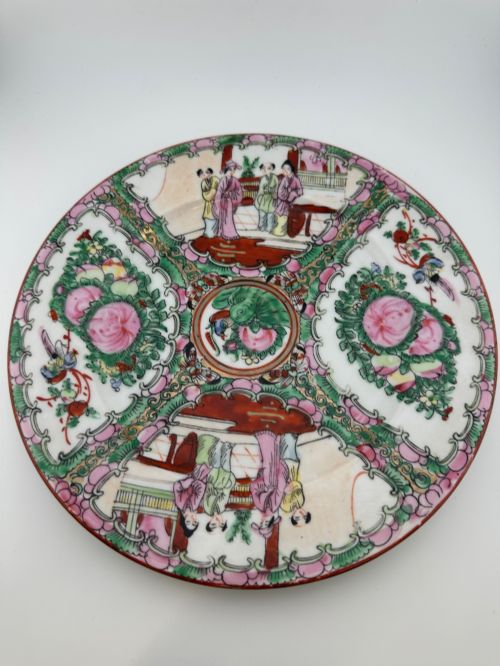
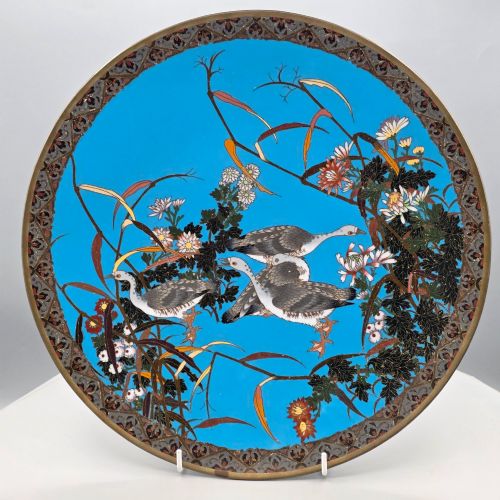
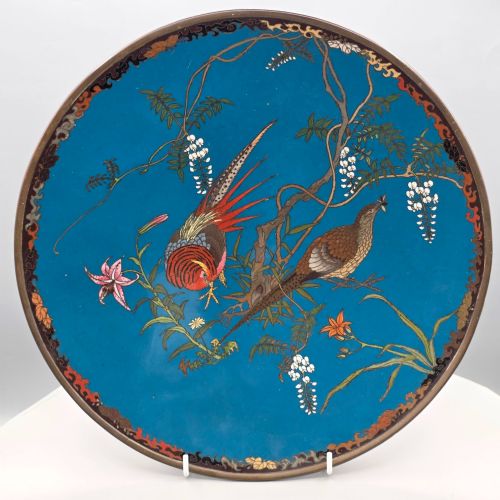
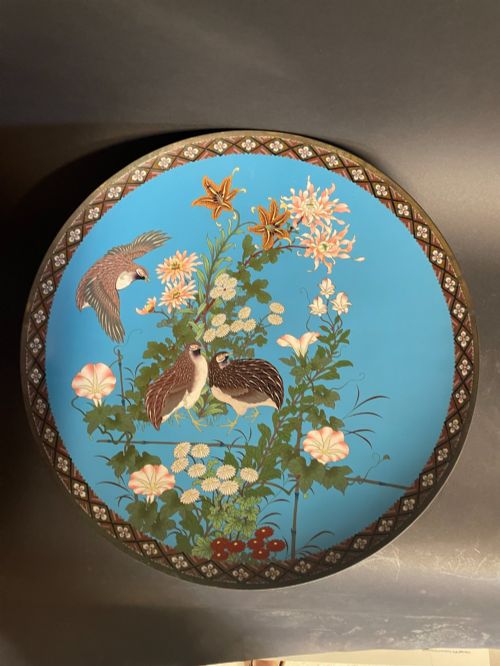
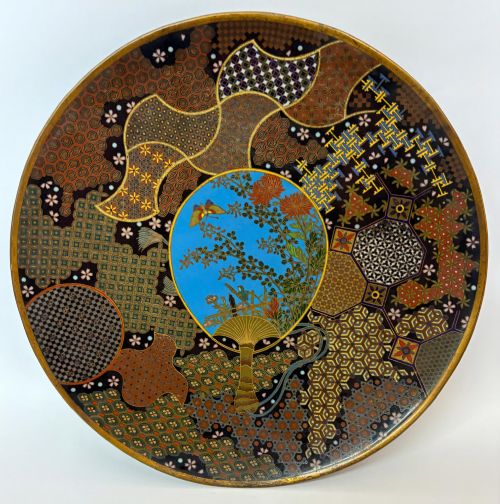
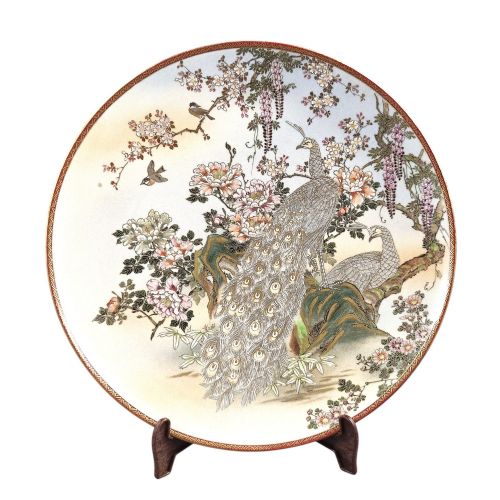
These pieces are a meiji period enamel charger, offering intricate Japanese metalwork and ceramic artistry designed to anchor a room.
Meiji Period Enamel Charger
A meiji period enamel charger represents a significant branch of late nineteenth-century Japanese decorative arts, produced primarily between the eighteen-sixties and the early twentieth century. These substantial decorative plates, trays and bowls display detailed pictorial or symbolic motifs across wide metallic surfaces.
The most common form on this page is the cloisonne enamel charger, frequently featuring natural subjects like birds, dragons and flora, or cultural figures such as samurai. Pieces span from small medium plates to huge chargers measuring over thirty centimetres across, occasionally utilising porcelain cores alongside traditional metal bases.
How they were made
Artisans constructed these chargers using a foundation of copper, brass, bronze or porcelain, applying intricate wirework known as cloisonne to outline complex designs. Coloured vitreous enamels were packed into these individual wire cells before firing and polishing to a smooth finish.
Certain examples incorporate totai shippo techniques, applying enamel directly onto porcelain surfaces textured to resemble tree bark. Artisans also utilised gilt detailing and hand-painted ceramic pigments for Kutani and Satsuma wares, combining metalworking with traditional pottery methods.
Several chargers feature unexpected wildlife details, capturing a mid-leap frog sharing space with chrysanthemums and butterflies.
What varies in quality
The standard of a meiji period enamel charger rests upon the precision of its wirework and the complexity of its palette. Finer examples display microscopic, flawless cell divisions forming sophisticated pictorial narratives such as landscapes or leaping koi, while simpler works rely on repetitive geometric patterns.
Signatures by recognised makers elevate specific pieces, alongside the ambition of the subject matter, ranging from standard floral arrangements to elaborate multi-figure samurai scenes or single dragons executed on a massive scale.
Kinkozan·Meizan
The Meiji Period Enamel Charger Glossary
- Cloisonne Enamel
- A technique where thin metal wires are soldered to a base to form cells, which are then filled with coloured enamel paste and fired. This method allows for sharp, detailed outlines in pictorial designs.
- Totai Shippo
- Enamel applied over a porcelain body rather than a traditional metal base, often worked to resemble natural textures like tree bark. It bridges ceramic manufacturing and metal enamelling traditions.
- Charger
- A large decorative plate or tray intended for display rather than utility. These items frequently occupy a central position on walls or cabinet stands due to their substantial diameter.
- Mon
- A Japanese heraldic badge or crest used to identify families or clans. These mon symbols appear frequently within the decorative borders or primary motifs of nineteenth-century metalwork.
- Satsuma
- A type of Japanese earthenware featuring a crackled ivory glaze decorated with polychrome enamels and gilt. These pieces often depict dense figurative scenes or natural motifs.
Meiji Period Enamel Charger: Frequently Asked Questions
What is a meiji period enamel charger?
These items are large decorative plates produced in Japan during the Meiji era, combining metal bases with coloured enamel designs.
They served primarily as ornamental display pieces rather than tableware, showcasing the technical skill of late nineteenth-century artisans.
How were these chargers displayed?
Historically, large chargers were placed on specialised stands or hung on walls to showcase their pictorial designs.
Today, they function as focal points in interior spaces, often displayed on mantelpieces or within cabinets.
What motifs appear on these pieces?
Common subjects include natural elements like birds, iris flowers, dragons, and Mount Fuji, alongside cultural figures such as samurai and Buddhas.
Each motif often carries auspicious symbolism rooted in Japanese tradition and folklore.
How do copper and porcelain bases differ?
Traditional chargers utilise metal bases like copper, brass, or bronze for standard cloisonne work, while totai shippo pieces use porcelain cores.
Porcelain-based examples often feature textured surfaces like faux tree bark beneath the enamel layers.