





Meiji Imari Porcelain Charger
These meiji imari porcelain charger pieces bring vibrant colour and traditional Japanese artistry directly to your walls and display tables.
Meiji Imari Porcelain Charger
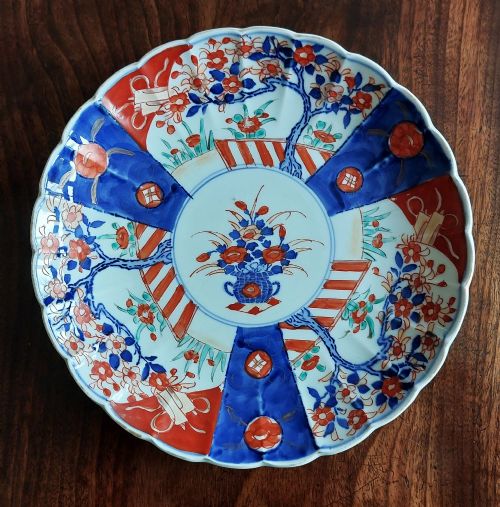
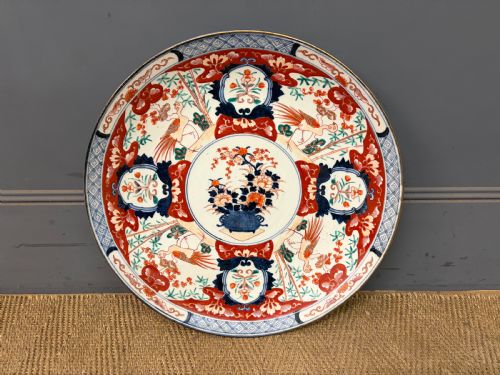
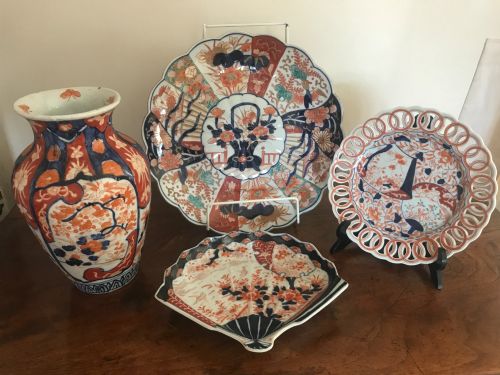
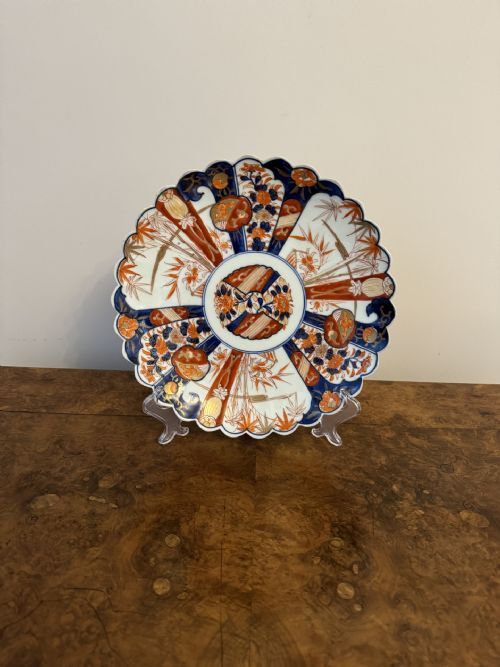
When you search for a meiji imari porcelain charger, you encounter large decorative plates and dishes originating from Japan during the nineteenth and early twentieth centuries. The pieces on this page span the Meiji period, Victorian era, and Arita production traditions.
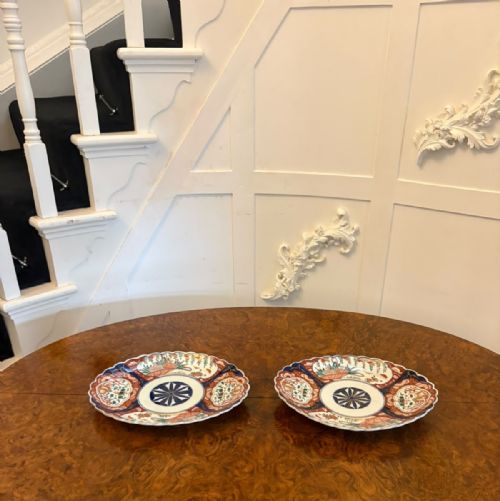
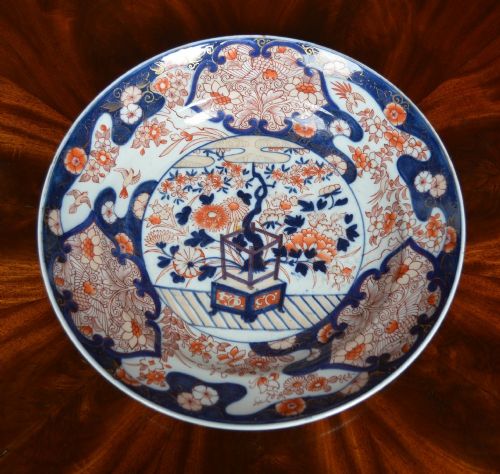
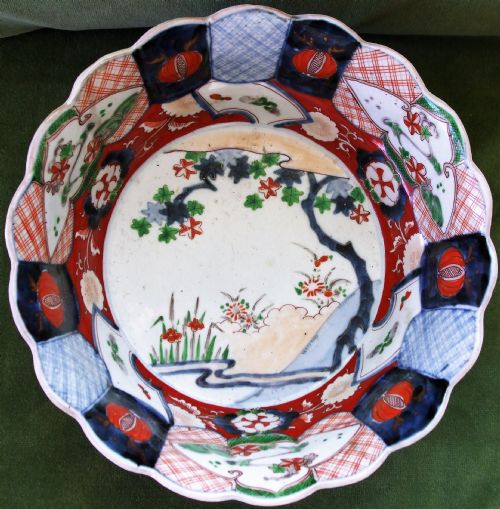
Most examples appear as circular chargers, scalloped edge plates, or large display bowls. They were primarily intended for decorative display rather than daily dining service.
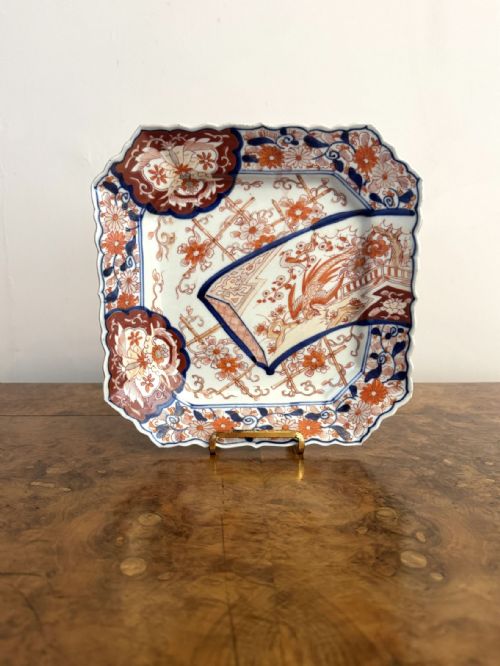
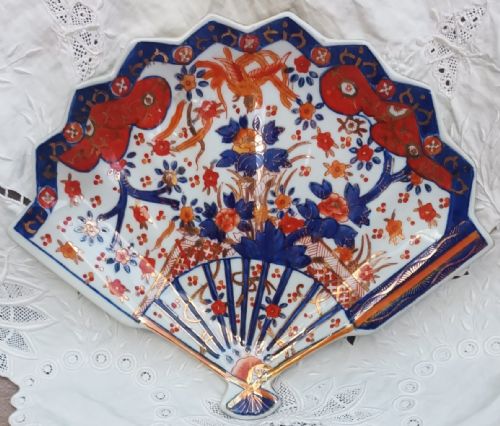
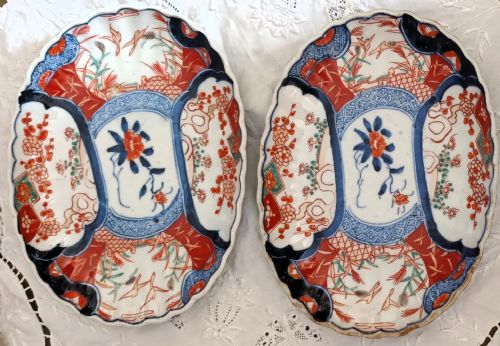
Forms range from standard round chargers to square shaped plates and oval dishes. You will also find pairs and collections alongside individual statement pieces.
How They Were Made
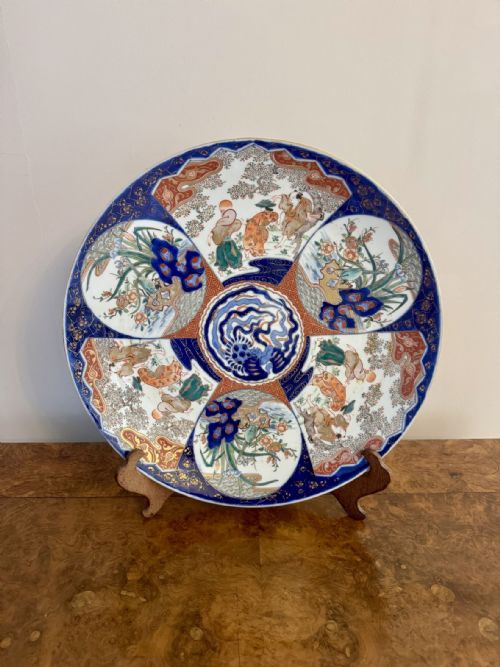
These items rely on a porcelain body finished with cobalt underglaze, enamel, and gold leaf highlights. Artisans applied cobalt blue directly beneath the glaze before adding rich iron red enamel and gilding over the top.
The characteristic palette combines deep cobalt blue and vibrant red with supplementary gold leaf details. Production centres such as Arita utilised these specific mineral pigments to achieve the traditional Imari aesthetic.
Several chargers proudly depict the Seven Lucky Gods, ensuring divine approval for any dining room wall.
What Varies in Quality
Quality depends upon the precision of the hand painted detail and the complexity of the motifs. Pieces depicting intricate scenes such as exotic birds or the Seven Lucky Gods often demonstrate superior artistic control.
The crispness of the cobalt underglaze and the application of the gilt accents distinguish standard production from exhibition quality work. Weight, scale, and the symmetry of scalloped edges also indicate the maker's level of skill.
The Meiji Imari Porcelain Charger Glossary
- Imari
- A style of Japanese porcelain featuring a distinct palette of cobalt blue, iron red, and gold. This decorative approach originated in Arita and gained immense popularity for export during the Meiji period.
- Meiji Period
- The era in Japanese history spanning from 1868 to 1912. Porcelain from this time frequently combines traditional motifs with ambitious scale for international markets.
- Cobalt Underglaze
- A blue pigment applied to the raw ceramic body before the clear glaze is fired. This technique ensures the colour remains permanent and protected beneath the glassy surface.
- Gilt
- A thin layer of gold applied to the surface of the porcelain as a decorative accent. It catches the light and highlights the edges of painted panels.
- Scallop Edge
- A decorative rim shaped into a series of interconnected curves. This contour is frequently found on chargers and display bowls from the period.
Meiji Imari Porcelain Charger: Frequently Asked Questions
How were chargers used?
These large porcelain plates were primarily created for decorative display on walls, cabinets, or tables. Their substantial size and rich palette made them centrepieces in formal Victorian and Meiji interiors.
Unlike everyday dining ware, they served to showcase wealth, taste, and an appreciation for international craftsmanship. Many feature drilled foot rings or were paired with stands specifically for exhibition.
What is the Imari palette?
The traditional Imari palette relies on a striking combination of underglaze cobalt blue and iron red enamel, frequently enhanced with gold leaf. These colours are layered to create dense floral, bird, and figural compositions.
Originating from the town of Arita, this specific coloration became instantly recognisable across Europe and America. The contrast between the deep blue and warm red defines the style.
How do I date a charger?
Dating relies on examining the potting style, the brightness of the enamels, and the characteristics of the foot ring. Pieces attributed to the Meiji period often exhibit refined painting and specific export markings.
Comparison with documented pieces from the late nineteenth century helps narrow the decade of production. Stylistic shifts between Edo traditions and Meiji manufacturing offer further clues.
Are these pieces fragile?
As hard paste porcelain, the body itself is durable, but the surface enamels and gilding require careful handling. Displaying them securely on sturdy wall hooks or specialised stands prevents accidental slips.
Cleaning should be limited to gentle dusting with a soft, dry cloth to protect the gold leaf highlights. Avoid harsh detergents or soaking, which can dull the historic enamels.