




Meiji Ceramic Pot
These meiji ceramic pot examples are dense Japanese vessels from the late nineteenth and early twentieth centuries, prized for holding foliage or incense.
Meiji Ceramic Pot
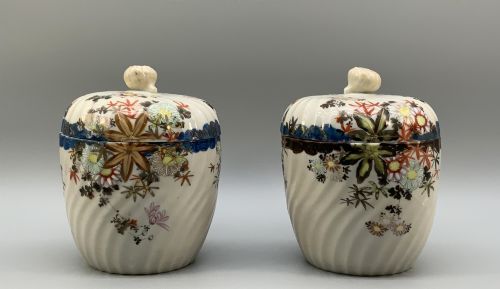
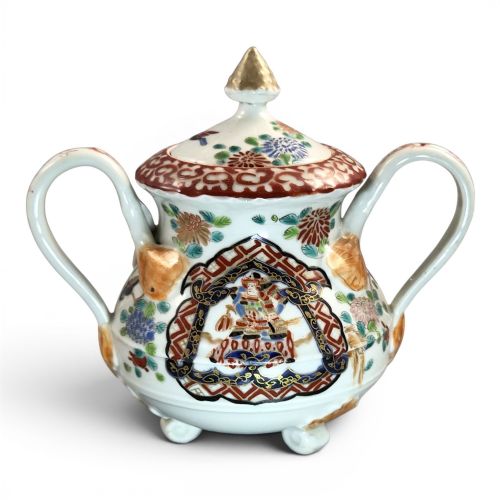
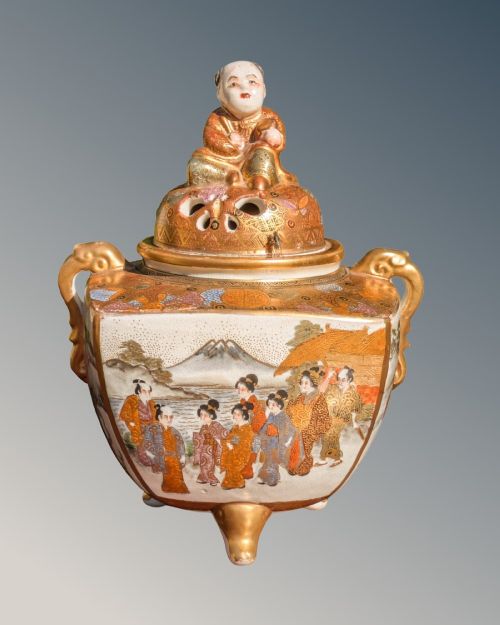
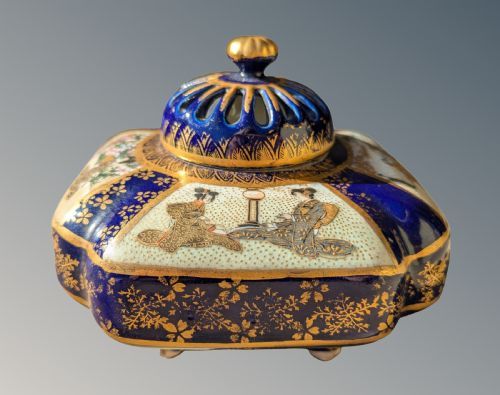
A meiji ceramic pot encompasses a variety of vessel forms originating from Japan during the nineteenth and early twentieth centuries. Collectors most frequently encounter jardiniere planters, lidded jars, incense burners, and sugar bowls on this page.
The objects span periods from the late nineteenth century into the early twentieth century, reflecting the craft traditions of Kyoto studios and major kilns. These vessels served both decorative and functional roles within domestic interiors.
Makers shaped earthenware, porcelain, and stoneware into functional containers often paired with hardwood stands. The assortment includes Satsuma wares and Imari patterns alongside cloisonne enamel items.
Materials and construction
Potters utilised clay bodies ranging from fine porcelain to coarse earthenware and heavy stoneware, shaping them on the wheel or in moulds. Surface decoration relied heavily on polychrome enamel, underglaze blue, and applied gold leaf or gilding.
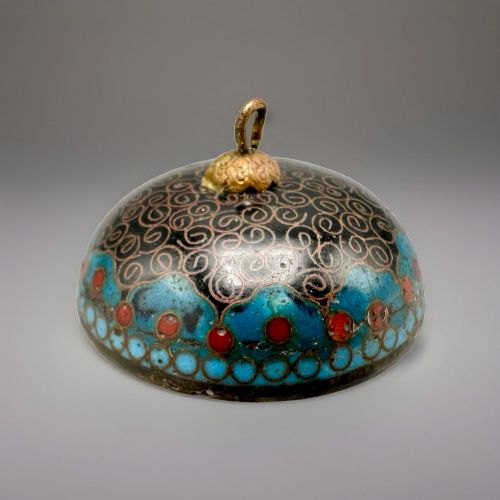
Certain pieces incorporated detailed cloisonne wirework filled with enamel pastes upon copper bases. Specialised kilns fired these earthenwares and porcelains repeatedly to set delicate pigments and metallic accents.
Meiji Ceramic Pot Retail Price Guide 2026
Typical asking prices for meiji ceramic pot among the pieces listed under this phrase on Sellingantiques today, from the lower quarter to the upper quarter. They describe what is for sale here now, not the wider market.
Listings feature items spanning the 1870s to the 1920s, employing porcelain, earthenware, stoneware, and enamel.
Assessing the execution
Quality rests upon the precision of the brushwork and the clarity of the enamel application across the vessel surface. Superior examples demonstrate controlled kiln temperatures that prevent glaze pooling or cracking.
The distinction between standard commercial output and workshop pieces signed by named makers lies in the depth of the carved detail and the fineness of the gilding. Balanced proportions and crisp mouldings further separate finer pots from simpler utilitarian items.
Makuzu Kozan II·Kinkozan·Shizan·Shozan·Kotobuki do
The Meiji Ceramic Pot Glossary
- Satsuma
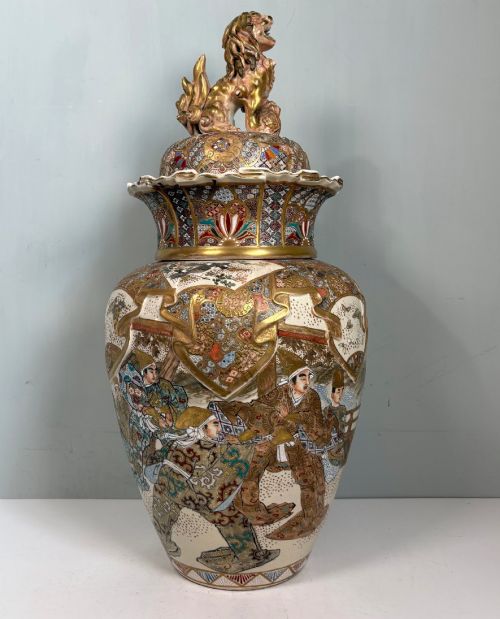
- A type of Japanese earthenware featuring a crackle glaze and ornate polychrome enamel decoration over creamy clay. It was extensively produced for export during the Meiji period.
- Koro
- A traditional Japanese incense burner typically fitted with a pierced cover to allow smoke to escape. These vessels frequently rest on three feet and feature sculpted handles.
- Jardiniere
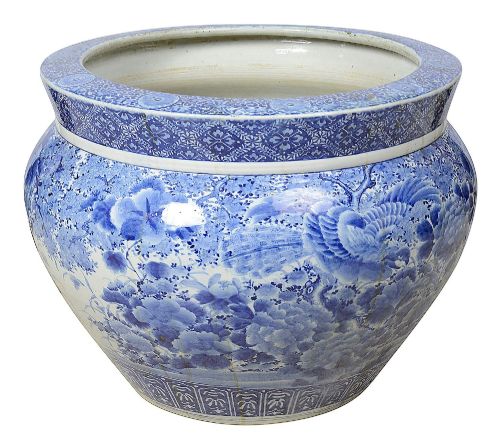
- A large ornamental pot or planter designed to hold growing plants or flower arrangements. They often sit upon associated hardwood stands.
- Imari
- A style of Japanese porcelain decorated in underglaze blue, iron red, and gold. This palette became immensely popular across European export markets.
Meiji Ceramic Pot: Frequently Asked Questions
What is a meiji ceramic pot?
A meiji ceramic pot is a vessel produced in Japan during the Meiji period, encompassing forms like jardinieres, lidded jars, and incense burners.
These pieces utilise materials such as porcelain, earthenware, and stoneware, often decorated with enamel and gilding.
How were these pots used?
Many of these vessels served functional roles in homes, acting as planters for foliage, containers for sugar, or burners for incense.
Others functioned purely as decorative objects displayed on tables or paired with hardwood stands.
How do I identify Satsuma ware?
Satsuma ware is characterised by a distinctive ivory-coloured earthenware body covered in a fine crackle glaze. Artisans then applied intricate enamel painting and gold leaf over this surface.
Signed pieces often attribute the work to specific Kyoto studios or master makers.