




Meiji Bronze Pair
When searching for a meiji bronze pair, collectors encounter dual decorative objects cast in Japan during the late nineteenth and early twentieth centuries.
Meiji Bronze Pair
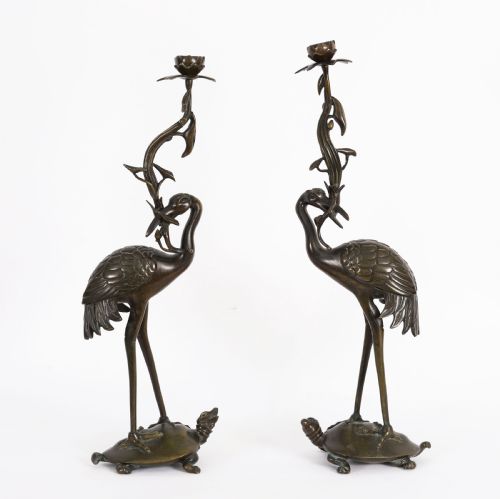
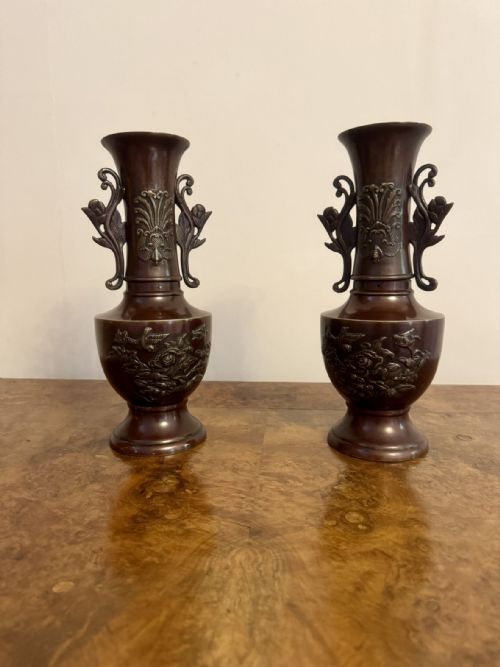
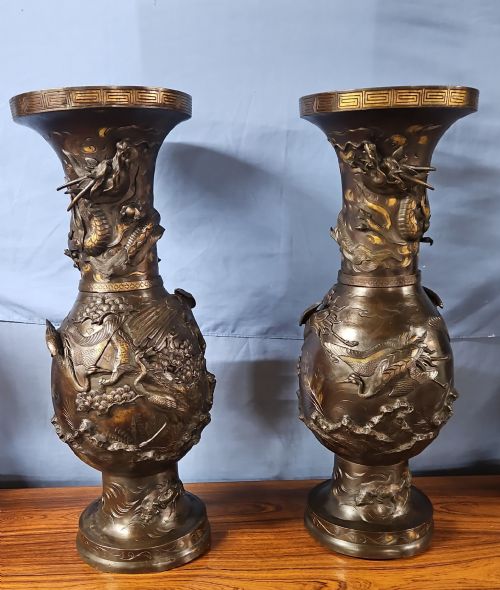
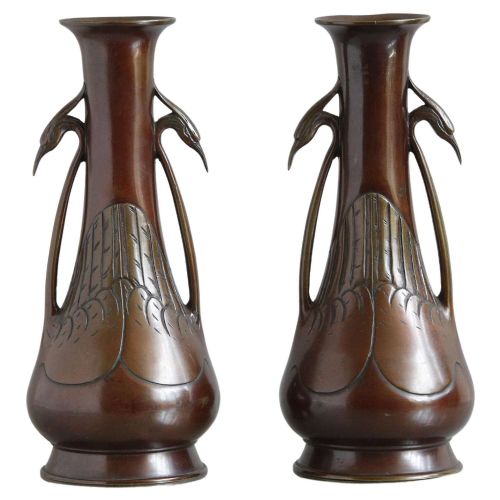
A meiji bronze pair typically manifests as matching vases, jardinières, or animal okimono produced during the Meiji period.
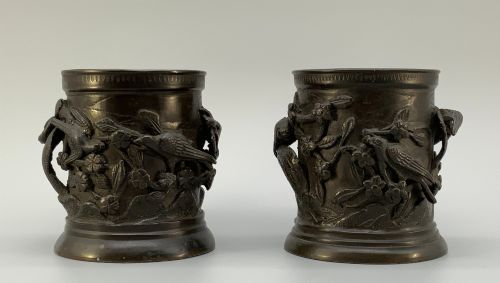
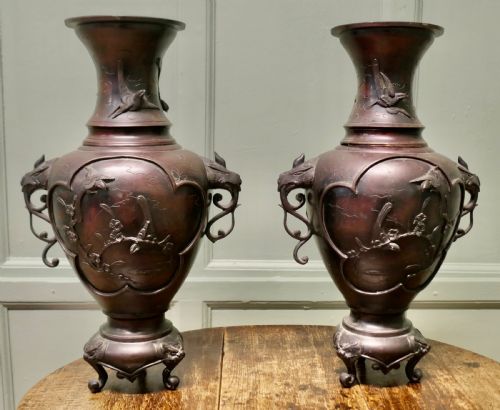
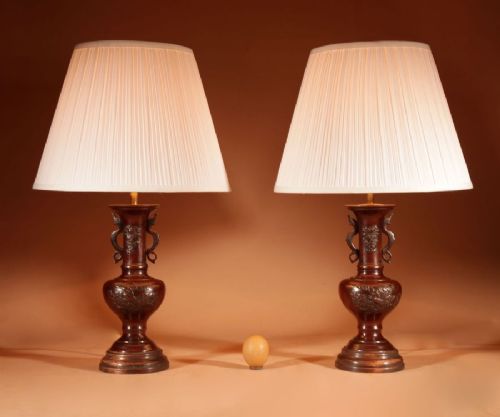
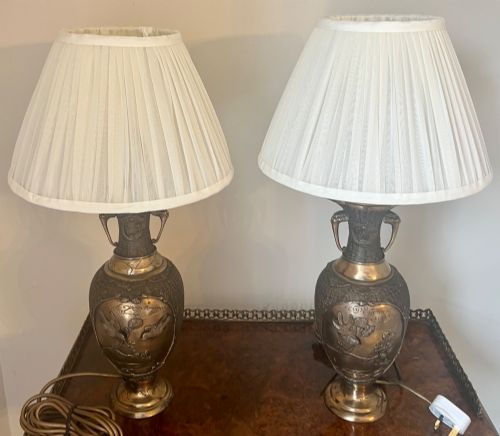
Vases and urns dominate the selection, often featuring handles shaped as birds or foliage alongside raised floral decoration.
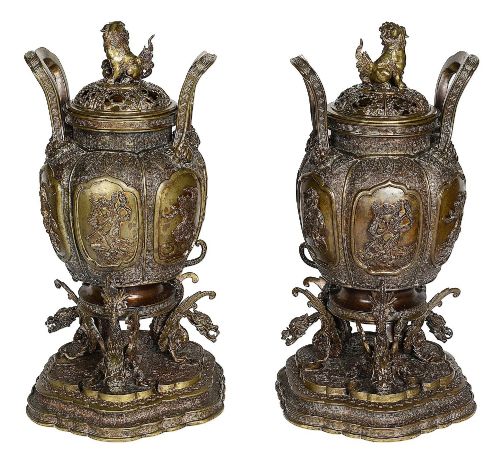
Beyond vessels, the category encompasses candlesticks, incense burners, and garden statuary such as geese and elephants.
How They Were Made
Craftsmen utilised traditional lost-wax casting methods to shape the bronze, copper, and brass components.
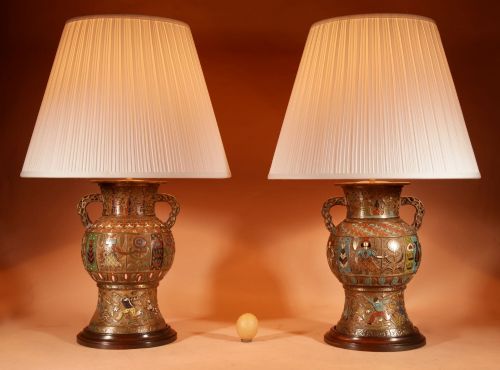
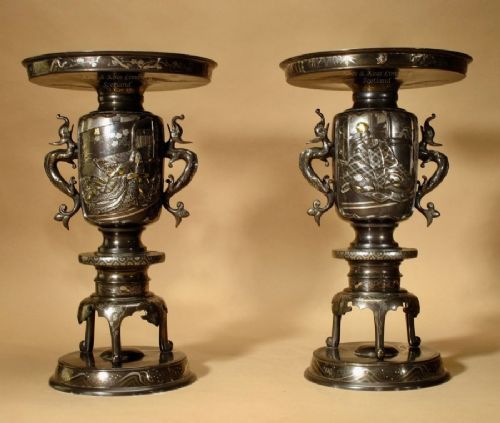
Many examples incorporate mixed metal work, champlevé enamel, or inlaid details to highlight birds, blossoms, and figures.
Listings feature items dated across the Meiji period, spanning from the eighteen seventies through to nineteen twenty.
What Varies in Quality
Finishing separates standard production pieces from masterworks, particularly in the precision of chiselling and the depth of patination.
The integration of mixed metals and the clarity of inlaid elements demonstrate the skill invested by the foundry.
Shuzan Hideyama·Akasofu Gyoko
The Meiji Bronze Pair Glossary
- Okimono
- A Japanese stand-alone ornamental figurine or sculpture meant for display on a shelf or in a tokonoma. These pieces often depict animals, figures, or warriors.
- Champlevé
- An enamel technique where troughs or cells are hollowed out of the metal surface and filled with vitreous enamel paste before firing. This adds vibrant colour to the metallic ground.
- Koro
- A traditional lidded incense burner designed with perforations to release fragrant smoke. They frequently take the form of mythical beasts or vessels supported on legs.
- Mimikuchi
- A designation for vases featuring specific ear-shaped handles or lugs. The term directs attention to the distinctive handle formation.
Meiji Bronze Pair: Frequently Asked Questions
What are meiji bronze pairs used for?
These dual objects served primarily as decorative ornaments within traditional interiors, often displayed on mantelpieces or as balanced elements on side tables. Larger versions functioned as garden okimono or substantial floor urns.
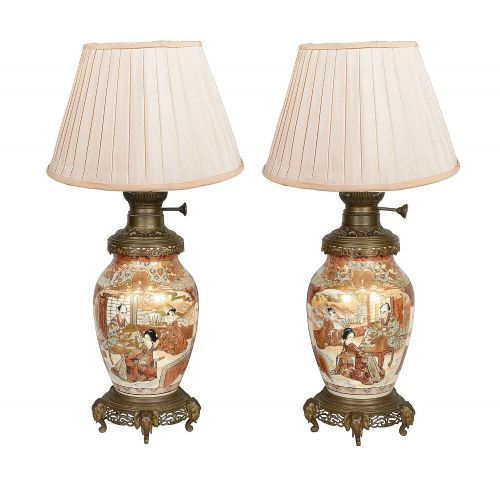
Over time, many vases were converted into table lamps while retaining their original patinated bronze bodies and sculpted handles.
How do you date meiji bronze items?
Dating relies on stylistic markers associated with the Meiji period between eighteen sixty-eight and nineteen twelve, alongside specific production traits like mixed metal inlay. Reference to Victorian import periods also helps place items arriving in Britain.
Archive records and listings show production spanning from the late nineteenth century into the early twentieth century, corresponding with international exhibitions.
Are these bronzes marked?
Some pieces bear signatures or foundry marks inlaid into the base or body, though many domestic export items remain unmarked. Signatures usually attribute the work to specific artists or specialised metalwork studios.
The presence of a signature often indicates higher workshop quality and individual craftsmanship.
How should I clean my bronze pair?
Maintenance requires gentle dusting with a soft dry cloth to protect the historic patinated surface. Avoid chemical polishes or water, which can strip the original finish and enamel work.
Preserving the natural oxidation maintains the aesthetic integrity developed over the decades.