



Japanese Metalwork Urns
Japanese metalwork urns bring together meticulous casting, patination and inlay from the Meiji period and surrounding decades.
Japanese Metalwork Urns
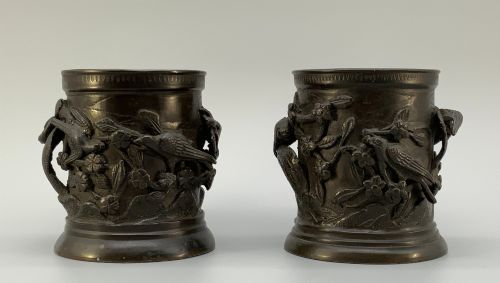
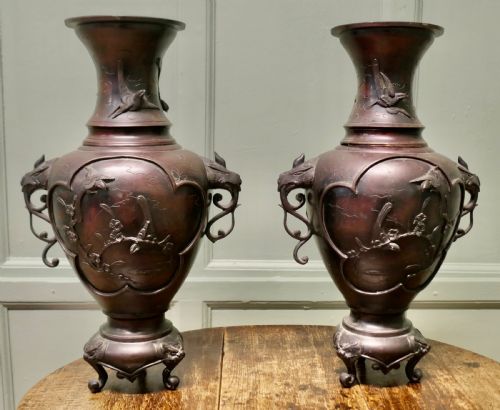
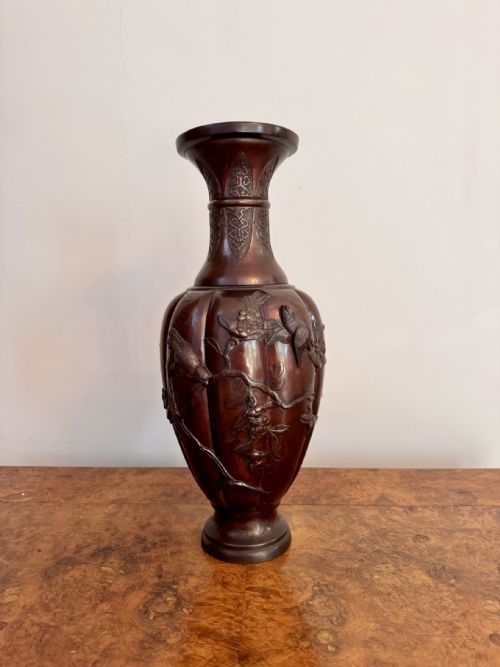
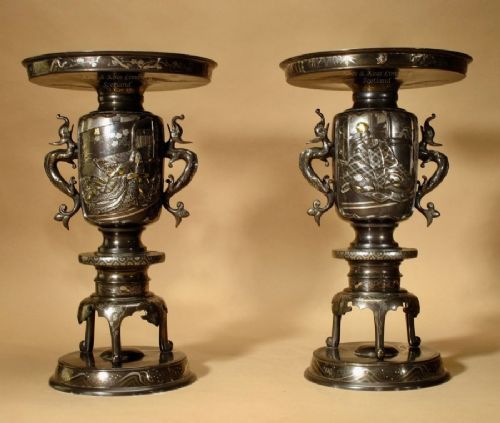
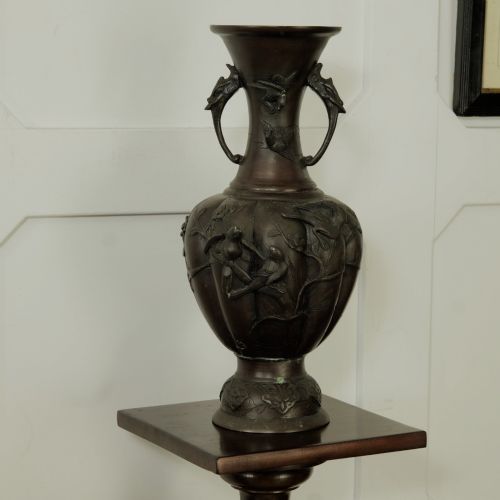
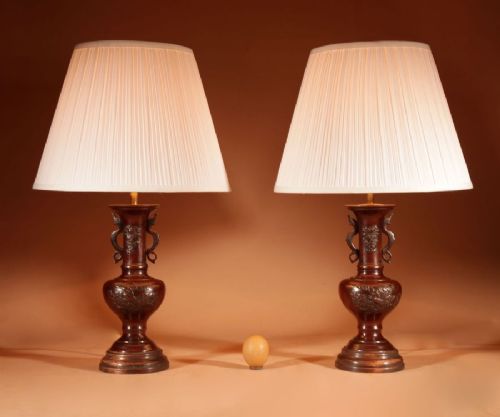
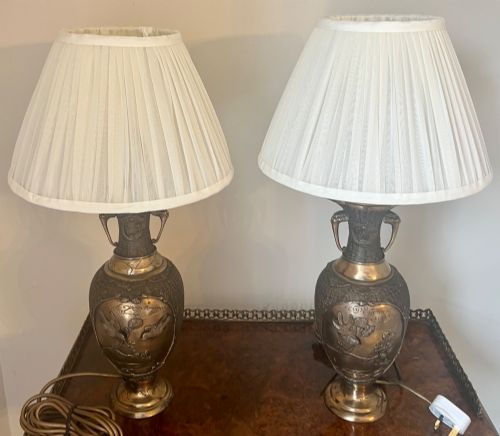
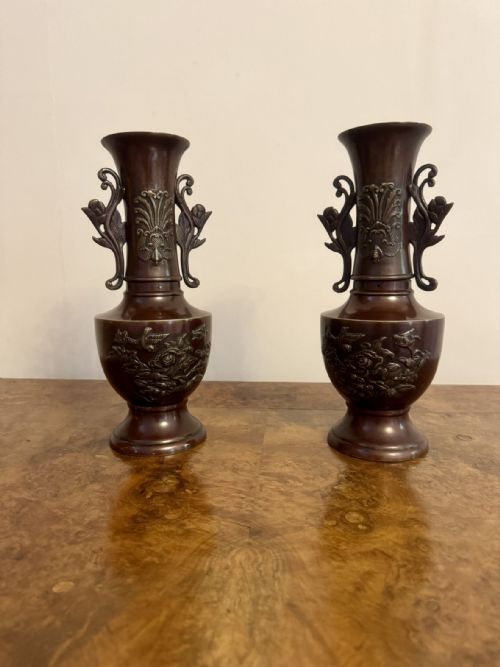
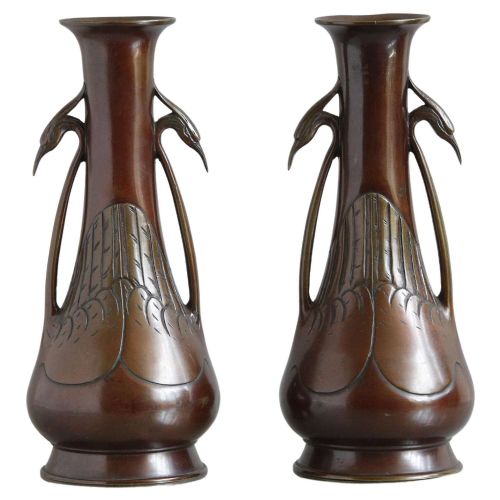
Japanese metalwork urns primarily comprise baluster vessels, jardiniere planters, temple water dispensers and twin-handled vases produced during the Meiji period and late nineteenth century.
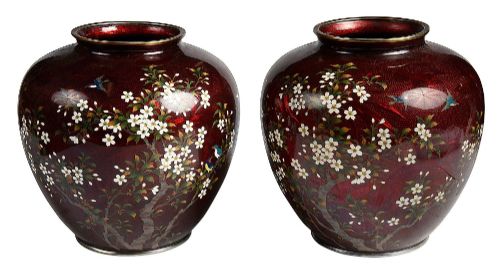
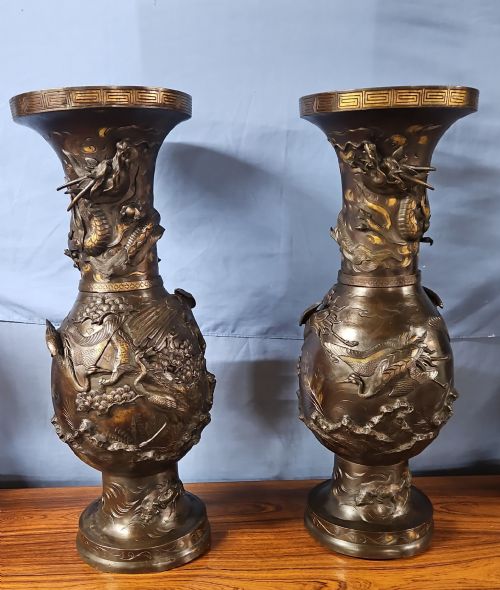
Buyers frequently encounter pairs of heavy bronze vases decorated with birds, blossom or dragons, alongside occasional cloisonne enamel palace vessels originating from the late Edo to early Showa eras.
Materials and technique
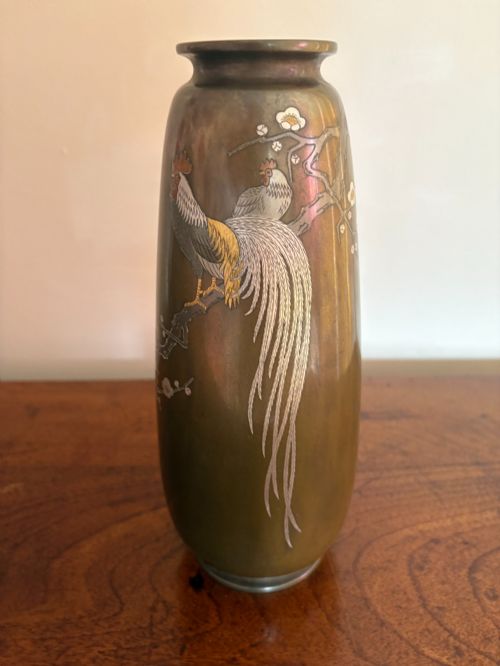
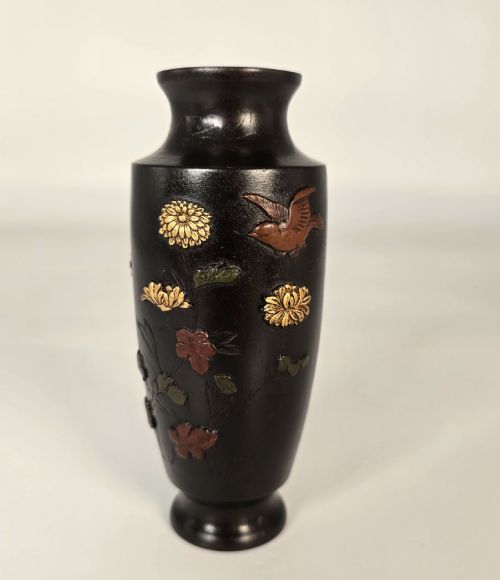
Artisans utilised bronze, copper and brass as foundational metals, often applying rich patination or combining mixed metals such as gold and silver for raised floral and faunal details.
Cloisonne enamel variations incorporate delicate wirework cells filled with coloured vitreous pastes, while cast pieces display intricate chased or inlaid motifs executed by specialised schools and workshops.
Listings feature heavy bronze vessels alongside copper, brass and cloisonne enamel examples created across the nineteenth and early twentieth centuries.
Craftsmanship and scale
Superior examples distinguish themselves through the crispness of chased details, the depth and stability of original patination, and the balanced integration of mixed metal inlays.
Substantial scale, such as towering palace vases or heavy multi-kilogram pairs, combined with signed panels or specialised handle motifs like egrets and dragons, elevates specific pieces above standard decorative production.
KANASAWA
The Japanese Metalwork Urns Glossary
- Meiji Period
- The era spanning 1868 to 1912 in Japanese history, associated with a surge in decorative metalwork destined for export. This timeframe accounts for the majority of bronze and cloisonne vessels found on the market.
- Patinated Bronze
- Metal treated with chemical solutions to produce controlled surface colouration ranging from deep browns to rich greens. This process protects the underlying alloy while enhancing decorative contrast.
- Mixed Metal
- The technique of combining disparate metals like gold, silver, copper and bronze within a single decorative surface. Artisans use this method to create naturalistic depictions of plumage, foliage and water.
- Cloisonne
- Enamel work created by soldering thin metal wires to a metal base to form enclosed cells that hold vitreous enamel pastes. Firing fixes the coloured glass powder into hard decorative patterns.
- Archaistic
- A stylistic approach that emulates ancient forms, such as early ritual bronzes from Chinese dynasties. These vessels appropriate ancient vessel shapes like the hu while retaining nineteenth-century manufacturing methods.
Japanese Metalwork Urns: Frequently Asked Questions
What distinguishes Meiji period bronze from later pieces?
Meiji period bronze typically displays heavier casting and more rigorous attention to surface patination, reflecting the high standards of nineteenth-century export workshops.
Later items often show simplified surface detailing and lighter metal gauges as production methods shifted.
How were these large bronze urns originally used?
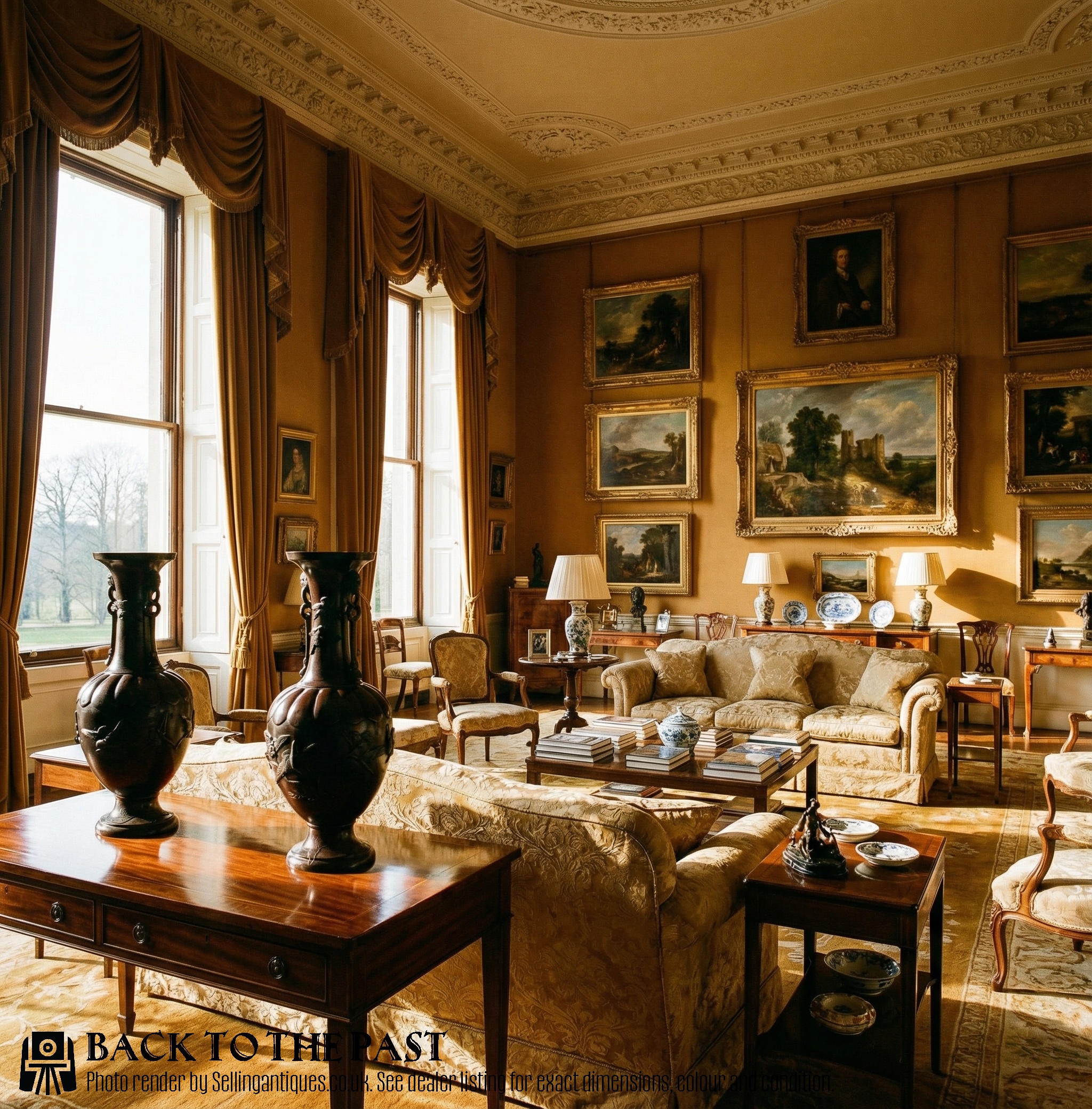
Large bronze urns and temple vessels served primarily as decorative focal points within domestic interiors or as functional receptacles for water and large floral arrangements.
Pairs were frequently placed upon pedestals or heavy tables in prominent reception rooms.
Are mixed metal inlays fragile?
Mixed metal inlays consist of fine wires and contrasting metal foils hammered into prepared channels on the bronze body, meaning they are secure under normal handling.
However, harsh cleaning agents can damage the surrounding patination and loosen delicate surface elements.
How do I identify a cloisonne enamel urn?
Cloisonne enamel urns feature smooth, vitrified surfaces where coloured pastes are held within a network of thin metal wires soldered to a copper or bronze foundation.
Under close inspection, the grid of metal separators remains visible across the entire decorative field.