




Mechanical Fusee Movement Clock
A mechanical fusee movement clock is a precision timepiece driven by a conical pulley and cord or chain, prized for its ability to maintain constant power.
Mechanical Fusee Movement Clock
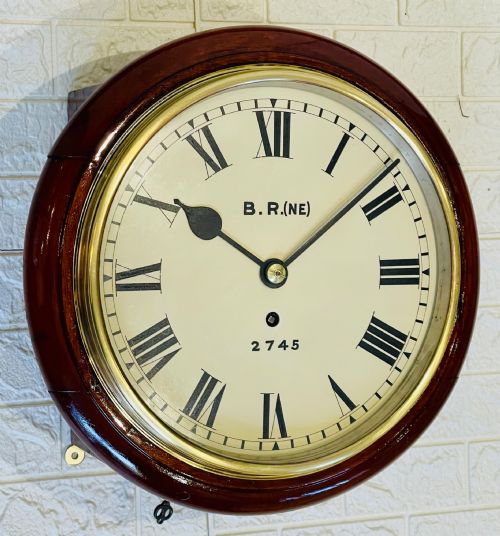
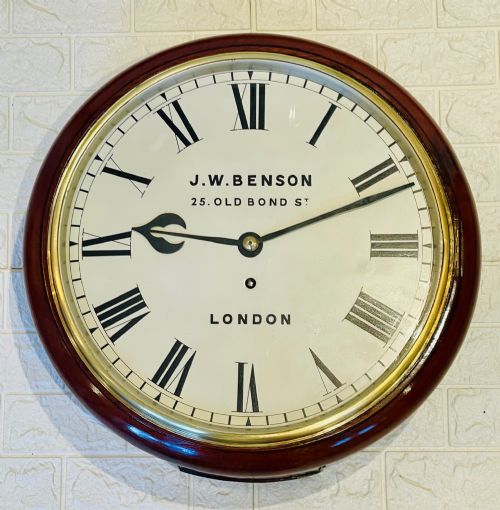
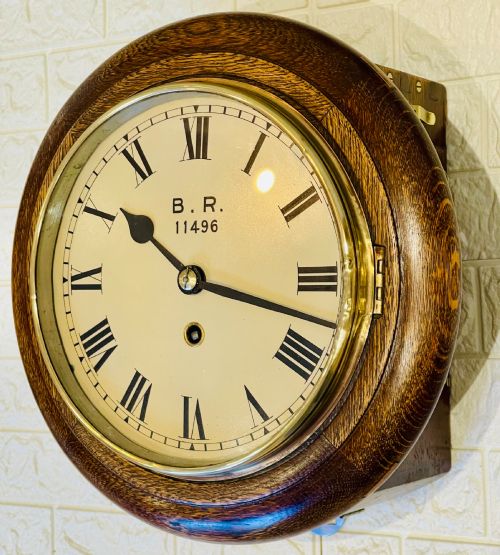
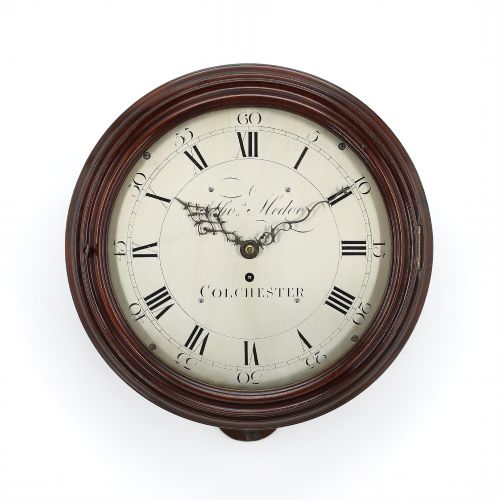
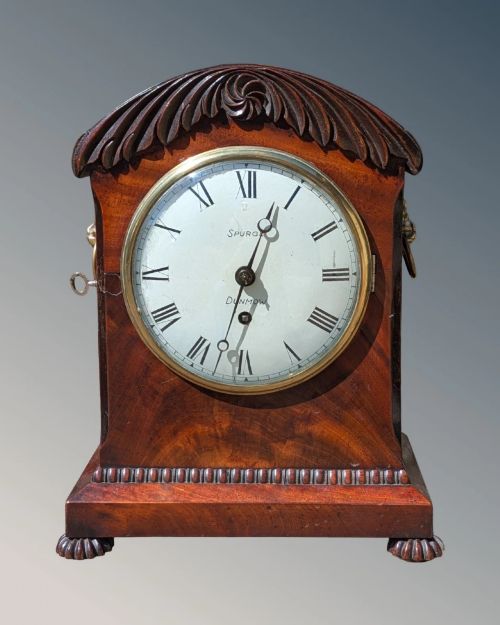
A mechanical fusee movement clock harnesses a weighted chain or cord wrapped around a spiral pulley to equalise the declining torque of the mainspring as it unwinds. These precision timepieces appear in several distinct formats across this page, predominantly as wall clocks, drop-dial variants, mantel clocks, and bracket clocks.
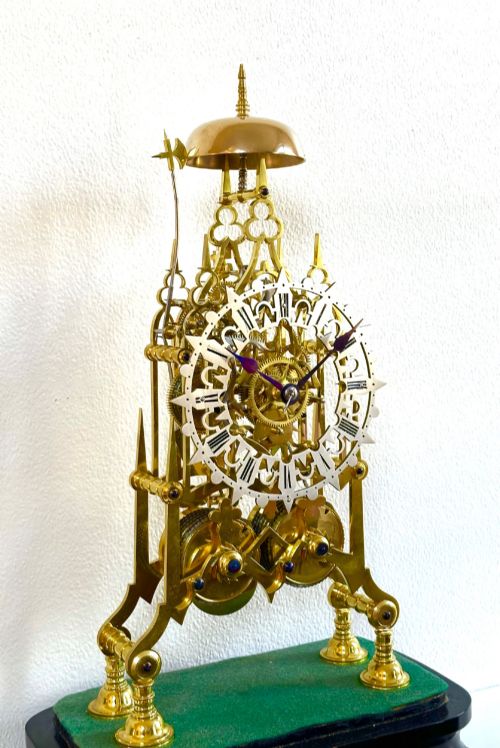
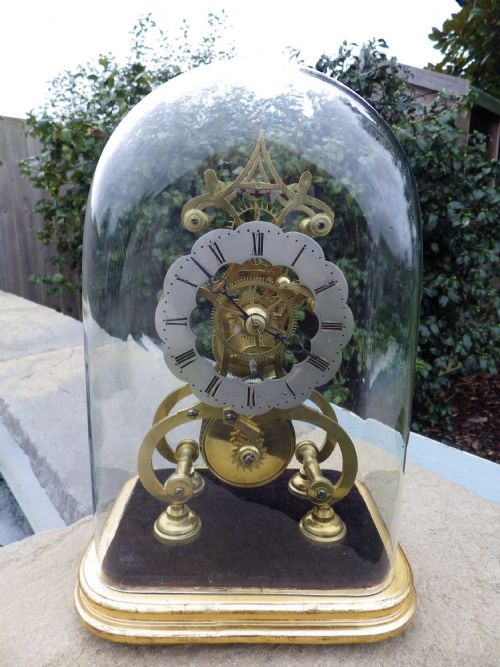
The selections span the Georgian, Victorian, Edwardian, and mid-twentieth-century eras, reflecting generations of British horological trade. Examples range from industrial railway dials and school clocks to elaborate skeleton clocks under glass domes and five-glass library pieces.
Mahogany and oak dominate the timber cases, alongside occasional rosewood, satinwood, and brass detailing. Buyers encounter local makers from various towns and cities alongside functional transport clocks associated with the railways.
Materials and Construction
Makers utilised chain or cord connections between the mainspring barrel and the cut spiral fusee pulley. Dials were constructed from painted wood, convex metal, or engine-turned gilded brass, often bearing the signature of the regional watchmaker.
One railway clock bears the inscription Gorgeous, proving that Victorian stationmasters appreciated a handsome dial.
Quality and Distinction
Cabinet quality also separates workshops, with crisp timber inlay, matched veneers, and undamaged brass bezels marking out superior productions. The clarity of the dial signwriting and the presence of original components further elevate a clock's standing.
Chave Taunton·Spurge Dunmow·Thomas Hedge of Colchester·John Walker·W. Burton·Butt Co Ltd·Hay London·Plumbly and Tupman·Sly Weymouth·Webb of Frome·Edwards Of London
The Mechanical Fusee Movement Clock Glossary
- Fusee
- A conical pulley with a helical groove designed to equalise the pull of the mainspring as it runs down. This mechanism ensures even force is delivered to the escapement throughout the running period.
- Bracket clock
- A portable table or mantel clock originating from an era when such pieces stood on wall brackets. They frequently feature detailed wooden cases and carrying handles.
- Drop dial
- A wall clock featuring an extended wooden case below the circular dial to accommodate a longer pendulum. This form was widely adopted by railway companies and institutions.
- Verge escapement
- An early type of escapement mechanism controlling the release of the wheel train. It works with a crown wheel to regulate the beat of the clock.
- Skeleton clock
- A timepiece with an open framework designed to expose the gear trains and movement plates. These are commonly displayed beneath protective glass domes.
Mechanical Fusee Movement Clock: Frequently Asked Questions
What is a fusee movement?
A fusee movement uses a conical pulley connected to a cord or chain to regulate power from the mainspring.
As the spring unwinds and loses tension, the chain moves to a wider section of the cone, maintaining steady force and improving timekeeping accuracy.
How do I wind a mechanical fusee clock?
Winding requires inserting a key into the dial aperture and turning it gently until resistance is felt.
Care must be taken not to overwind, and many fusee clocks maintain power during the winding process to prevent the time from stopping.
Where were drop dial clocks used?
Drop dial clocks were heavily utilised in railway stations, offices, and schools for clear public timekeeping.
Their robust wooden cases and legible painted dials made them suited to high-traffic municipal environments.
How do I care for a mantel clock?
Place the clock on a stable, level surface away from direct sunlight, drafts, and sudden temperature shifts.
Professional servicing every few years ensures the brass pivots and wheel trains remain clean and properly lubricated.