




Traditional Brass Desk Clock
A traditional brass desk clock brings mechanical precision and heavy metal warmth to a study.
Traditional Brass Desk Clock
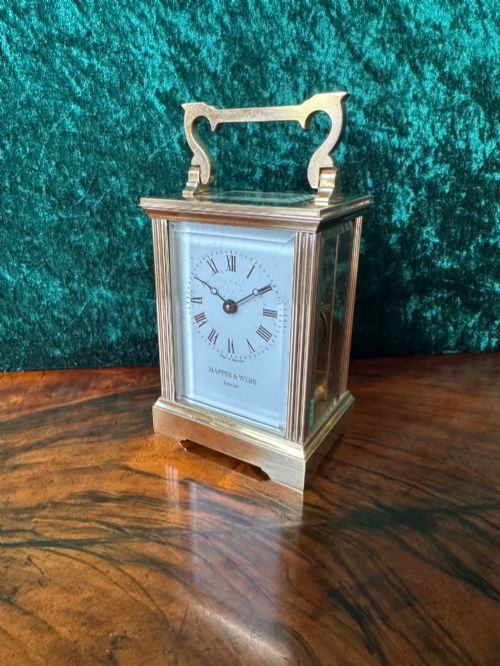
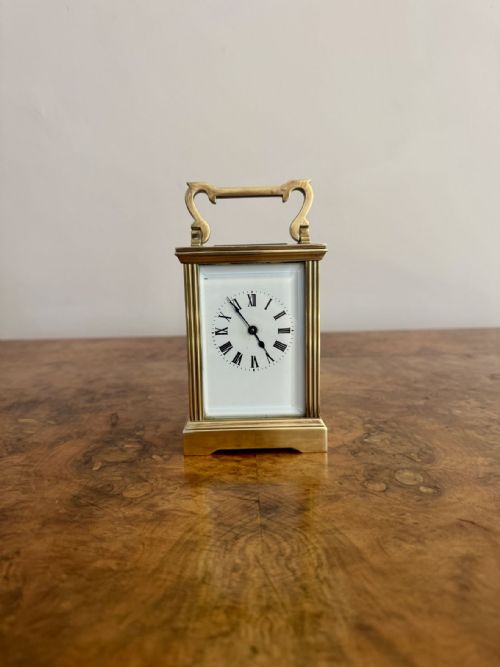
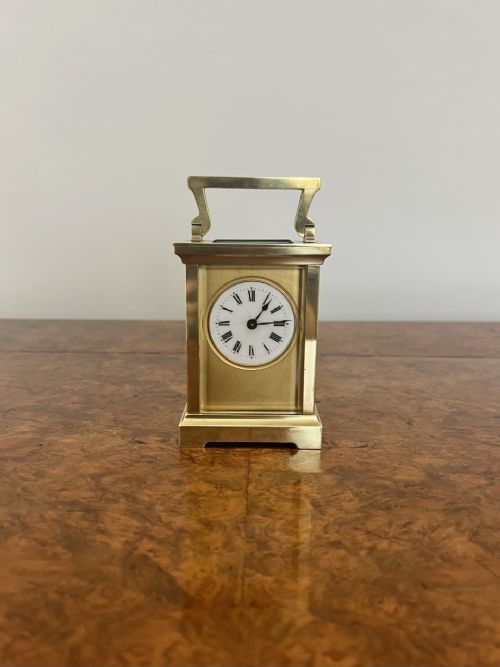
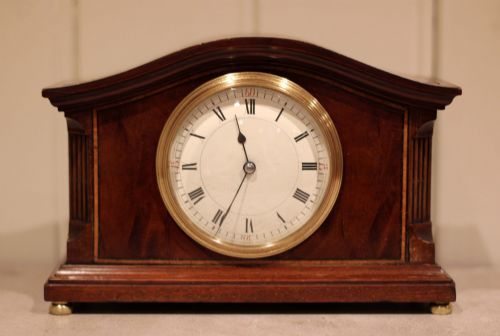
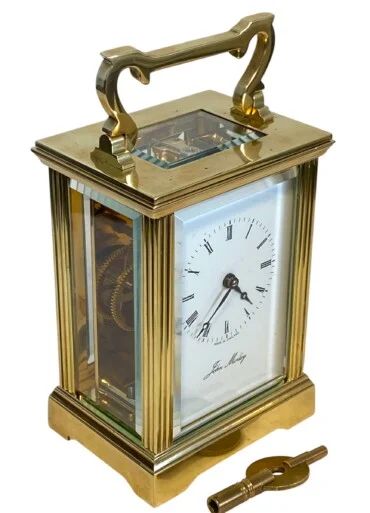
A traditional brass desk clock covers heavy carriage clocks, four glass mantel pieces, and smaller table timepieces built from the nineteenth century into the mid twentieth century. These objects combine polished brass framing with bevelled glass panels, white enamel dials, and mechanical movements designed for portable or desk use.
The version most commonly met on this page is the Edwardian or Victorian brass carriage clock, alongside French late nineteenth century examples housed in brass and glass cases. These pieces were built for travel or domestic desk placement, offering mechanical reliability within a compact metallic frame.
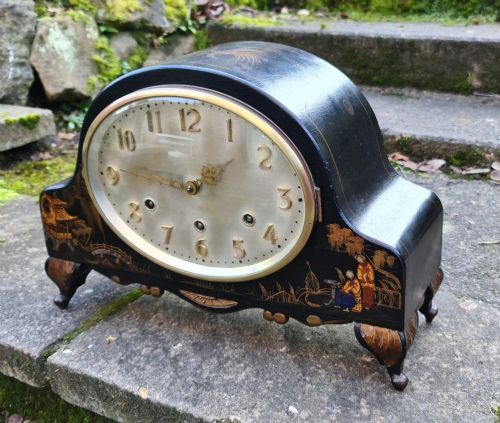
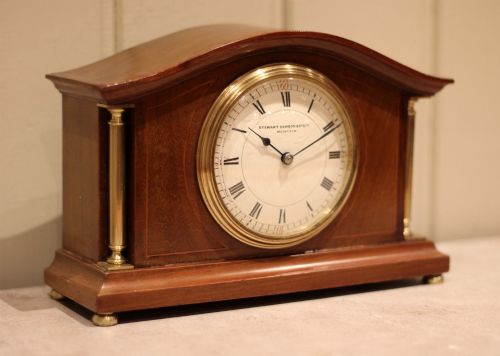
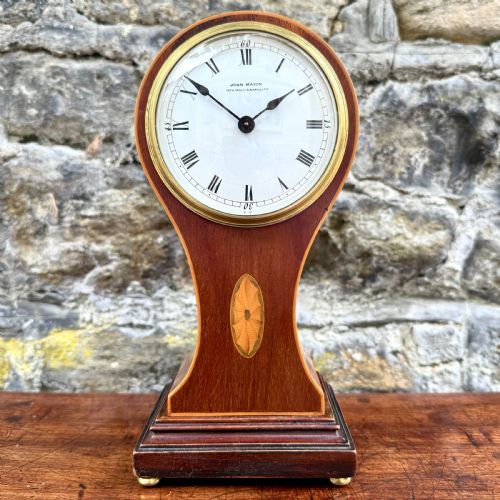
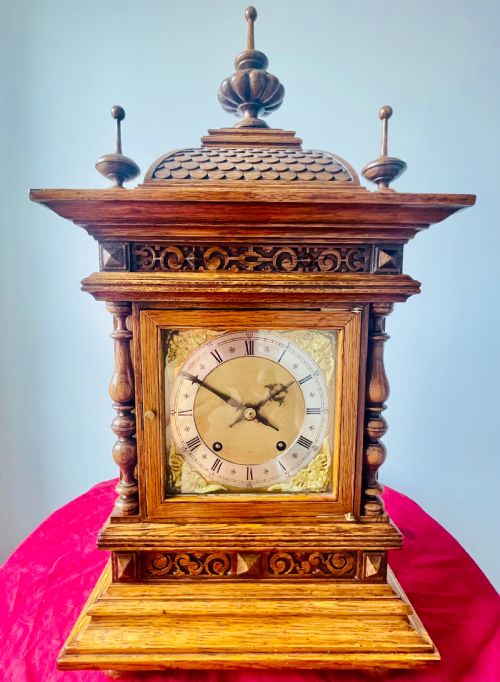
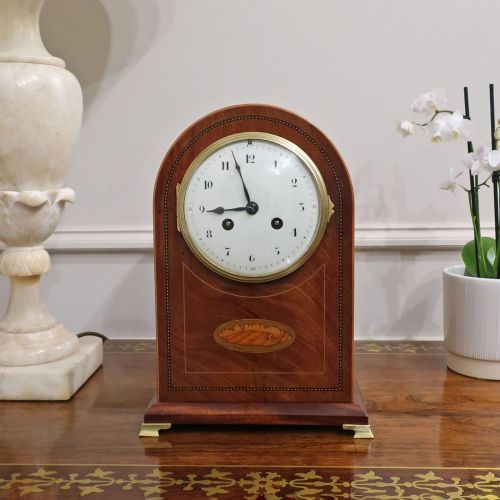
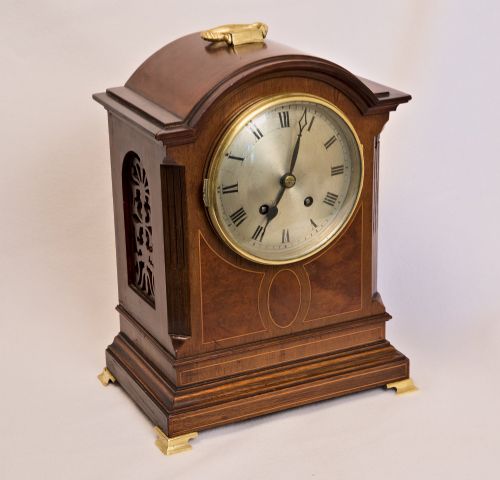
The selection ranges across Georgian styles, Regency pad top forms, and Edwardian cabinet pieces made from mahogany, walnut, and oak alongside solid brass housings. Buyers find both simple timepieces and striking movements equipped with glass panels that expose the escapement within.
How they were made
Cases are formed from cast and polished brass, frequently paired with bevelled glass windows that reveal the internal gear train and escapement. Cabinet versions utilise dense hardwoods such as mahogany, walnut, and satinwood, constructed with bracket feet and pad tops.
Dials rely on white enamel painted with Roman or Arabic numerals, protected behind hinged glass bezels and driven by eight-day mechanical movements. Metal components are hand-finished, while wooden cases receive French polish to highlight the grain.
One heavy specimen arrived carrying explicit notes of its former life as unyielding shop stock.
What varies in quality
The weight and casting thickness of the brass case separate standard production from superior workshops, as heavy metal housings retain better alignment of the internal movement. Finer examples feature crisp engraving on the brass mask surrounding the dial and thick bevelled glass without distortion.
The sophistication of the movement itself dictates the grade, moving from simple timepieces to quarterly striking bracket clocks with platform escapements. Maker reputation and the preservation of original enamel dials and blued steel hands complete the distinction.
Mappin and Webb·John Morley·Henry Jacob·L Epee·Tiffany·W. Burton·Piggin Norwich·Grey of Edinburgh·Winterhalder and Hofmeier·Hampson and Son
The Traditional Brass Desk Clock Glossary
- Carriage clock
- A portable spring-driven clock with a brass frame and glass panels, originally designed for travelling. These pieces usually feature a swinging handle on top.
- Platform escapement
- A small assembly containing the balance wheel and escapement fitted directly to the movement, common in carriage clocks. It allows the clock to keep time in any position without needing a pendulum.
- Fusee
- A conical pulley used in better mechanical clocks to maintain even power delivery as the mainspring unwinds. This mechanism ensures consistent timekeeping throughout the running period.
- Enamel dial
- A metal face coated with fused glass powder and fired to create a smooth, white surface for painted numerals. These dials resist fading and discolouration over centuries.
- Bracket clock
- A portable table clock originally designed to sit on a wall bracket or desk. They feature substantial wooden or brass cases with striking or chiming movements.
Traditional Brass Desk Clock: Frequently Asked Questions
How do I wind a carriage clock?
Use the matching key on the winding arbors found on the backplate of the movement. Turn gently until resistance is felt, avoiding over-winding to protect the mainspring.
Keep the clock upright during the process and handle the glass panels with care to prevent shifting the delicate platform escapement inside.
Why does my clock run fast or slow?
Mechanical clocks require regulation via a small lever near the balance wheel or pendulum. Moving the regulator towards fast or slow alters the effective length of the spring.
Minor temperature changes and house vibrations can also influence the rate, so small adjustments over several days yield the best timekeeping.
How do I date a brass carriage clock?
Examine the shape of the brass case, the style of the handle, and the typography on the enamel dial. Victorian and Edwardian examples often feature heavy brass castings and specific escapement types.
Maker signatures or patent stamps engraved on the backplate provide the most accurate reference for production dates.
Where should I place a desk clock?
Position the clock on a stable, level surface away from direct sunlight and heavy moisture sources. Desks, mantelpieces, and wooden side tables offer ideal support.
A stable foundation ensures the escapement beats evenly, which prevents the mechanical movement from stopping prematurely.