





Victorian Railway Dial Clock
A victorian railway dial clock is a sturdy timekeeper built to keep stations running on schedule, prized for its honest engineering and bold face.
Victorian Railway Dial Clock
A victorian railway dial clock is a heavy wall timekeeper designed for platforms, offices, and booking halls. Most examples found here date from the nineteenth century into the early twentieth century, spanning periods from Victorian and Edwardian up to nineteen thirty.
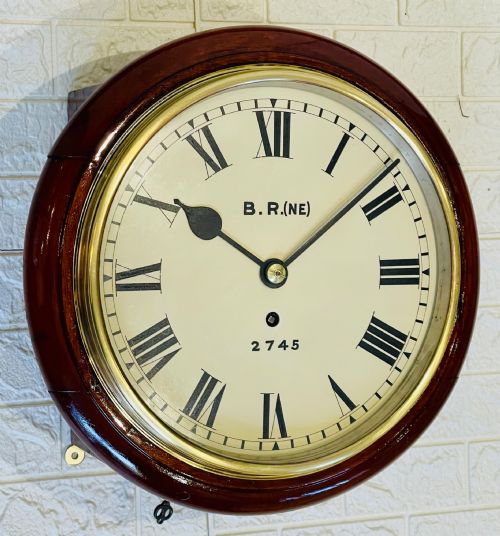
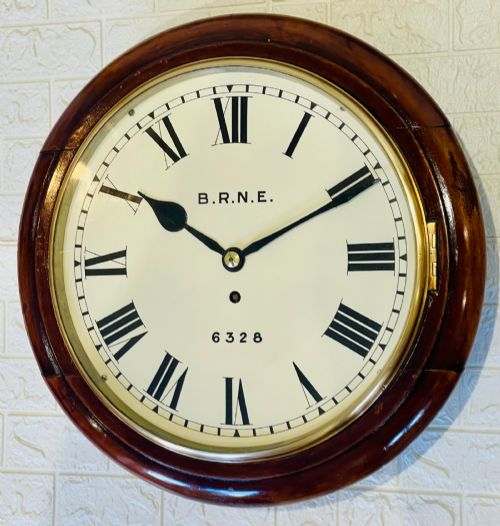
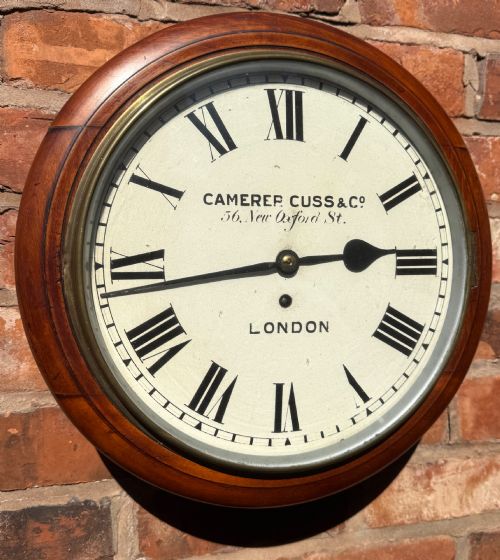
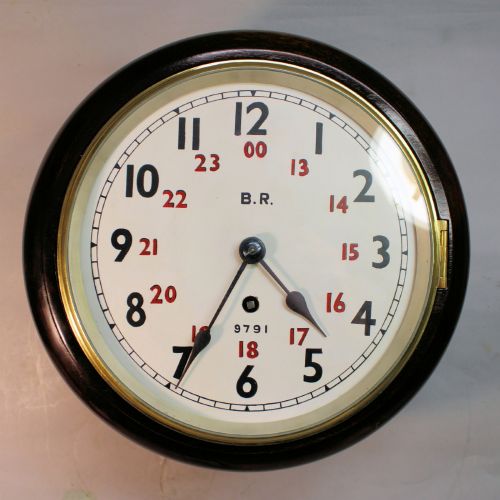
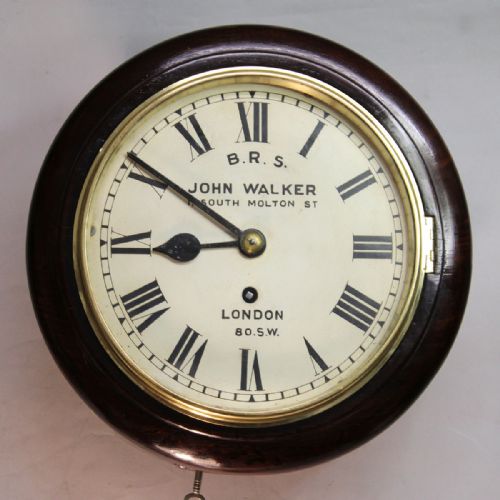
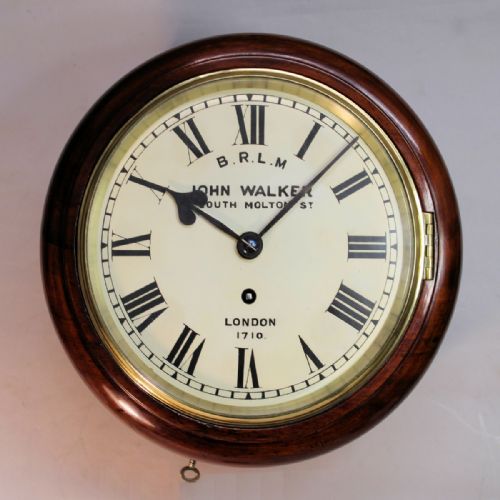
The dominant form is the round wall clock, often featuring a mahogany or oak case housing a clear painted iron dial protected by glass. Many pieces bear specific regional company markings or maker signatures from names like John Walker and Camerer Cuss.
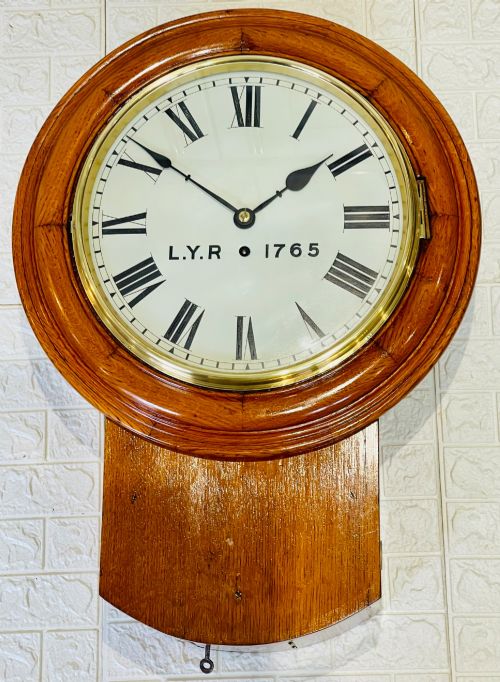
Buyers will encounter various formats, including standard fusee timepieces, drop dial wall clocks, and occasional double dial variants. These pieces bring a distinct industrial presence to domestic and commercial interiors alike.
How they were made
The cases rely on solid timbers like mahogany, oak, beech, and painted wood, turned or joined into robust circular housings built to withstand vibration and heavy use. Brass components inside support the precision movement.
Most traditional specimens utilise a fusee movement, a cone-shaped pulley and chain mechanism that equalises the mainspring's pull to maintain steady timekeeping. Dials are constructed from painted iron or wood, finished with bold numerals for distant legibility.
Listings feature movements spanning the Victorian period, nineteen hundred, and nineteen thirty, housed in mahogany, oak, and beech.
What varies in quality
Quality rests on the original maker and the crispness of the movement, where reputable London retailers and specialised railway workshops command greater regard. The choice of timber also shifts the character, with dense figured mahogany holding more prestige than simpler beech or plain painted housings.
The preservation of original company lettering, station association markings, and uncompromised dial paint elevates an example far above one with replaced components or modern repainting. Proportions range from compact eight-inch dials up to commanding eighteen-inch displays, each built for its specific architectural space.
Camerer Cuss And Co·John Walker·Thomas Gibbs·Anglo Swiss Watch Co
The Victorian Railway Dial Clock Glossary
- Fusee
- A conical pulley mechanism connected to a chain or cord that ensures even power distribution from the mainspring as it unwinds. This traditional setup is a hallmark of better nineteenth-century English timekeepers.
- Drop dial
- A wall clock featuring an extended lower wooden case below the circular dial, often housing a pendulum box and a bottom access door. These were widely utilised in railway offices and stations.
- Dial clock
- A round-faced wall clock designed for clear legibility in public spaces, typically mounted high on station walls. The face is protected by a hinged brass bezel and glass.
- Timepiece
- A clock that displays the time without a striking or chiming train. Most standard railway dial clocks were pure timepieces to ensure absolute reliability.
- Bezel
- The brass rim that holds the glass door protecting the dial face. It often swings open on a hinge to allow hand-setting and winding.
Victorian Railway Dial Clock: Frequently Asked Questions
How do I wind a fusee railway clock?
Use the appropriate winding key on the dial face to turn the arbor clockwise until resistance is felt. Care must be taken not to overwind the chain.
Most fusee movements require winding once a week to maintain consistent operation and timekeeping accuracy.
Where were these clocks originally hung?
These clocks were mounted on walls in railway stations, waiting rooms, signal boxes, and administrative offices across Britain. Their clear dials ensured staff and passengers could read the time from a distance.
Specific pieces often carry painted initials or numbers denoting the railway company and exact station of service.
How do I tell an original Victorian dial from a modern replacement?
Original Victorian dials are typically painted iron or wood, showing subtle signs of age, hairline crazing, and hand-painted numerals. Modern replacements often use printed paper or stark white plastic.
Examining the patina on the hands and the character of the lettering helps confirm period authenticity.
Can I hang a heavy railway clock on a standard wall?
Due to the dense mahogany or oak cases and heavy brass movements, these clocks possess substantial weight. They must be secured directly into masonry or solid wooden studs.
Using a sturdy wall bracket or a heavy-duty screw fixed firmly into a wall plug ensures safe suspension.