



Marquetry Wooden Cupboard
A marquetry wooden cupboard brings disciplined floral and geometric patterns into a room through finely cut veneers.
Marquetry Wooden Cupboard
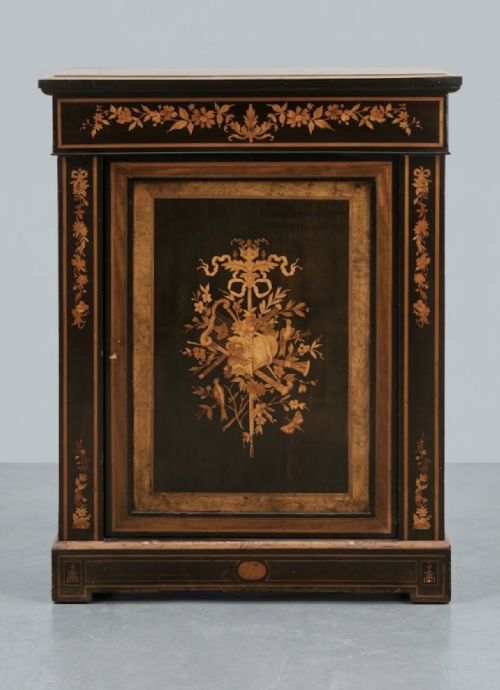
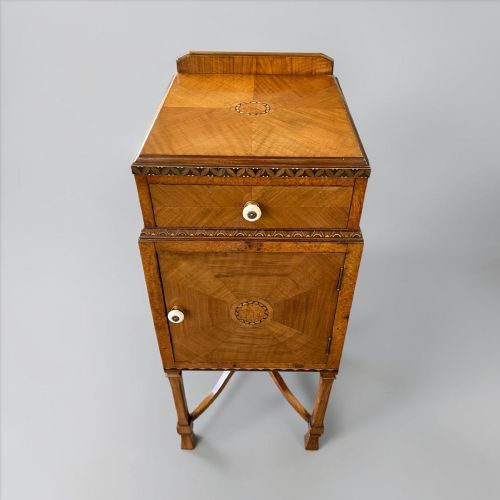
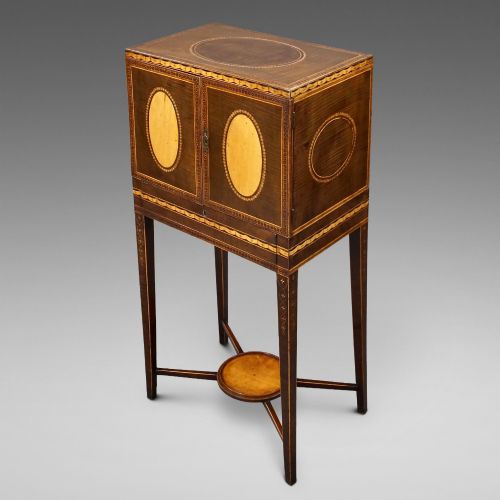
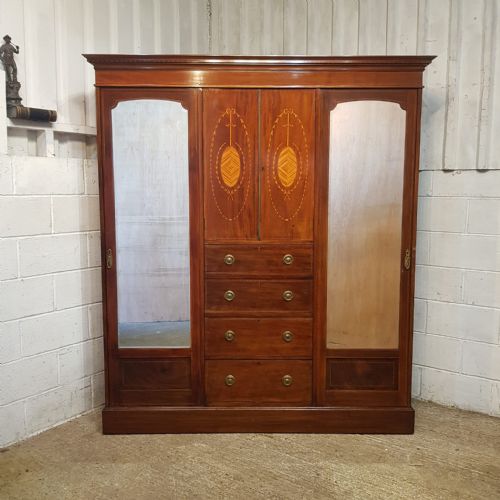
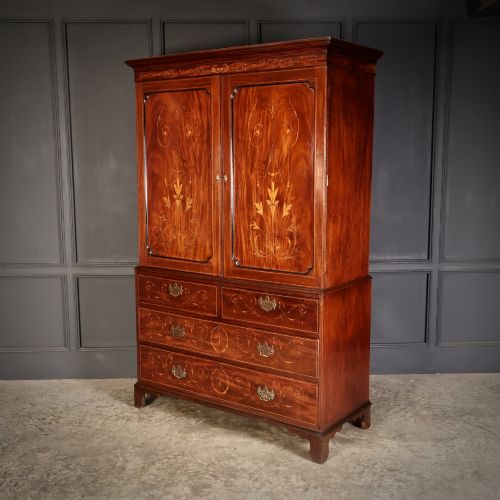
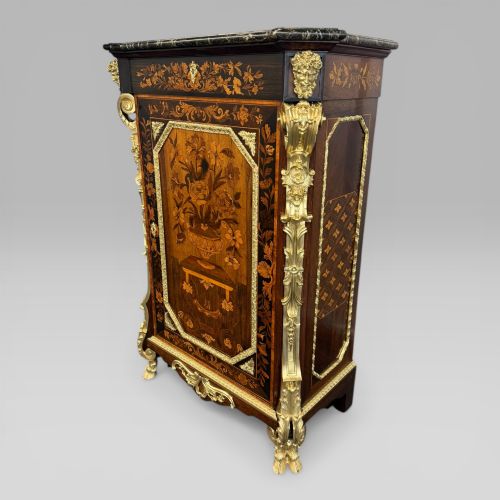
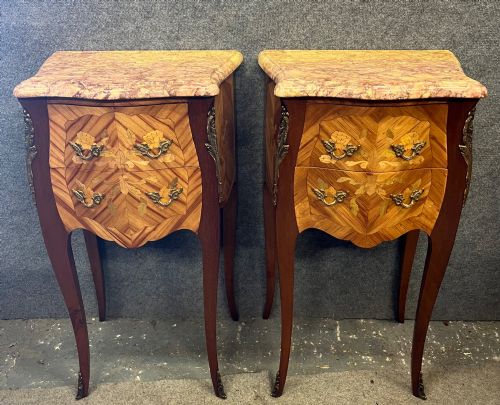
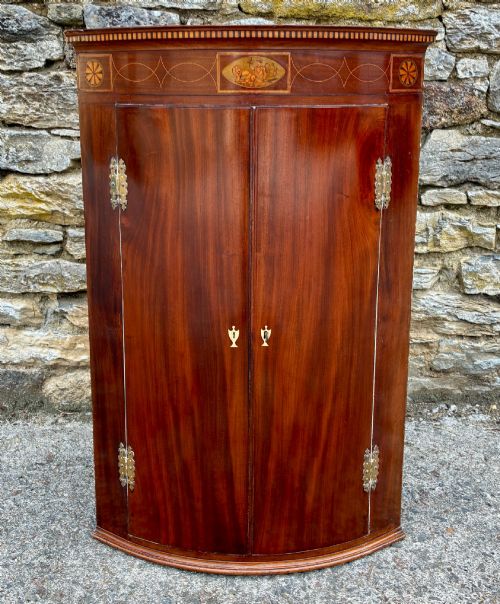
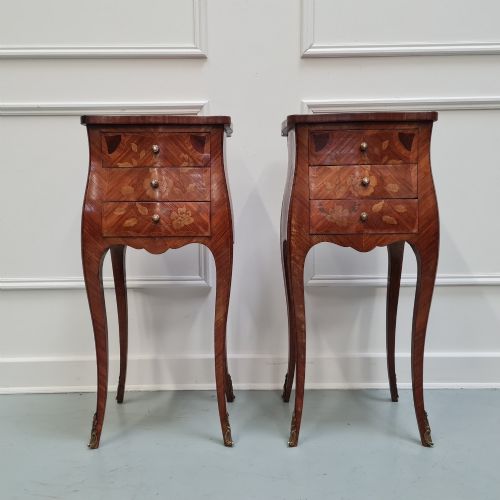
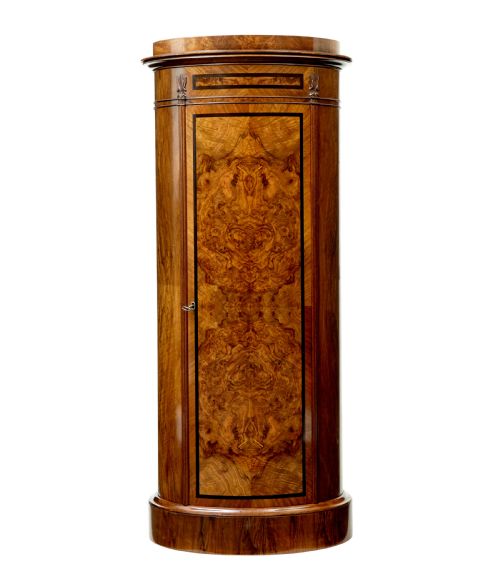
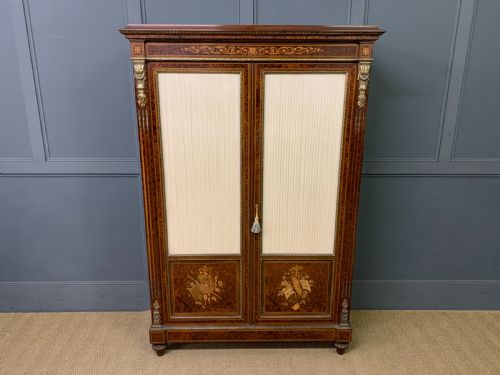
A marquetry wooden cupboard appears in many formats across this selection, ranging from compact bedside tables and corner cabinets to tall wardrobes and side cabinets. The most frequent versions span the eighteenth and nineteenth centuries, alongside pieces from the early twentieth century.
Makers shaped these storage items using regional traditions such as French Louis styles, Sheraton Revival designs, and Georgian proportions. Buyers will encounter floor-standing corner units, marble-topped bedside chests, and larger linen presses that combine practical storage with decorative veneer work.
The materials deployed in these cabinets include walnut, mahogany, and satinwood, often enhanced with contrasting timbers to form detailed patterns. These pieces function as focal points in a room while offering enclosed shelving or drawer space.
Materials and technique
Cabinetmakers constructed the carcases of these cupboards using solid timbers like mahogany, oak, and walnut, providing a stable foundation for decorative surfaces. They applied thin veneers of exotic and native woods to the exterior panels.
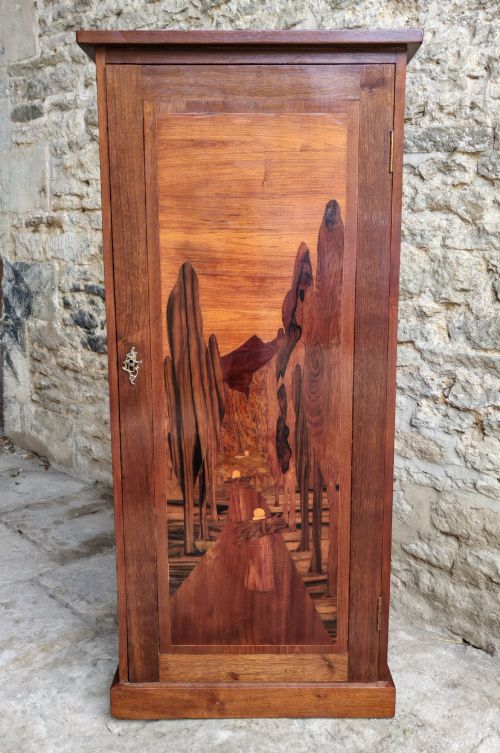
The marquetry decoration relies on cutting contrasting pieces of timber, such as satinwood, kingwood, and tulipwood, and fitting them together to create pictorial or geometric designs. Craftsmen occasionally integrated brass stringing and ormolu mounts to highlight the architectural lines of the cabinet.
Marble tops appear frequently on bedside cabinets and commodes from later periods, providing a durable and decorative upper surface. Interior fittings typically comprise fixed or adjustable wooden shelving designed to hold books, linen, or personal items.
Standards of execution
The distinction between ordinary and exceptional marquetry wooden cupboard examples rests upon the precision of the veneer cutting and the complexity of the timber selection. Master craftsmen achieved seamless joints between contrasting woods, whereas lesser pieces show wider gaps filled with dark stopping.
The depth and clarity of the natural grain figure in the primary timber dictate the overall visual impact of the facade. Cabinets that retain harmonious colour variation across the entire patterned surface demonstrate superior material selection by the maker.
Structural integrity and the retention of original brass hardware or marble slabs influence the standing of a piece. Retaining the original surface polish rather than a heavy modern refinishing preserves the subtle tones of the inlaid woods.
Edward Holmes Baldock·Whytock & Reid of Edinburgh·Gordovil Spain·Pietro Ferrario
The Marquetry Wooden Cupboard Glossary
- Marquetry
- A decorative technique where small pieces of veneer are assembled into pictorial or geometric patterns on a wooden carcase. This differs from inlay, which involves recessing designs into a solid surface.
- Satinwood
- A lustrous, hard timber with a yellowish colour and a satiny sheen, frequently used in eighteenth and nineteenth-century cabinetmaking for contrasting details. It takes a high polish.
- Ormolu
- Gilded bronze mounts applied to furniture for decorative effect, common on French and high-status British pieces. The metalwork is cast and chased before gilding.
- Linen press
- A tall cupboard featuring sliding trays or shelves in the upper section for storing textiles, often set above a base of wider drawers. Georgian examples frequently display figured mahogany veneers.
- Kingwood
- A dense, heavy timber with dark violet-brown streaks used for contrasting banding and geometric marquetry panels. It originates from South America and gained popularity in French cabinetwork.
Marquetry Wooden Cupboard: Frequently Asked Questions
What is a marquetry wooden cupboard?
A marquetry wooden cupboard is an enclosed storage piece decorated with fitted veneers of various coloured timbers. These designs often depict floral motifs, urns, or geometric arrangements across the doors and drawer fronts.
Such cabinets range from small bedside chests to large bookcases and wardrobes. They combine practical shelving with ornamental woodworking traditions spanning several centuries.
Where should I place a corner cupboard?
A corner cupboard fits directly into the meeting point of two walls, utilising space that often remains empty. Tall floor-standing versions work well in dining rooms or hallways for displaying objects.
Smaller hanging or pedestal variants suit studies and bedrooms. Their angled shape allows them to anchor an awkward junction in a room layout.
How do I clean marble topped cabinets?
Marble surfaces require gentle cleaning with a soft cloth and warm water. Avoid acidic household cleaners or abrasive scouring powders, which etch the polished stone surface.
Dry the marble thoroughly after washing to prevent water spotting. Periodic waxing can help protect the stone from staining.
How do I identify a Sheraton Revival piece?
Sheraton Revival furniture dates to the late nineteenth and early twentieth centuries, drawing inspiration from late eighteenth-century neoclassical designs. These pieces typically feature symmetrical proportions and delicate satinwood inlay.
Look for tapered legs, painted floral swags, and restrained classical motifs. The construction materials and secondary woods inside the drawers usually point to this later manufacturing period rather than the seventeen-hundreds.