





Restoration Walnut Cabinet
A restoration walnut cabinet brings intense grain and deep timber tones to a room, offering period presence and storage.
Restoration Walnut Cabinet
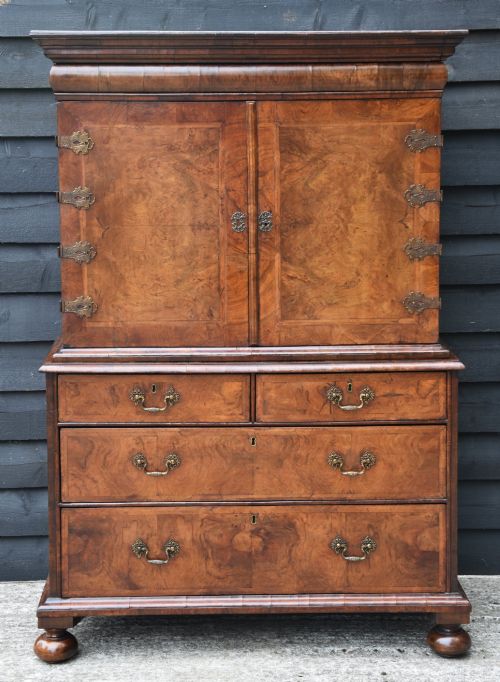
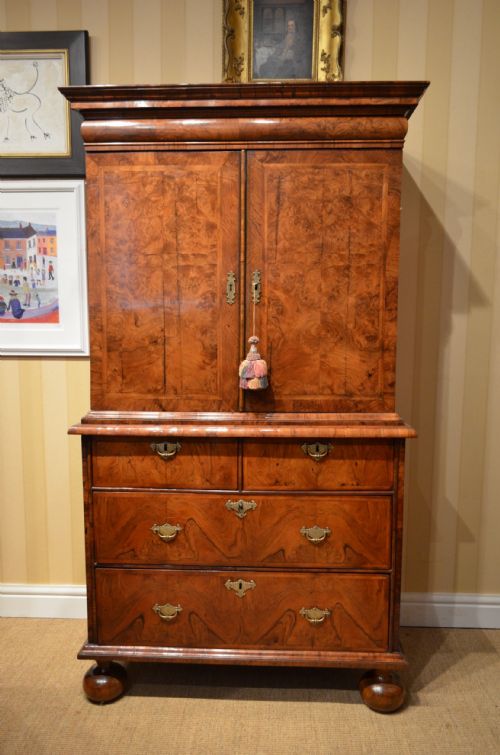
A restoration walnut cabinet encompasses pieces from the seventeenth and eighteenth centuries, including bureau cabinets, chests of drawers, and cabinets on stands. These items are constructed using walnut, burr walnut, and oak, alongside decorative veneers.
The most common forms on this page are seventeenth-century William and Mary examples featuring oyster veneers and elaborate stands. Pieces span from the late seventeenth century into the nineteenth century, covering English, Dutch, and French origins.
Buyers seek these cabinets for their rich timber surfaces and historical joinery. Each piece demonstrates the domestic storage design of its respective period.
Materials and construction methods
Cabinet makers utilised solid oak and pine for carcases, applying walnut and olive wood veneers to external surfaces. Oyster veneering involved slicing small branches transversely to create circular patterns across the drawer fronts and panels.
Marquetry work incorporated boxwood and other timbers to form intricate inlaid patterns, notably seaweed designs. Brass hardware such as drop handles and escutcheons completed the construction of these seventeenth and eighteenth-century pieces.
Restoration Walnut Cabinet Retail Price Guide 2026
Typical asking prices for restoration walnut cabinet among the pieces listed under this phrase on Sellingantiques today, from the lower quarter to the upper quarter. They describe what is for sale here now, not the wider market.
Branch cuts create natural oyster patterns that look remarkably like scattered coffee beans across the drawer fronts.
Assessing quality in walnut furniture
Quality rests upon the selection and matching of timber veneers across the façade. Finer examples display carefully aligned oyster veneers and crisp marquetry work that maintains symmetry.
The integrity of the underlying carcase and the retention of original brass fittings influence the standing of a piece. Stands, bases, and lower structures that match the upper cabinet in age and timber elevate the overall coherence.
The Restoration Walnut Cabinet Glossary
- Oyster veneer
- Slices of timber cut transversely from small branches to produce circular or oval patterns resembling oyster shells. This technique gained popularity in the late seventeenth century.
- Seaweed marquetry
- An intricate form of inlay resembling seaweed or arabesque foliage, typically executed in boxwood against a dark walnut background. It decorates the finest surfaces of the period.
- Bureau cabinet
- A desk form featuring a sloping fall front that opens to reveal internal compartments, usually surmounted by a glazed or panelled upper cupboard.
- Burr walnut
- Timber taken from growths on walnut trees that produce highly figured, swirling grain patterns. It is sliced into fine veneers for high-status furniture fronts.
Restoration Walnut Cabinet: Frequently Asked Questions
How do I identify a William and Mary piece?
William and Mary furniture often displays geometric oyster veneers, seaweed marquetry, and elevated stands with turned legs.
These pieces typically date from the late seventeenth century and utilise walnut or olive wood.
Where should I place a cabinet on stand?
A cabinet on stand works best against a sturdy wall in a principal room where its elevation and detailed grain can be appreciated.
Ensure the room maintains stable humidity to protect the delicate nineteenth and seventeenth-century veneers.
What does requiring restoration mean for a cabinet?
Requiring restoration indicates that the piece needs attention to its timber surfaces, structure, or veneers before regular use.
Buyers should expect to stabilise loose veneers or address surface wear appropriate to seventeenth and eighteenth-century items.