



Marquetry Pedestal Dining Table
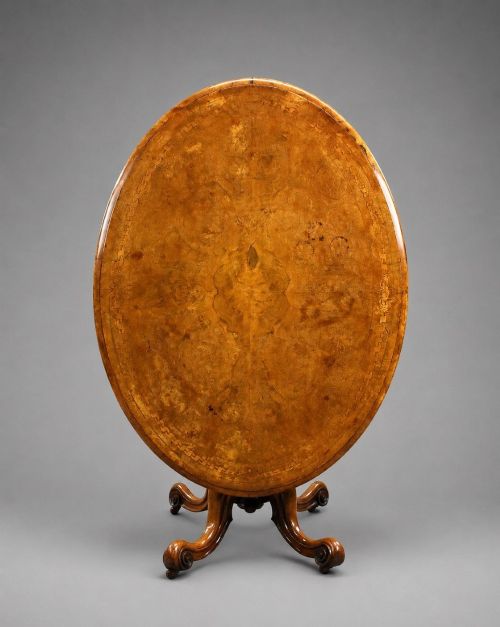
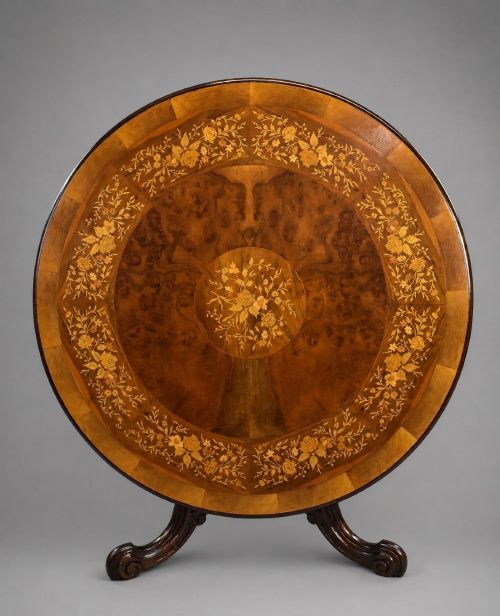
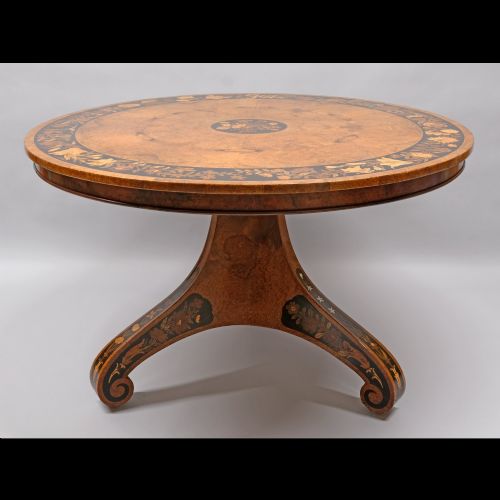
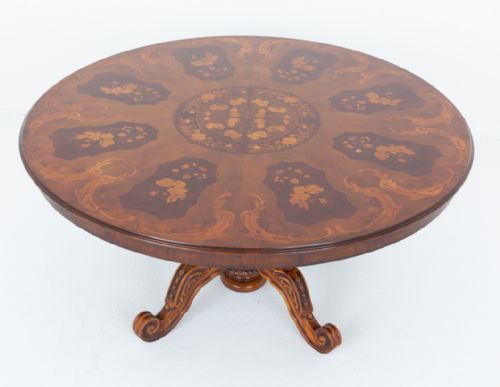
A marquetry pedestal dining table brings together intricate wood veneers and substantial nineteenth-century timber forms for a central room setting.
Marquetry Pedestal Dining Table
When you search for a marquetry pedestal dining table, you encounter nineteenth-century walnut, rosewood, and mahogany examples often categorised in period records as centre tables, loo tables, or breakfast tables. These pieces span the Victorian, Regency, and Edwardian eras, utilising central column supports rather than standard four-leg configurations.
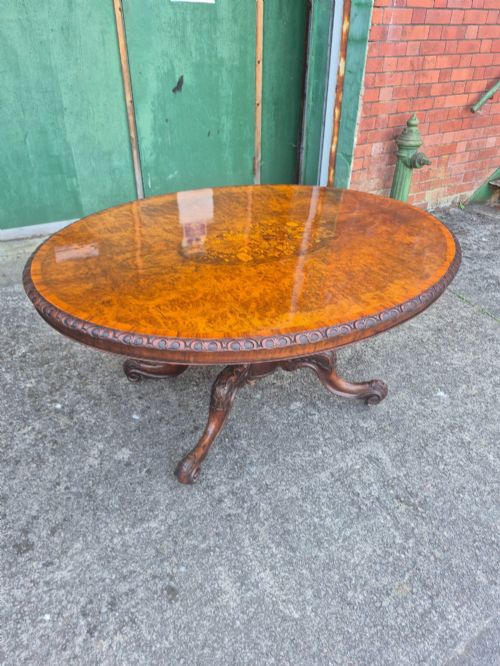
The assortment on this page leans heavily toward Victorian burr walnut and nineteenth-century rosewood variants featuring elaborate inlaid surfaces. While many carry the broader label of centre or breakfast tables, their substantial proportions and pedestal bases serve dining and gathering functions effectively.
Materials and construction methods
Cabinet makers built these tables using solid timber frames overlaid with figured veneers such as burr walnut, birdseye maple, and pollard oak. Marquetry decoration relied on precise hand-cutting of contrasting timbers, embedding boxwood and satinwood directly into the primary surface.
Many examples incorporate brass inlay or gilt carvings alongside the timber marquetry. Pedestal supports typically feature carved wooden columns resting on heavy, multi-footed platforms, occasionally housing tilt-top mechanisms for storage.
Several tables retain their original tilt mechanisms, ready to save space after dinner just as they did in the eighteen-fifties.
Distinctions in quality and execution
The standard of a marquetry pedestal dining table rests upon the precision of the veneer work and the depth of the timber figuring. Superior pieces display seamless integration of contrasting woods without lifting edges or crude filler.
Structural stability in the central column and base platform separates finer examples from standard production. Well-executed carving on the pedestal and the crispness of the boxwood or brass inlay indicate higher workshop standards.
Holmes Baldock·John Kendal
The Marquetry Pedestal Dining Table Glossary
- Marquetry
- Decorative veneer work assembled in patterns to form pictures or geometric designs on a furniture surface. This technique uses thin slices of various coloured woods fitted together precisely.
- Burr walnut
- Timber taken from a tree growth or burl, producing swirling, highly figured grain patterns prized by nineteenth-century cabinet makers. It provides a rich visual texture for table tops.
- Tilt-top table
- A table designed with a mechanism allowing the top to pivot vertically when not in use. This feature saved floor space in period drawing rooms.
- Loo table
- A large round or oval nineteenth-century table originally used for the card game loo. These pieces share the pedestal format commonly sought for dining.
- Centre table
- A freestanding table designed to be viewed from all sides rather than pushed against a wall. They frequently feature decorative veneer work across the entire top surface.
Marquetry Pedestal Dining Table: Frequently Asked Questions
What is a marquetry pedestal dining table?
These are nineteenth-century freestanding tables supported by a central pillar and heavy base, decorated with inlaid wood veneers. They typically date from the Victorian or Regency periods.
Such tables were designed to stand in the middle of a room, functioning as breakfast tables, loo tables, or general dining surfaces.
How do I care for burr walnut?
Burr walnut requires stable indoor humidity and protection from direct sunlight to prevent the delicate veneers from drying or fading. Regular dusting with a soft, dry cloth preserves the polished surface.
Avoid placing hot items or liquids directly onto the wood to protect the historic polish and underlying marquetry.
What is a tilt-top mechanism?
A tilt-top mechanism allows the upper surface of the table to rotate and lock into a vertical position against the pedestal. This ingenious design allowed nineteenth-century households to store large tables against walls when rooms were needed for other purposes.
When locked flat, a sturdy brass catch or wooden wedge keeps the top secure for dining.
How do I distinguish Regency from Victorian tables?
Regency tables often feature rosewood construction with geometric brass inlay and formal classical proportions. They reflect neoclassical design influences from the early nineteenth century.
Victorian pieces more frequently utilise burr walnut with elaborate floral marquetry, curved cabriole elements, and heavier, highly carved pedestal bases.