
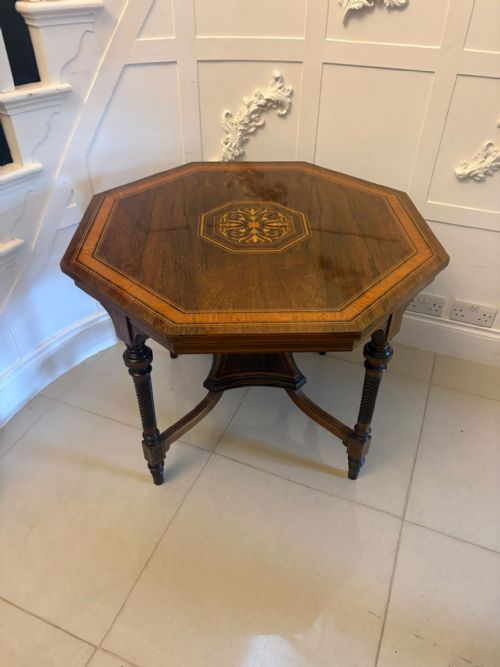
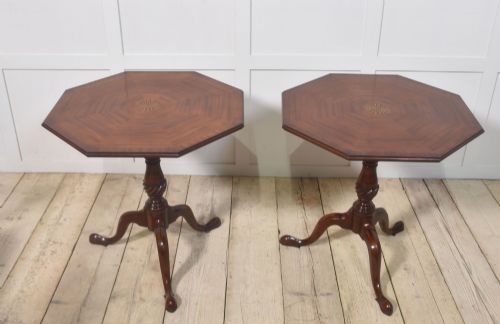


Marquetry Octagonal Tea Table
A marquetry octagonal tea table brings intricate timber work and geometric geometry into a room, offering a functional surface steeped in historical character.
Marquetry Octagonal Tea Table
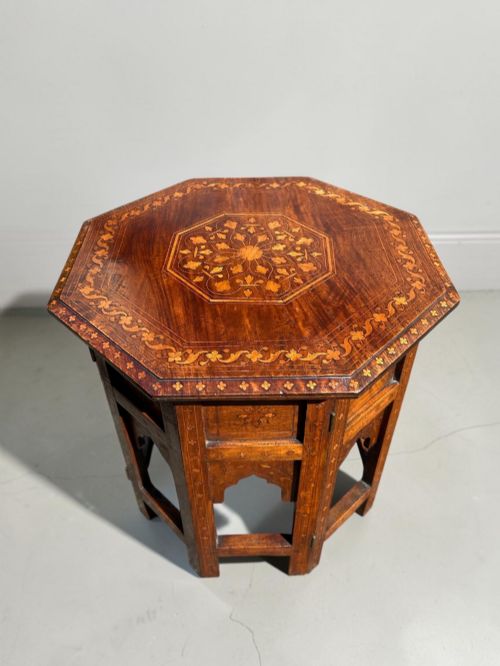
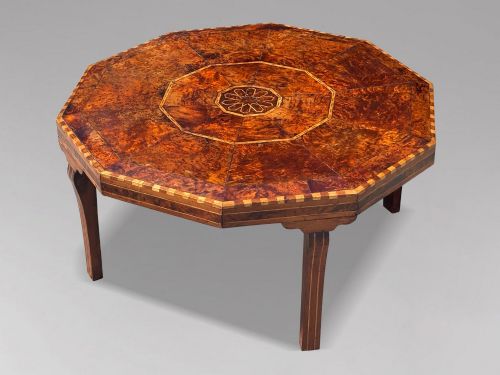
A marquetry octagonal tea table serves primarily as a striking centre or occasional piece, designed with eight distinct sides that lend a geometric balance to domestic spaces. These tables emerge from various periods including the Georgian and Victorian eras, as well as Edwardian and later 19th-century workshops.
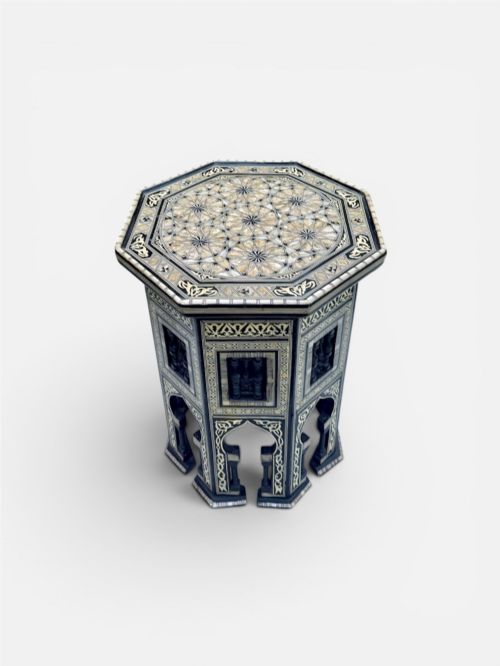
The materials span rich hardwoods such as rosewood, walnut, and mahogany, frequently embellished with elaborate wood inlay, brass, or mother of pearl. Origins vary widely, taking in British cabinet-making traditions alongside Anglo-Indian, Middle Eastern, and Italian Sorrento influences.
Buyers encounter forms functioning variously as coffee tables, side tables, and occasional tables, often retaining the compact proportions suited to display or hospitality. Each piece showcases regional decorative grammar, from British floral marquetry to intricate geometric lattice work.
Materials and construction methods
Cabinet makers constructed the foundational carcass using dense timbers such as mahogany, walnut, and rosewood, ensuring structural stability for the multi-sided top. Secondary woods provided a robust framework beneath the visible show surfaces.
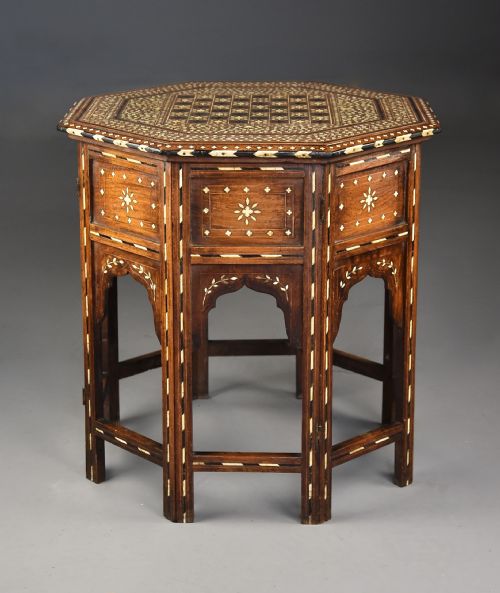
Artisans applied decorative veneers and detailed wood inlay, combining boxwood, satinwood, and exotic species to build pictorial or geometric motifs. Inlaid brass wire and mother of pearl elements further enriched the surfaces, particularly in Anglo-Indian and Middle Eastern examples.
Listings feature rosewood, walnut, and mahogany timbers combined with brass and mother of pearl.
Judging quality and execution
The sophistication of the timber selection and the precision of the marquetry define the upper tier of these tables. Finely cut veneers that fit tightly without excessive filler demonstrate superior workshop discipline.
Structural integrity of the eight-sided jointing and the stability of the central pillar or leg supports distinguish master craftsmanship from simpler production. The crispness of hand-carved details and the depth of the polished finish complete the distinction.
The Marquetry Octagonal Tea Table Glossary
- Marquetry
- Decorative veneer work assembled in patterns or pictures using thin slices of wood, shell, or ivory. This technique transforms a plain tabletop into a canvas of contrasting tones.
- Octagonal
- Having eight sides and eight angles. This specific geometric format alters the traditional square or round tea table footprint.
- Sorrento Ware
- Intarsia woodwork originating from the Italian town of Sorrento, typically featuring delicate floral or architectural marquetry. These pieces often utilise pale contrasting woods.
- Hoshiarpur
- A North Indian centre renowned for intricate woodwork involving detailed inlay of brass, bone, or contrasting timbers. Such work frequently covers the entire surface of occasional tables.
Marquetry Octagonal Tea Table: Frequently Asked Questions
How do I care for a marquetry table?
Keep these timber surfaces away from direct heat sources and strong sunlight to prevent the delicate veneers from lifting or drying out. Regular dusting with a soft, dry cloth preserves the polished finish.
Apply high-quality beeswax sparingly when the wood appears dry, buffing gently to maintain the natural lustre of the rosewood or mahogany.
Were these tables actually used for tea?
Many of these multi-sided tables served as convenient surfaces for serving tea, holding porcelain pots and cups during formal gatherings in the parlour.
Over time, their decorative geometric tops and manageable proportions led to their adoption as general centre pieces, lamp tables, or occasional display surfaces.
How do I distinguish Victorian from Edwardian examples?
Victorian pieces often favour heavier timbers like rosewood and walnut, paired with dense, deep floral marquetry or elaborate brass inlay. The overall aesthetic leans toward rich, dark tones and substantial presence.
Edwardian tables tend to display lighter framing timbers, including maple or satinwood, reflecting a shift toward airier drawing room aesthetics and refined, simpler lines.
What is Anglo-Indian inlay work?
Anglo-Indian pieces combine traditional British furniture forms with intricate craftsmanship from Indian workshops, particularly in regions like Hoshiarpur. They frequently feature dense geometric patterns.
Artisans utilised contrasting woods, brass wire, and mother of pearl, creating richly textured surfaces that cover the entire octagonal top and supporting structure.