


Marquetry Mahogany Clock
A marquetry mahogany clock brings together rich timber and intricate inlaid patterns, offering both timekeeping and traditional decorative craft.
Marquetry Mahogany Clock
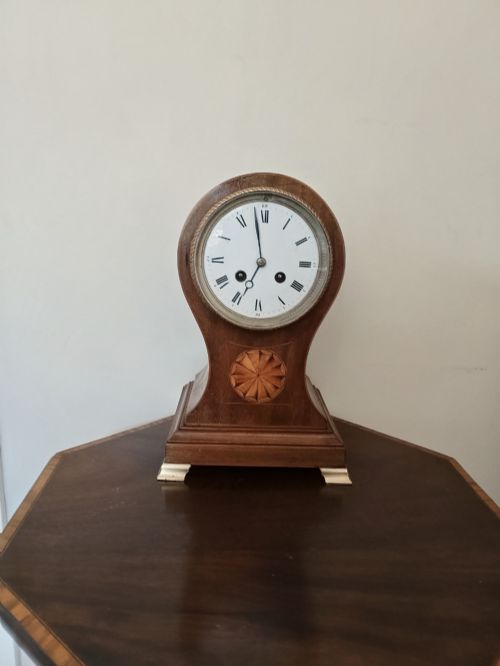
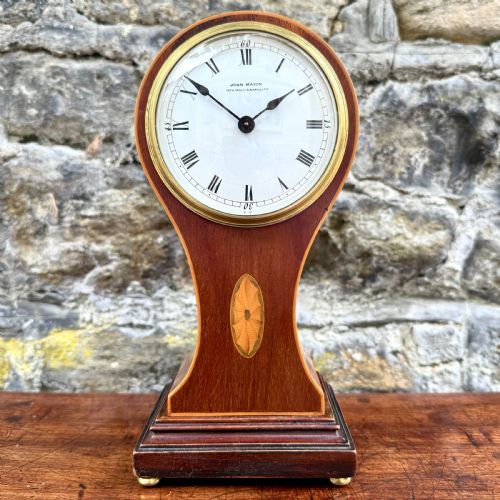
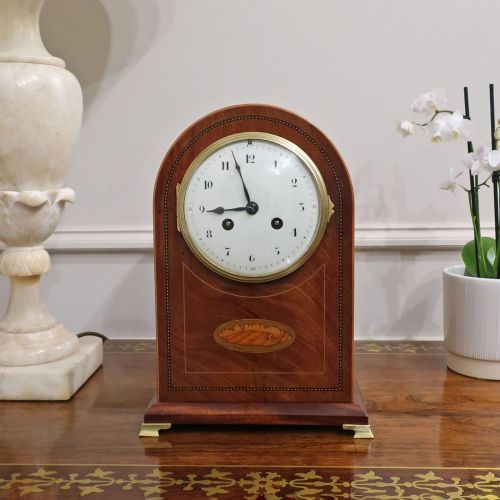
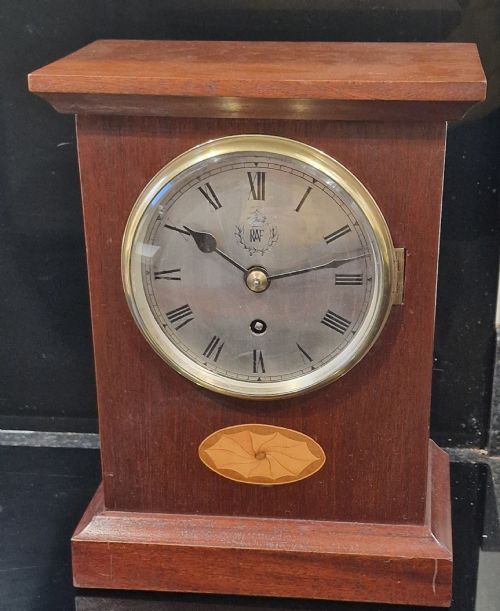
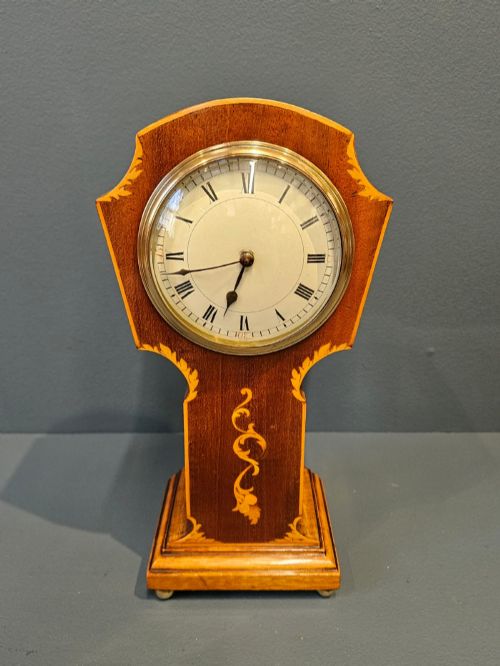
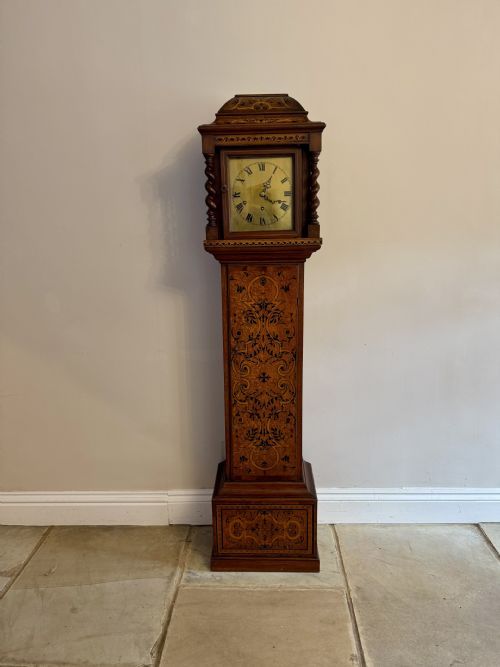
A marquetry mahogany clock combines structural timber with decorative wood veneers arranged in pictorial or geometric patterns. These timepieces appear primarily as mantel clocks, grandfathers, and longcase clocks.
The Edwardian era and the nineteenth century provide the majority of pieces on this page, alongside Georgian and Victorian examples. Mantel forms often feature balloon or lancet shapes, while taller floor-standing versions display musical movements or moon dials.
Makers and regional workshops from Britain, France, and Japan produced these variations, working within styles that range from Arts and Crafts and Art Nouveau to Belle Epoque.
Materials and technique
Makers built the primary housing from mahogany, utilising its stable grain and deep reddish-brown tone as a foundation for decoration. Artisans then applied contrasting veneers of satinwood, boxwood, and other pale timbers to create detailed marquetry inlay.
Brass components, including bezels, dials, and movement plates, met with glass panelling to protect the enamel or silvered clock faces. Fusee movements, spring-driven mechanisms, and pendulum weights drove the inner workings of these clocks.
Listings feature mantel, wall, and longcase clocks spanning the Georgian, Victorian, and Edwardian periods, constructed in mahogany, brass, glass, and inlaid marquetry.
What separates the tiers
The precision of the marquetry cutting and the crispness of the wood fit determine the visual standard at the upper end of the range. Simpler geometric banding sits below pictorial floral designs or figural panels executed in diverse contrasting veneers.
Mechanical complexity separates standard timepieces from chiming, musical, or fusee movements signed by notable makers. The integration of high-grade brasswork, painted moon dials, and substantial architectural cases distinguishes finer examples from everyday production.
David Morice of Auchtermuchty·Paul Philip Barraud·William Warren·W. Burton·Seikosha·Japy Freres·Vincenti
The Marquetry Mahogany Clock Glossary
- Marquetry
- The art of applying fitted pieces of wood veneer to a structure to form decorative patterns or pictures. This technique distinguishes plain wooden cases from ornate inlaid surfaces.
- Fusee
- A conical pulley used in clock movements to maintain an even pull as the mainspring unwinds. This mechanism improves timekeeping accuracy across the power reserve.
- Grandmother clock
- A smaller, more slender version of a longcase or grandfather clock, standing at a reduced height. These pieces offer tall proportions in compact domestic spaces.
- Silvered dial
- A clock face treated with a silver compound to produce a matte metallic finish, usually featuring engraved numerals. This treatment contrasts with white enamel faces.
- Bracket clock
- A portable table or shelf clock, historically designed to sit upon a wall bracket. Many examples feature carrying handles and glazed side panels.
Marquetry Mahogany Clock: Frequently Asked Questions
What is a marquetry mahogany clock?
A marquetry mahogany clock is a timekeeping device built with a mahogany case decorated using fitted wood veneers. These pieces range from small mantel clocks to tall floor-standing longcase examples.
Craftsmen used contrasting timbers like boxwood and satinwood to form floral, pictorial, or geometric patterns across the timber surfaces.
How do I tell an Edwardian clock from a Georgian one?
Edwardian clocks often feature lighter proportions, balloon or lancet case shapes, and delicate floral marquetry typical of the early twentieth century. Georgian longcase and bracket clocks display heavier architectural framing and proportions tied to the eighteenth century.
Examining the dial style, movement type, and overall cabinet design helps clarify the period of production.
Where were these clocks placed in a home?
Smaller mantel clocks sat upon fireplace mantelpieces, side tables, or brackets attached to walls in principal rooms. Taller longcase and grandfather clocks stood in hallways, landings, or main living spaces where their height and chime could be appreciated.
Portable table clocks allowed owners to move them between rooms as needed.