


French Mahogany Mantel Clock
A french mahogany mantel clock brings striking architectural presence to a room, combining rich cabinet timber with precise European movement.
French Mahogany Mantel Clock
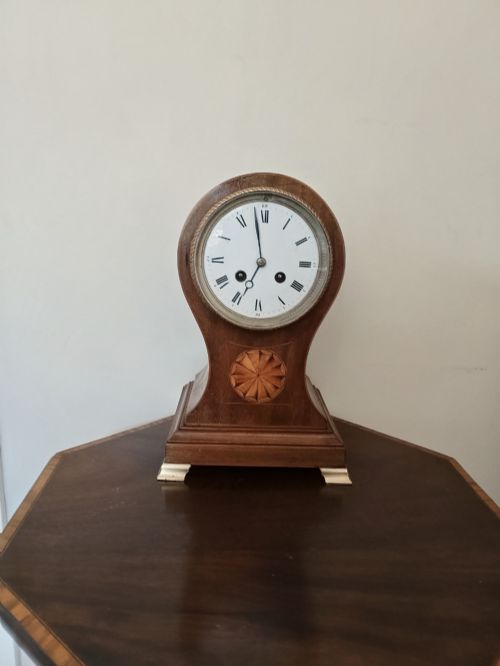
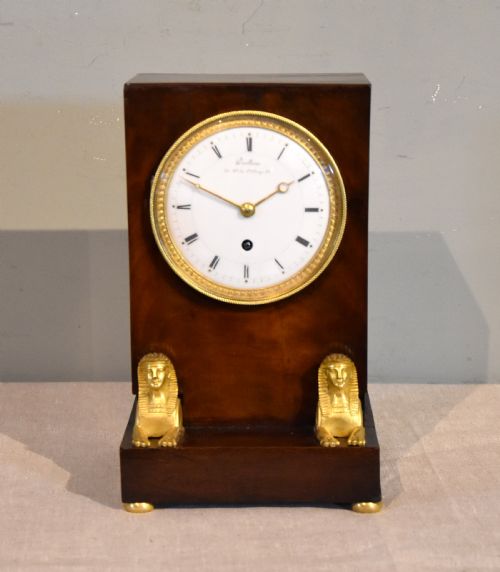
A french mahogany mantel clock represents a tradition of cabinetmaking and horology spanning the nineteenth and early twentieth centuries, appearing in styles from the restrained portico and lancet formats to ornate Belle Epoque and Art Nouveau designs. The pieces encountered here emerge predominantly from the Victorian and Edwardian eras, alongside earlier nineteenth-century iterations spanning the Louis Philippe and French Empire idioms.
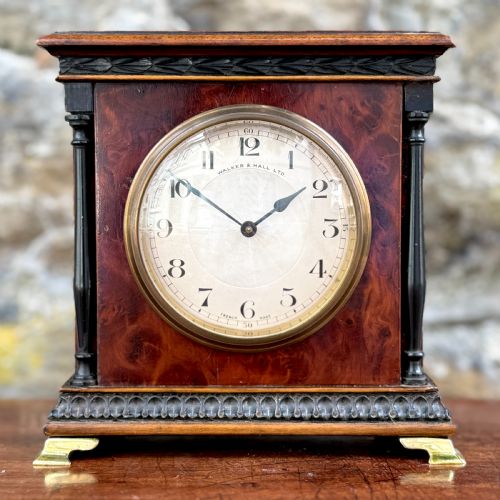
Makers housed these movements in mahogany, burr walnut, and ebonised wood cases, frequently embellished with brass, ormolu, enamel dials, and glass panels. Such clocks served as domestic timekeepers and decorative centrepieces for the mantelpiece or table, shifting in silhouette from strict architectural porticos to sweeping balloon and lyre shapes.
Craftsmanship and distinction
Quality rests in the crispness of the timber carving, the precision of the brass inlay and ormolu mounts, and the sophistication of the clock movement itself. Finer examples display meticulous marquetry, unblemished enamel or silvered dials, and robust mechanical components signed by notable makers.
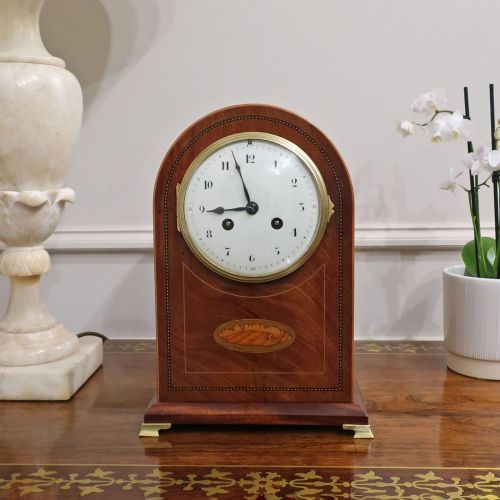
Simpler timepieces rely on clean architectural proportions rather than heavy ornamentation, where the depth of the mahogany grain and the balance of the brass mounts dictate the overall visual weight.
Even French timepieces occasionally require English patience when adjusting a sluggish pendulum after a journey.
Walker and Hall·Maple and Co Paris·Malecot of Paris·Vincenti·L.P Japy·Japy Freres·Couaillet·Samuel Marti·Planchon A Paris·Drocourt
The French Mahogany Mantel Clock Glossary
- Portico clock
- A clock built in the architectural form of a classical portico with supporting pillars flanking the central pendulum chamber. This style gained popularity during the nineteenth century.
- Ormolu
- Gilt bronze ornamentation applied to furniture and clock cases. It provides bright metallic contrast against dark mahogany surfaces.
- Balloon clock
- A mantel clock featuring a rounded, swelling case shape reminiscent of early hot air balloons. These typically date from the late nineteenth and early twentieth centuries.
- Lancet style
- A clock case design terminating in a pointed gothic arch at the top. The silhouette resembles a lancet window.
- Knife edge suspension
- A delicate pendulum suspension system utilising a knife-edge pivot to reduce friction. This mechanism appears in higher-grade regulators.
French Mahogany Mantel Clock: Frequently Asked Questions
What periods do these clocks cover?
The selections span the nineteenth century through the Edwardian period, encompassing Victorian workmanship alongside earlier French Empire and Louis Philippe styles.
Craftsmen produced these designs across distinct decades, moving from strict architectural porticos toward flowing Art Nouveau and Belle Epoque aesthetic forms.
How do I wind the movement?
Most mechanical versions utilise a key inserted into winding holes on the dial to tension the mainspring barrels inside the brass movement.
Care must be taken not to overwind the mechanism, ensuring the clock maintains accurate timekeeping over its designated cycle.
Where should I place the clock?
These pieces suit placement on a sturdy mantelpiece, sideboard, or table where the wooden case and metal mounts catch the light.
Stability is essential for pendulum regulation, so position the clock on a level surface away from vibrations and drafts.
What is the difference between a timepiece and a clock?
In horological terms, a timepiece indicates hours and minutes without incorporating a strike or chime train.
Clocks include additional mechanical gearing to sound the hours or half-hours on a bell or gong.