
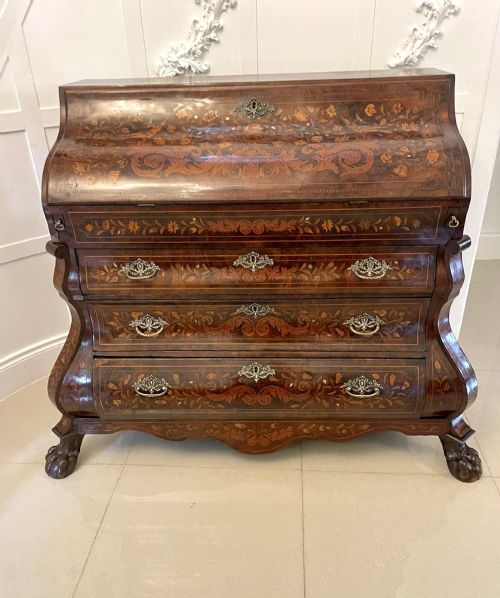
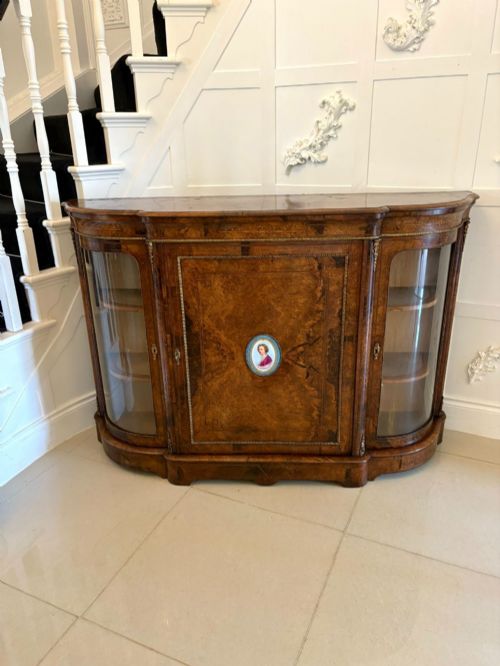
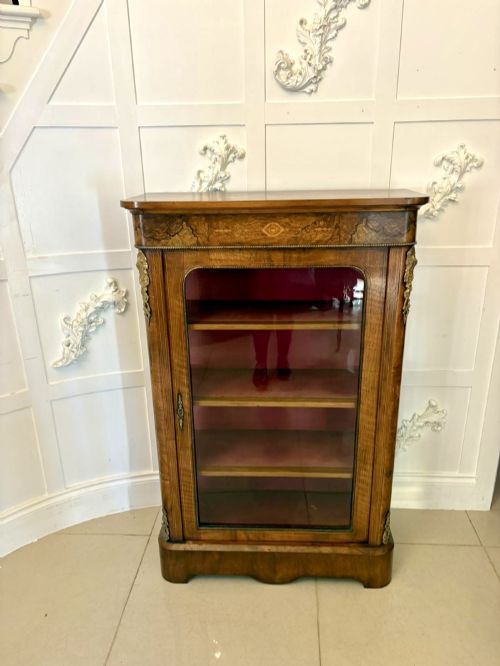
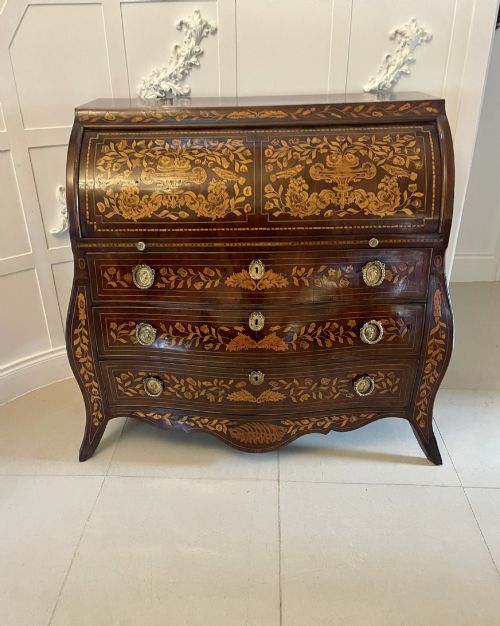
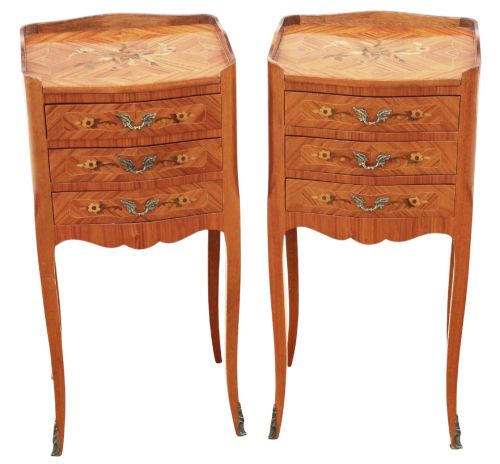
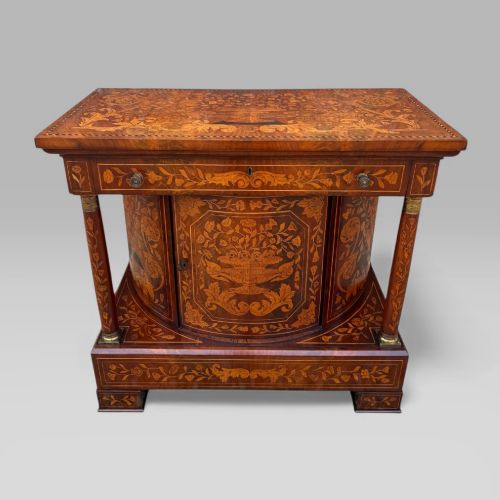
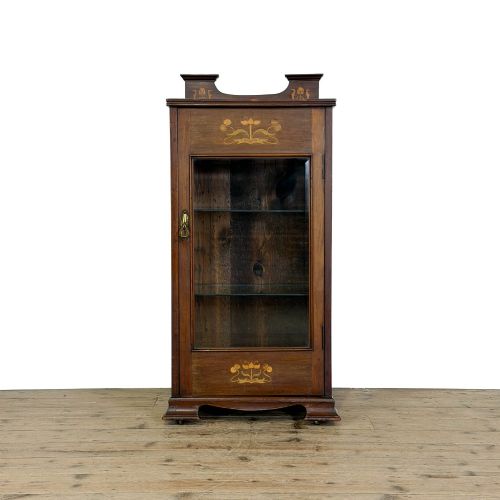
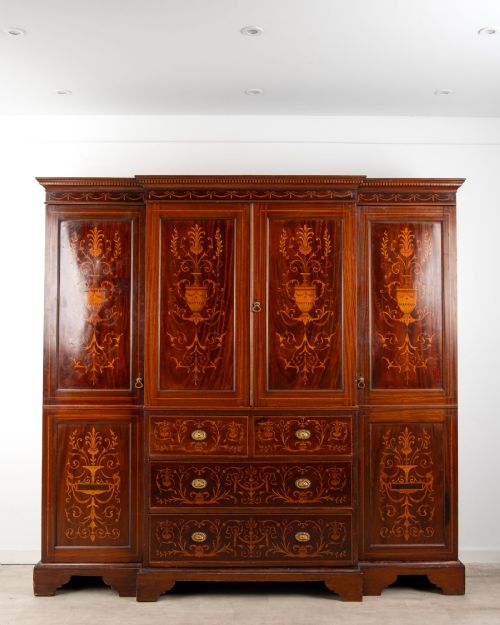
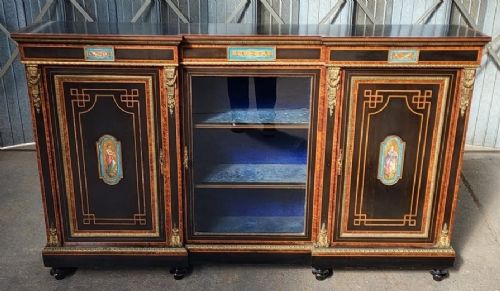
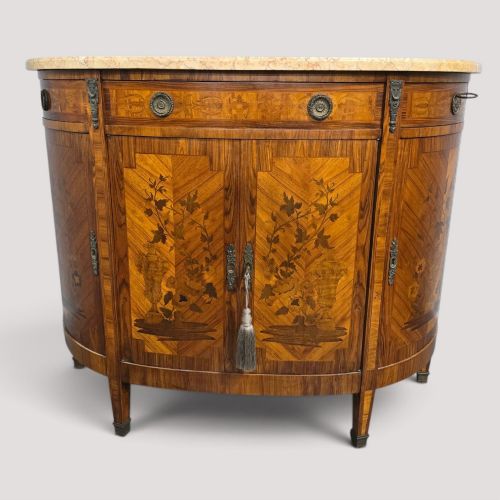
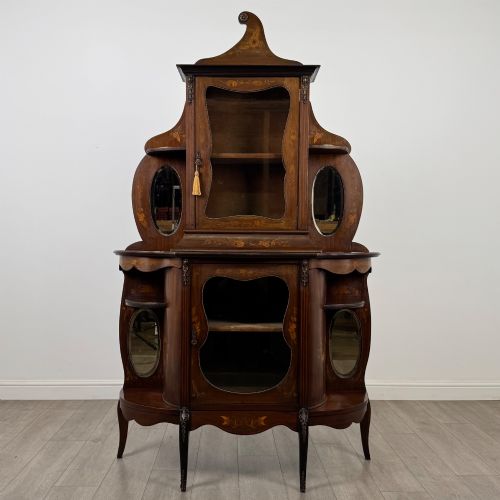
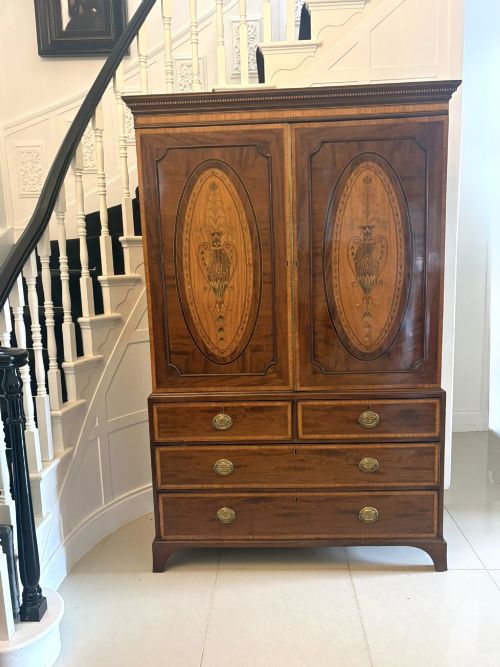

Marquetry Inlay Cabinet
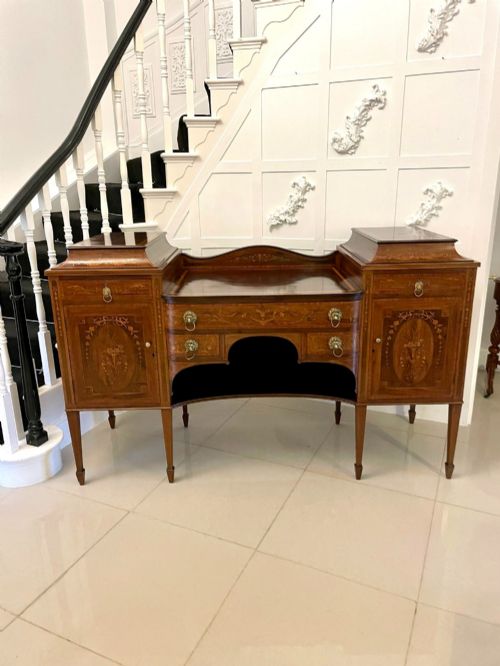
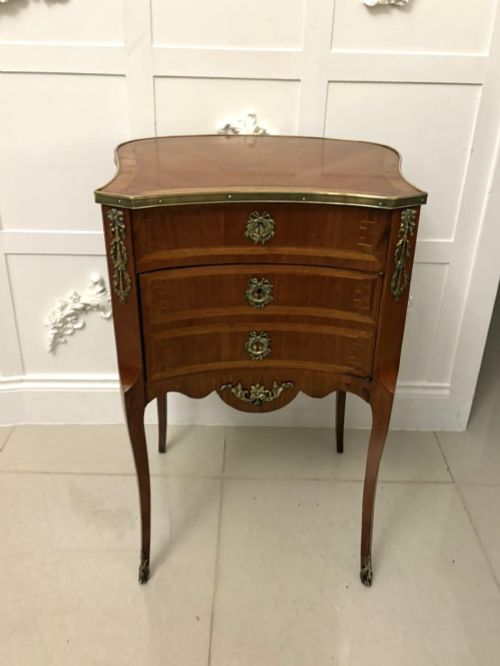
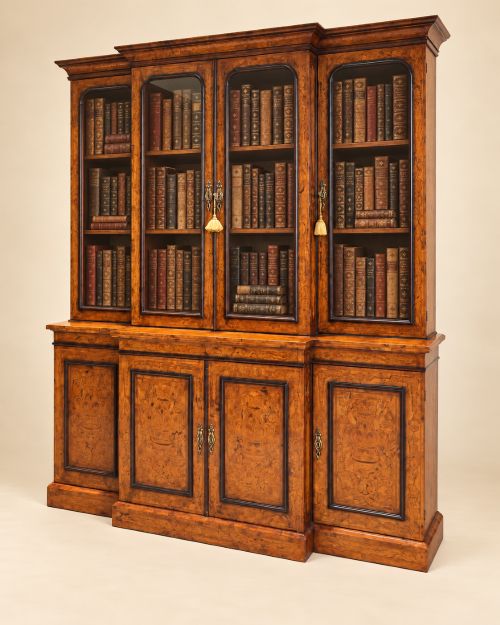
These marquetry inlay cabinet examples combine figured woods with delicate floral patterns, offering collectors a refined focal point for period interiors.
What They Are
A marquetry inlay cabinet brings together figured timbers and intricate patterned wood panels to create practical storage with strong visual appeal. When you search for a marquetry inlay cabinet, you encounter forms such as side cabinets, pier cabinets, credenzas, and display vitrines.
The pieces on this page span the Victorian and Regency periods, alongside nineteenth-century examples and Edwardian styles. Among these, Victorian burr walnut pier cabinets and French kingwood vitrines appear most frequently.
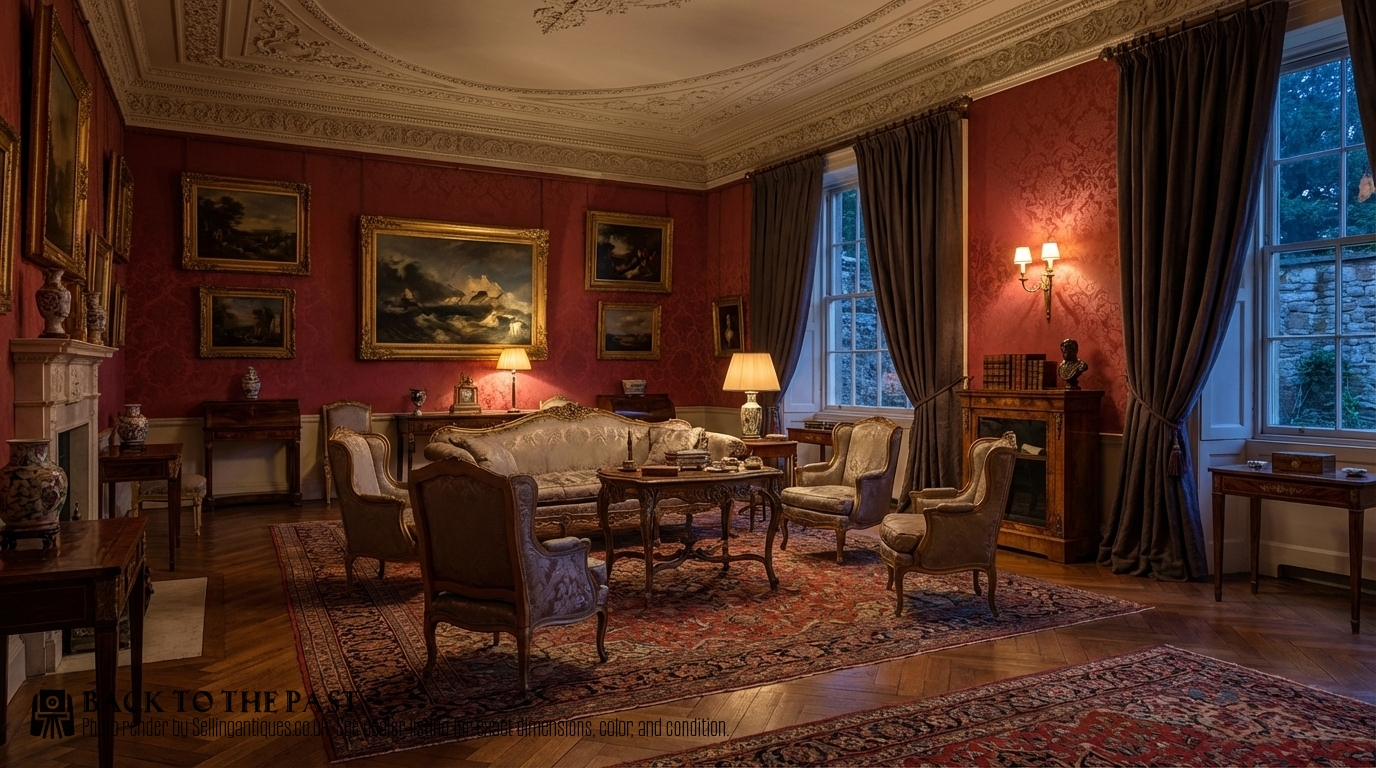
Origin points vary across English workshops and French cabinet makers, often featuring glazed doors, mirrored backs, or brass or ormolu mounts. Buyers select these works to anchor a room with traditional craftsmanship and warm timber tones.
How They Were Made
Cabinet makers utilised structural timbers like walnut, mahogany, and ebonised wood as a carcase for decorative veneers such as burr walnut, fiddle back mahogany, and kingwood. These rich surfaces were enhanced through precision cutting and fitting of boxwood and contrasting wood veneers.
Makers applied floral marquetry inlay directly into the veneer panels, creating detailed decorative motifs. Metal elements such as brass and ormolu mounts, along with glass panels and mirror inserts, were integrated to frame the timberwork.
Retail Price Guide 2026
Typical UK retail prices for marquetry inlay cabinet, calculated from the Sellingantiques database of over a million retail prices indexed since 2003. This retail price guide relies exclusively on Sellingantiques data; no external sources or auction records are used, so the figures do not describe the wider market.
Some nineteenth-century cabinets hide their contents behind floral marquetry so detailed that visitors often mistake the cupboard doors for paintings.
What Varies in Quality
Quality rests in the selection of the underlying burr or figured veneer and the precision of the botanical or geometric marquetry. Finer examples display seamless alignment across complex patterns and incorporate superior secondary woods.
The integration of mounts, glass, and brass detailing further separates standard production from exceptional cabinet work. Superior pieces maintain crispness in the floral details and balance the proportions of glass, timber, and metal.
The Marquetry Inlay Cabinet Glossary
- Marquetry
- The art of applying decorative pieces of veneer to a structural structure to form pictorial or floral patterns. This technique defines the surface decoration of the pieces on this page.
- Veneer
- A thin slice of figured wood applied over a stable carcase timber. Burr walnut and kingwood are frequently utilised in this manner.
- Pier Cabinet
- A narrow display cabinet designed to sit against the wall between windows. These upright forms often feature glass doors and velvet-lined interiors.
- Credenza
- A low cabinet piece often featuring multiple doors and elaborate marquetry panels. They serve as prominent side storage in traditional reception rooms.
- Ormolu
- Gilded bronze mounts applied to cabinet corners and frames. This material provides metallic contrast to the dark polished timbers.
Frequently Asked Questions
What is a marquetry inlay cabinet?
A marquetry inlay cabinet is a piece of antique furniture decorated with fitted wood veneers that form floral or geometric patterns.
These pieces range from narrow pier cabinets to wide credenzas, constructed primarily during the nineteenth century.
How do I identify a Victorian cabinet?
Victorian cabinets often utilise burr walnut veneers, ebonised wood details, and rich floral marquetry. They frequently incorporate glass doors or mirrored backs.
Many examples date from the middle to late nineteenth century and reflect classic revival styles.
Where should I place a pier cabinet?
Pier cabinets suit narrow wall spaces, hallways, or drawing rooms where floor space is limited. Their upright proportions make them ideal for displaying ceramics or small collections.
They pair well with traditional seating arrangements and period architectural details.
What woods are used in these cabinets?
Makers relied on walnut, burr walnut, kingwood, mahogany, and rosewood for their rich grain patterns. Boxwood and contrasting timbers provided the pale tones needed for detailed marquetry.
Ebonised wood was also utilised to create dark, striking framing elements.
How do I care for antique veneer?
Antique veneer requires stable indoor humidity levels away from direct sunlight and heat sources. Gentle dusting with a dry cloth preserves the polished surface.
Avoid liquid cleaners and harsh chemical polishes to protect the historic timber.