


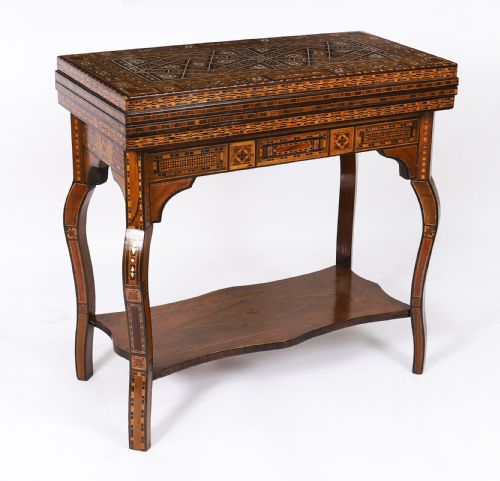
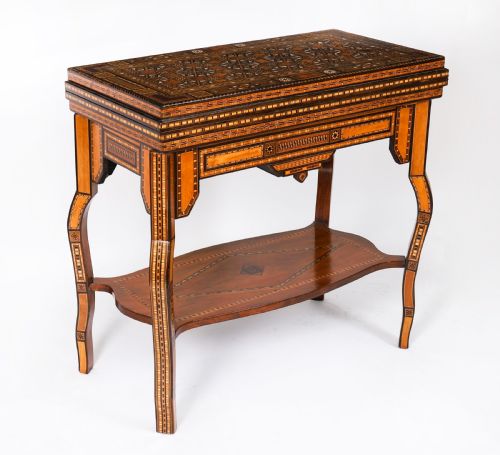
Marquetry Gaming Table
A marquetry gaming table brings together intricate wood veneers and fold-over or multi-purpose tops designed for card play and social gatherings.
Marquetry Gaming Table
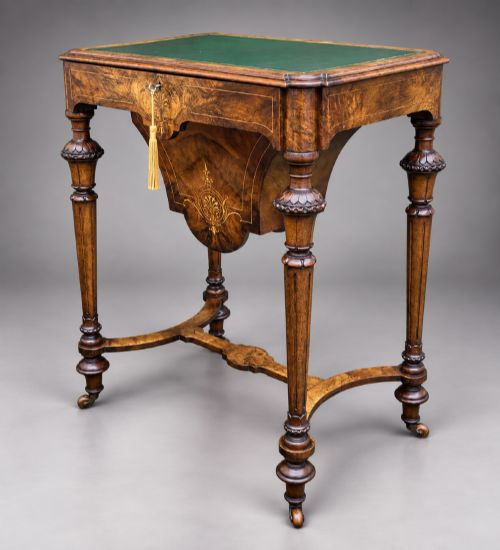
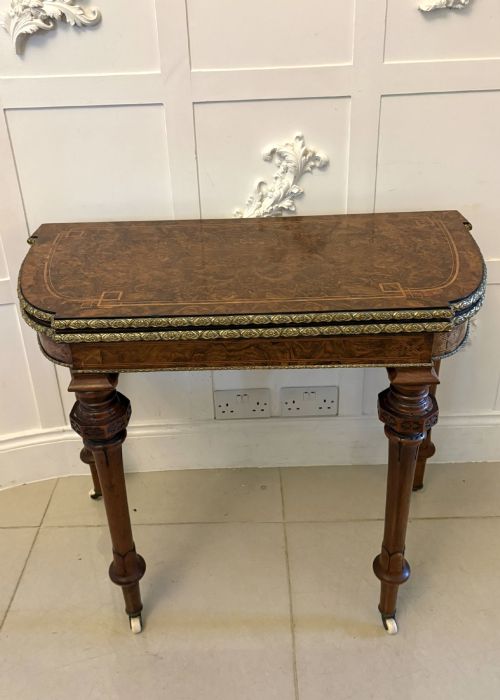
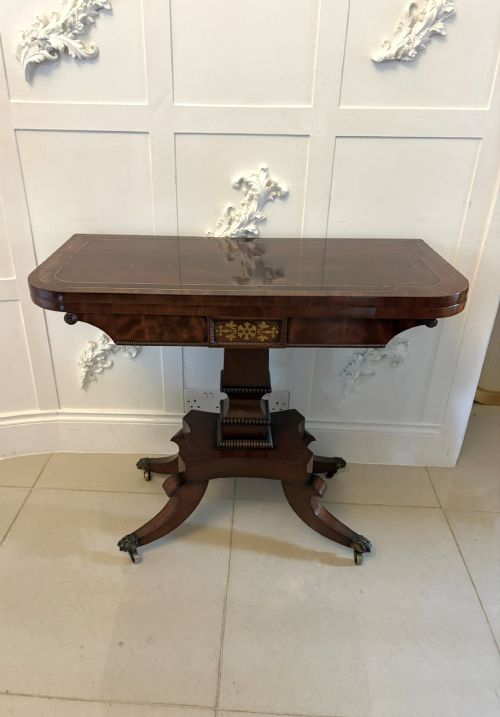
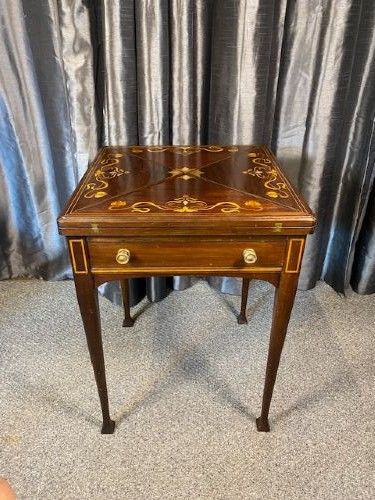
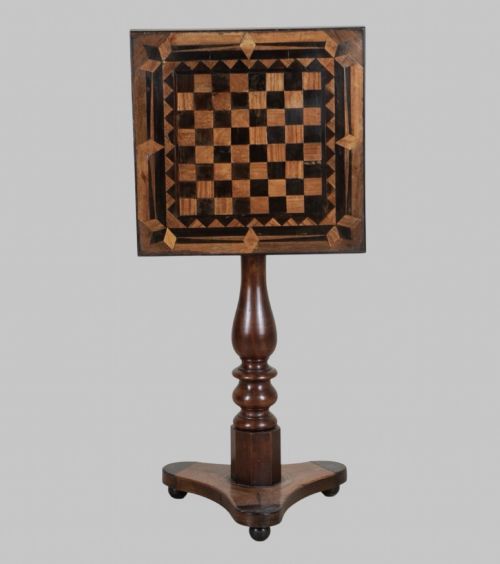
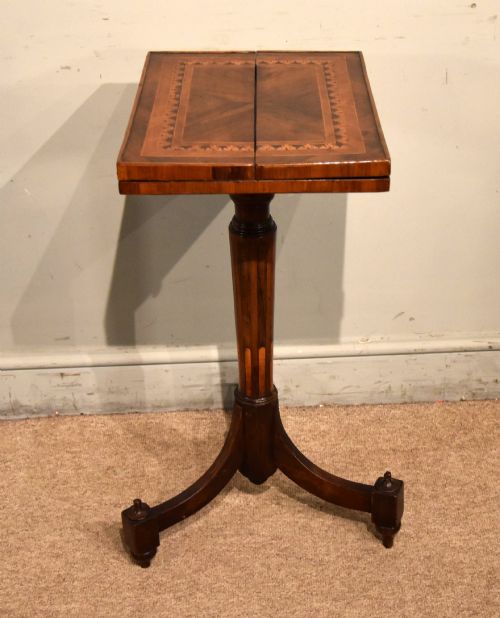
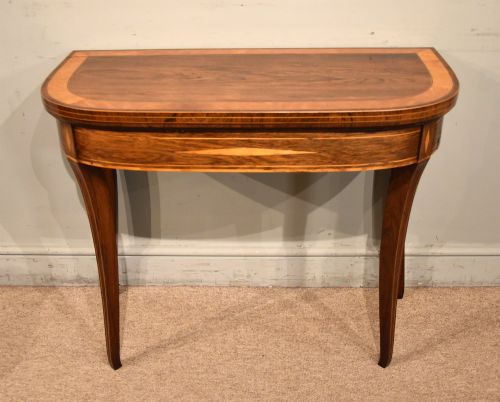
A marquetry gaming table combines the function of a social surface with decorative wood work, appearing frequently in Victorian, Georgian, and Regency forms across this selection. Buyers find card tables, console tables, and envelope tops designed to transform from compact side pieces into playing surfaces.
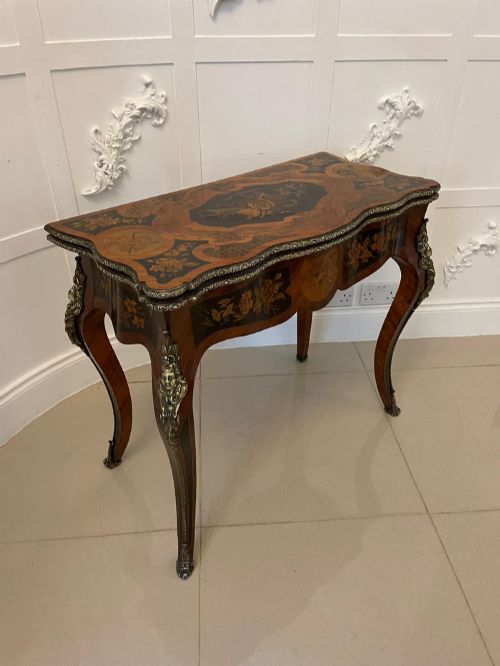
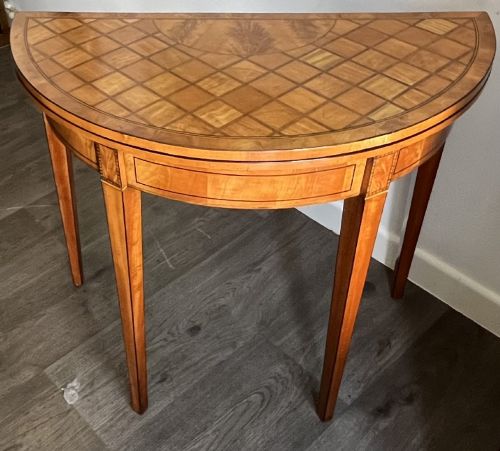
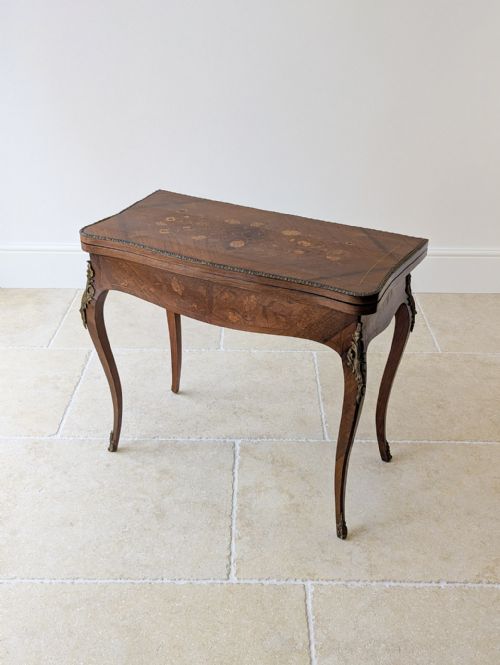
The materials span walnut, mahogany, rosewood, and satinwood, often decorated with floral or geometric patterns set into the timber. These pieces range from English Georgian demi-lune designs to French Louis XV style tables mounted in ormolu.
How They Were Made
Cabinet makers utilised veneers of burr walnut, kingwood, and rosewood applied over solid secondary timbers, creating patterned surfaces through precise cutting. Marquetry involves fitting together thin slices of various woods like boxwood to form pictorial or floral motifs.
Metal mounts in brass or ormolu were cast and applied to edges and legs, while brass inlay often formed delicate lines along mahogany and rosewood tops. Swivel mechanisms, fold-over leaves, and pivoting envelope actions required precise joinery to function smoothly over centuries.
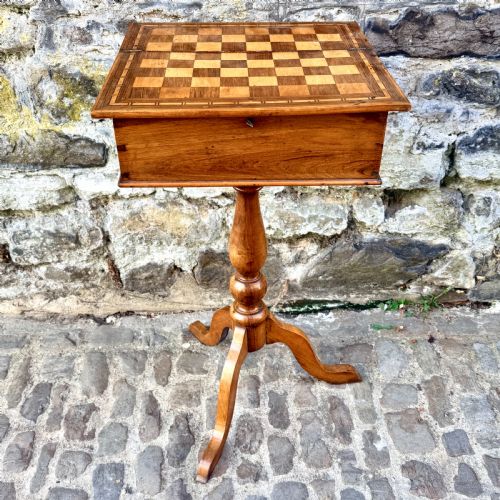
A Maltese patience table in olive and satinwood offers a compact surface designed specifically for solitary card games.
What Varies in Quality
The ambition of the marquetry design and the choice of timbers set individual examples apart, with burr walnut and exhibition-grade kingwood sitting at the upper end. Finer pieces demonstrate precise contrast between light and dark woods, such as boxwood and satinwood set against rosewood.
The quality of the mountings and the integrity of the pivoting or folding mechanism dictate the standard of execution. Tables bearing attribution to notable makers or featuring extensive ormolu and detailed floral inlay represent the top tier of the range.
George Bullock·François Linke·Maple & Co.
The Marquetry Gaming Table Glossary
- Marquetry
- A decorative technique where pieces of veneer are fitted together to form pictorial or geometric designs on a wooden surface. This differs from plain inlay by covering the entire top with a mosaic of various timbers.
- Ormolu
- Gilded bronze used for decorative mounts and furniture trim during the eighteenth and nineteenth centuries. It adds weight and metallic contrast to walnut and kingwood surfaces.
- Envelope table
- A card table with a square top composed of four triangular flaps that swivel and fold outwards to reveal a baize-lined playing surface. This form gained popularity in the late nineteenth and early twentieth centuries.
- Demi-lune
- A half-moon shape characteristic of card tables designed to stand flat against a wall when closed. George III examples frequently utilise this curved format.
- Cross-banding
- A border of veneer laid around the edge of a table top with the grain running perpendicular to the centre panel. It provides a neat visual frame to marquetry work.
Marquetry Gaming Table: Frequently Asked Questions
How do I open a card table safely?
Most tables feature a fold-over top that pivots on hinges, or a rear leg that swings out to support the opened leaf. Check the movement carefully before lifting to ensure the pivot pin operates without binding.
Take care not to force warped timbers or tight hinges. Supporting the weight of the leaf while swinging the support leg protects the structural joints from undue strain.
What woods were used in these tables?
The evidence shows a strong preference for rich dark timbers including mahogany, rosewood, walnut, and kingwood. Lighter contrasting woods such as satinwood and boxwood appear in the marquetry patterns and stringing lines.
Exotic veneers like burr walnut and olive wood provide distinctive grain patterns on the top surfaces. Secondary woods form the internal framing beneath these decorative outer layers.
How do I date a marquetry gaming table?
Dating relies on combining the overall style, such as Georgian demi-lune or Victorian Louis XV revival, with the specific veneer choices and construction methods. Tables from the eighteenth century often display simpler mahogany framing, while mid-nineteenth century pieces frequently incorporate elaborate floral marquetry and ormolu mounts.
Secondary evidence like envelope mechanisms point towards the late Victorian and Edwardian eras. Comparing the hardware, timber selection, and decorative motifs helps narrow the decade of manufacture.
How do I care for antique wood surfaces?
Keep wooden tables away from direct sunlight and sources of extreme heat to prevent the delicate veneers from drying and lifting. Regular dusting with a soft, dry cloth preserves the polished finish without leaving moisture behind.
Apply a suitable wax polish sparingly when the timber appears dry, buffing it gently to maintain the natural sheen. Avoid placing damp glasses or hot items directly onto the antique polish.