




Marquetry Fall Front Bureau
A marquetry fall front bureau brings together intricate floral wood inlay and practical writing storage, making it a focal point for any study.
Marquetry Fall Front Bureau
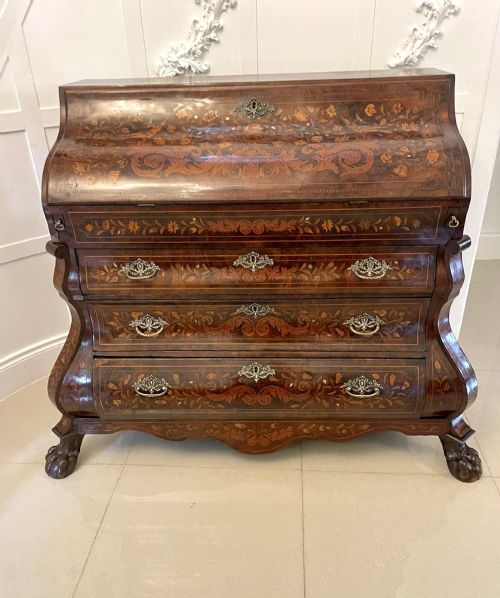
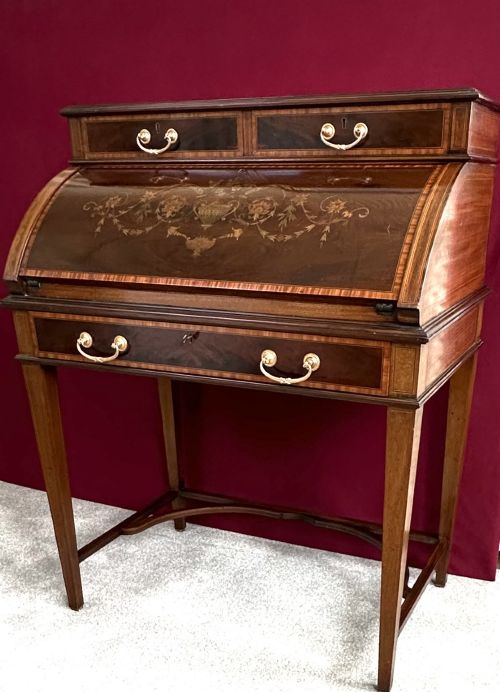
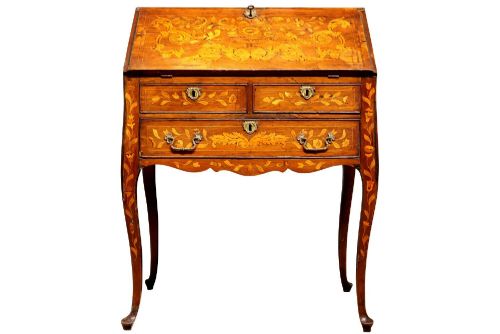
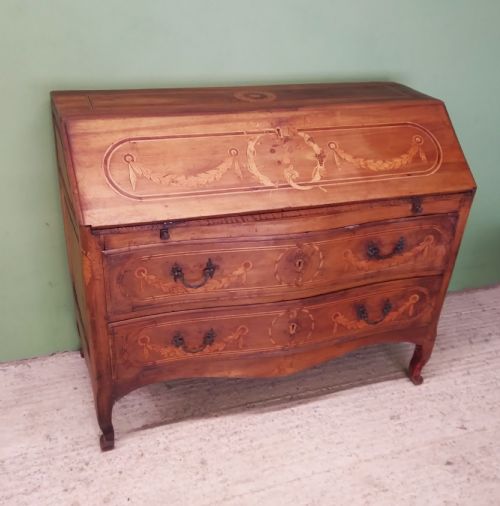
A marquetry fall front bureau is a writing desk featuring a hinged writing flap that drops down to reveal fitted compartments and pigeonholes. When you search for this phrase, you encounter pieces primarily from the eighteenth and nineteenth centuries, alongside later revivals.
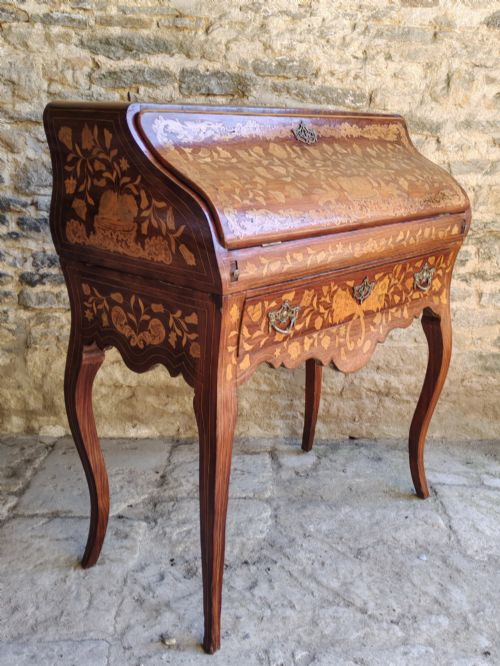
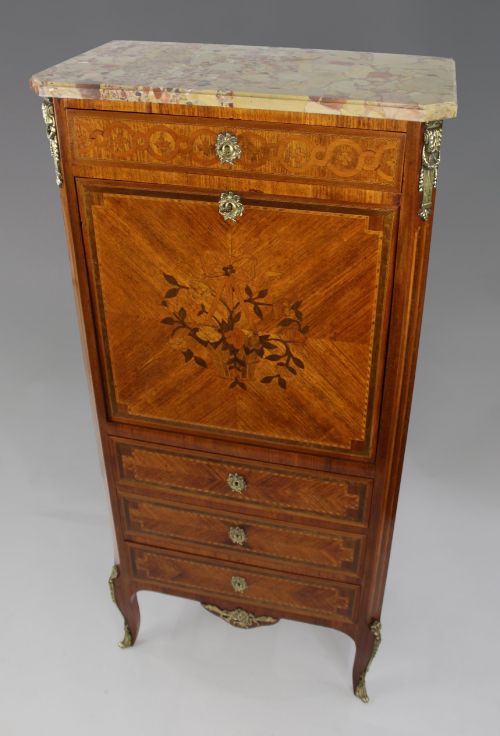
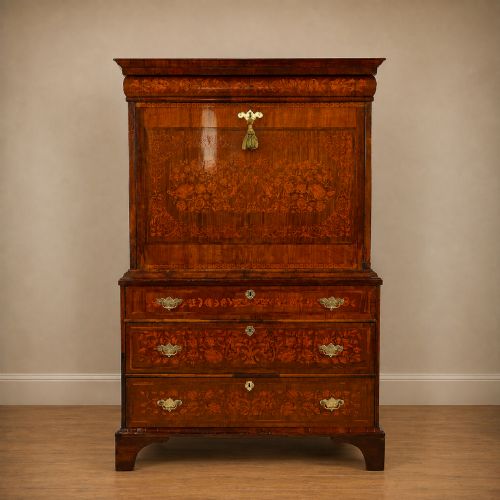
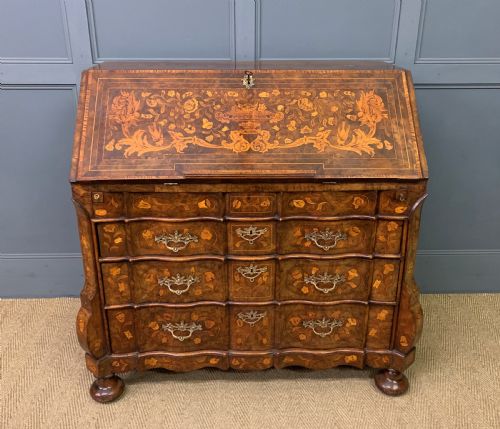
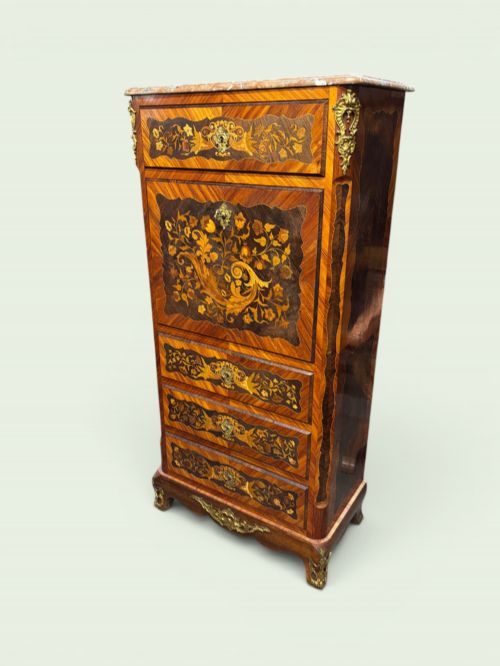
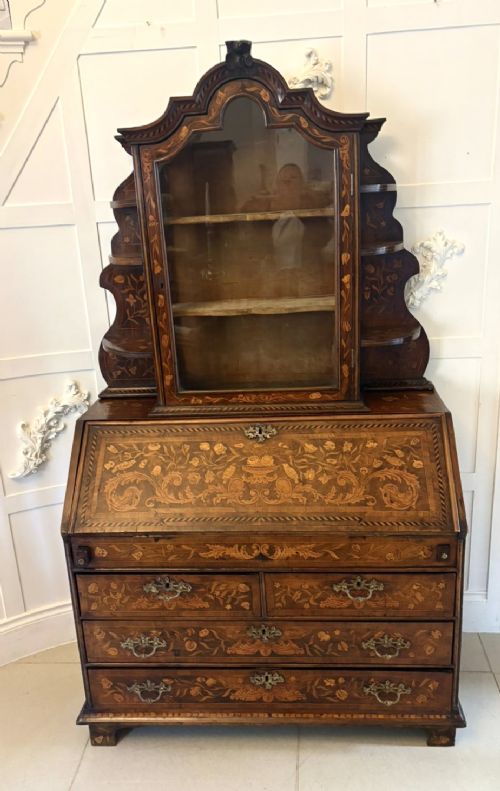
The selection ranges from compact French bureau de dame writing desks to large Dutch floral marquetry bureau bookcases and bombé shaped writing cabinets. Walnut forms the backbone of these pieces, frequently enriched with elaborate floral or geometric wood patterns.
Originating largely from English, Dutch, French, and Italian workshops, these desks showcase regional cabinetmaking traditions through distinct silhouettes. Some examples incorporate upper bookcase sections with glazed doors, while others stand as single lower desks with marble tops and gilt bronze mounts.
How They Were Made
Cabinetmakers constructed the carcase using solid foundational timbers like oak or mahogany, then applied rich veneers of walnut, rosewood, kingwood, or fruitwood. The distinctive pictorial designs rely on marquetry techniques, where contrasting wood veneers are hand-cut and fitted together to create floral and figurative motifs.
Metal fittings such as brass handles, ormolu mounts, and gilt bronze details provide structural accent and decorative contrast to the timber surfaces. Marble tops appear on several continental European escritoires, adding weight and a smooth writing or display surface above the cabinet.
Periods represented span from the seventeenth-century William and Mary style up to Edwardian and 1920s revivals.
What Varies in Quality
The precision and complexity of the wood inlay determine much of the visual success of the piece, with finer examples displaying minute control over shading and grain direction. The choice of primary and secondary timbers also separates standard production from exceptional cabinetmaking, particularly in the selection of burr walnut and exotic woods.
Proportion and the retention of original mounts, marble tops, and interior fitments influence the overall integrity of the bureau. Pieces that maintain their original patination and operational fall front mechanisms demonstrate superior preservation over time.
Joseph II the Holy Roman Emperor
The Marquetry Fall Front Bureau Glossary
- Marquetry
- Decorative veneer work where pieces of various coloured woods are assembled to form pictorial or geometric patterns on a solid ground.
- Fall front
- A hinged writing flap that drops into a horizontal position to serve as a desk surface, concealing pigeonholes and small drawers inside.
- Bombé
- A swelling, outward-curved contour found on the front and sides of certain eighteenth-century cabinets and desks.
- Escritoire
- A writing cabinet or desk, often featuring a drop-front writing surface and internal compartments.
- Ormolu
- Gilt bronze mounts used as decorative ornamentation on furniture, particularly popular in French cabinetmaking.
Marquetry Fall Front Bureau: Frequently Asked Questions
What is a fall front bureau?
A fall front bureau is a writing desk with a hinged panel that folds down for writing and conceals interior drawers.
When closed, the flat front displays decorative marquetry or figured wood veneers.
How do I use a bureau daily?
Lower the front flap to create a compact writing surface with immediate access to letter slots and stationery drawers.
Close the flap when finished to hide paperwork and maintain a tidy room.
Where were these bureaus made?
These desks originate from English, French, Dutch, Italian, and Maltese workshops across the eighteenth and nineteenth centuries.
Regional styles range from bombe shaped Dutch floral marquetry to refined French bureau de dame designs.
How do I tell different periods apart?
Eighteenth-century examples often feature substantial walnut construction with elaborate floral marquetry and bombe silhouettes.
Nineteenth-century pieces frequently include revival styles, ormolu mounts, and exotic woods like rosewood and kingwood.