


Slope Front Writing Bureau
A slope front writing bureau offers a clever folding flap that conceals a fitted interior of pigeonholes and small drawers.
Slope Front Writing Bureau
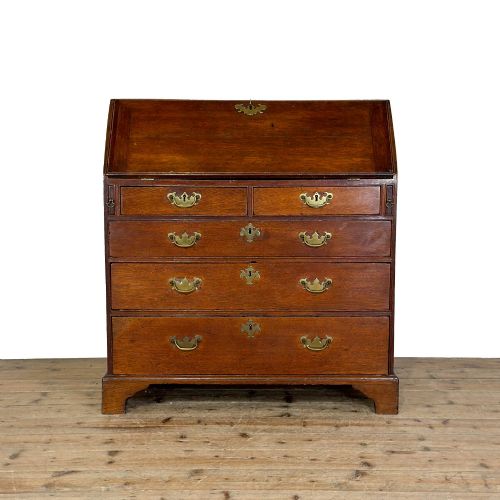
When you search for a slope front writing bureau, you encounter compact case furniture designed for correspondence and document storage. The form relies on a hinged writing flap that drops down at an angle to provide a horizontal writing surface.
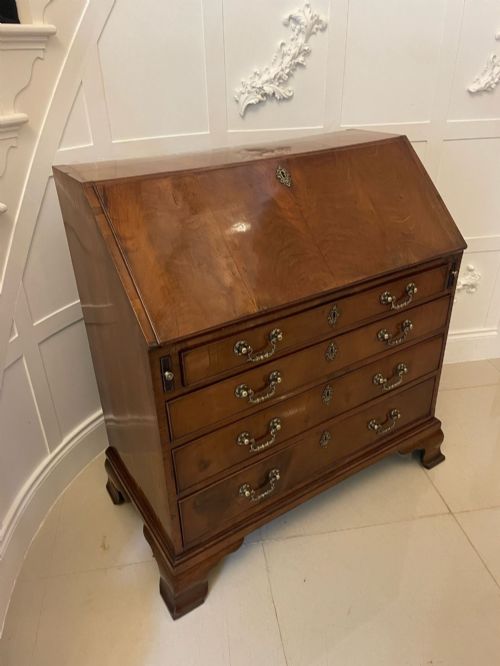
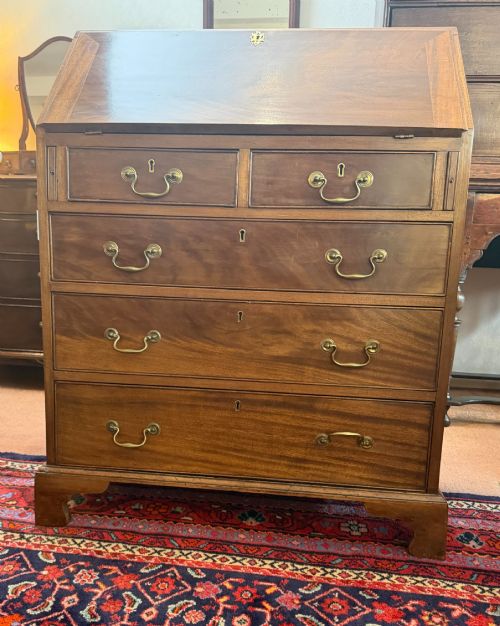
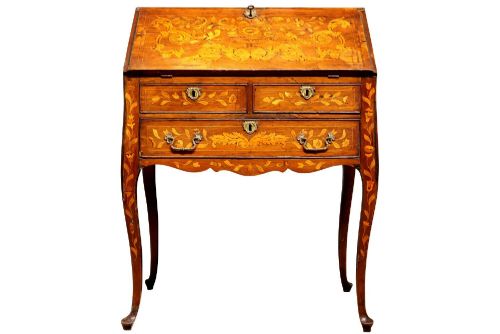
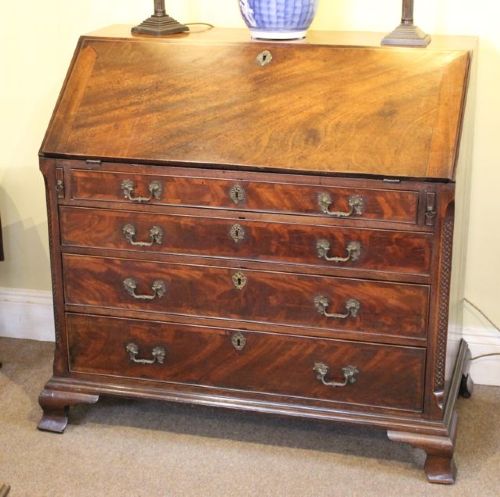
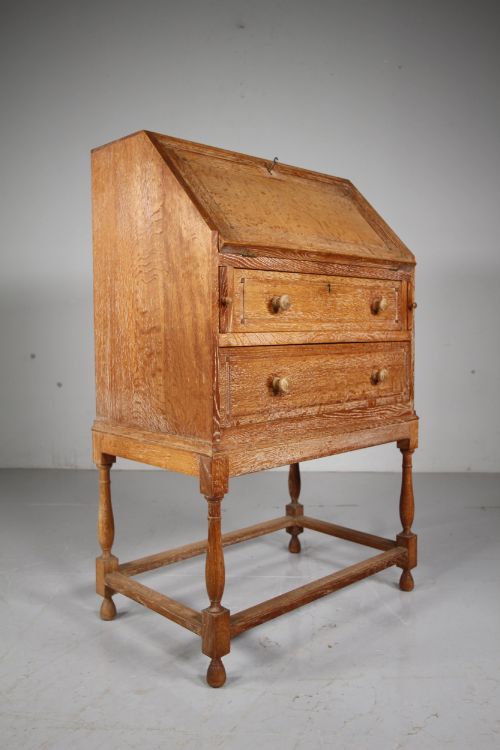
The pieces appearing on this page span several centuries, with particular strength in eighteenth century Georgian examples and twentieth century Edwardian interpretations. Makers constructed these items in diverse regional styles, including Dutch floral marquetry and English oak, walnut or mahogany.
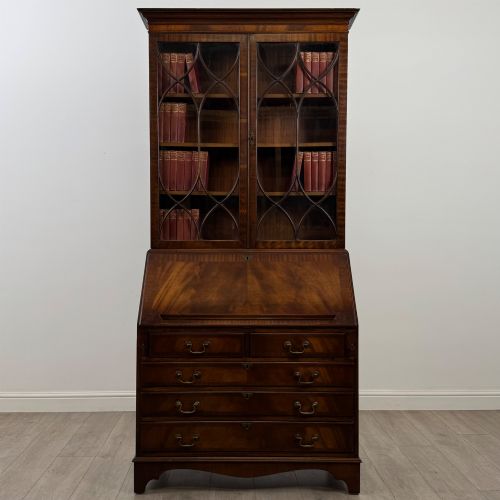
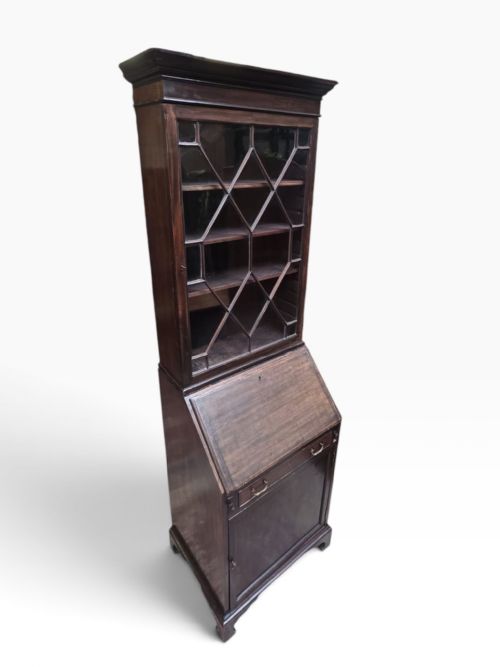
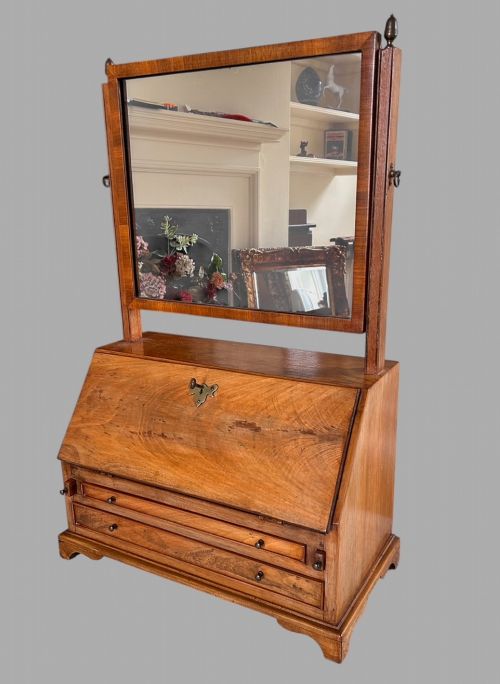
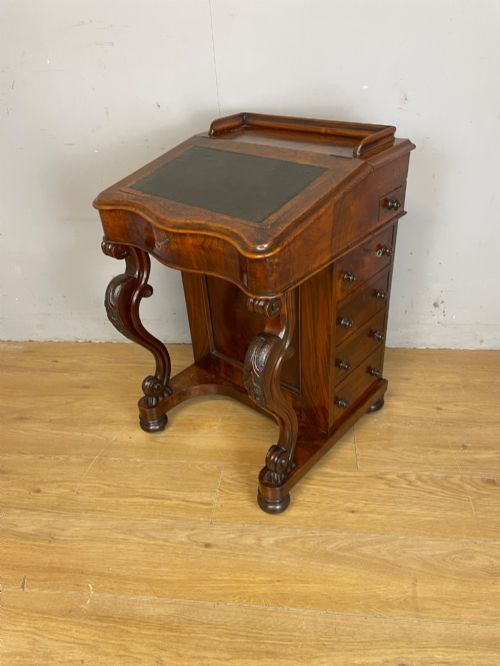
Most examples combine a writing slope with a chest of drawers beneath, while taller variants incorporate upper bookcase sections or glazing. Smaller formats such as the Davenport or table-top versions also appear across the selection.
How they were made
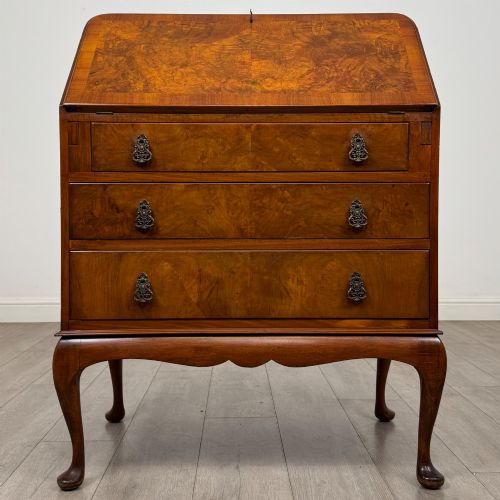
Cabinetmakers constructed these writing desks using solid timbers and decorative veneers applied to secondary woods. Mahogany, walnut, and oak dominate the construction, often enhanced by burr walnut figuring, satinwood, or fruitwood elements.
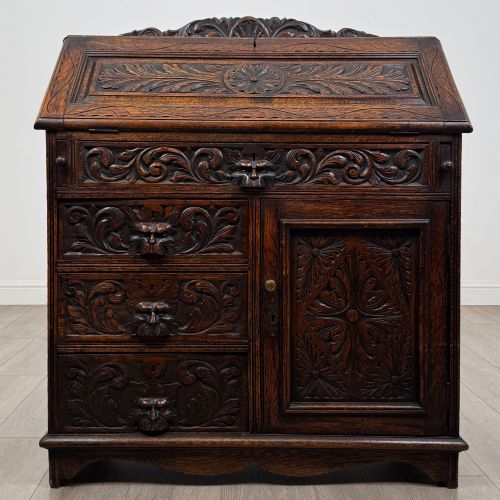
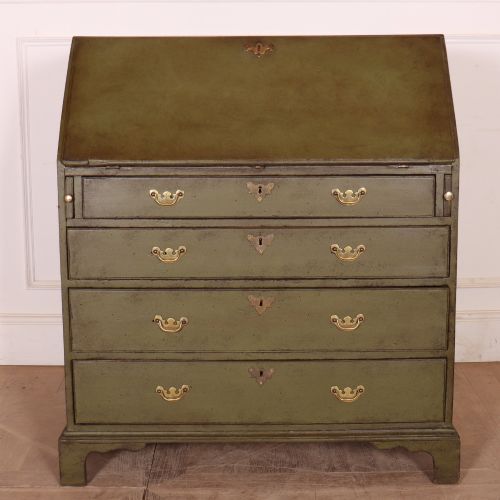
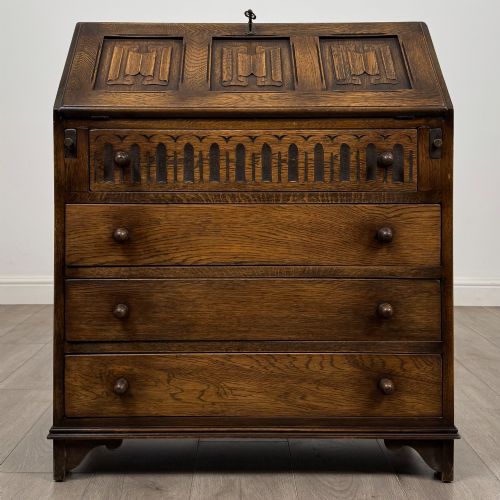
Surface decoration ranges from carved linenfold and Green Man motifs to intricate floral marquetry and painted finishes. Brass handles, escutcheons, and occasional leather writing inserts complete the functional hardware of the pieces.
Some nineteenth century oak examples proudly sport carved Green Man faces glaring out from the stationery department.
What varies in quality
The distinction between standard examples and the finest pieces rests on the choice of timber and the precision of the cabinetwork. Grain selection in figured walnut and mahogany dictates the visual impact of the fall front.
Interior architecture reveals much about a bureau's tier, distinguishing simple partitions from stepped banks of drawers with secret compartments. Secondary woods, drawer linings, and the crispness of carved details further separate workshop standards.
Heals of London·Stanley Webb Davies
The Slope Front Writing Bureau Glossary
- Fall front
- The hinged panel that drops forward to form the writing surface of a bureau. It conceals the internal compartments when closed.
- Bureau bookcase
- A combination piece featuring a writing bureau base beneath an upper glazed or panelled cabinet for books. These taller units require substantial wall clearance.
- Marquetry
- Decorative veneer work created by fitting pieces of coloured wood, bone, or ivory into a ground veneer to form pictorial designs. Dutch examples frequently employ floral versions of this technique.
- Davenport
- A compact desk type featuring a sloped writing top above a pedestal of drawers. These typically incorporate side compartments and stationery storage.
- Pigeonhole
- A small, open compartment within the fitted interior of a bureau designed for sorting letters and papers. These often surround a central locked cupboard.
Slope Front Writing Bureau: Frequently Asked Questions
How do I date an old bureau?
Examining construction methods, timber choices, and secondary woods helps determine the manufacturing period. Drawer linings, handle configurations, and dovetailing provide reliable clues to the age of a piece.
Stylistic markers such as bracket feet, cabriole legs, or Arts and Crafts carving also align with specific decades recorded in the listings.
Are slope front bureaux practical for daily use?
These desks provide dedicated workspace and generous storage within a relatively small footprint. The enclosed writing surface allows you to leave correspondence out of sight when closed.
Kneehole clearance varies significantly on older models, so checking the height beneath the open flap ensures comfortable seating.
How should I care for walnut and mahogany surfaces?
Maintaining these timber surfaces involves regular dusting with a soft, dry cloth and avoiding direct sunlight. Minimising exposure to sudden temperature fluctuations prevents veneer lifting and timber splitting.
Occasional application of appropriate wax polish nourishes the grain without building up heavy residues over time.