

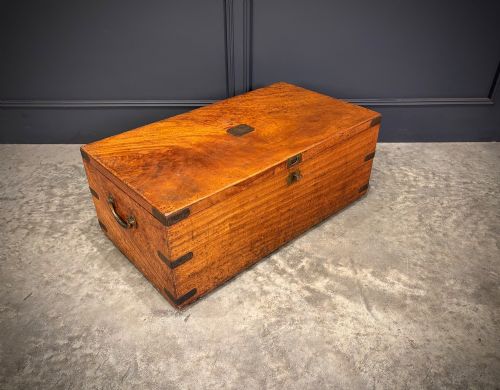


Maritime Wooden Trunk
A maritime wooden trunk carries the scent of camphor and salt, built to travel oceans during the Victorian and Georgian periods.
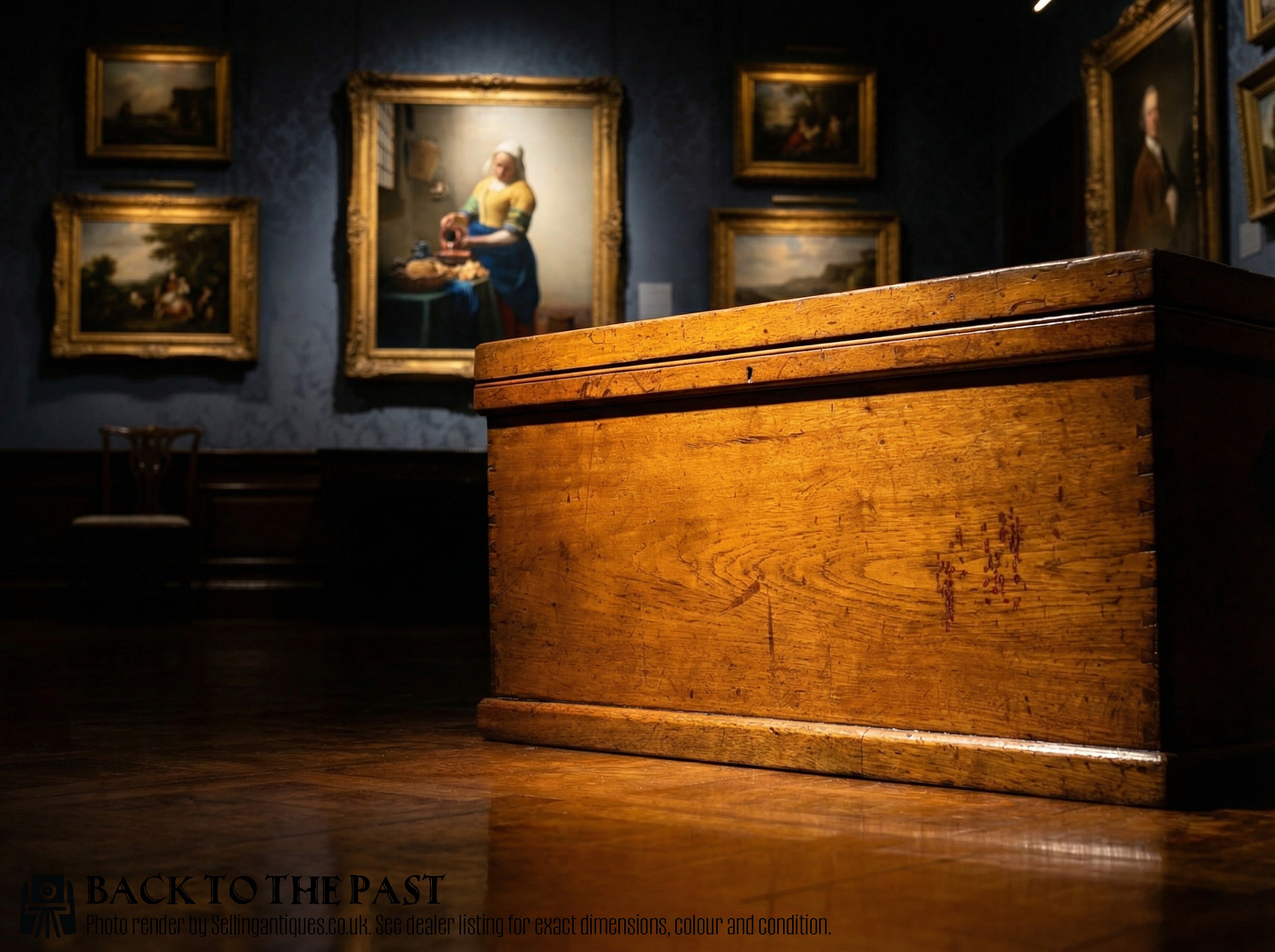
Maritime Wooden Trunk
A maritime wooden trunk is a portable container designed for travel by sea and land during the eighteenth and nineteenth centuries. These pieces served officers, merchants, and sailors who required robust storage for personal belongings during lengthy voyages. The examples found here span campaign styles, sea chests, and storage boxes built for rigorous journeys.
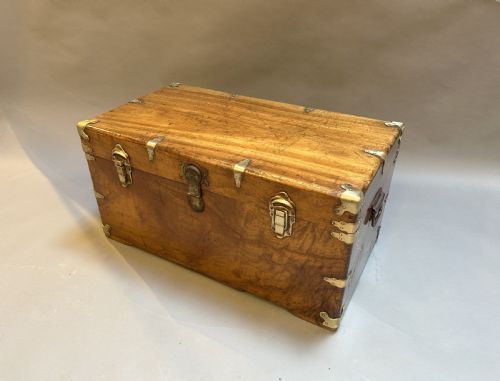
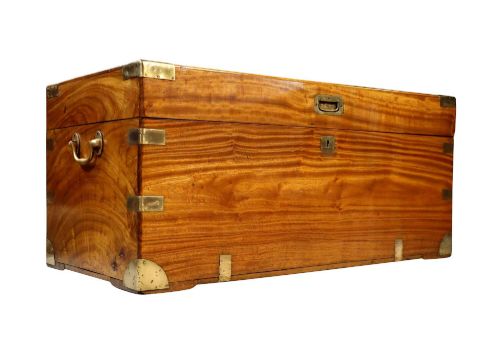
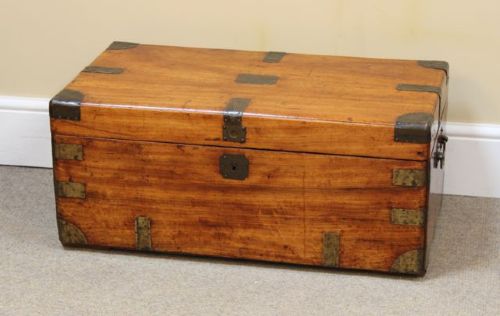
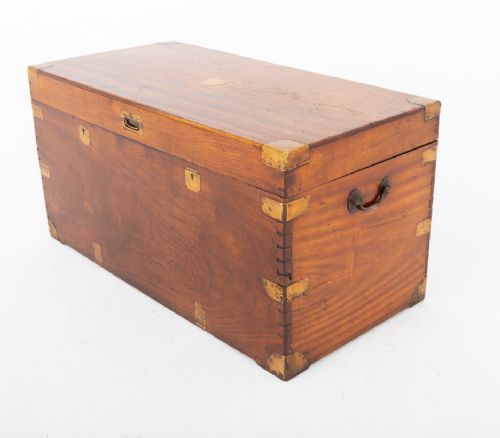
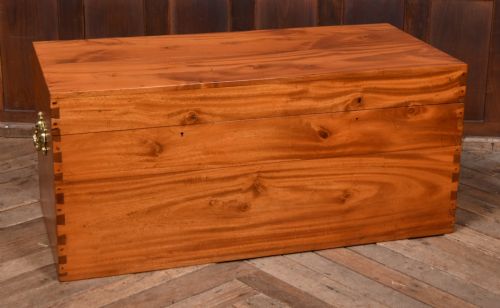
The version most commonly met on this page is the nineteenth century camphor wood chest, often framed in brass and associated with military campaign use. These pieces display the characteristic timber chosen for its insect-repellent properties, vital for long postings abroad. Alongside these, teak, pine, and padouk storage trunks appear from Victorian and Georgian origins.
Construction and Materials
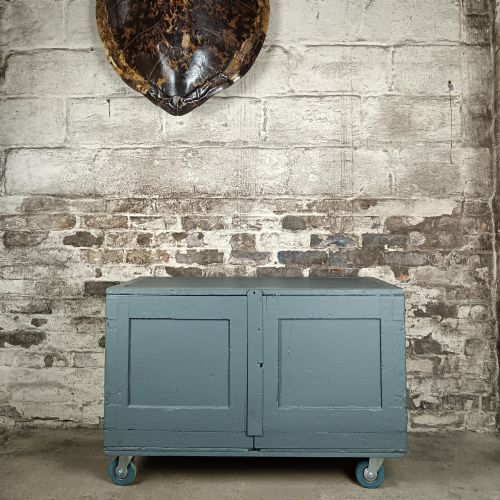
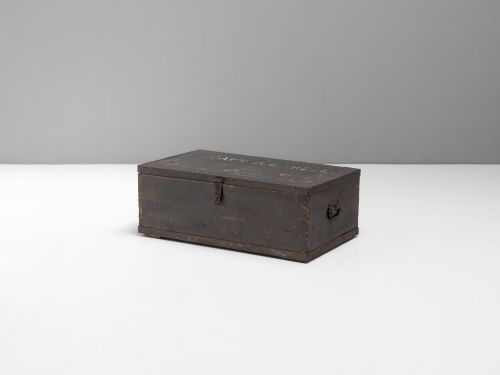
Makers utilised resilient timbers such as camphor wood, teak, and padouk to withstand fluctuating maritime climates and resist pests. These dense woods were jointed solidly to endure the strains of shipboard transport and rough handling in transit. Pine also appears, frequently painted for service on merchant vessels.
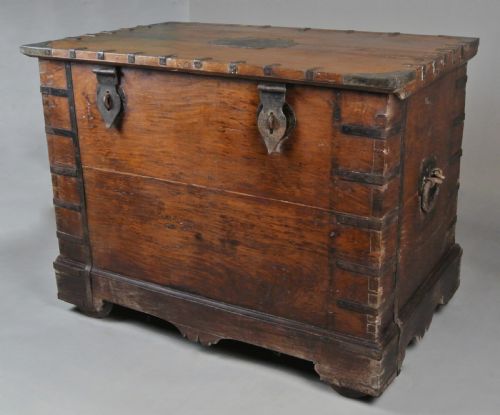
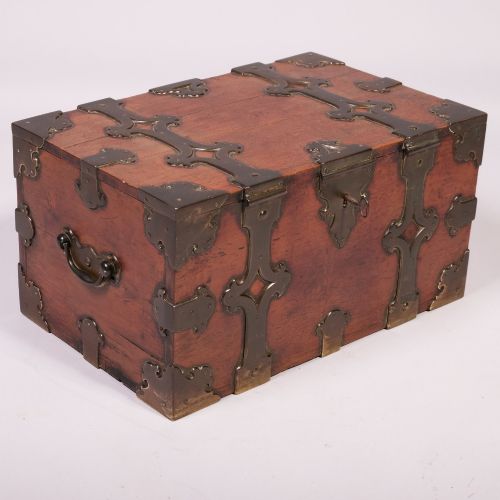
Metal reinforcement defines the construction, with brass bindings, iron mounts, and brass stud decoration protecting vulnerable corners and edges. Rope handles or recessed brass drop handles allowed secure lifting when stowed in cramped quarters. Locks and key escutcheons completed the construction, ensuring personal contents remained secure at sea.
Maritime Wooden Trunk Retail Price Guide 2026
Typical asking prices for maritime wooden trunk among the pieces listed under this phrase on Sellingantiques today, from the lower quarter to the upper quarter. They describe what is for sale here now, not the wider market.
Listings feature eighteenth and nineteenth-century periods, utilising camphor wood, teak, pine, and brass.
Evaluating Quality
The grade of timber and the complexity of brass work set examples apart, with dense camphor wood and heavy, hand-engraved brass mounts representing superior execution. Simpler pine sea chests relied on utility rather than decorative metalwork, reflecting their practical purpose on working ships. The crispness of corner brackets and the integration of dovetail joints indicate the skill of the original maker.
Proportion and intact original hardware distinguish finer pieces from altered or later assembled boxes. Retained keys, working locks, and secondary interior compartments demonstrate a higher standard of survival and preservation. The presence of painted maritime motifs or inscribed names adds regional and historical specificity to individual trunks.
The Maritime Wooden Trunk Glossary
- Campaign trunk
- A portable chest built in sections or fitted with carrying handles for military officers on the move. These pieces often feature brass corners to prevent damage during transport.
- Camphor wood
- An aromatic timber native to Asia, prized for its ability to repel insects and protect stored textiles. This wood forms the primary material for many nineteenth-century export chests.
- Zanzibar chest
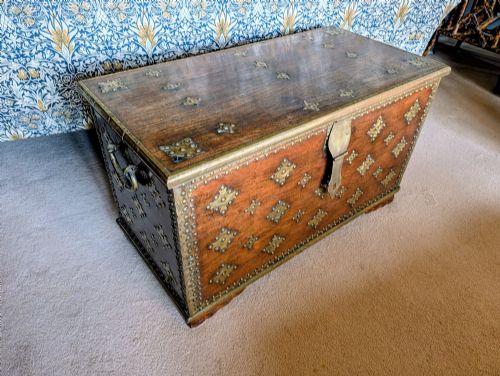
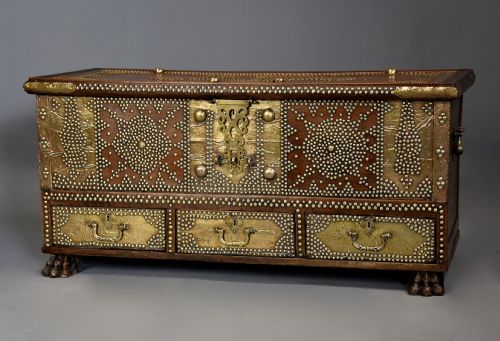
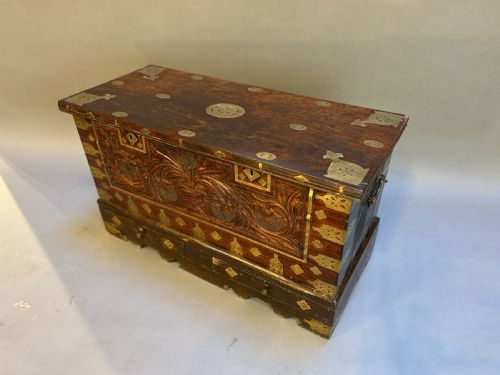
- A heavily decorated storage chest featuring brass studs, straps, and intricate lock plates reflecting trade routes between India, Oman, and East Africa. These trunks utilise teak or padouk.
- Sea chest
- A heavy wooden box used by sailors to hold personal gear aboard ship. They frequently feature rope beckets for handles and painted maritime scenes.
- Dovetail joint
- An interlocking woodworking joint formed by interlocking wedge-shaped fingers, providing exceptional strength for load-bearing corners on storage trunks.
Maritime Wooden Trunk: Frequently Asked Questions
How do I identify a campaign trunk?
Campaign trunks are identified by recessed brass handles, reinforced brass corners, and often a split construction designed for easy packing by military personnel. They were built to withstand frequent relocation during the Victorian era and earlier.
Many campaign pieces utilise camphor wood to protect contents from moths and dampness during tropical postings. Look for original brass strapping and maker markings on the interior.
What is a Zanzibar chest?
A Zanzibar chest is a distinct type of trade chest characterised by heavy brass studding, elaborate strapwork, and central figurative lock plates. Originating from Indian and Omani maritime trade routes, they were constructed from dense hardwoods like teak and padouk.
These trunks often incorporate hidden internal compartments known as till boxes for valuables. Their ornate brass decoration distinguishes them from standard British military trunks.
How do I care for a camphor wood trunk?
Camphor wood trunks require stable indoor humidity away from direct heat sources to prevent the timber from splitting. Regular dusting with a soft cloth preserves the natural grain and aromatic qualities of the wood.
Avoid applying heavy modern polishes that can seal the timber and dull the brass hardware. The interior wood should remain untreated to maintain its natural insect-repellent scent.