


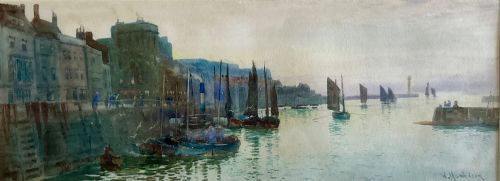
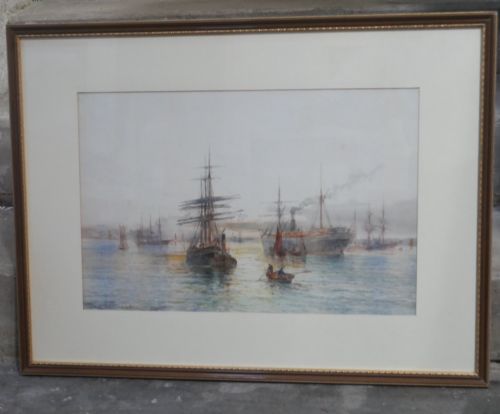
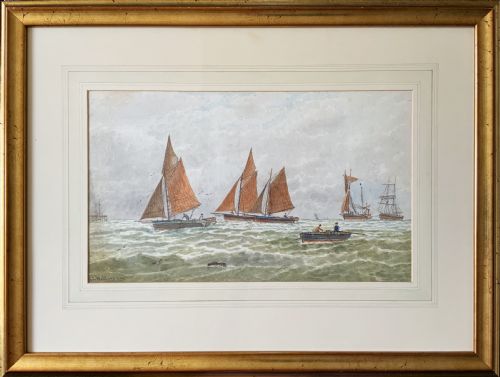
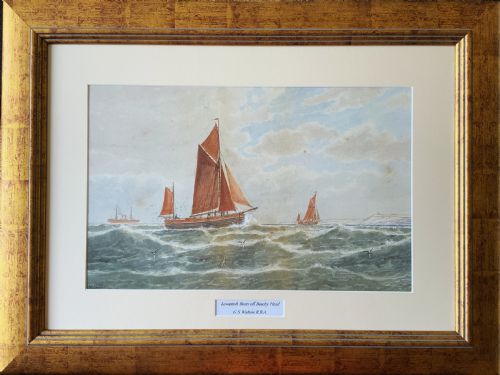


Maritime Watercolour Wall Art
Maritime watercolour wall art captures coastal life and naval history on paper through transparent pigment and ink.
Maritime Watercolour Wall Art
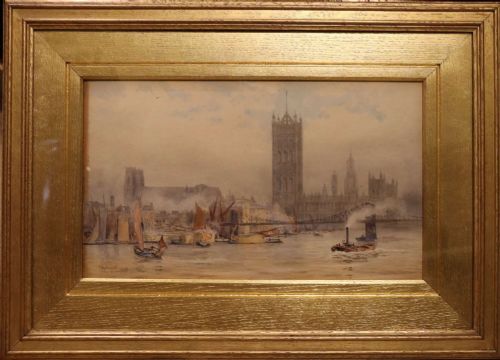
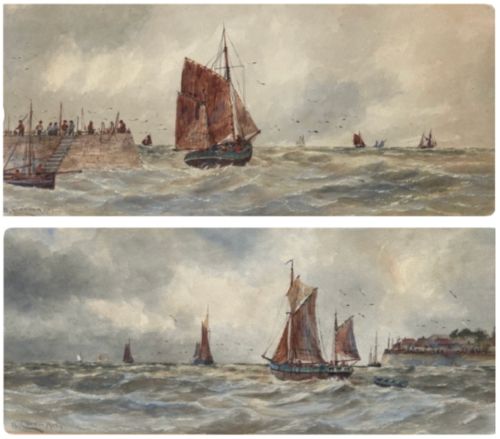
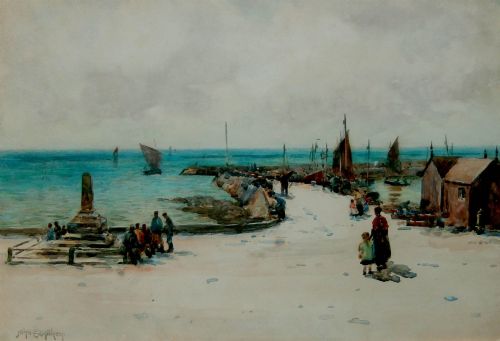
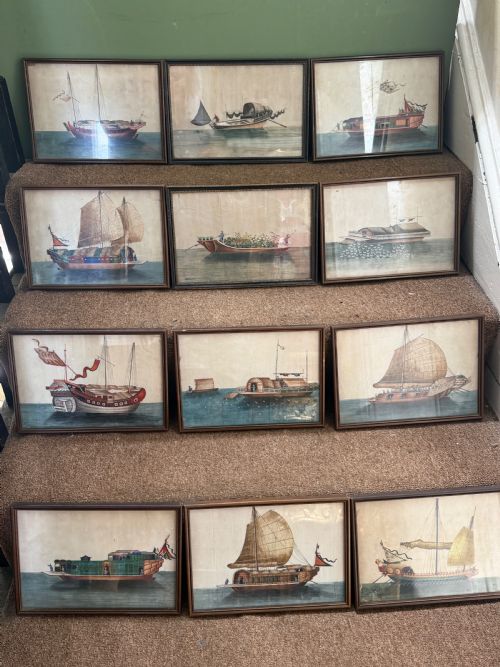
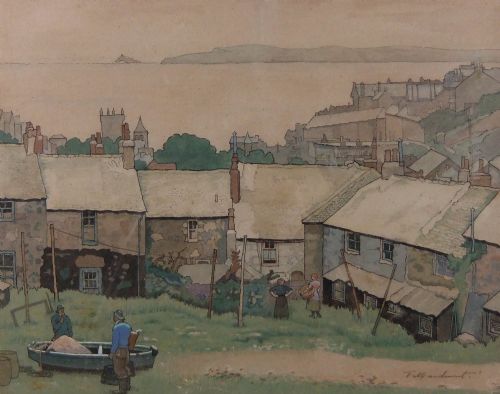
When browsing for maritime watercolour wall art, collectors encounter original paintings and framed artworks depicting harbours, sailing ships, and coastal scenes. These pieces originate predominantly from the nineteenth and early twentieth centuries, spanning the Victorian and Edwardian periods up to the mid-twentieth century.
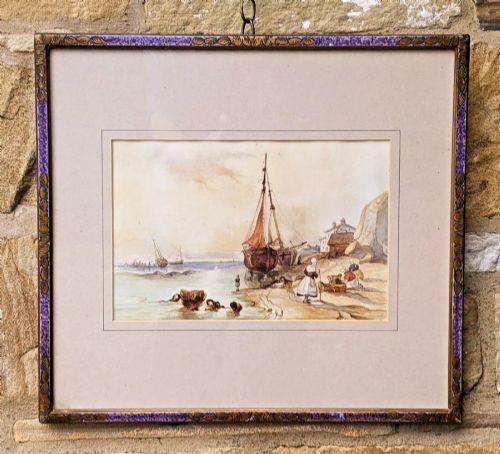
The selections on this page feature British and European coastal locations, including St Ives, Whitby, and the Thames, alongside international shipping subjects. Buyers most frequently meet works executed on paper, often preserved in period wood or gilt wood frames under glass.
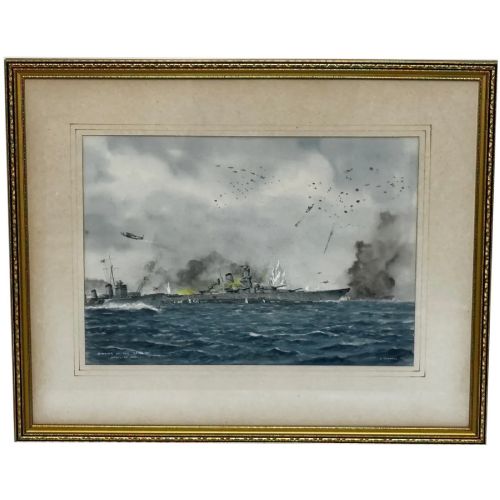
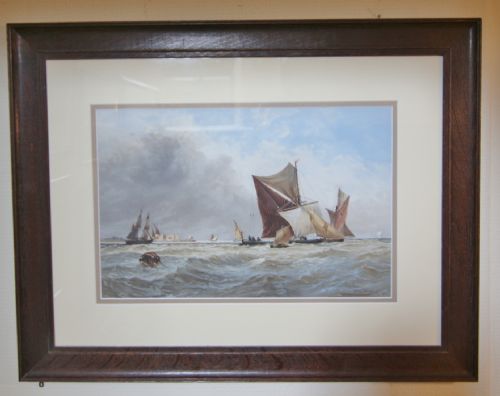
Subject matter ranges from traditional English fishing boats and racing yachts to naval battleships and busy ports. The inventory reflects diverse regional schools, capturing specific coastal topography and maritime activity across decades of artistic practice.
Technique and Materials
Artists applied watercolour pigment and ink onto paper supports, occasionally incorporating gouache for opaque highlights on denser compositional elements. The medium relies on the luminosity of the white paper showing through transparent washes to render water, sky, and atmospheric light.
Historical works utilise traditional water-soluble pigments brushed onto textured paper sheets, which painters mounted inside protective frames often constructed from wood or gilt wood. Glazing with glass preserves the delicate water-soluble pigments from atmospheric moisture and environmental damage over time.
Frame materials recorded include standard wood alongside ornate gilt wood constructions designed to protect fragile works on paper.
Assessing Quality
Superior examples demonstrate confident brushwork, accurate rendering of maritime rigging and vessel architecture, and a strong command of atmospheric light. The artist's ability to capture the movement of water and weather conditions distinguishes accomplished works from routine topographical sketches.
Condition and presentation significantly influence overall merit, particularly the preservation of pigment vibrancy against fading and the integrity of the original paper support. Framing choices, whether period gilt wood or later mountings, affect the visual impact of the painting.
H. Medlycott·James Orrock·William Cannon·John E. Aitken·Eric Tufnell·William Banks Fortescue·Thomas Maidment·TB Hardy·William Matthison·George Stanfield Walters·George F Pennington·William Frederick Settle·Alfred George Morgan·Paul Delvaux·Charles William Adderton·Richard Harry Carter·William Lee Hankey·Thomas Bush Hardy·Edward Seago·Robert Leslie Howey·Frank H. Mason·George Hamilton Constantine·Frederick William Hattersley·James Thomas Watts·Samuel Owen
The Maritime Watercolour Wall Art Glossary
- Gouache
- An opaque watercolour paint mixed with a white pigment filler, producing a heavier and less transparent finish than standard watercolour.
- Lugger
- A small fishing vessel carrying lug sails set on one or more masts, frequently depicted in nineteenth-century West Country coastal scenes.
- Seascape
- A painting, drawing, or other work of art that depicts the sea, ships, and coastal views.
- Gilt Wood
- Wood that has been treated with a thin layer of gold leaf or gold-coloured paint, commonly utilised for traditional picture framing.
Maritime Watercolour Wall Art: Frequently Asked Questions
What subjects appear in maritime watercolours?
These works depict fishing boats, merchant sailing ships, naval vessels, and busy ports across British and European coastal locations.
Compositions range from calm harbour anchorages to turbulent seascapes featuring racing yachts and historic warships.
How are antique watercolours framed?
Many pieces retain their period wood or gilt wood frames, set behind protective glass to shield the paper from environmental wear.
Original framing often includes paper mats and backing boards that help date the assembly.
How do I care for watercolour wall art?
Display paintings away from direct sunlight to prevent the watercolour pigments from fading and the paper support from yellowing.
Maintain stable indoor humidity levels and keep glazed frames sealed against dust and atmospheric moisture.
How do I identify the period of a painting?
Dating relies on the rigging style and architecture of the depicted vessels, artist signatures, and framing materials characteristic of nineteenth or twentieth-century workshops.
Inscribed titles, dates on the mount, and artist biographical records provide further confirmation of the era.