




British Impressionist Beach Scene
British impressionist beach scene paintings capture coastal light and leisure on canvas and paper across several decades.
British Impressionist Beach Scene
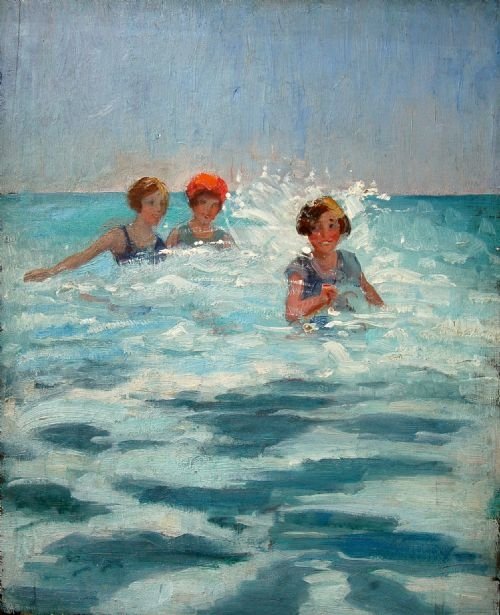
A british impressionist beach scene presents coastal views, harbours, and shores captured through loose brushwork and observant colour. These works range from late nineteenth century watercolours to mid twentieth century oils depicting figures by the sea.
The selections on this page feature coastal locations such as St Ives, Heacham, and Sidmouth. Many examples record children playing on the beach or boats resting at low tide.
Makers and painters associated with these styles include the Newlyn School and individual artists working in various British coastal spots. The focus remains on outdoor atmosphere rather than rigid academic detail.
Materials and Techniques
Artists painted these coastal subjects primarily in oil paint on canvas or wood panels, alongside watercolours on paper. The medium allowed for rapid application to catch changing light on the shore.
Frames often consist of gilt wood, which complements the warm tones and lively brushstrokes of the painted surface.
British Impressionist Beach Scene Retail Price Guide 2026
Typical asking prices for british impressionist beach scene among the pieces listed under this phrase on Sellingantiques today, from the lower quarter to the upper quarter. They describe what is for sale here now, not the wider market.
Listings span periods from the nineteenth century to the 1960s, utilising canvas, oil paint, paper, wood, and watercolour.
Judging Quality and Execution
Quality rests in the handling of light and atmosphere rather than mere scale or subject matter. A stronger work demonstrates confident brush placement that suggests movement in the surf or air.
Condition of the canvas or paper and the preservation of the original pigments influence the visual impact of each piece.
William Banks Fortescue·Donald McIntyre·Frederick William Hattersley·Ernest F Hill·Jeffrey Pratt·Owen Bowen·William Greaves·Alfred Egerton Cooper·Harry John Pearson
The British Impressionist Beach Scene Glossary
- Newlyn School
- An art colony based in Cornwall that focused on plein air painting of local coastal life and landscapes. Their work heavily influenced British impressionism.
- Plein air
- Painting outdoors to capture direct observations of natural light and weather. This method defined much of the impressionist approach to beach scenes.
- Gilt wood
- Wood coated with a thin layer of gold leaf or metallic gilt, commonly used for framing fine art paintings from the nineteenth and twentieth centuries.
- Watercolour
- A paint consisting of pigment suspended in a water-based solution, applied to paper to achieve transparent washes of colour.
British Impressionist Beach Scene: Frequently Asked Questions
What periods do these beach scenes cover?
The listings span from the late nineteenth century through to the mid twentieth century, covering decades of shifting British artistic styles.
Most examples cluster around the turn of the century and the interwar years, showing steady evolution in coastal painting.
Where are the coastal locations usually set?
Many scenes depict specific British coastal spots, particularly in Cornwall such as St Ives, as well as locations in Norfolk and Devon.
Artists frequently chose working harbours and popular bathing shores for their subjects.
How should I display an oil on canvas?
These works suit rooms with stable humidity and indirect natural light to protect the canvas and paint layers from degradation.
Pairing the painting with its period frame helps maintain the historical context of the piece.
What is the difference between oil and watercolour here?
Oils offer heavier texture and deeper pigment saturation on canvas or wood supports, suitable for robust coastal lighting.
Watercolours on paper provide lighter, more transparent washes that capture delicate atmospheric effects.