





Paper Watercolour Coastal Scene
A paper watercolour coastal scene captures the shifting light and maritime life of British and European shores across the nineteenth and twentieth centuries.
Paper Watercolour Coastal Scene
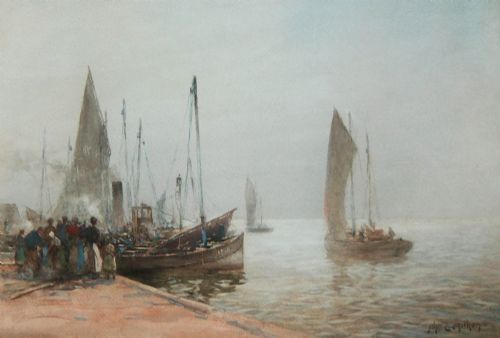
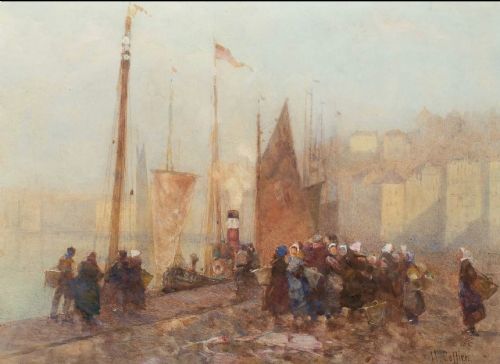
A paper watercolour coastal scene depicts harbours, fishing fleets, and shorelines using fluid pigments on paper supports. Buyers seeking these works will find authentic watercolours ranging from late Victorian views to mid-century maritime compositions.
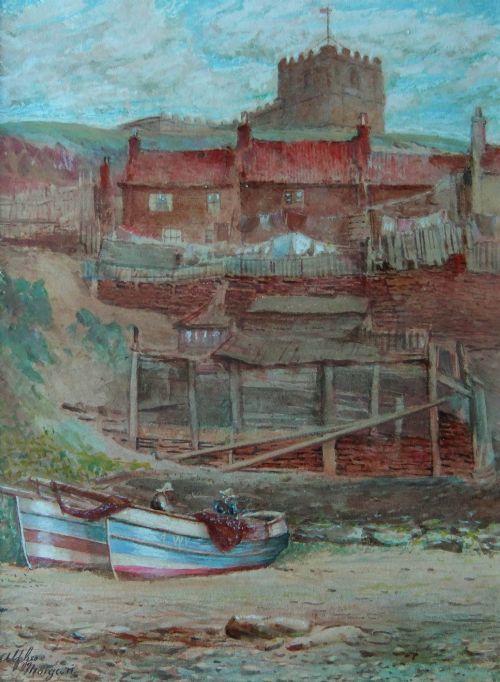
The most common examples on this page date from the late nineteenth century through to the 1940s, frequently recording specific British coastal locations such as Whitby, St Ives, and Mousehole. These paintings often incorporate local vessels, dockyards, and figures engaged in daily maritime labour.
Works span movements from Victorian traditionalism and British Impressionism to early twentieth-century marine art. Collectors encounter framed watercolours protected by glass, often framed with wood mouldings suited to the period of execution.
Materials and technique
Artists painted these coastal subjects using watercolour pigments applied to sheets of paper, occasionally combining ink for fine linear detail. The absorbency of the paper allowed practitioners to build transparent washes that conveyed atmospheric sea mists and open skies.
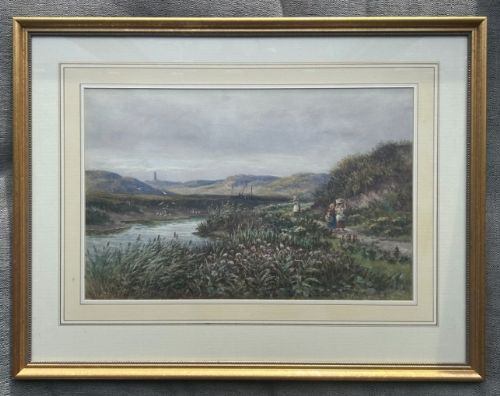
Finished watercolours were traditionally mounted under glass within wood frames to protect the delicate paper surface from moisture and light damage. Surviving examples demonstrate the skillful handling of fluid pigment to capture reflective water and changing tidal conditions.
Listings feature works executed on paper using watercolour pigments and ink, spanning the nineteenth century through to the mid-twentieth century.
Evaluating quality
Quality in a paper watercolour coastal scene rests on the artist's command of light, atmosphere, and spatial depth within the restricted medium of watercolour. Superior works display confident brushwork and precise tonal control that bring movement to the sea and harbour architecture.
Compositional strength and the specificity of the topographical record separate exceptional examples from standard topographical sketches. The preservation of the paper support, retaining vibrant pigment without excessive fading or foxing, also elevates the standing of an individual painting.
James Orrock·Hector Caffieri·Thomas Bush Hardy·Paul Delvaux·Rowland Henry Hill
The Paper Watercolour Coastal Scene Glossary
- Watercolour pigment
- A colourant ground with a water-soluble binder, applied in washes to paper to create translucent layers of tone. This medium allows artists to capture the luminous qualities of light over water.
- British Impressionism
- A painting style emerging in the late nineteenth and early twentieth centuries that focused on loose brushwork and natural light. Practitioners applied these principles to harbour scenes and coastal landscapes.
- Woodblock print
- A relief printing technique where an image is carved into a block of wood, inked, and transferred to paper. Examples of this medium occasionally accompany watercolour landscapes in mixed portfolios.
- Foxing
- Brown or reddish spots caused by chemical reactions in ageing paper, often accelerated by damp storage conditions. Collectors examine sheets closely for the presence of these spots within the paper surface.
- Provenance
- The documented history of ownership of an artwork, establishing its authenticity and lineage. Clear attribution to named regional artists reinforces the historical value of a coastal painting.
Paper Watercolour Coastal Scene: Frequently Asked Questions
How should I frame an antique watercolour?
Antique watercolours require professional framing behind conservation-grade glass to filter ultraviolet light and prevent fading. Acid-free mounts should be used to keep the paper separated from the glass surface.
Direct sunlight and high humidity must be avoided when choosing a wall location for display. Proper environmental control protects the paper support and water-soluble pigments from deterioration.
What subjects appear in these coastal scenes?
These watercolours frequently depict bustling fishing ports, quiet estuaries, and dramatic cliffs along the British coastline. Common motifs include moored cobles, drying fishing nets, and historic harbour architecture.
Specific locations such as Whitby, St Ives, and Polperro appear repeatedly across the selection. Artists also documented continental shores, including scenes from the French Riviera and Dutch waterways.
How do I identify the period of a watercolour?
Dating relies upon stylistic markers, framing methods, and signatures associated with recorded artists working within specific eras. Victorian and Edwardian works often feature detailed maritime activity and traditional pigment palettes.
Later twentieth-century examples tend towards looser, more impressionistic interpretations of harbour light and form. Reference to exhibition records and artist lifespans helps narrow the date of execution.
Are these watercolours original artworks?
The listings comprise original, one-off paintings executed by hand on paper rather than mechanical reproductions. Each sheet records the direct touch and brushwork of the individual artist.
Signatures, inscriptions, and artist attributions help confirm the unique status of each painting. Such works represent direct historical records of past coastal environments.