

Marbled Commode Chest
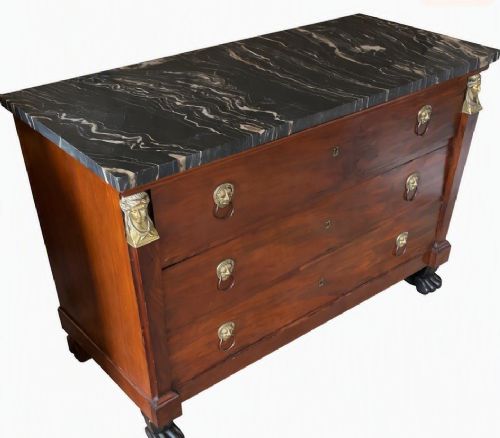
These pieces unite solid timber carcases with stone surfaces, delivering a marbled commode chest that brings heavy storage and a cool surface together.
Marbled Commode Chest
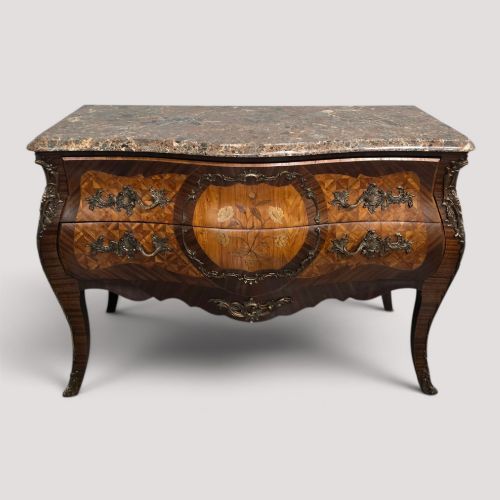
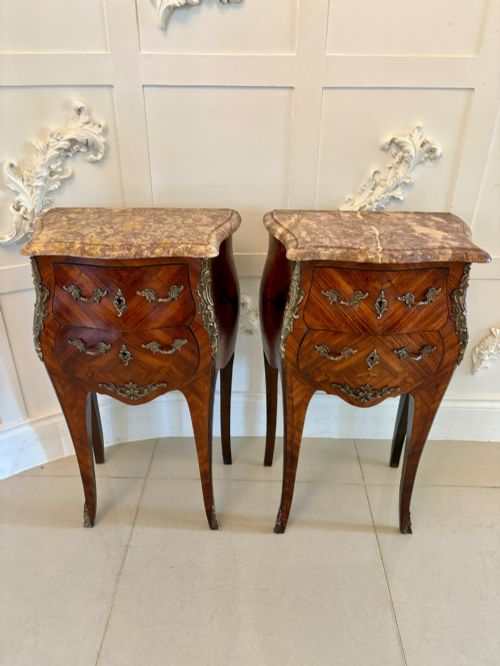
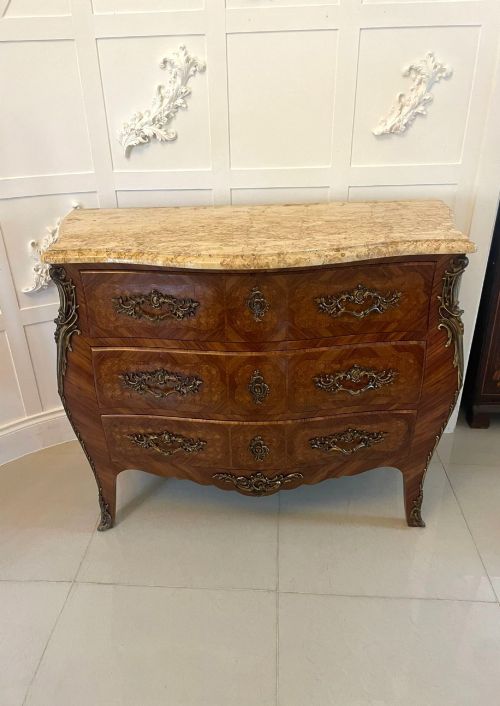
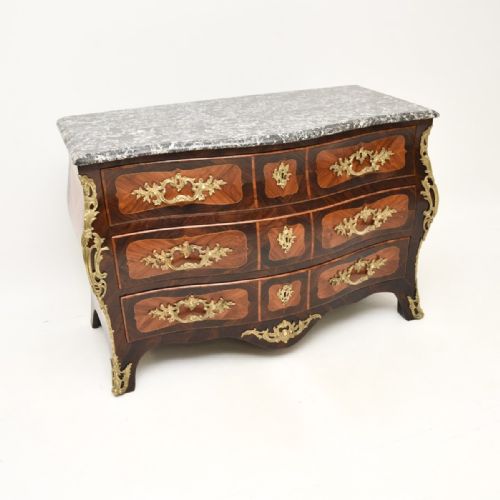
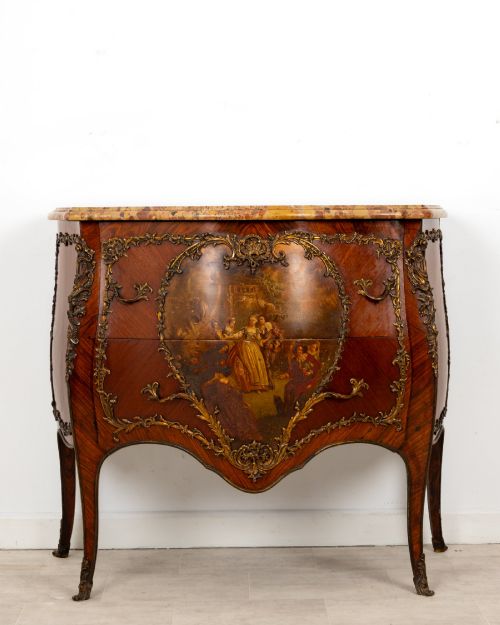
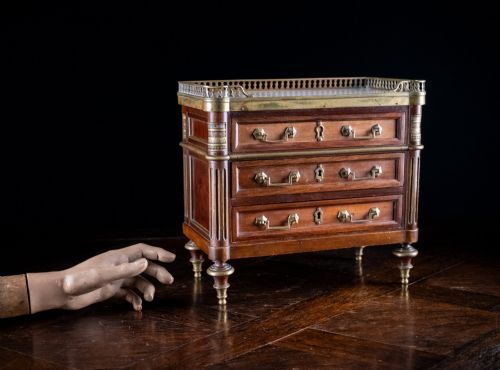
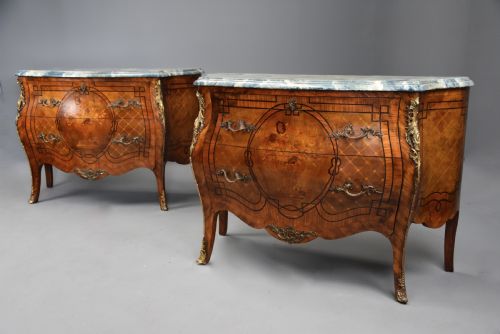
A marbled commode chest appears in forms ranging from serpentine fronts to bombe silhouettes, alongside bedside tables and miniature versions. These items emerge primarily from French workshops spanning the eighteenth century through to the early twentieth century.
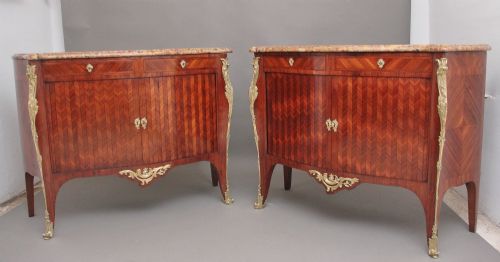
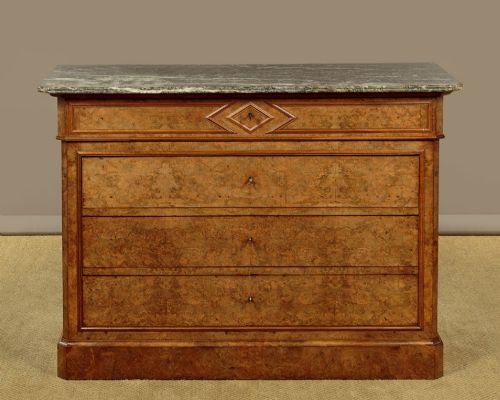
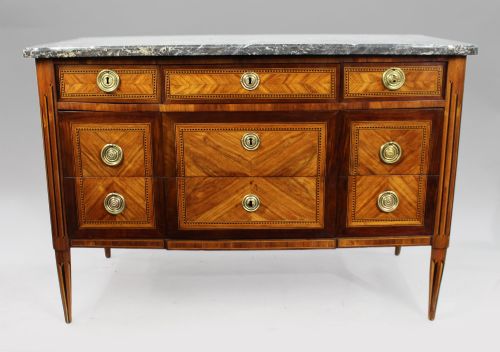
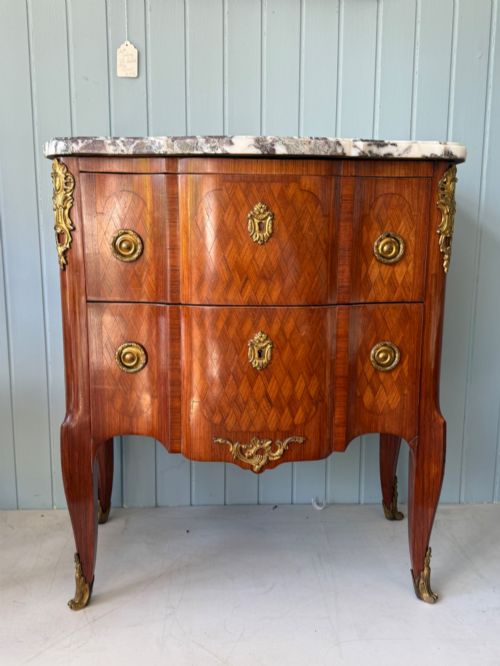
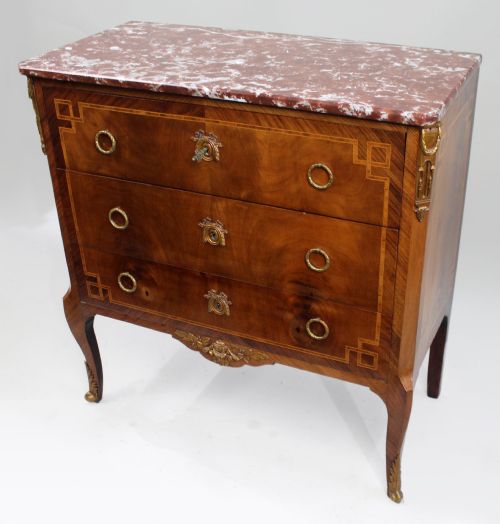
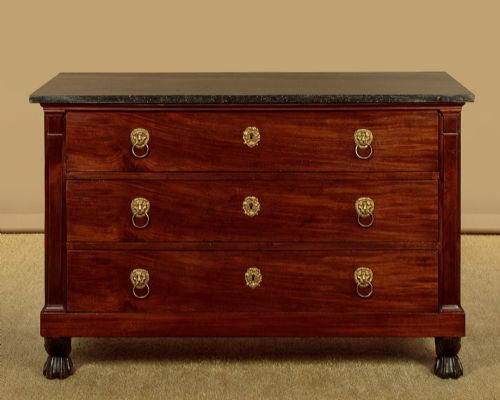
The version most commonly met on this page combines a wooden carcase of walnut, mahogany or kingwood with a fitted marble top, often set upon short legs or a shaped apron. Chests of drawers and commodes dominate the selection, built for bedroom and reception room placement.
Materials and Construction
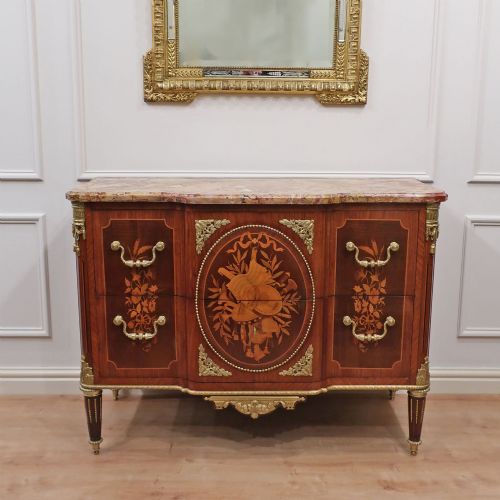
Carpenters build the carcases from timbers such as walnut, oak, cherrywood and mahogany, frequently applying decorative veneers of kingwood or parquetry patterns across the exterior surfaces. Stonemasons shape slabs of marble to fit the exact contours of the chest tops, leaving polished upper faces.
Metalworkers cast and chase bronze mounts, ormolu and brass handles, securing these elements to the wooden bodies with fixings. Cabinetmakers utilise dovetail joints for drawer construction and apply finishes including varnish and lacquer to protect the wood.
Miniature chests exist alongside full-sized models, offering tiny drawers built with the exact same joinery as their room-sized counterparts.
Standard and Execution
The standard of a marbled commode chest rests on the precision of the timber marquetry and the weight and figuring of the stone top. Finer examples display meticulous grain matching and hand-chiselled gilt-bronze mounts that integrate seamlessly with the carcase.
Lower tiers of quality present simpler painted or plain timber surfaces with standard cast brass hardware and thinner marble slabs lacking distinct veining. The depth of the carving and the tightness of the drawer joints separate workshop productions from standard output.
Jacques Bircklé·Henry Dasson·E. Kahn
The Marbled Commode Chest Glossary
- Bombe
- A swelling, outward-curving chest shape prevalent in eighteenth-century French cabinetmaking. This contour requires skilled bending of wood veneers.
- Ormolu
- Gilded bronze used for decorative mounts and handles on fine furniture. The technique involves applying a gold amalgam to heated bronze.
- Marquetry
- Inlaid wood veneers forming pictorial or geometric designs across the surface of a chest. Craftsmen cut contrasting timber veneers together to achieve tight fits.
- Parquetry
- Geometric wood inlay patterns such as lozenges or cubes arranged across furniture panels. It provides texture without figurative imagery.
- Vernis Martin
- European imitation of East Asian lacquerwork developed in France. It uses successive layers of varnish to produce a glossy, decorated finish.
Marbled Commode Chest: Frequently Asked Questions
What is a marbled commode chest?
A marbled commode chest is a low wooden storage unit featuring a fitted stone top, originating largely from French cabinetmaking traditions.
These pieces combine timber carcases with marble surfaces to provide both drawer storage and a durable display top.
How do I identify the period?
Dating relies on stylistic markers such as cabriole legs for earlier pieces or straighter neoclassical lines for later eighteenth- and nineteenth-century examples.
Timber choices and mount designs also signal the era of manufacture, moving from heavy marquetry towards revival styles.
Where were these chests used?
Original placement was primarily in domestic bedrooms and reception rooms as functional storage for clothing and personal items.
The stone top offered a practical surface resistant to water and cosmetic spills during daily use.
How do I care for the marble top?
Maintenance involves wiping the stone surface with a damp cloth and avoiding acidic liquids that can etch the polish.
Gentle cleaning protects the natural veining and prevents staining on antique stone.