
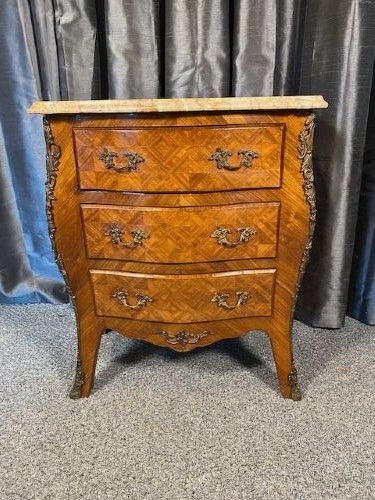
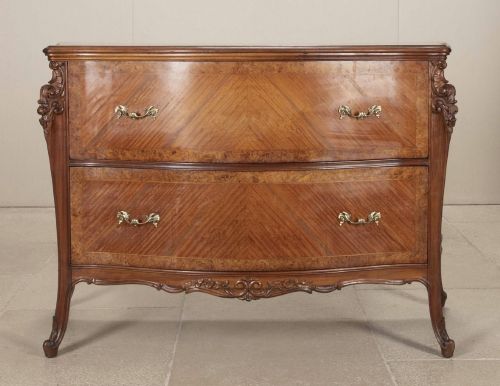
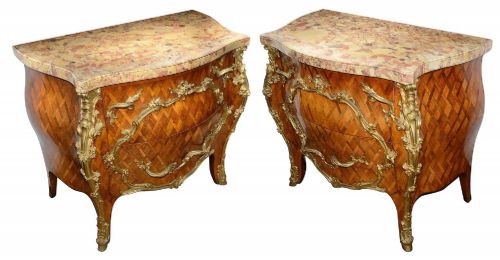
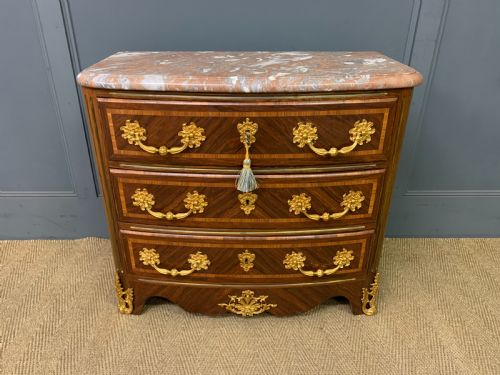

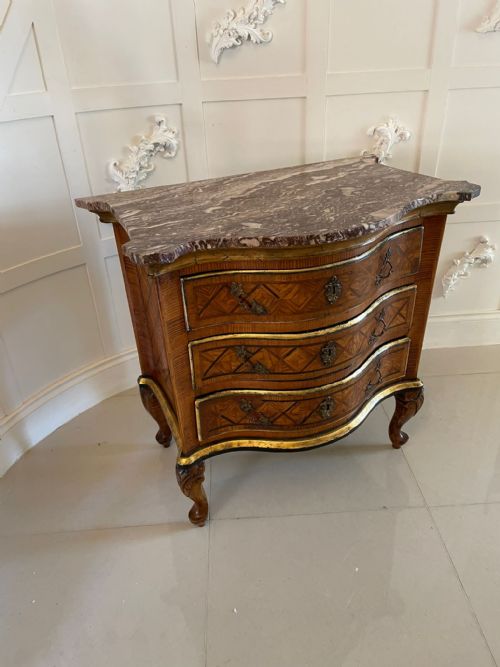


Serpentine Parquetry Commode
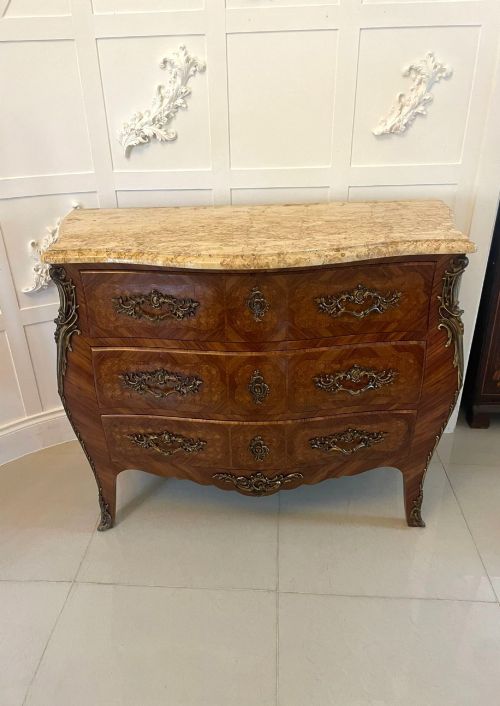
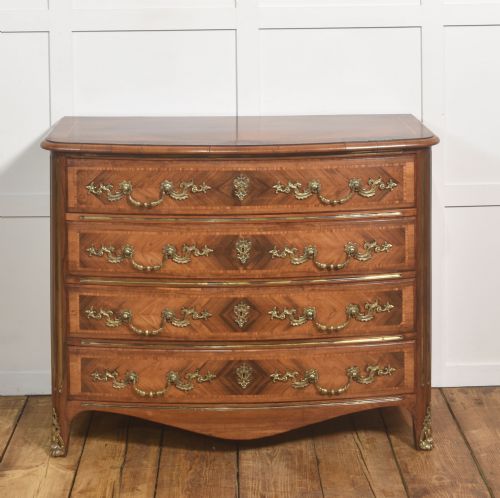
A serpentine parquetry commode brings curved French and Continental elegance into a room through geometric wood patterns and fitted stone tops.
Serpentine Parquetry Commode
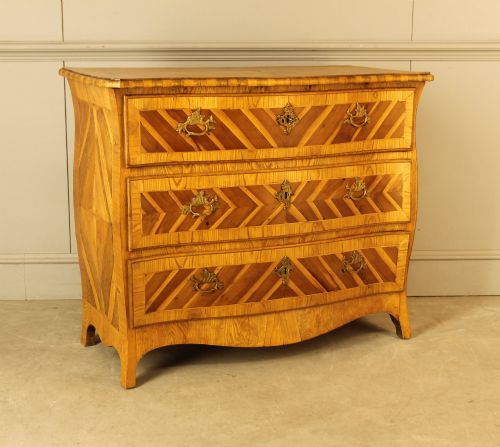
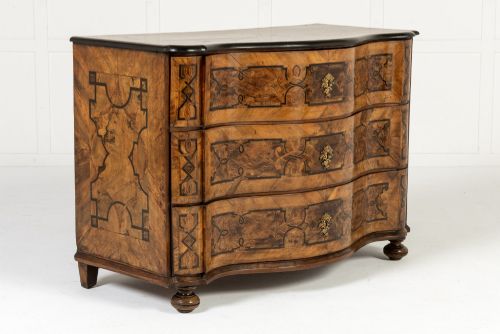
A serpentine parquetry commode is a decorative storage chest defined by an undulating front and geometric wood veneer patterns, taking forms such as standard commodes, bedside cabinets, and miniature chests. These pieces emerge primarily from 18th-century workshops and subsequent 19th-century revival periods, particularly within French, Italian, German, and Swedish traditions.
Buyers encounter examples spanning the 18th century through to the early 20th century, with significant representation from the Louis XV style, Louis XVI style, and Régence periods. The primary forms function as grand salon chests or smaller bedside companions, each maintaining the characteristic curved outline and fitted upper surface.
The construction relies heavily on Continental cabinet-making traditions, where chest of drawers designs incorporate shaped carcasses and intricate wood mosaics. Surviving pieces demonstrate the enduring appeal of Rococo and neoclassical design vocabularies translated into domestic storage.
How They Were Made
Cabinet-makers constructed these pieces using native and exotic timbers such as walnut, kingwood, mahogany, and fruitwood applied as veneers over a sturdy carcass. Geometric parquetry and pictorial marquetry patterns were meticulously cut and fitted by hand to create the characteristic surface decoration.
The undulating serpentine and bombe profiles required advanced woodworking skill to shape the timber frames and drawers to harmonious curves. Mounts in cast bronze and ormolu were then fitted to accentuate the structural contours and protect vulnerable corners.
Heavier elements like marble, breccia marble, and scagliola were shaped to follow the exact contours of the serpentine top edge, providing a durable and decorative working surface. These stone slabs were selected to complement the tone of the underlying wood veneers.
Miniature apprentice chests and bedside cabinets bring full-scale serpentine curves down to diminutive tabletop proportions.
What Varies in Quality
Quality rests upon the precision of the parquetry layout and the crispness of the serpentine carving through the wooden carcass. Superior pieces display seamless integration between the complex wood grain patterns and the underlying structural curves.
The refinement of the cast ormolu mounts and the selection of the marble top significantly differentiate the tiers of production. Finer examples feature heavier, hand-chased bronze mounts and thick, highly figured marble slabs that fit the undulating surface precisely.
Period execution, whether originating in the 18th century or during later 19th-century revivals, displays varying degrees of cabinet-making ambition. Original surfaces and untouched mounts separate standard decorative chests from works of exceptional workshop execution.
The Serpentine Parquetry Commode Glossary
- Parquetry
- Geometric wood mosaic work arranged in repeating patterns across the surface of a furniture piece. It utilises contrasting timbers to create visual depth and texture.
- Serpentine
- A furniture front or top shaped with a double curve, convex in the centre and concave at the sides. This contour requires specialised woodworking skill to execute correctly.
- Ormolu
- Gilded bronze used for decorative mounts and furniture hardware. It provides metallic contrast against the polished wood veneers.
- Bombe
- A swelling, outward-curving chest profile associated with Continental cabinet-making. This bulbous form demands expert shaping of both carcass and drawers.
- Marquetry
- Inlaid wood designs forming pictorial or floral motifs rather than geometric patterns. Craftsmen use various coloured veneers to build up the image.
- Scagliola
- A composite material made from selenite, glue, and pigments, mimicking marble. It is laid into place and polished to create decorative table tops.
Serpentine Parquetry Commode: Frequently Asked Questions
What is a serpentine parquetry commode?
A serpentine parquetry commode is a decorative chest of drawers featuring an undulating curved front and geometric wood veneer patterns. These pieces originated primarily in Continental Europe as functional storage furniture for salons and bedrooms.
Cabinet-makers built them using timber frames decorated with contrasting wood veneers and fitted stone tops. The form evolved through various stylistic periods including French Rococo and neoclassical revivals.
How do I identify an 18th-century piece?
Identifying an 18th-century piece involves examining the construction methods, timber types, and wear patterns native to the period. Authentic examples often feature hand-cut dovetails, older secondary woods, and patinated bronze mounts.
Stylistic markers such as Régence or Louis XV proportions also help distinguish original 18th-century items from later 19th-century revival copies.
How were marble tops fitted to curved fronts?
Marble tops on serpentine commodes were hand-cut and ground to match the exact undulating profile of the wooden carcass. Stonemasons followed templates taken from the specific chest to ensure a flush, seamless fit along the edges.
These heavy stone slabs rested directly on the upper frame, providing both a decorative finish and a durable surface for the furniture.
Where should I place a commode at home?
These commodes suit living rooms, hallways, or bedrooms where their decorative front and stone top can be fully appreciated. Their substantial presence makes them effective focal points against plain walls.
Because they provide practical drawer storage alongside display space, they function well as side cabinets or bedside units depending on their physical scale.
What is the difference between parquetry and marquetry?
Parquetry consists of geometric wood pieces arranged in repeating patterns like cubes, lozenges, or squares. It relies on the natural grain contrast of different timbers.
Marquetry employs similar wood veneers to create pictorial scenes, floral arrangements, or scrollwork. Both techniques appear frequently across Continental commode surfaces.