


Marble Top Pot Stand
A marble top pot stand brings cool stone and solid timber together to elevate a plant, lamp or vase.
Marble Top Pot Stand
When you search for a marble top pot stand, you encounter a surprisingly varied group of small furnishings designed to elevate plants, lamps, and decorative objects. These pieces span from the late nineteenth century into the early decades of the twentieth century, reflecting both European domestic styles and Chinese export craftsmanship.
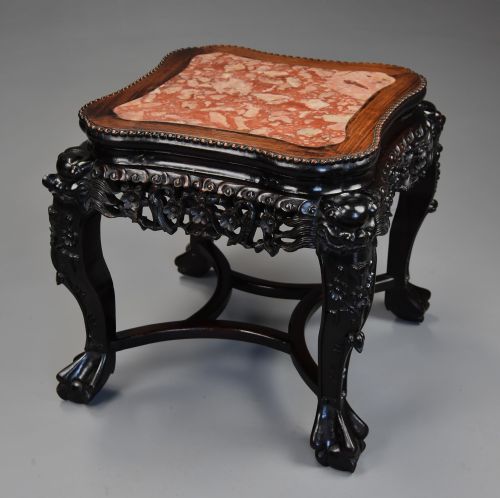
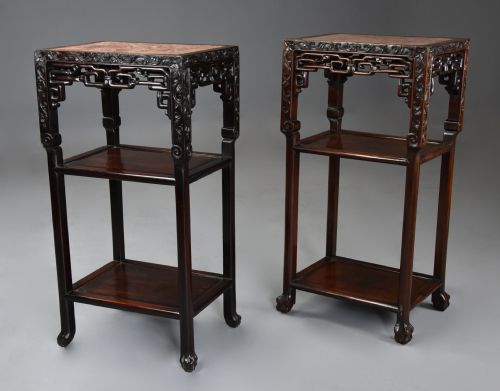
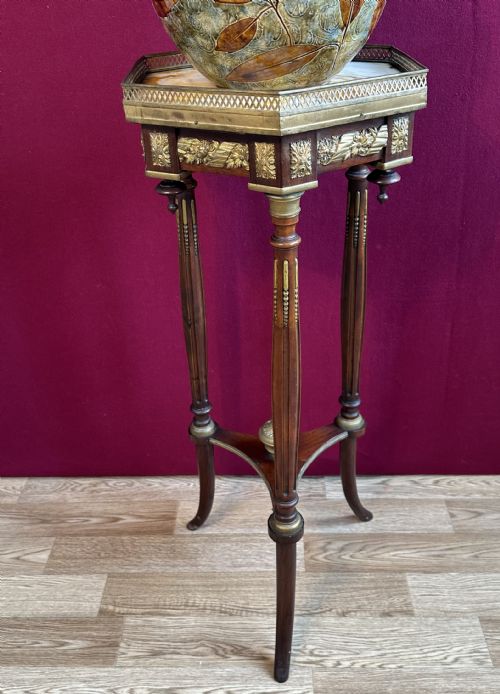
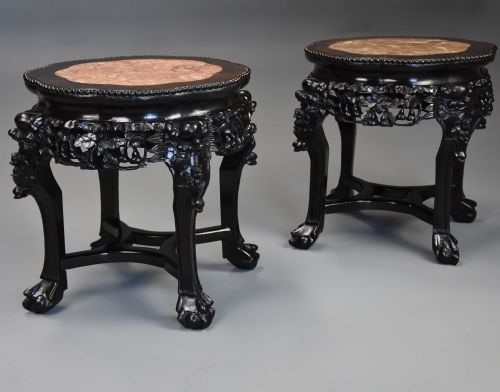
You are most likely to meet Chinese hardwood stands featuring inset marble tops alongside Victorian plant stands and French bedside cabinets with stone surfaces. The forms range from low rectangular tables and cylindrical cupboards to tall pedestals, all united by a durable stone surface inset into a wooden or brass frame.
How they were made
Cabinet makers utilised dense hardwoods such as mahogany, walnut, oak, and exotic Chinese timbers to build sturdy frames that could support heavy stone inserts. Wood was carved, turned, or ebonised, whilst alternative examples employed painted finishes or faux bamboo moulding.
The stone tops typically consist of inset marble slabs, sometimes in contrasting rouge or white tones, fitted flush into the timber or brass structure. Brass components appear both as structural frames and decorative mounts, particularly in French provincial and Belle Epoque designs.
Some nineteenth-century makers cleverly painted ordinary pine to mimic the exotic grain of bamboo, fooling the eye from across the room.
What varies in quality
The distinction between standard utility items and superior examples lies in the depth of carving and the selection of materials. Finely carved hardwood frames and intricately figured marble inserts separate workshop pieces of high ambition from simpler utilitarian stands.
Proportion and structural integrity dictate the standing of a piece, where tight joinery in the timber frame ensures the heavy stone top remains secure without wobble or undue gapes.
The Marble Top Pot Stand Glossary
- Jardiniere stand
- A tall piece designed specifically to hold a heavy plant container or flower pot. These stands frequently feature water-resistant stone or tiled tops to cope with damp garden use.
- Pot cupboard
- A small bedside cabinet or enclosed stand originally built to house a chamber pot. They combine a cupboard door or drawer with a flat upper surface.
- Hardwood
- Dense timber sourced from broad-leaved deciduous trees, highly valued for durability and fine carving capability. Examples include mahogany, oak, and various Asian species.
- Rouge marble
- A deep reddish ornamental limestone with white or grey veining, popular for decorative furniture tops. It adds strong colour contrast to dark wood frames.
Marble Top Pot Stand: Frequently Asked Questions
What is a marble top pot stand used for?
These pieces were originally built to hold heavy potted plants, jardinieres, or bedside water ewers safely away from damp floors. The stone surface protected the wood beneath from water spills and soil.
Today, they function well as lamp tables, display pedestals for sculpture, or compact bedside tables in modern interiors.
How do I date a marble top pot stand?
Dating relies on examining the timber species, construction joints, and stylistic markers such as French Rococo revival curves or Chinese Qing Dynasty carving. Cabinet making techniques shifted from hand-cut dovetails to machine assistance around the late nineteenth century.
The specific combination of materials, such as ebonised wood paired with rouge marble, often points directly to Victorian or late nineteenth-century workshop practices.
Are marble tops removable?
Most marble inserts rest inside a rebated wooden frame or brass gallery by gravity alone. This allows the heavy stone to be lifted out separately for easier transport and cleaning.
On certain cabinets and cupboards, the stone sits permanently fixed with mortar or mechanical brackets, so checking how the edge meets the frame is essential before lifting.
How do I care for the marble top?
Marble is a porous and acid-sensitive metamorphic stone that absorbs liquids and etches easily if exposed to lemon juice, wine, or vinegar. Cleaning requires only a damp cloth and mild, pH-neutral soap rather than harsh domestic scourers.
Applying a specialist stone sealer helps protect the surface from accidental rings and stains whilst preserving the polished finish.