




Chinese Fretwork Side Table
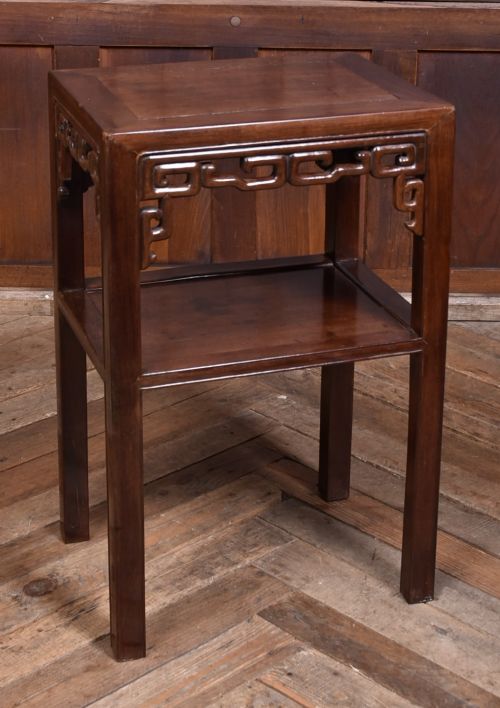
These Chinese fretwork side table pieces combine intricate pierced geometric designs with solid cabinet timbers, bringing architectural elegance and structural lightness to a room.
Chinese Fretwork Side Table
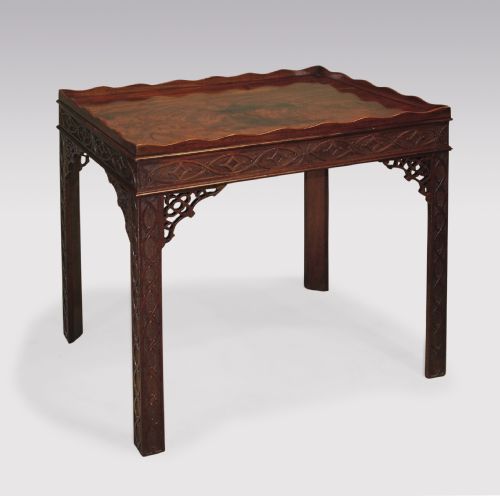
When you search for a Chinese fretwork side table, you encounter a distinct cross-cultural design vocabulary spanning the eighteenth century through the Edwardian era. These items encompass forms such as console tables, altar tables, plant stands, silver tables, and nests of tables.
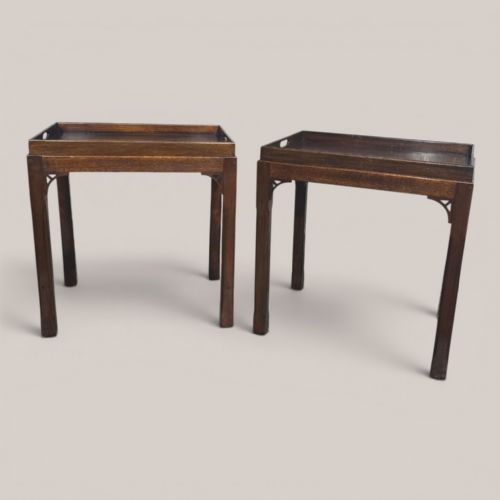
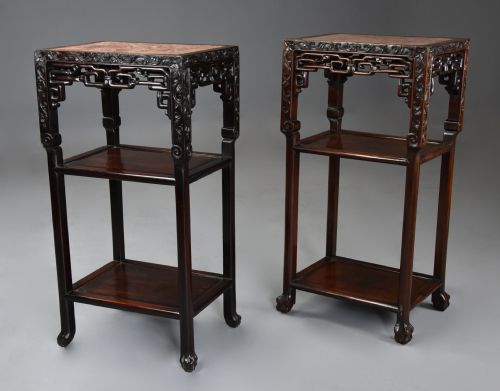
The surviving examples range from authentic Qing Dynasty imports to English Georgian interpretations in the Chinese Chippendale manner, alongside later revival pieces. You meet mahogany, hardwood, elm, and hongmu constructions, frequently accented by inset marble or porcelain panels.
The recurring visual hallmark is the pierced lattice or fretwork pattern, which softens the heavy silhouette of traditional timber furniture. These tables served various domestic functions, from display surfaces in reception rooms to functional writing and Pembroke tables.
How they were made
Cabinetmakers utilised dense timbers such as mahogany, elm, and hongmu, which allowed for the precise execution of delicate pierced fretwork without sacrificing structural integrity. Dense hardwoods were selected for their ability to hold crisp, carved lines along aprons and legs.
Construction techniques combined traditional mortise and tenon joinery with meticulous hand-carving to achieve the intricate openwork patterns characteristic of the style. Selected pieces incorporate inset panels of rouge marble or painted porcelain directly into the timber framework.
Surface finishing relied on hand-polishing and waxing to enhance the natural grain of the hardwood or mahogany without masking the underlying character of the material.
Materials recur across different forms, pairing standard cabinet timbers like mahogany with dense Asian hardwoods such as hongmu and elm.
What varies in quality
The standard of carving determines much of the distinction between pieces, particularly in the depth and sharpness of the pierced fretwork. Superior examples display crisp, undercut geometric patterns where lesser specimens appear rounded or mechanically uniform.
Material selection plays a defining role, with dense hongmu and well-figured mahogany commanding attention over utilitarian elm or secondary softwoods. The integration of secondary elements, such as fitted porcelain plaques or inset marble panels, indicates a higher grade of commission.
Structural harmony separates workshop output, ensuring that delicate openwork remains rigid and weight is distributed evenly across slender legs and pierced brackets.
Butler
The Chinese Fretwork Side Table Glossary
- Fretwork
- An ornamental design carved in low relief or pierced out of a solid board, forming geometric or interlaced patterns. This technique provides the primary decorative vocabulary for these tables.
- Hongmu
- A traditional Chinese term for dense, reddish-brown hardwoods prized for cabinetmaking and carving. It translates literally to red wood and offers exceptional durability.
- Altar Table
- A traditional Chinese table form characterised by an elongated rectangular top, often featuring upturned flange ends and carved apron spandrels. They originated in domestic and ceremonial spaces.
- Silver Table
- A form of display table dating from the eighteenth century, designed with a raised gallery edge to hold decorative silver. These pieces frequently incorporate Chinese fretwork legs and rails.
- Chippendale Manner
- A design style inspired by Thomas Chippendale's pattern books, incorporating Chinese fretwork, blind fret carving, and slender legs. English cabinetmakers produced these interpretations throughout the Georgian and revival periods.
Chinese Fretwork Side Table: Frequently Asked Questions
What is a Chinese fretwork side table?
These tables are low or console-height furniture pieces defined by openwork geometric lattice carving, drawing on both Asian export traditions and English Georgian design.
The inventory includes forms ranging from nineteenth-century pot stands to eighteenth-century silver tables and nesting sets.
How do I tell an 18th century piece from a revival?
Eighteenth-century examples typically display the timber shrinkage, patination, and hand-tool marks consistent with period cabinetmaking techniques. Revival pieces from the Edwardian era often utilise machine-cut joinery and uniform timber finishes.
Examining the underside and drawer construction helps reveal the true age of the timber.
Where should I place an altar table?
Altar tables work effectively against a hallway wall or behind a sofa, where their elongated proportions and narrow depth do not crowd the room. Their decorated aprons and flange ends draw the eye when kept clear of clutter.
Pairing them with a lamp or ceramics echoes their original function as display surfaces.
What maintenance do these timbers require?
Mahogany and hongmu benefit from occasional applications of natural beeswax to nourish the grain and preserve the surface sheen. Avoid placing them near direct heat sources that can dry out dense hardwoods.
Dusting with a soft, dry cloth prevents the intricate fretwork channels from accumulating debris.