

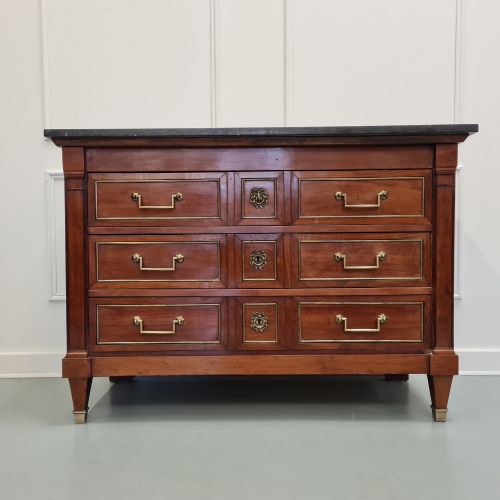


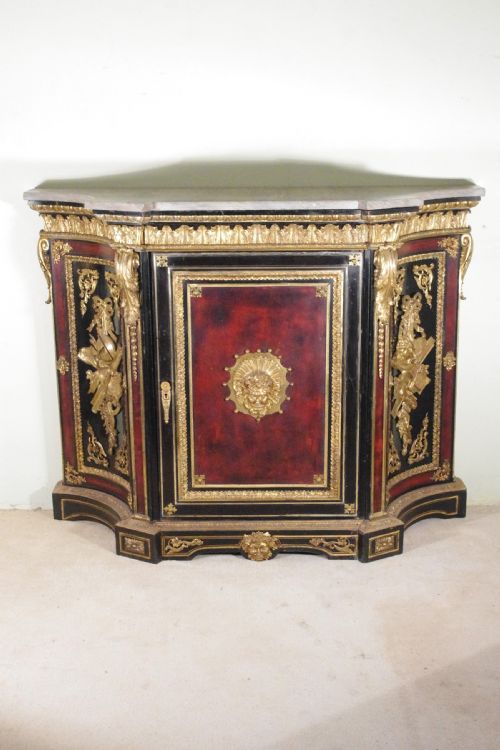
Marble Top Empire Commode
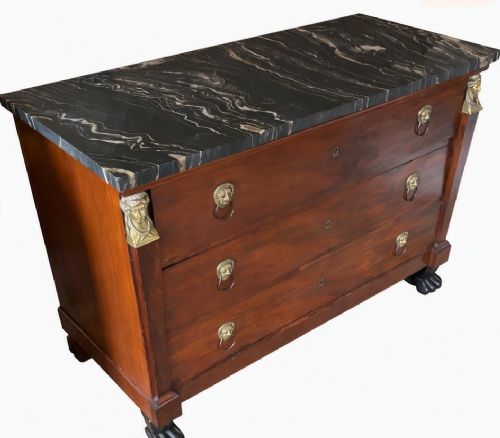
A marble top empire commode brings architectural dignity to a room, offering grand proportions and a solid stone surface that grounds the piece.
Marble Top Empire Commode
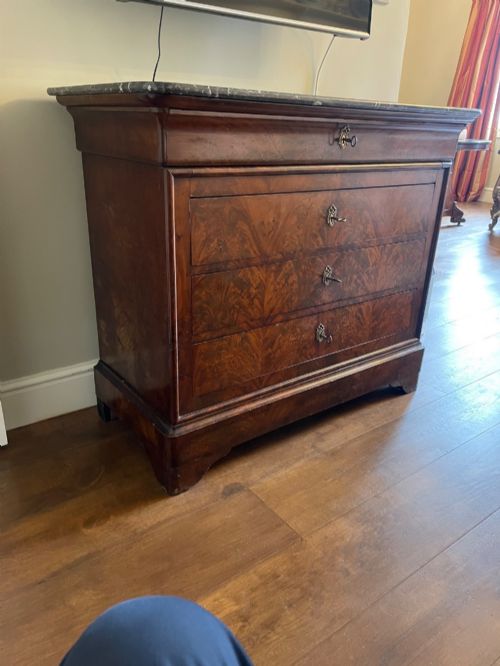
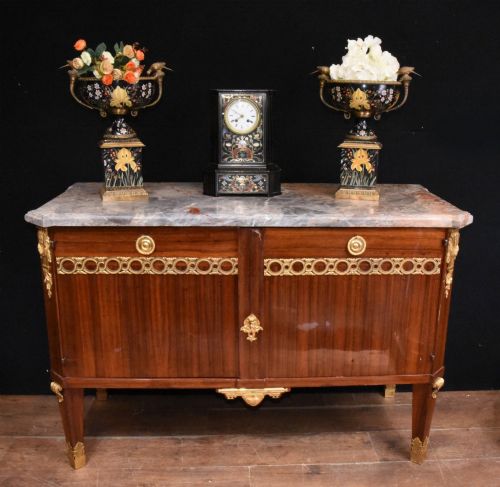
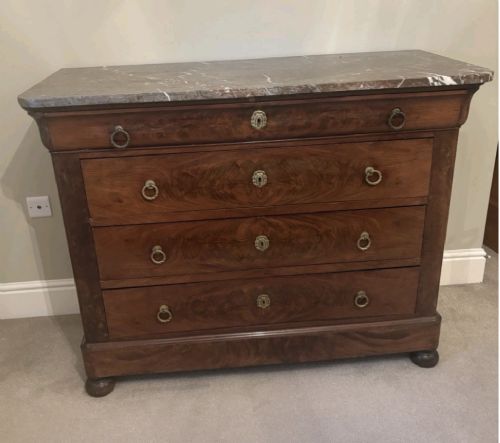
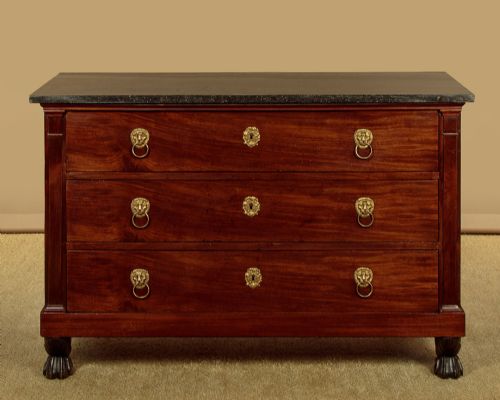
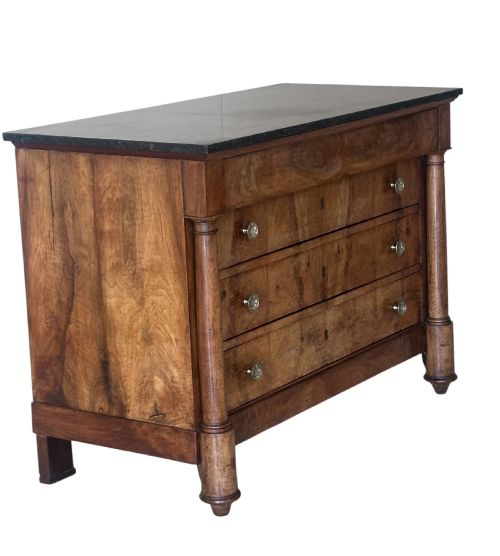
A marble top empire commode is a substantial storage piece defined by its heavy stone slab and classical proportions. You will mostly encounter French examples from the nineteenth century, ranging from early period pieces to later revivals.
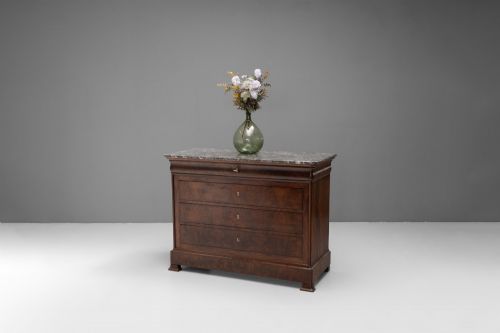
The forms on this page include chests of drawers, side cabinets, and commodes featuring rectilinear frames and substantial timber construction. These items serve as functional storage while making a strong visual statement in a hallway or bedroom.
The aesthetic draws heavily from French Empire, Charles X, and Napoleon III styles, often incorporating architectural columns and symmetrical drawer arrangements. Their enduring appeal lies in the contrast between warm timber and cool, polished stone.
Materials and construction
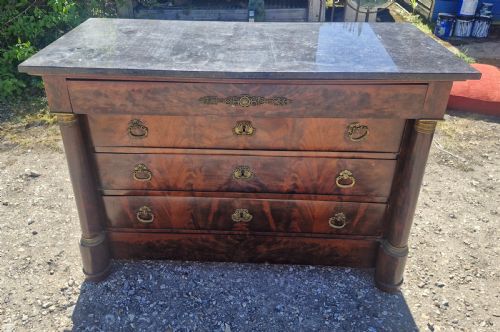
Makers built the carcases of these commodes from solid timbers like mahogany, walnut, elm, and chestnut, often applying flame or burr mahogany veneers to the main surfaces. Ebonised wood also appears, creating a dark, dramatic contrast against metal mounts.
Cast brass and ormolu mounts punctuate the timber facades, highlighting key architectural lines around drawers and keyholes. Heavy marble slabs crown the tops, ranging from plain white variants to fossilised stone.
Marble Top Empire Commode Retail Price Guide 2026
Typical asking prices for marble top empire commode among the pieces listed under this phrase on Sellingantiques today, from the lower quarter to the upper quarter. They describe what is for sale here now, not the wider market.
Listings feature mahogany, walnut, elm, and chestnut timbers paired with brass, ormolu, and fossilised marble.
Distinctions in quality
Quality reveals itself in the crispness of the cast brass or ormolu mounts and how cleanly they integrate with the timber facade. Better examples utilise dense, figured veneers like flame mahogany or burr walnut applied with evident care.
The selection and thickness of the marble top also dictate the tier of the piece, with substantial fossilised or figured slabs marking out superior cabinetwork. Furthermore, the integrity of the underlying carcase and smooth drawer operation separate standard production from finer workshop output.
Edmond Poteau
The Marble Top Empire Commode Glossary
- Ormolu
- Gilt bronze mounts applied to furniture. This technique provides a bright metallic contrast against dark mahogany and ebonised surfaces.
- Empire
- A neoclassical design style spanning the early nineteenth century. It takes inspiration from ancient Roman and Greek architecture.
- Commode
- A low chest of drawers or cabinet designed for domestic storage. These pieces typically sit lower than standard tallboys.
- Ebonised
- Timber treated to resemble ebony through staining or painting. This finish creates a stark, formal appearance popular in later nineteenth-century pieces.
- Marquetry
- Inlaid wood patterns forming decorative pictures or geometric designs. Artisans cut various coloured veneers to fit precisely into a prepared background.
Marble Top Empire Commode: Frequently Asked Questions
What is a marble top empire commode?
A marble top empire commode is a classical nineteenth-century storage chest featuring a heavy stone top and symmetrical wooden drawers. These pieces often display architectural mounts and formal geometric lines.
Originating from French design traditions, they combine practical drawer space with a durable stone surface suitable for display.
How do I care for the marble?
Marble requires gentle cleaning with a damp cloth and mild soap to avoid dulling the polished finish. Acidic liquids like wine or citrus can etch the stone and should be wiped away immediately.
Applying a specialist stone wax helps protect the surface from marks while maintaining its natural lustre over time.
How do I date a commode?
Dating relies on examining the timber construction methods, secondary woods inside the drawers, and stylistic cues in the brass mounts. Early nineteenth-century pieces often feature clean neoclassical lines, while later nineteenth-century items may show revival characteristics.
Comparing the drawer dovetails and overall joinery helps narrow down whether a piece originates from the early empire period or a later decade.
Where should I place it?
A commode works well in a hallway as a striking console alternative or in a bedroom for ample drawer storage. The flat stone top provides an ideal surface for lamps, mirrors, or decorative objects.
Ensure the floor is level and sturdy enough to support the substantial combined weight of the wood and stone.