



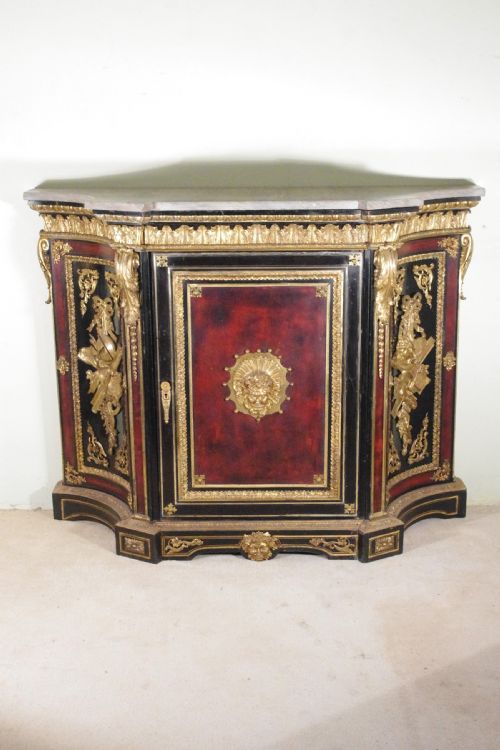


Empire Marble Top Credenza
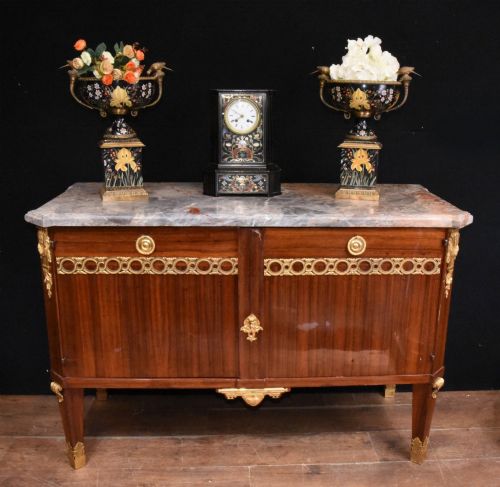
These empire marble top credenza selections bring heavy timber, cold stone, and glittering mounts together to anchor a grand room.
Empire Marble Top Credenza
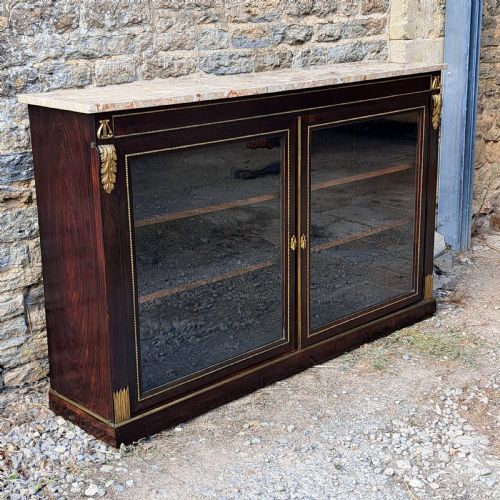
An empire marble top credenza functions as a substantial storage cabinet featuring a solid stone slab across the upper surface. Buyers examining this category encounter various heavy timber sideboards, chiffoniers, and pier cabinets designed for formal reception rooms.
The selections span the nineteenth century alongside later revivals, displaying French, Italian, and Regency influences. Most examples combine enclosed lower cupboards with display shelves or marble surfaces intended to hold decorative objects.
How they were made
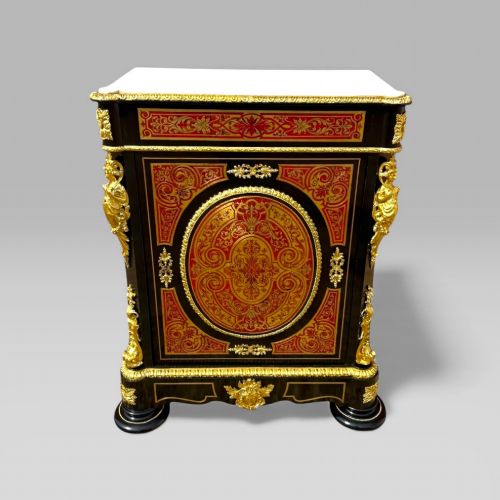
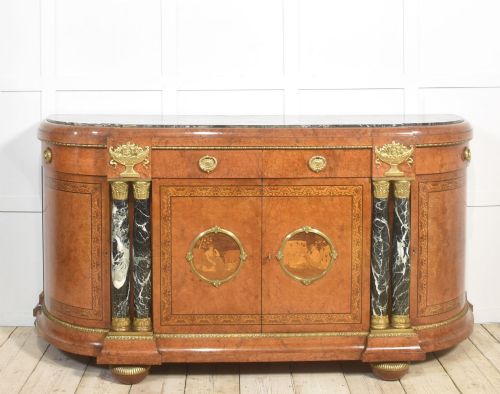
Cabinet makers utilised dense hardwoods including mahogany, rosewood, burr walnut, and ebonised wood to build the carcases of these large storage units. Surfaces often received elaborate marquetry or tortoiseshell boulle work alongside fitted marble slabs on top.
Gilt metal and ormolu mounts were cast and applied to key structural points, framing doors, corners, and plinths with decorative bronze work or brass detailing.
Empire Marble Top Credenza Retail Price Guide 2026
Typical asking prices for empire marble top credenza among the pieces listed under this phrase on Sellingantiques today, from the lower quarter to the upper quarter. They describe what is for sale here now, not the wider market.
Listings feature pieces from the nineteenth century alongside Regency and later revival periods, built primarily in mahogany, rosewood, and ebonised wood.
What varies in quality
The refinement of the cast ormolu mounts and the precision of the brass inlay separate standard production from finer workshop output. Heavier timber selection and thicker, well-figured marble tops indicate superior construction standards.
The integration of intricate marquetry, ebonised finishes, and finely carved parcel gilt details determines the overall decorative sophistication of individual cabinets.
Edmond Poteau
The Empire Marble Top Credenza Glossary
- Ormolu
- Gilt bronze mounts applied to furniture. This technique involves coating cast bronze with gold amalgam to create a bright metallic decoration.
- Chiffonier
- A tall sideboard or multi-drawer cabinet. These pieces typically feature enclosed lower storage beneath open or glazed upper shelving.
- Boulle work
- A form of marquetry using brass and tortoiseshell. Developed in France, this method creates intricate contrasting patterns across cabinet doors.
- Enfilade
- A suite of rooms or a long line of furniture. In storage terms, it describes an extended sideboard or cabinet arrangement.
- Commode a porte
- A cupboard commode with doors. This form provides enclosed shelving behind hinged cabinet fronts rather than standard drawers.
Empire Marble Top Credenza: Frequently Asked Questions
What is an empire marble top credenza used for?
These large cabinets provide heavy storage space within dining rooms and grand reception areas while offering a flat stone surface for display.
The sturdy marble top allows owners to place heavy decorative objects or serving dishes without risking heat or moisture damage to the underlying timber.
How do I care for the marble top?
Regular dusting with a soft cloth keeps the stone surface clean without abrading the polished finish. Avoid acidic cleaners that etch marble over time, using mild soapy water for accidental spills instead.
Applying a specialist stone wax periodically helps protect the surface from staining.
How can I tell the period of the cabinet?
Examine the timber species, construction joints, and mount styles to determine the era of manufacture. Nineteenth-century examples often feature dense rosewood or mahogany carcases paired with hand-cast ormolu.
Later revival pieces replicate these historical motifs but may show different interior framing and machine-finished hardware.
Where should I place this cabinet at home?
Position these heavy units against a primary wall in a dining room, hallway, or living space where the deep timber and stone top can serve as a visual anchor.
Ensure the floor is level and capable of supporting the combined weight of the timber carcase and the heavy marble slab.