

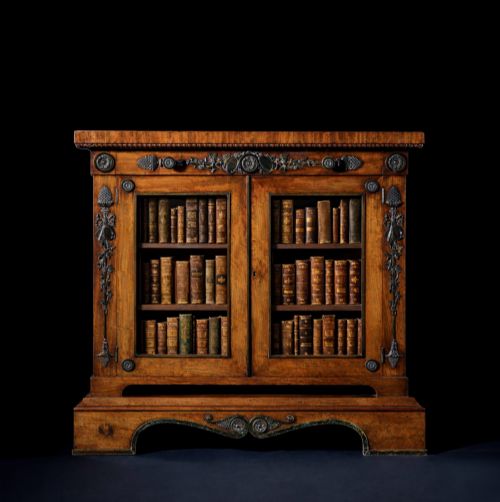


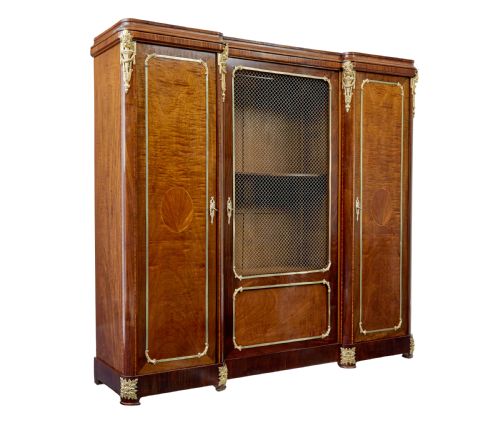


Mahogany Ormolu Side Cabinet
A mahogany ormolu side cabinet brings architectural presence and rich metalwork into a room, offering both surface display and concealed storage.
Mahogany Ormolu Side Cabinet
A mahogany ormolu side cabinet combines a dark timber carcass with cast metal mounts, appearing primarily in nineteenth-century French and Regency forms. You will frequently encounter smaller bedside tables, commodes, and upright cabinets bearing classical gilt decoration.
These pieces draw upon French Empire, Regency, and Louis XVI revival styles, often featuring marble tops and glazed or panelled doors. The proportion tends to be compact and rectilinear, designed to anchor a wall or sit neatly beside a bed.
How they were made
Cabinetmakers utilised dense mahogany, sometimes with marquetry or painted details, building structural carcasses to support heavy stone tops and cast metal fittings. The timber was selected for grain figure and polished to a deep lustre.
Mounts in ormolu, brass, and bronze were cast and fire-gilt, then secured to the timber with screws or pins to accent corners, friezes, and feet. Glass panels and mirrored interiors appeared in display variations.
Mahogany Ormolu Side Cabinet Retail Price Guide 2026
Typical asking prices for mahogany ormolu side cabinet among the pieces listed under this phrase on Sellingantiques today, from the lower quarter to the upper quarter. They describe what is for sale here now, not the wider market.
Listings feature nineteenth-century pieces spanning Regency, French Empire, and Louis XVI revival styles, constructed from mahogany, marble, and ormolu.
What varies in quality
The precision of the metal chasing separates standard production from exceptional cabinetwork, where individual leaf and scroll details retain sharp definition. Heavier, crisper bronze mounts indicate superior workshop output.
Timber selection and carcass construction also dictate value, with figured mahogany veneers applied uniformly over stable secondary woods. Integrated marble tops with precise edge moulding further distinguish finer pieces.
François Linke·Jean-Henri Riesener·Harrods
The Mahogany Ormolu Side Cabinet Glossary
- Ormolu
- Gilt bronze mounts applied to furniture. This technique involves amalgamating gold with mercury and heating it onto a bronze base.
- Side cabinet
- A low storage piece designed to stand against a wall. These typically include doors, drawers, or open shelving.
- Vernis Martin
- A type of decorative lacquer developed in France. It mimics Asian lacquerwork using European varnish techniques.
- Marquetry
- Inlaid wood veneers forming decorative patterns. Craftsmen fit contrasting timbers together within the main surface.
Mahogany Ormolu Side Cabinet: Frequently Asked Questions
How do I date a mahogany ormolu side cabinet?
Dating relies upon stylistic markers such as Empire or Louis XVI revival motifs combined with construction methods visible inside the carcass. Nineteenth-century examples often display hand-cut dovetails and distinct patination on the timber.
Examining the fixing pins behind the ormolu mounts also helps determine the period. Machine-made screws point toward later nineteenth or early twentieth-century production.
Can I use a side cabinet as a bedside table?
Many pieces catalogued as side cabinets or commodes function well beside a bed, provided the height aligns with your mattress. Compact French bedside cabinets specifically served this purpose originally.
Measuring the surface depth ensures your bedside lamps and books fit comfortably. Marble-topped versions offer practical resistance to spills.
What is the difference between ormolu and brass mounts?
Ormolu consists of gilt bronze, which yields a warmer, deeper golden tone through the fire-gilding process. Brass mounts are generally yellower and brighter in appearance.
Finer nineteenth-century workshops preferred bronze for its ability to hold crisp detail during the chasing process. Magnet testing and weight can also help distinguish the alloy.
How should I clean the marble top?
Cleaning requires warm water and a soft cloth, avoiding acidic substances like vinegar or lemon juice that etch stone. Dry the surface thoroughly after wiping.
For stubborn marks, a specialist poultice may be necessary. Regular dusting prevents everyday grime from settling into the porous surface.