

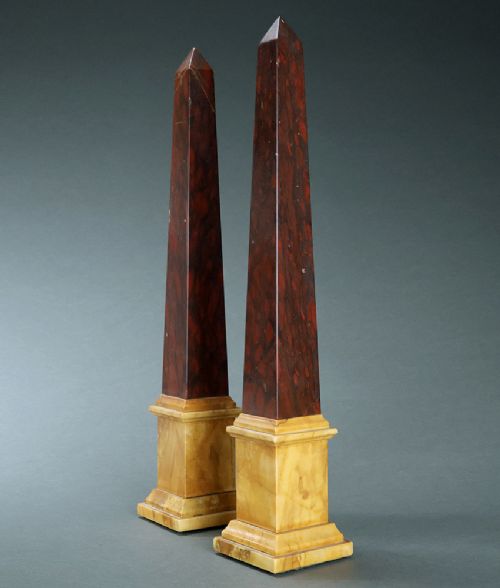


Marble Plinth Pair
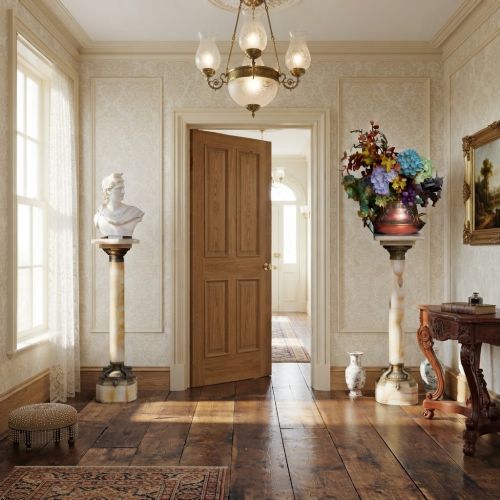
These decorative pairs bring architectural gravity to a room, using stone and cast metal to elevate sculptures, urns and garnitures.
Marble Plinth Pair
When you search for a marble plinth pair, you encounter matched sets of architectural columns, pedestals, and stone bases designed to display decorative objects or elevate statues. The selections on this page span the nineteenth and early twentieth centuries, drawing heavily on Neoclassical, French Empire, and Grand Tour aesthetic traditions.
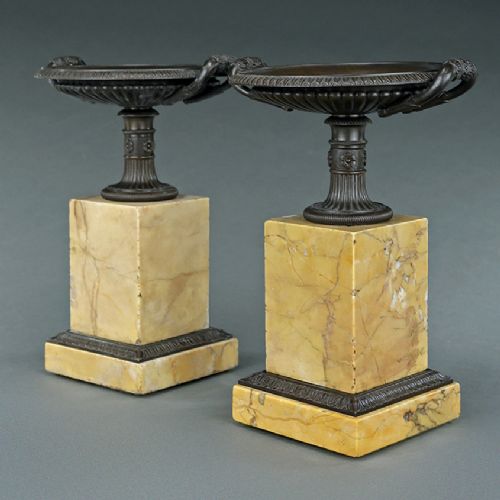
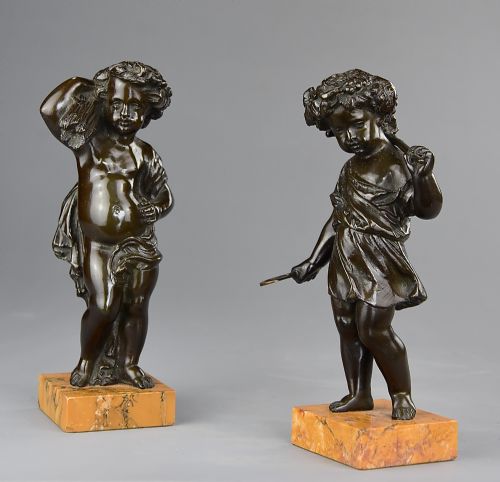
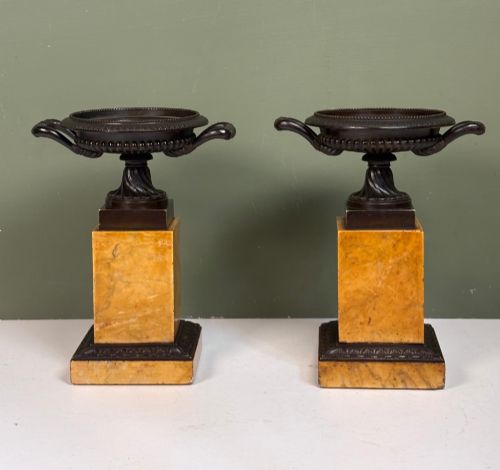
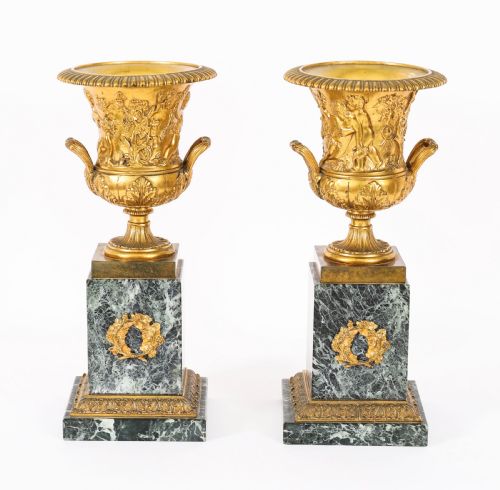
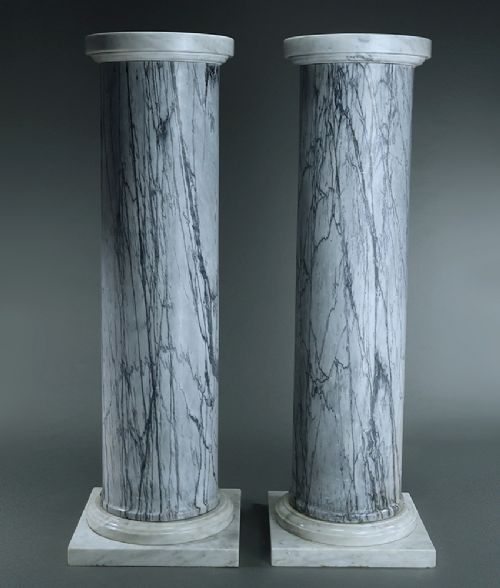
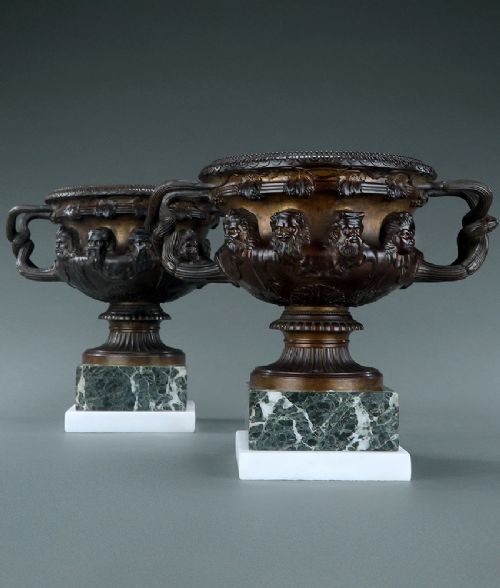
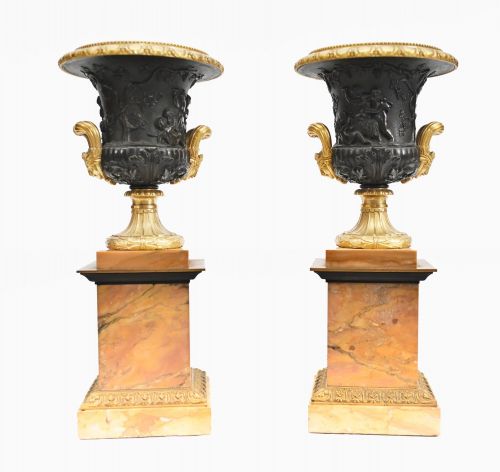
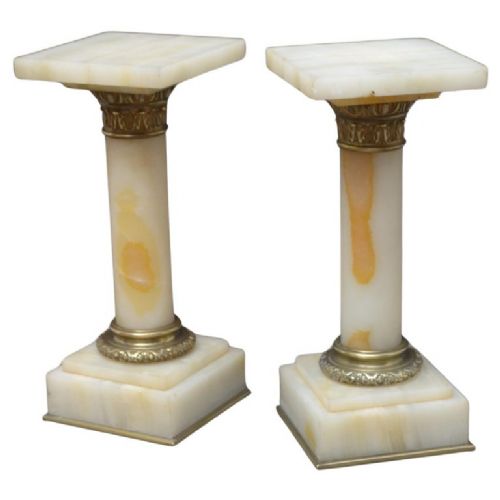
Most entries combine natural stone bases or columns with metal mounts, supporting bronze urns, tazzas, busts, and animal figures. You also find standalone columns in various marbles and onyx designed to carry lamps, clocks, or smaller garniture sets.
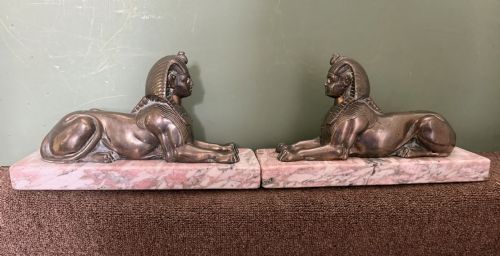
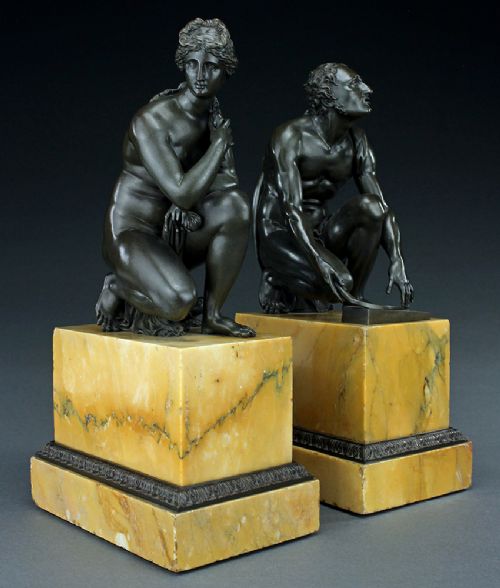
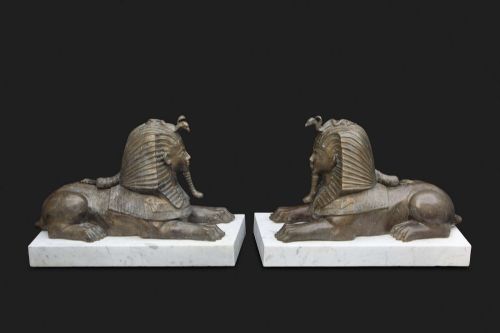
The configurations range from tall torchere columns and low pedestals to dedicated stone plinth bases that anchor cast-metal lions, sphinxes, and classical figures.
How they were made
Makers cut and turned natural stones including Carrara, Bardiglio, Sienna, and serpentine marble, frequently pairing the polished stone bodies with cast or gilt bronze, ormolu, and brass mounts.
Foundries cast metal components such as campana urns, tazzas, and animal figures using traditional techniques, applying patination or mercury gilding to achieve contrasting textures against the stone.
Alternative materials in the record include alabaster, onyx, scagliola, and painted plaster, alongside wooden display pieces finished to simulate rich variegated marbles.
The listings show materials spanning natural marbles, onyx, alabaster, and cast bronze alongside simulated stone finishes like scagliola and painted plaster.
What varies in quality
Quality rests on the depth of the stone figuring and the precision of the turning, where tight grain and balanced colouration elevate a pair above uniform or heavily filled slabs.
Metalwork reveals the standard of craftsmanship through the crispness of chased details on ormolu collars, handles, and sculptural figures rather than mere surface shine.
The harmony of the matching components determines the success of a pair, distinguishing workshop pieces cast and cut as a unified set from later assembled companions.
The Marble Plinth Pair Glossary
- Ormolu
- Gilt bronze mounted onto furniture, stone bases, or decorative objects. This technique involves applying a gold amalgam to bronze before firing.
- Grand Tour
- Souvenirs and classical antiquities collected by wealthy travellers during the eighteenth and nineteenth centuries. These pieces typically emulate ancient Roman and Greek sculpture and architecture.
- Tazza
- A shallow bowl or vase raised on a standard and a foot, frequently fashioned from bronze and mounted on a marble plinth. These decorative vessels draw directly on classical forms.
- Campana
- An inverted bell-shaped urn or vase popular in classical and neoclassical design. Such vessels often feature cast handles and detailed friezes.
- Verde Antico
- A dark green serpentine marble mottled with white veins, prized by classical and neoclassical makers for its rich appearance. Imitations were frequently produced using painted plaster or scagliola.
Marble Plinth Pair: Frequently Asked Questions
What is a marble plinth pair used for?
These matched sets serve as elevated platforms for display, supporting bronze sculptures, urns, clocks, or candelabra.
They also function as standalone architectural columns and torchere stands within interior schemes.
How do I style them at home?
Place matching columns or pedestals in corners or flanking doorways to add height and symmetry to a room.
Smaller stone plinth bases carrying bronze figures or tazzas sit effectively on sideboards, mantelpieces, or library tables.
How do I tell nineteenth-century pieces apart?
Nineteenth-century items often show hand-chased metal details and natural stone variations that differ from twentieth-century reproductions.
Examining the underside of the stone and the construction of the metal pins helps reveal the period of assembly.
What stones are most common?
The records feature Carrara, Bardiglio, Sienna, and serpentine marbles, alongside onyx, alabaster, and scagliola.
Many pieces incorporate contrasting dark and light stones to highlight the turning and mounting.