
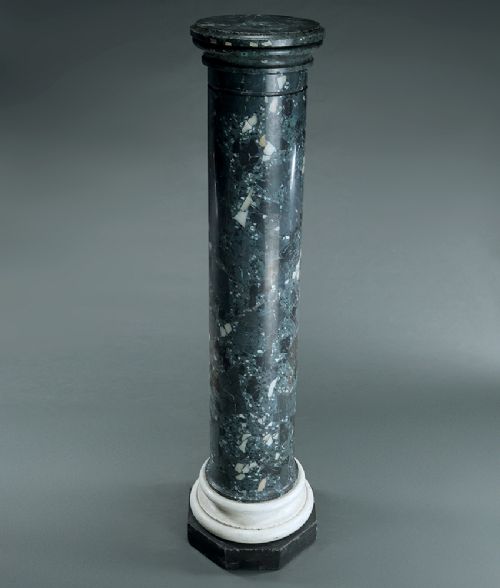
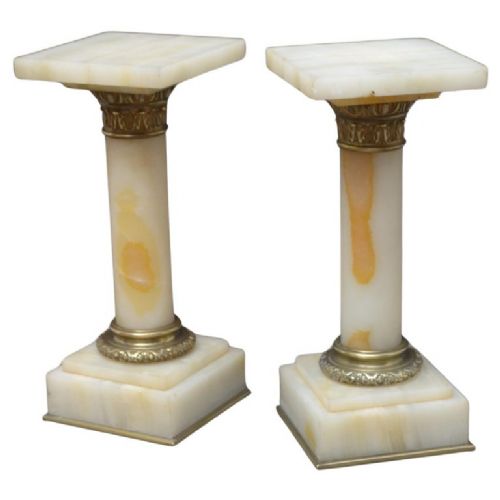


Marble Display Plinth
These marble display plinth pieces elevate sculpture and ornament, bringing classical architecture into domestic interiors through stone columns and pedestals.
Marble Display Plinth
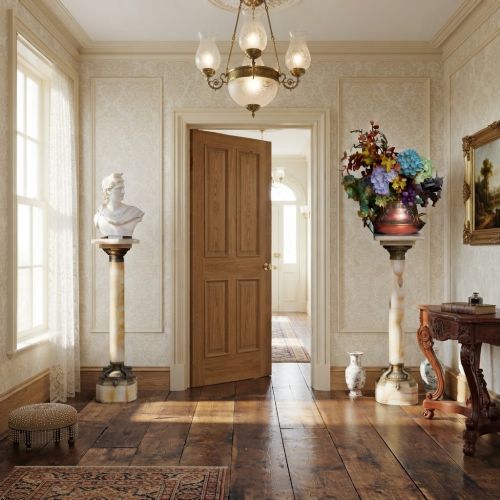
A marble display plinth serves to elevate decorative objects, urns, and busts, functioning as both a structural support and a distinct architectural feature within a room. When exploring this selection, buyers frequently encounter tall vertical columns and sturdy pedestals originating from the nineteenth century alongside later twentieth-century iterations.
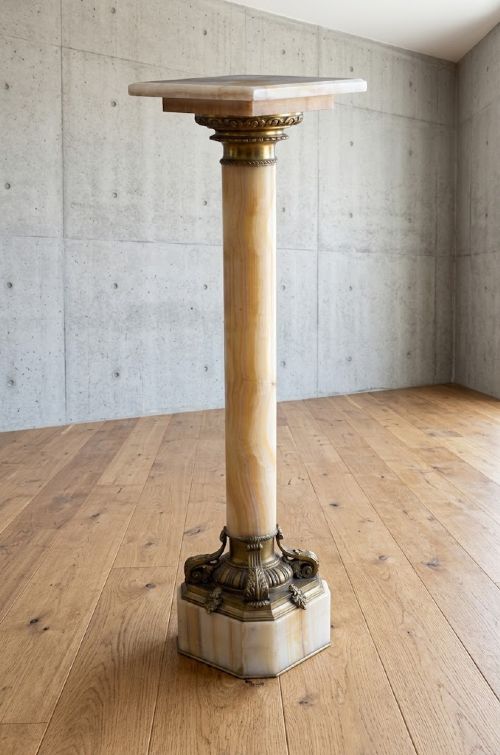
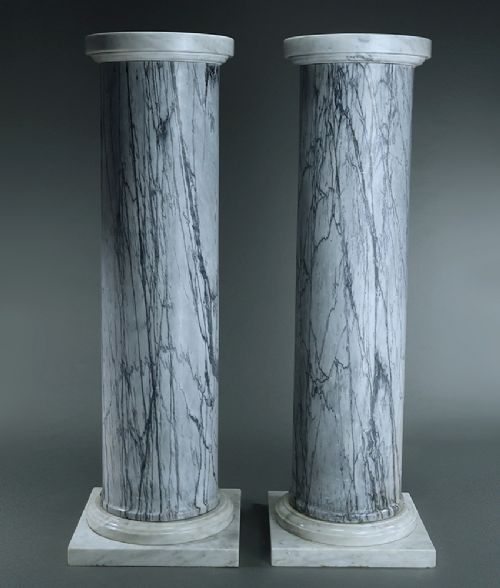
The forms span simple cylindrical shafts and square pillars to elaborate multi-tiered stands incorporating brass or gilt bronze mounts. These pieces draw heavily on classical design traditions, including neoclassical and Italian baroque aesthetics, which dictated proportions and ornamental details for domestic display.
Origins vary across European workshops, with French and Italian pieces appearing alongside British examples in diverse stone and painted finishes. Such supports range from monumental architectural elements designed for grand reception rooms to smaller plant stands suited for domestic corners.
Distinctions in Quality and Craftsmanship
The standard of a piece rests largely on the selection and matching of the stone, where continuous veining and uniform colouration across the shaft demonstrate superior material choice. Finer examples display crisp, deeply carved architectural details in the marble itself rather than relying entirely on applied metal mounts to provide visual interest.
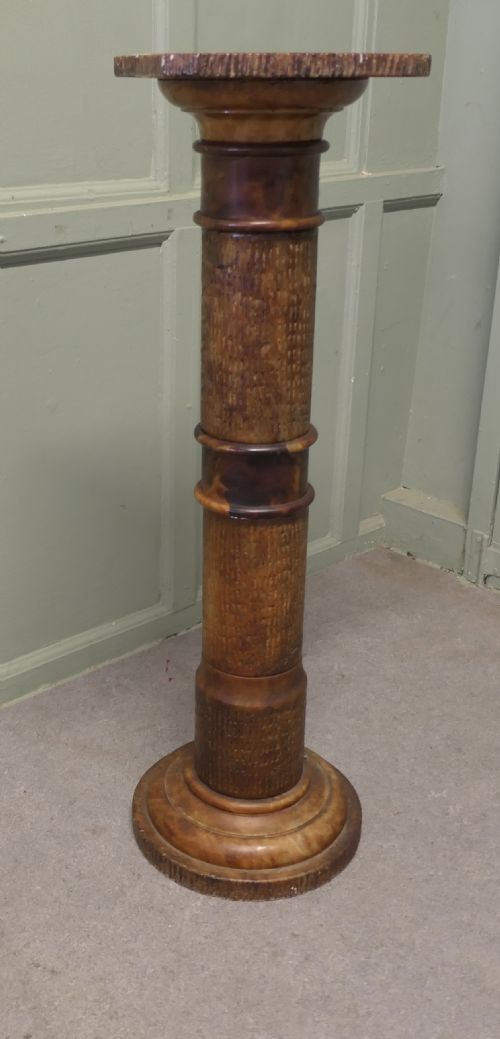
Structural integrity and stability determine daily utility, as heavier stone columns require precise engineering to bear weight safely without shifting. The finesse of the secondary materials, such as the precision-chased detail on ormolu collars or the convincing depth of hand-painted faux marbling on wood and plaster surfaces, separates standard utility pieces from exceptional studio work.
Some nineteenth-century columns feature rotating tops, allowing homeowners to slowly spin their favourite potted plants or busts without ever leaving the armchair.
The Marble Display Plinth Glossary
- Scagliola
- A composite material made from pigmented selenite, glue, and plaster, applied to mimic the appearance of natural marble and other hard stones. This technique allowed craftsmen to create elaborate, seamless columns and tabletops without using solid blocks.
- Ormolu
- Gilt bronze ornamentation applied to furniture and decorative objects during the eighteenth and nineteenth centuries. The technique involves creating finely chased bronze details coated in a layer of gold amalgam.
- Verde Antico
- A dark green serpentine marble displaying white calcite veining, highly favoured by classical and neoclassical sculptors. It appears frequently in nineteenth-century columns and decorative architectural elements.
- Torchere
- A tall stand or pedestal originally designed to hold a light source such as a torch or candle, later adapted for urns and decorative figures. These pieces typically feature slender vertical proportions.
- Socle
- A short plain plinth or pedestal supporting a statue, column, or bust. It provides a stable base and visually grounds the architectural element above it.
Marble Display Plinth: Frequently Asked Questions
How do I choose the right height?
Consider the object you intend to place on top and the overall scale of the room. Taller columns work well for smaller busts or urns, while lower pedestals suit larger sculptures.
Ensure the weight capacity matches your display piece, especially when dealing with dense natural stones like solid marble or onyx.
Are faux marble columns authentic antiques?
Many faux marble pieces date from the nineteenth century and earlier, utilising skilled painted finishes on wood, plaster, or scagliola. These were legitimate decorative alternatives to costly solid stone.
Examine the base material and surface wear to determine the age and technique used by the maker.
How do I clean and maintain marble?
Dust the surface regularly with a soft, dry cloth to prevent buildup in carved crevices and around metal mounts. Avoid acidic cleaning agents that can etch natural stone.
For deeper cleaning, use a damp cloth with mild soap, drying the surface thoroughly immediately afterwards to protect the finish.