
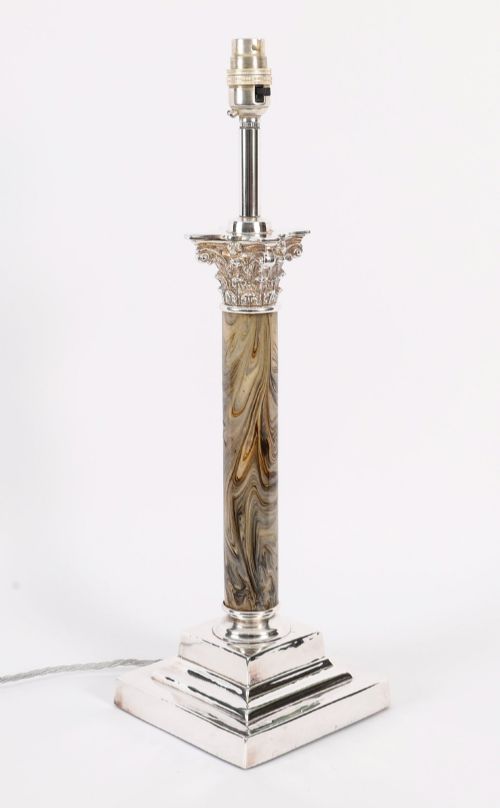
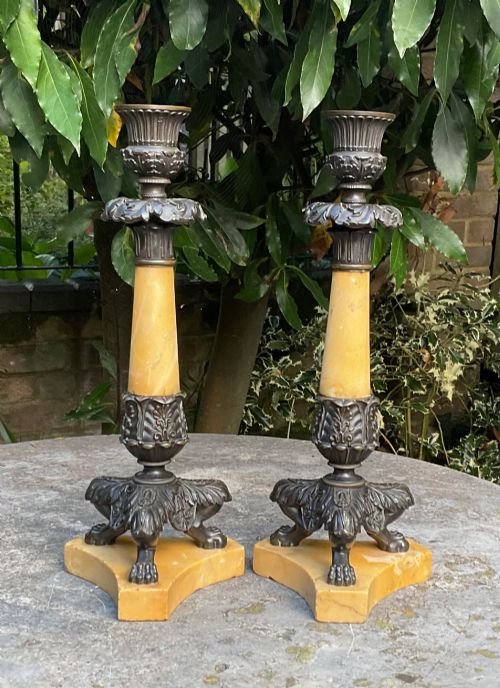
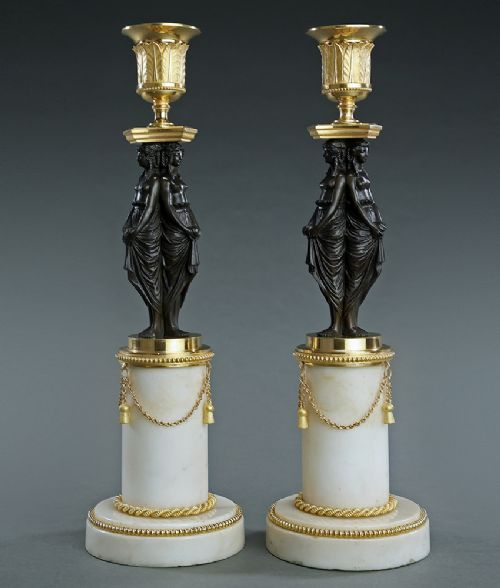
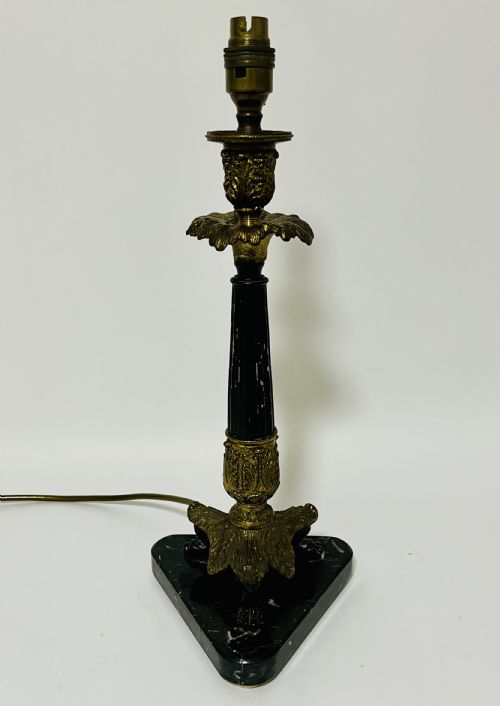


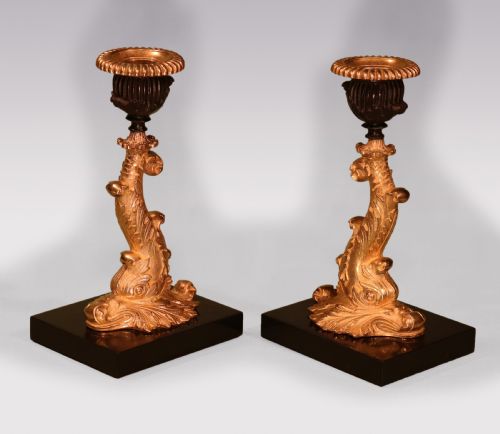


Marble Base Candlesticks
Marble base candlesticks combine heavy stone plinths with cast metal figures and candle sockets, bringing weight and classical proportion to a mantelpiece or side table.
Marble Base Candlesticks
Marble base candlesticks combine stone plinths with metal columns, figures, and candle sockets, creating formal lighting accessories for the home. When you search for marble base candlesticks, you encounter pieces that range from single shafts to elaborate figural groups supporting multiple candle arms or adapted later as table lamps.
The pieces listed here date from the Regency era through the nineteenth century and into the twentieth century. French workshops produced many of the surviving examples in neoclassical and Louis XVI styles, alongside Italian Grand Tour pieces depicting putti and cherubs.
The forms vary from simple columnar designs to pairs featuring bronze putti, dolphins, caryatids, and cherubs standing upon square or rounded marble blocks. Alongside standard candlesticks, the selection includes multi-branched candelabra and standard lamps sharing the same foundational materials.
How they were made
Foundational bases use solid marble or onyx turned and cut into plinths, supporting metal elements cast in bronze, brass, or silver plate. Metal components frequently combine patinated dark bronze with gilt bronze or ormolu highlights to create textural contrast.
Craftsmen utilised lost-wax casting for figural elements like cherubs, putti, and dolphins, finishing the surfaces with chasing and fire-gilding. Individual parts connect via threaded rods running through the centre of the marble and metal assemblies.
Bronze dolphins hold up candles with surprising nautical dignity, proving that sea creatures make excellent domestic lighting assistants.
What varies in quality
Quality rests in the crispness of the metal chasing and the depth of the gilding on the bronze or ormolu components. Finer castings show detailed feathering on wings, distinct facial expressions on figures, and clean architectural moulding on columns and bases.
The selection and turning of the marble itself distinguishes finer examples, with dense, uniform stone showing precise edges and secure mounting to the metal feet. Weaker examples exhibit loose joints between the stone plinth and the metal superstructure, or clumsy repairs to the delicate cast arms.
Claude Clodion·Holtzapffel·Thomas Hope
The Marble Base Candlesticks Glossary
- Ormolu
- Gilt bronze created by applying a mixture of gold and mercury to a bronze base and heating it to vaporise the mercury. This technique produces a durable, rich golden surface typical of fine French decorative objects.
- Caryatid
- A sculpted female figure serving as an architectural support in place of a column. These figures appear frequently on the stems of neoclassical candlesticks.
- Patinated bronze
- Metal treated with chemical solutions to darken the surface and create a controlled finish. This dark tone contrasts with bright gilt highlights on figures and mounts.
- Grand Tour
- A cultural journey undertaken by wealthy young Europeans in the eighteenth and nineteenth centuries to study classical art. Souvenirs from these travels included small bronze sculptures and candlesticks mounted on marble bases.
Marble Base Candlesticks: Frequently Asked Questions
How do I clean marble and bronze?
Dust marble gently with a soft dry cloth and avoid harsh acidic cleaners that etch the polished stone surface. Use a dry microfibre cloth on bronze and ormolu parts, as moisture and abrasive polishes strip the historic gilding.
Keep these objects away from direct heat sources and damp environments to protect the internal metal rods and prevent the stone from staining.
Were these originally wired for electricity?
Nineteenth-century examples were designed exclusively for wax candles or oil, with electrical wiring added during later twentieth-century conversions. Many retain their original sockets and weighted bases.
When converting a candlestick into a lamp or restoring old wiring, choose methods that avoid drilling new holes through structural bronze or original marble.
How do I spot a marriage piece?
A marriage occurs when components from different periods or origins are combined to form a single object. Check the fit between the marble base and the metal stem for mismatched patination, uneven gaps, or modern fixing screws.
Pairs should match in weight, marble colour, and casting quality, as mismatched heights or differing bronze tones indicate assembled components.