
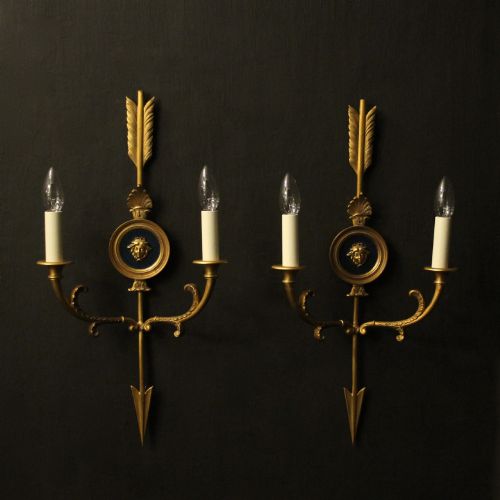
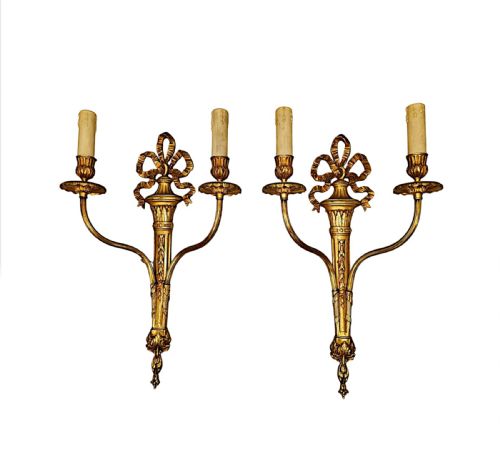
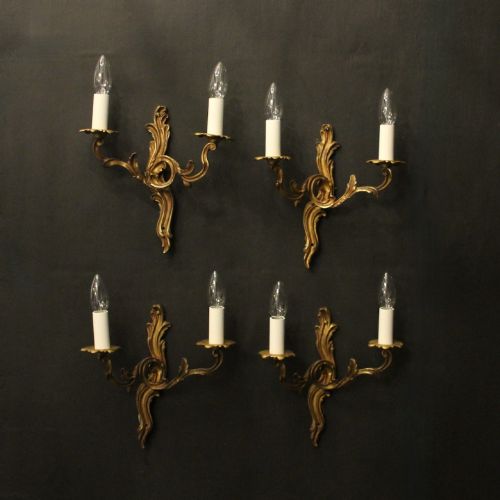

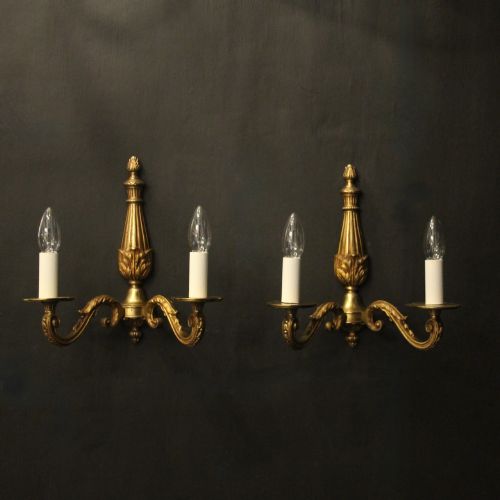
Vintage Bronze Sconces
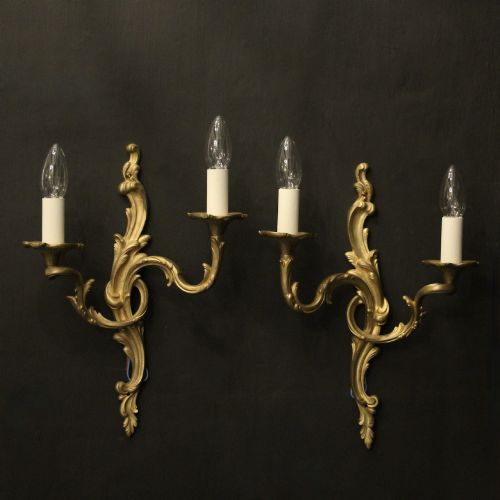
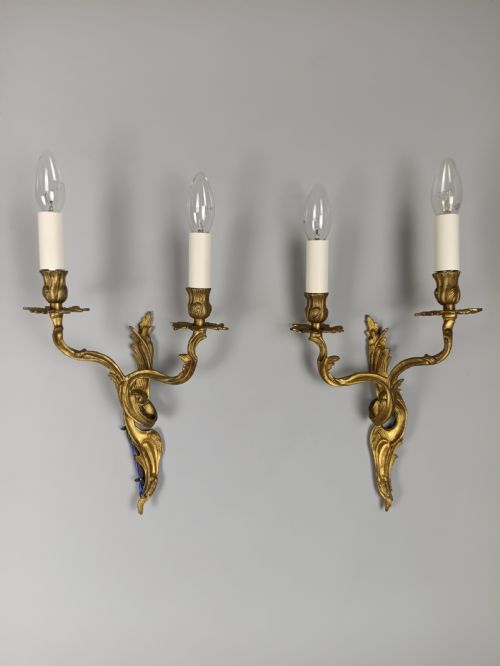
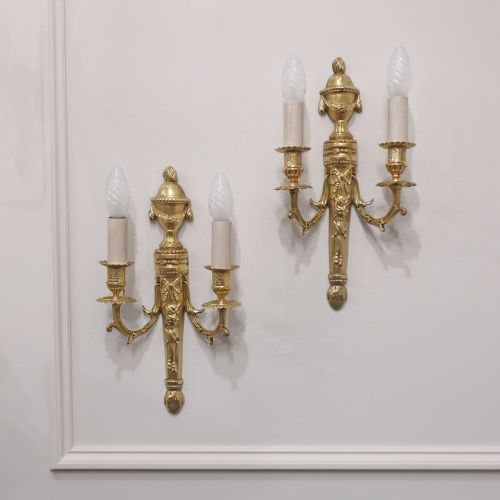
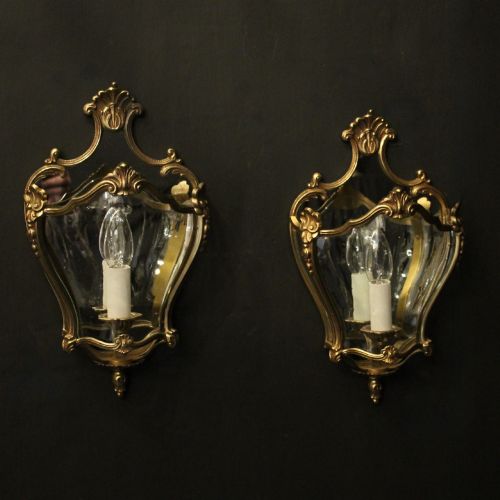
These vintage bronze sconces bring warmth and decorative focus to an interior, merging utility with period French and English design.
Vintage Bronze Sconces
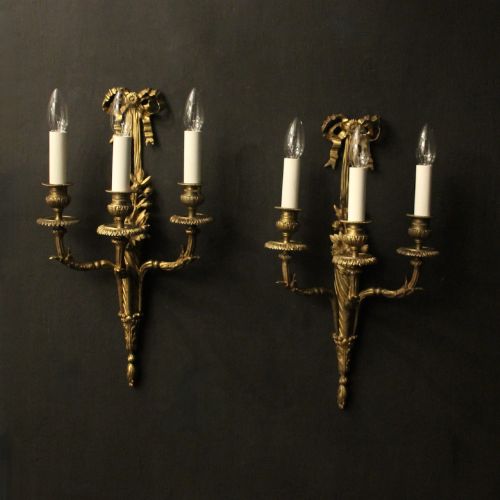
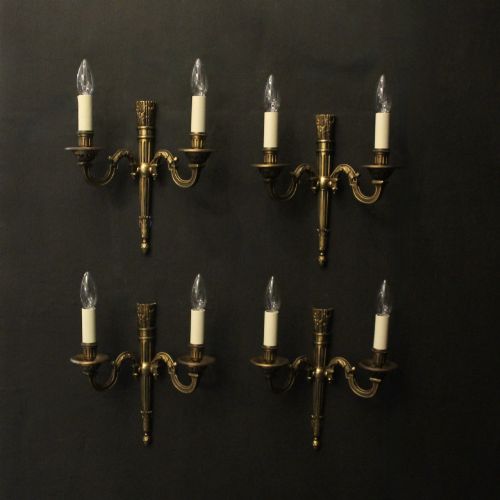
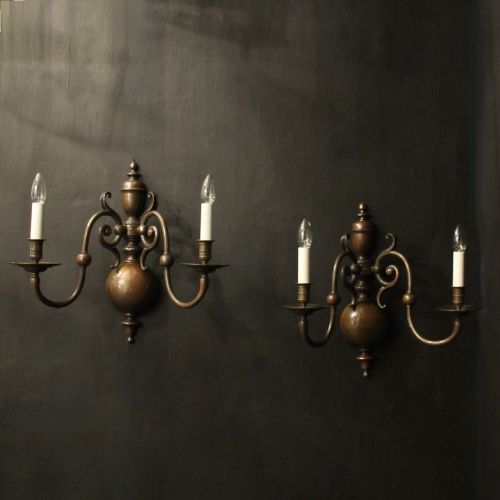
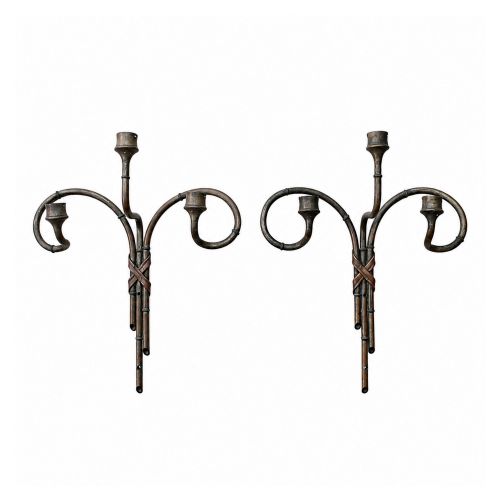
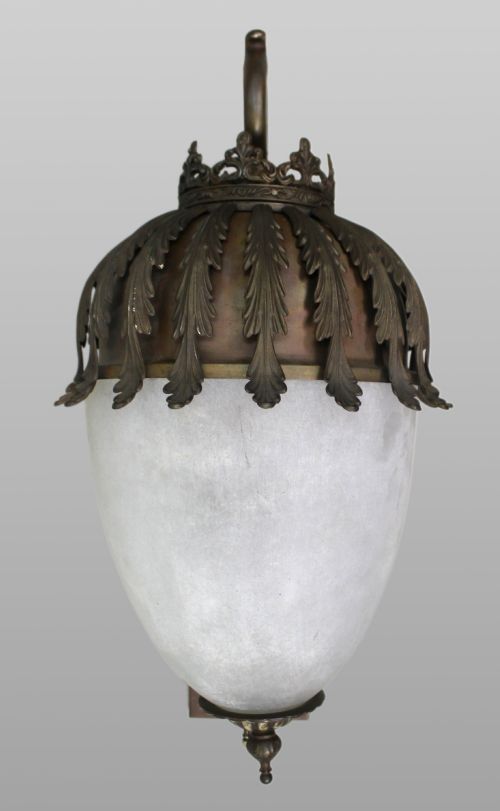
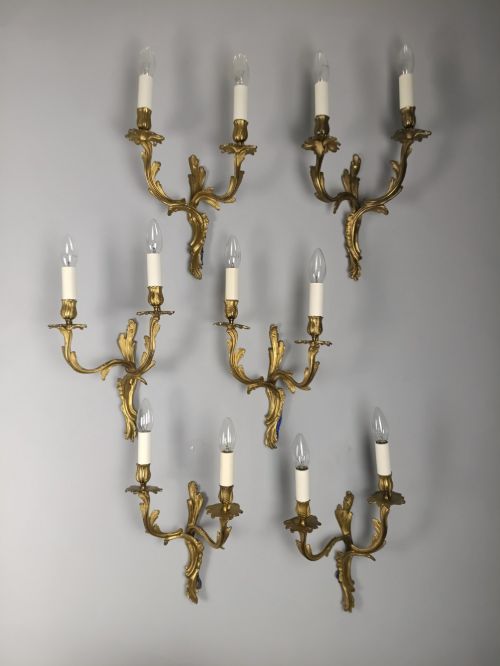
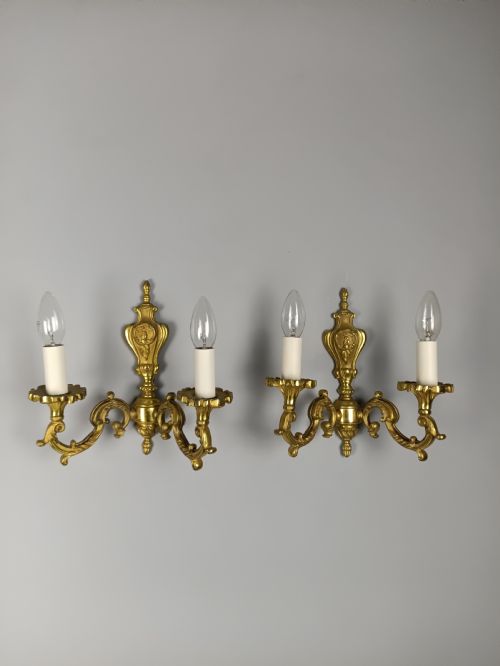
When you search for vintage bronze sconces, you encounter wall-mounted light fixtures that span from the nineteenth century into the nineteen-thirties. The selection on this page relies heavily on French production, featuring twin-arm and triple-arm configurations alongside single-arm and lantern forms.
The majority of pieces originate from the early decades of the twentieth century, alongside nineteenth-century examples and Victorian designs. Buyers frequently select these fixtures to illuminate hallways, reception rooms, and dining spaces with period character.
How they were made
Maker workshops utilised cast bronze, brass, and ormolu, applying gilding and silvering to the metal surfaces to create reflective finishes. Many pieces incorporate crystal glass drops, onyx, or porcelain flowers as decorative embellishments.
The decorative schemes draw upon French Rococo, Empire, and Louis XVI styles, incorporating cast motifs such as ribbons, caryatids, and foliate scrolls. Metal components were formed through traditional casting methods before being hand-chased and assembled.
Listings feature items from the 1880s through the 1930s, constructed in gilt bronze, brass, ormolu, and glass.
What varies in quality
The standard of chasing and the crispness of cast detail separate ordinary production from finer work. Pieces associated with named makers or specific hotel commissions demonstrate superior weight and sculptural depth in the metalwork.
The richness and preservation of the original gilding or ormolu surface dictate visual presence. Heavier gauge metal castings retain their structural integrity better over decades of use.
Casier
The Vintage Bronze Sconces Glossary
- Ormolu
- Gilded bronze, where a layer of gold amalgam is applied to a bronze base. This technique was widely used in French decorative metalwork.
- Applique
- A wall-mounted light fixture or sconce. The term is frequently used interchangeably with wall lights in French pieces.
- Champleve
- An enamelling technique where troughs are carved into the metal surface and filled with vitreous enamel before firing. It appears on nineteenth-century decorative metal objects.
- Louis XVI Style
- A neoclassical design vocabulary characterised by straight lines, symmetry, and classical motifs such as urns and ribbons. It experienced significant revivals in the nineteenth and early twentieth centuries.
- Caryatid
- A sculpted female figure serving as an architectural support. These figures appear on neoclassical candlesticks and wall fixtures.
Vintage Bronze Sconces: Frequently Asked Questions
How do I install vintage sconces safely?
Many vintage sconces arrive rewired and ready for installation by a qualified electrician. They mount directly to standard wall junction boxes using existing mounting plates or brackets.
Ensure the electrical supply is switched off before mounting. Professional installation guarantees secure attachment to the wall structure.
What is the difference between bronze and brass sconces?
Bronze is an alloy of copper and tin, offering a heavier weight and a deeper tone when cast. Brass is an alloy of copper and zinc, which tends to have a brighter yellow colour unless patinated or gilded.
Both metals were utilised extensively in antique wall lighting. Gilded bronze and ormolu often present a richer finish than plain brass.
How should I clean gilded bronze fixtures?
Dust the metal gently with a soft, dry cloth to remove surface particles. Avoid abrasive cleaners or metal polishes that can strip the delicate gilt surface.
Preserving the original patina maintains the historical character of the piece. Professional conservation is recommended for heavily tarnished items.
Can I use LED bulbs in these wall lights?
Modern LED candles or small pygmy bulbs fit most vintage lamp holders, provided the wattage matches modern safety limits. Check the internal wiring and bulb size compatibility before fitting new lamps.
Using low-heat LED bulbs protects fragile components like crystal drops and porcelain flowers from thermal stress.