


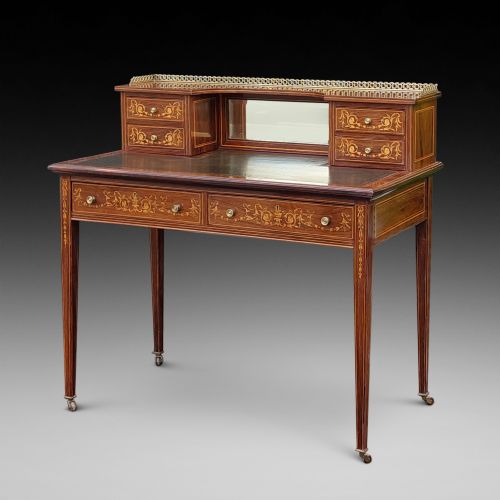


Maple Writing Desk
When you seek a maple writing desk, you examine functional nineteenth- and early twentieth-century furniture designed for correspondence and administrative tasks.
Maple Writing Desk
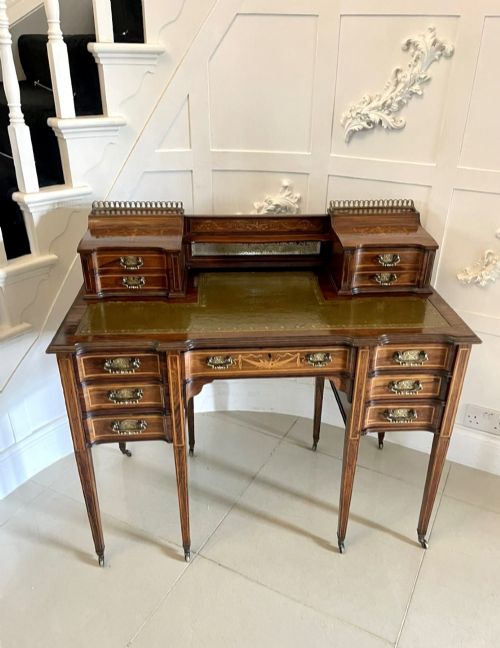
A maple writing desk encompasses freestanding tables, kneehole configurations, and specialised writing furniture produced during the Victorian and Edwardian eras. Many examples originate from commercial makers and retail furnishers of the period, reflecting domestic utility and office organisation.
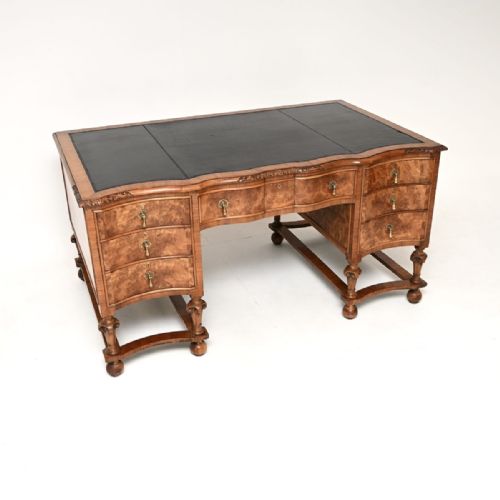
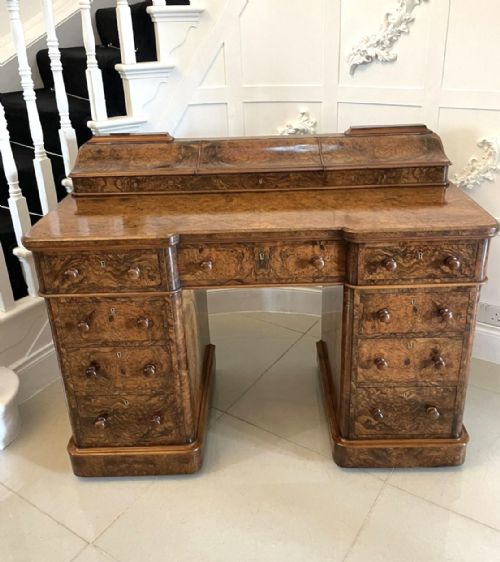
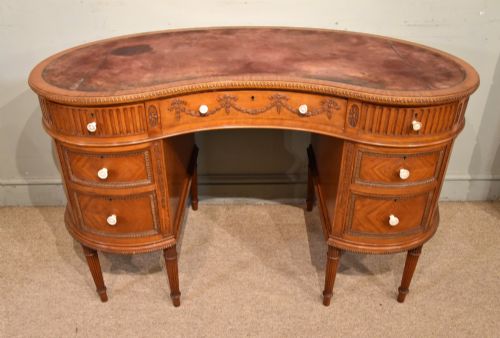
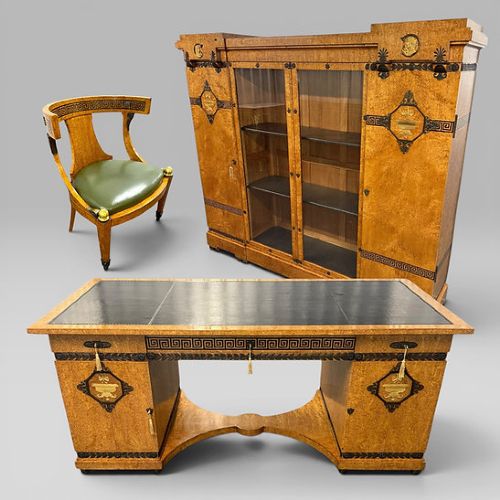
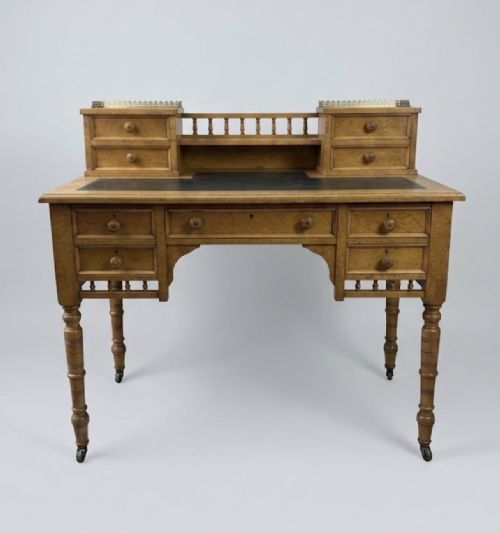
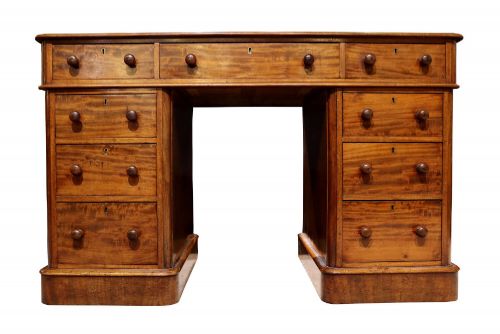
The selections on this page feature distinctive timber grains, including bird's-eye maple and tiger maple, alongside variants incorporating secondary woods like mahogany and walnut. Forms range from compact writing tables to twin pedestal layouts fitted with multiple drawers and tooled leather writing surfaces.
Buyers encounter pieces spanning the mid-nineteenth century through the Edwardian period, displaying stylistic influences from Sheraton revivals to Art Nouveau. These items serve as functional workstations and decorative centerpieces within domestic interiors.
Materials and Construction
Cabinetmakers utilised solid maple and decorative veneers applied to carcases of pine or mahogany, often highlighting the natural figure of the wood through book-matching and polished finishes. Inlaid borders in contrasting timbers such as satinwood, rosewood, and purpleheart frequently define the perimeters of writing surfaces and drawer fronts.
Structural integrity relied on traditional joinery, including dovetail joints for drawer construction and mortise-and-tenon framing for pedestals and legs. Brass hardware, including drop handles, locks, and casters, accompanied inset leather writing panels tooled with gold leaf.
Listings feature nineteenth-century and Edwardian pieces constructed from bird's-eye maple, burr walnut, mahogany, and rosewood.
Gradations of Make
Quality separates standard commercial output from workshop pieces through the selection of timber veneers and the intricacy of marquetry inlay. Superior examples display carefully matched bird's-eye maple figures across expansive surfaces and drawer arrangements.
Secondary elements such as the thickness of drawer linings, the presence of original locks stamped by makers, and the precision of dovetail joints indicate the standard of production. The preservation of original polished surfaces and leather inserts further differentiates preserved survivals from heavily altered pieces.
Maple and Co·Mercier Frères·Gillows of Lancaster·Wiggers
The Maple Writing Desk Glossary
- Bird's-eye maple
- A figure in maple timber caused by local disruptions in grain growth, creating small circular patterns resembling bird eyes.
- Pedestal desk
- A heavy writing desk supported by two banks of drawers resting on the floor.
- Superstructure
- A set of small drawers, pigeonholes, or shelves positioned on top of the main writing surface.
- Marquetry
- Decorative veneer work formed by fitting together pieces of various woods to create pictorial or geometric designs.
- Inlaid
- Embedded into the surface of a primary wood to form a contrasting decorative pattern.
Maple Writing Desk: Frequently Asked Questions
What defines a maple writing desk?
A maple writing desk is a piece of antique furniture constructed primarily from maple timber, featuring a dedicated surface for writing and correspondence. These pieces often include integrated drawers and compartments for stationery storage.
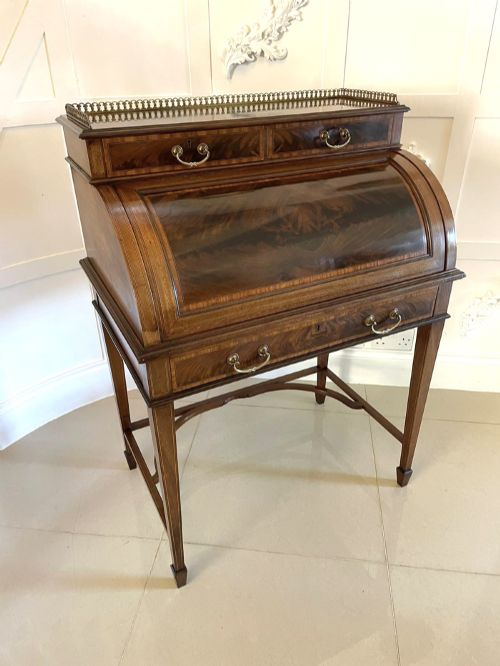
They appear in various forms, from simple writing tables to complex pedestal and cylinder desks dating from the nineteenth and early twentieth centuries.
How do I care for antique maple furniture?
Maintenance requires avoiding direct sunlight and excessive humidity fluctuations to prevent veneer lifting and timber splitting. Regular dusting with a soft, dry cloth preserves the polished finish.
Application of appropriate beeswax formulas helps nourish antique wood surfaces without causing moisture damage.
Were these desks used in homes or offices?
These desks served both domestic writing rooms and professional commercial offices depending on their scale and complexity. Smaller tables and Davenport styles suited private correspondence in residential settings.
Larger twin pedestal and partner configurations accommodated heavy administrative tasks and business management.
How can I identify the period of a desk?
Dating relies on examining construction methods, hardware types, and stylistic decorative motifs present in the woodwork. Mid-nineteenth-century examples often feature heavier proportions and rosewood or walnut accents, while Edwardian versions incorporate lighter marquetry and satinwood banding.
Maker stamps and original locks provide further chronological indicators.